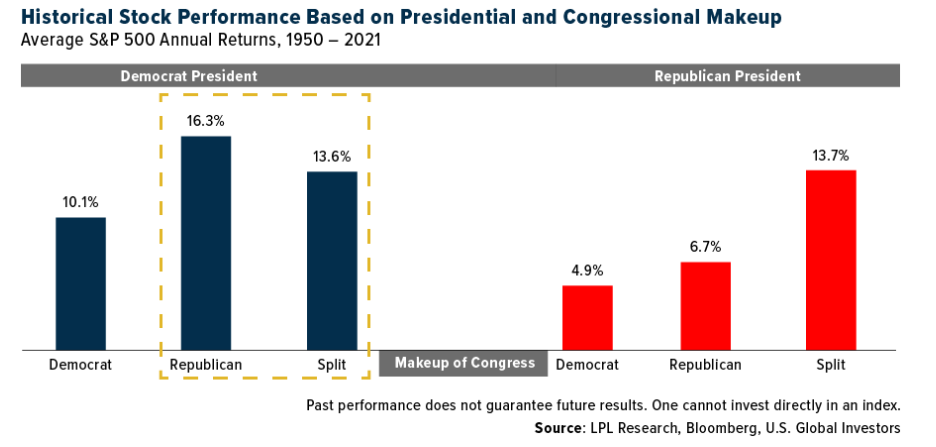
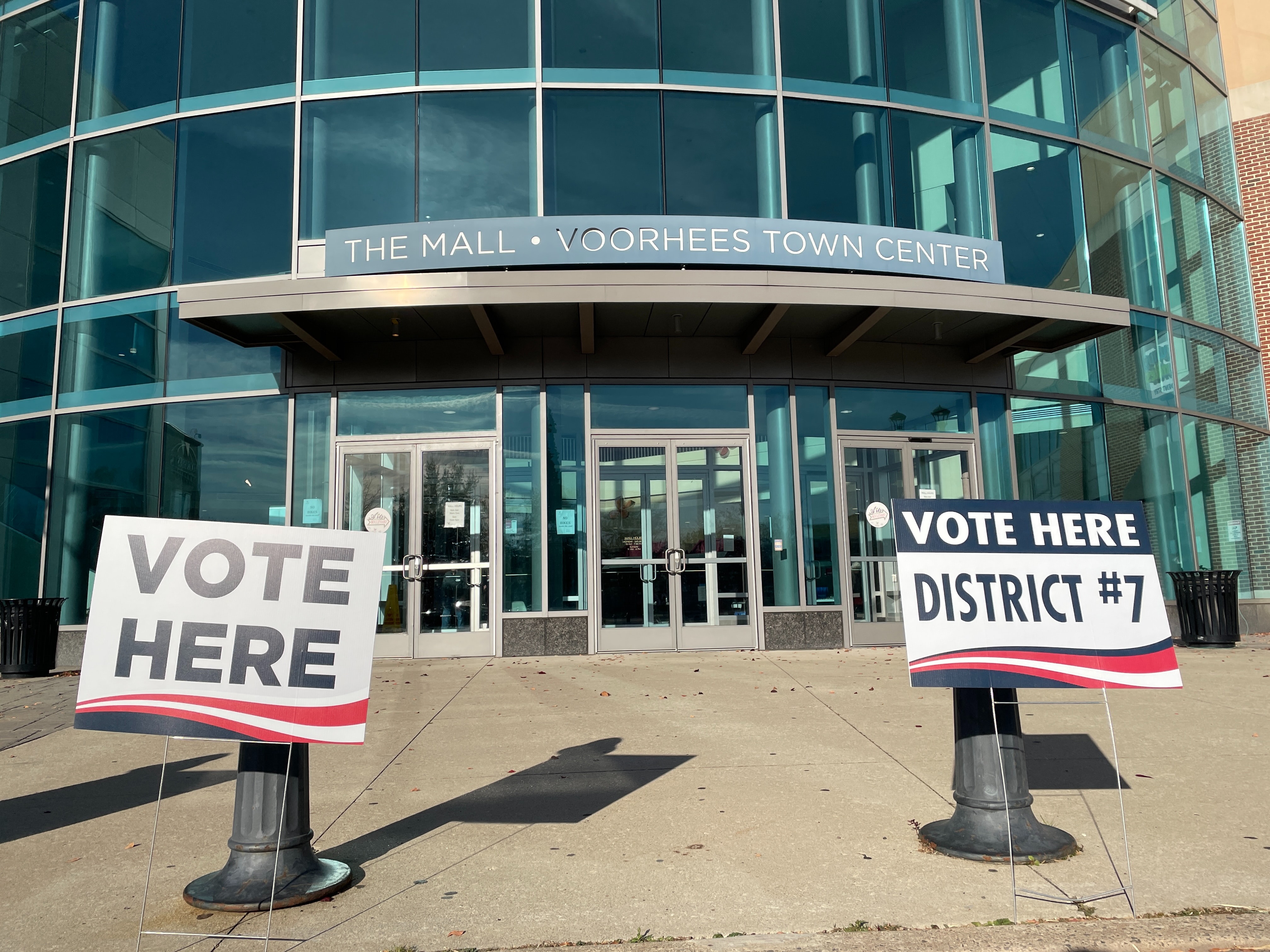
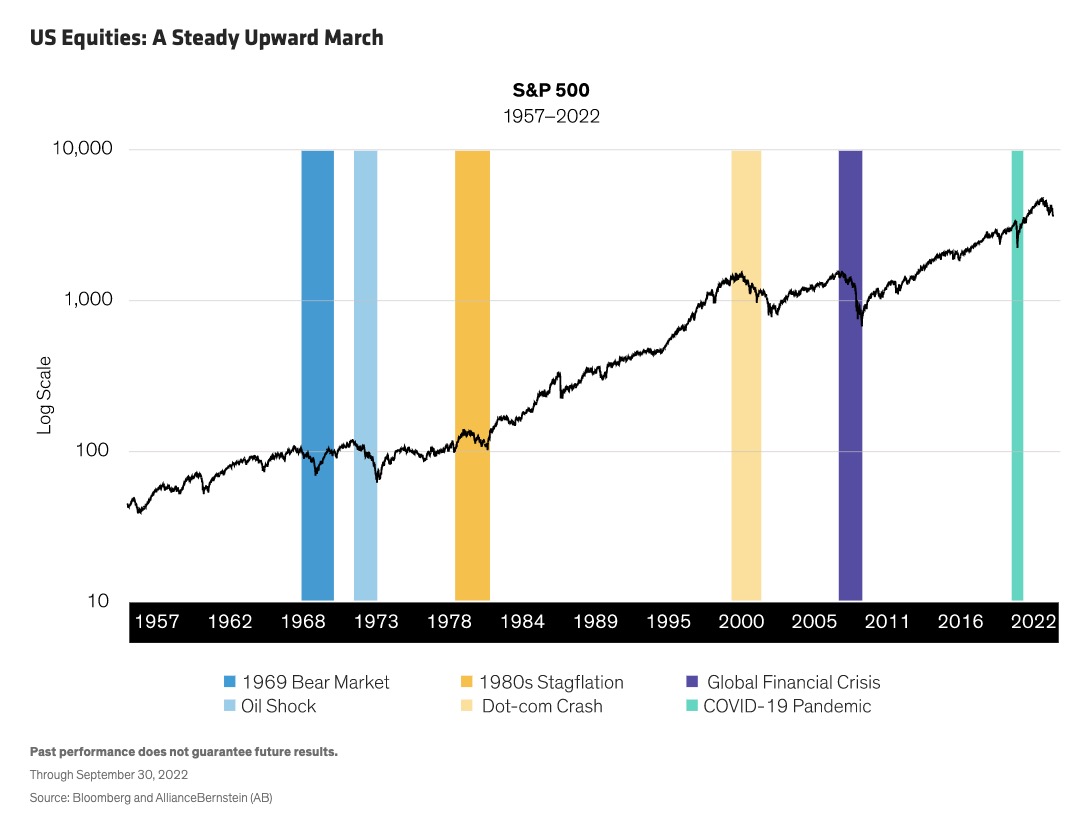
With the midterm elections behind us, does the market outlook improve given a now gridlocked Congress? Historically speaking, such is the case.
For years leading up to the pandemic, low inflation and stable growth created a favorable environment for investors that supported sustained periods of robust stock and bond returns. With inflation virtually non-existent, economic downturns were met with monetary and fiscal stimulus that provided a backstop for financial markets.
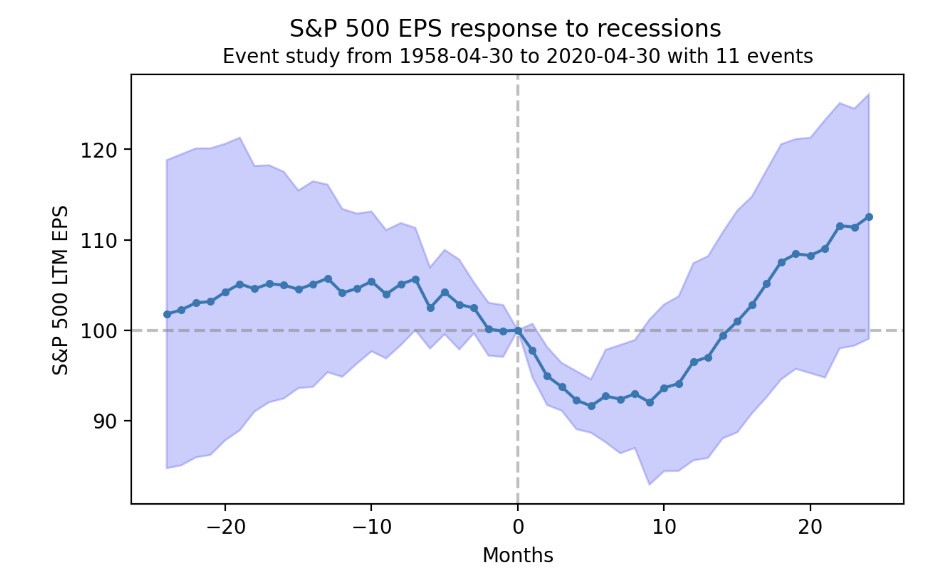
As warning signs for the economy mount, investors are cheering for more bad news. That's because they expect economic weakness will force the Federal Reserve to stop raising interest rates and eventually re-embrace loose monetary policy.
A split U.S. Congress in 2023 will likely limit fiscal policy, but could be positive for equity markets.
Despite stubbornly high inflation and recessionary fears, spending by consumers may not slow down as we approach the busy holiday shopping season.
Two aspects of the financial markets operate simultaneously. Emphatically, they do not operate alternately, but simultaneously. One aspect is driven entirely by arithmetic. Every security is a claim to some long-term stream of cash flows that will be delivered to the holder, or series of holders, over time.
As we approach Thanksgiving, it’s the perfect time to reflect on all we are grateful for. From an investor’s perspective, this year’s bear market will certainly not make this list. But even though it has been a challenging year performance-wise, we still believe that investors have a cornucopia of economic and financial market blessings to count!
Is globalization truly dead? Stephen Dover, head of Franklin Templeton Institute, explores what drives globalization, whether we are currently in a “de-globalization” wave—and what it means for investors.
Financial crises are really about trust. They tend to occur when people lose trust in assets, institutions, or people they had thought trustworthy. Whether the lost trust was a consequence of the crisis, or its cause is a different question. But they do seem to go together.
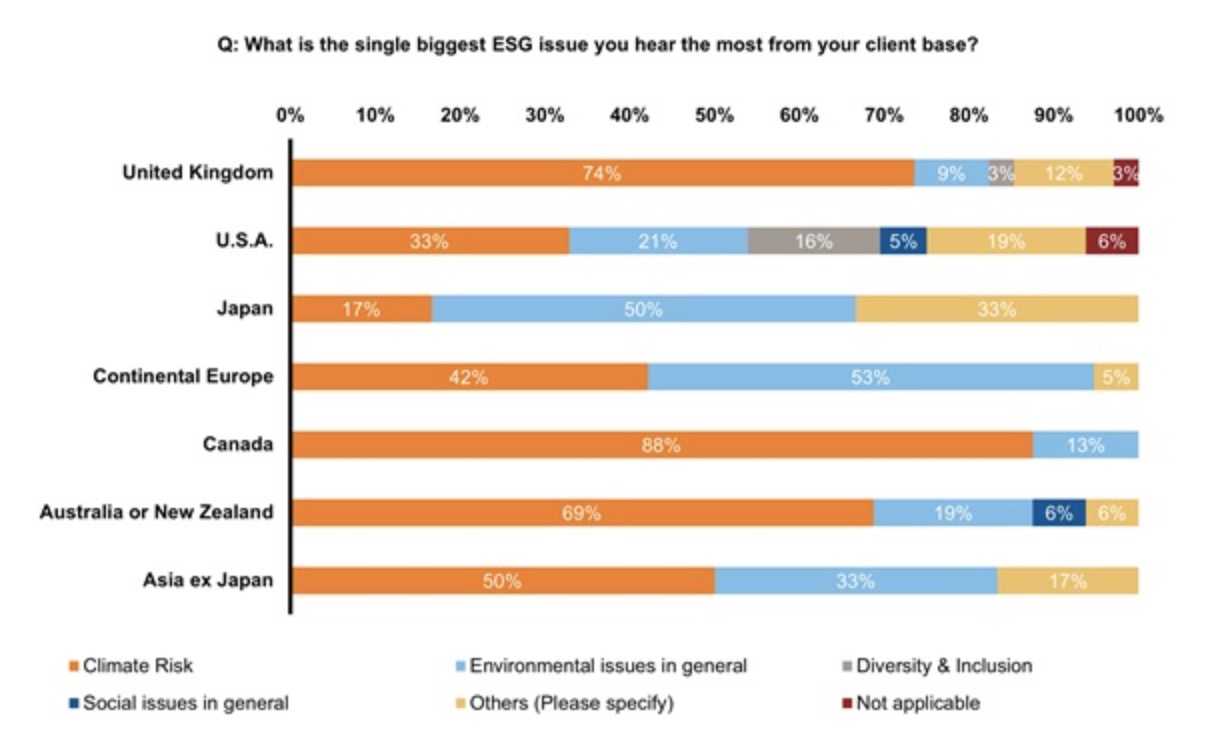
Our annual ESG manager survey of active managers assesses the integration of ESG considerations in investment processes among equity, fixed income and private markets managers, and spotlights firmwide policies, use of data, engagement and integration.
Although off their Thursday lows, equity index prices closed lower yesterday.
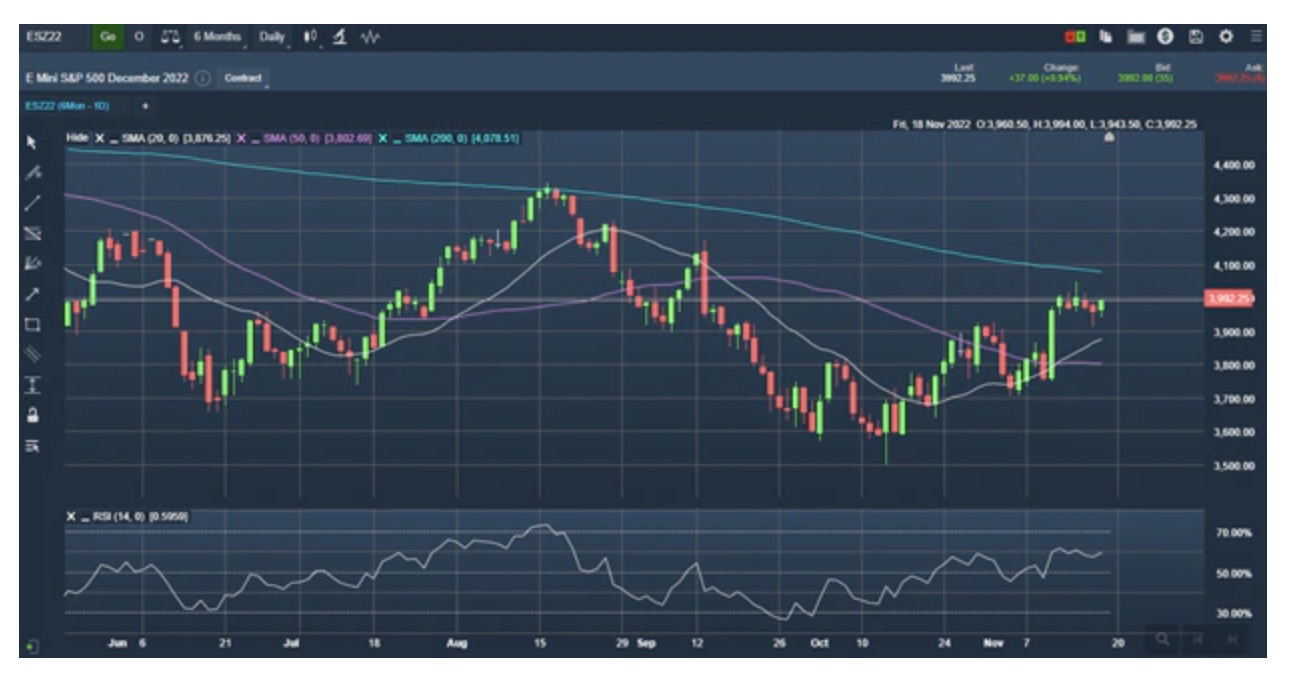
Review the latest portfolio strategy commentary from Mike Gibbs, managing director of Equity Portfolio and Technical Strategy.
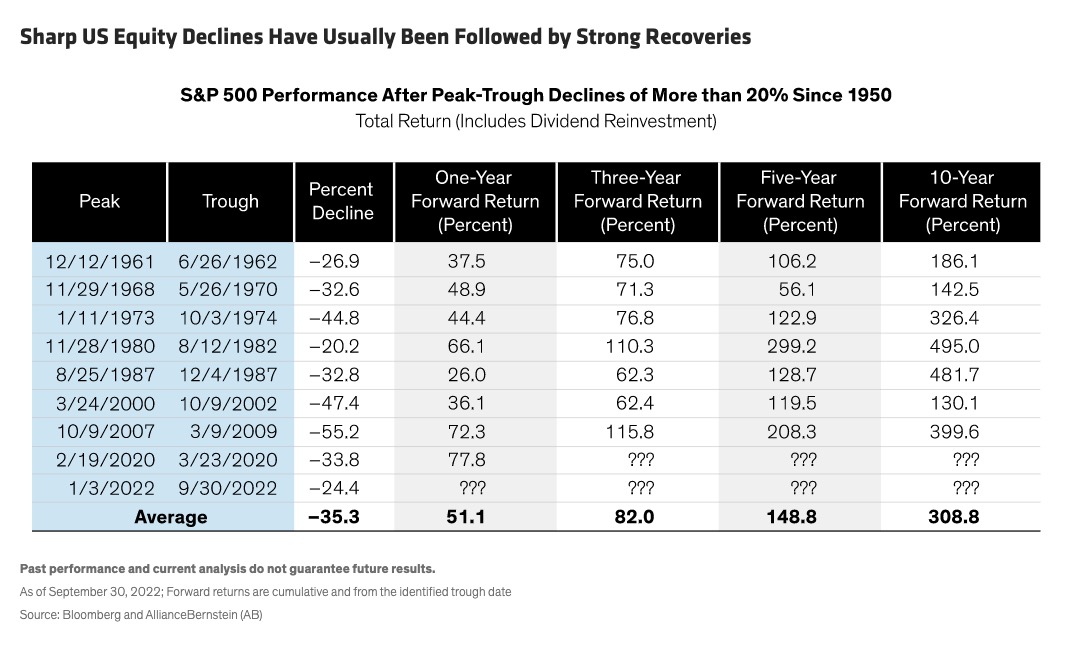
After a tough year for equities, is a recovery imminent?
There was a time when a large portion of Americans belonged to the “middle class.”
Franklin Mutual Series believes dividend payers can give value investors better total returns over the longer term.
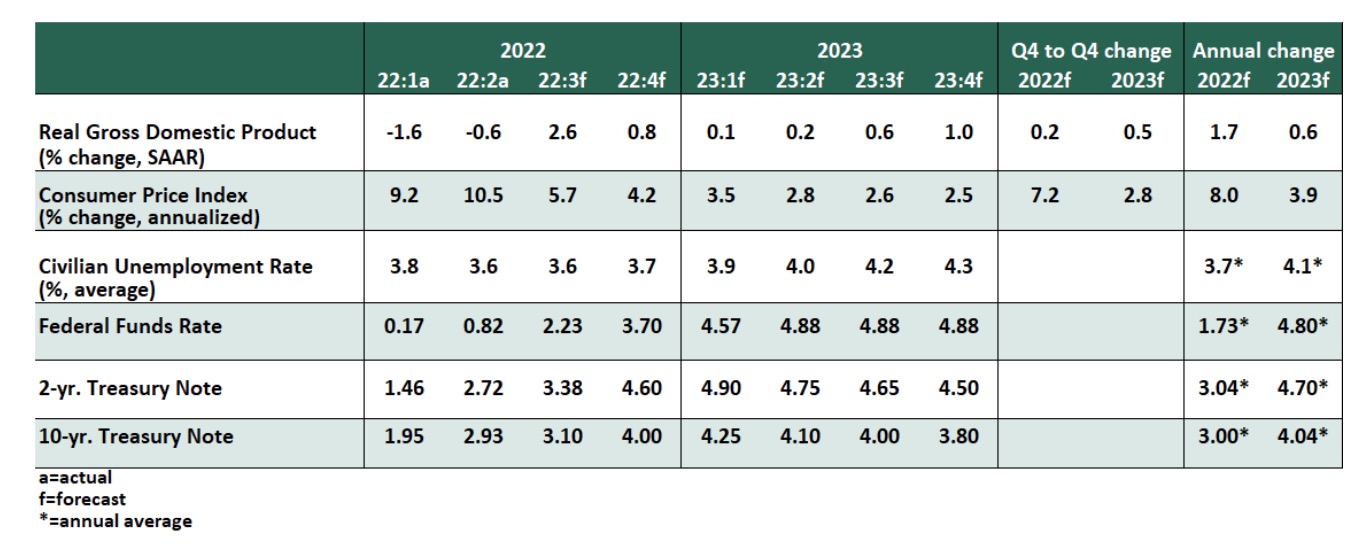
The Northern Trust Economics team shares its outlook for inflation, growth, employment and interest rates.
The recent implosion of FTX is explained and why the inevitable crypto and pension fund collapse was precipitated by Fed policy.
Anne Walsh, Chief Investment Officer for Fixed Income, on the economic and credit cycle, and on risk and opportunity across the fixed-income landscape.
In the 1994 comedy film, Ace Ventura: Pet Detective, Lt. Einhorn is the female leading the Miami police’s investigation of the disappearance of the Miami Dolphin’s mascot, Snowflake.
Corporate defined benefit (DB) plan sponsors face two primary risks: equity risk and interest rate risk.
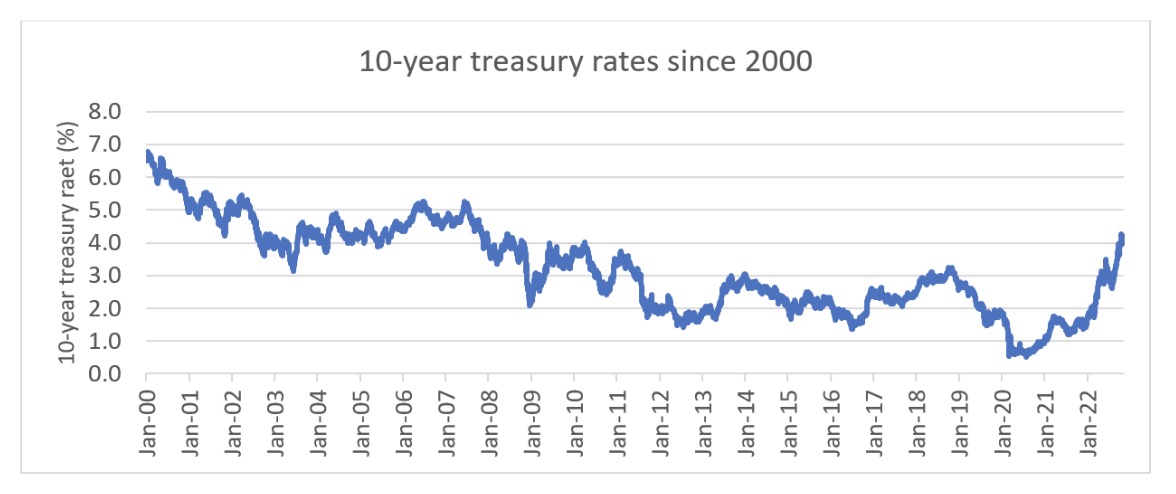
With interest rates higher amid a challenging macro environment, we see a compelling case for bond allocations and are cautious about higher-risk investments.
Xi’s move to ease China’s COVID policy should reduce obstacles to normal life in the country and set the stage for a gradual economic recovery.
With Tuesday's (Nov 15th) Producer Price Index (PPI) numbers bringing more relief on the inflation side, a new bearish narrative has been put forward by financial pundits over the last few days.
Doug Drabik discusses fixed income market conditions and offers insight for bond investors.
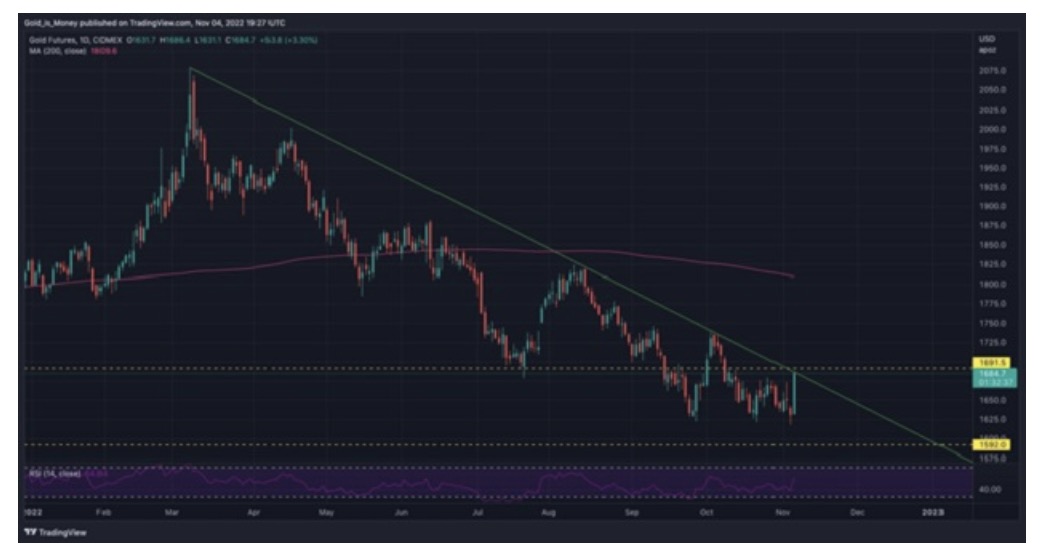
While investors continue to await a possible Federal Reserve pivot toward monetary easing, the pivot has already occurred in major asset markets, including precious metals.
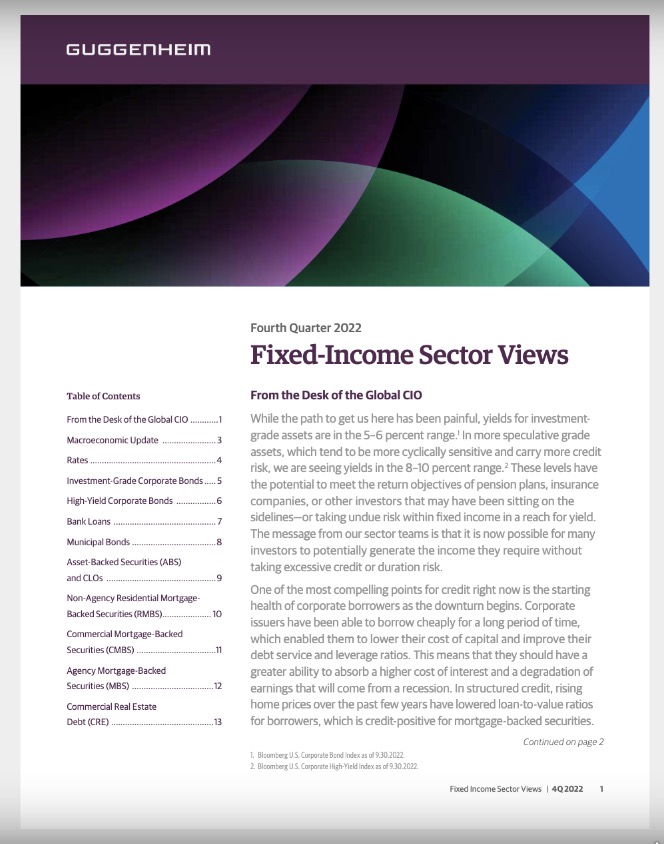
While the path to get us here has been painful, investable yields have the potential to meet the return objectives of pension plans, insurance companies, or other investors that may have been sitting on the sidelines—or taking undue risk within fixed income in a reach for yield.
High inflation and slow economic growth are a problem for investors. Here's how to shore up your portfolio.
We believe highly innovative companies, when accounted for properly, are cheaper than their non-innovative peers in all regions of the world.
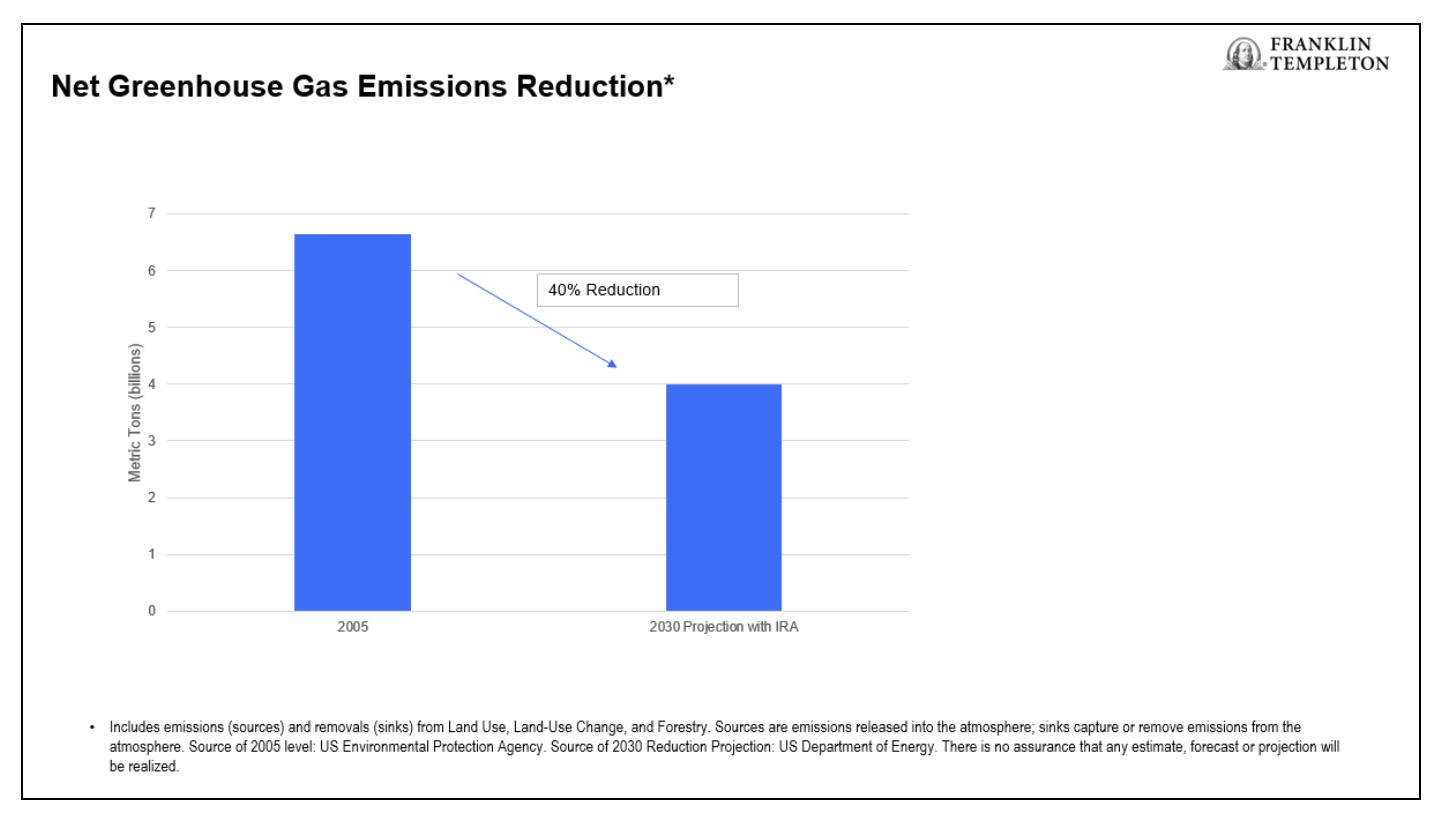
Inflation Reduction Act (IRA), climate and multi-asset implications—Franklin Templeton Investment Solutions examines the IRA from an investment lens.
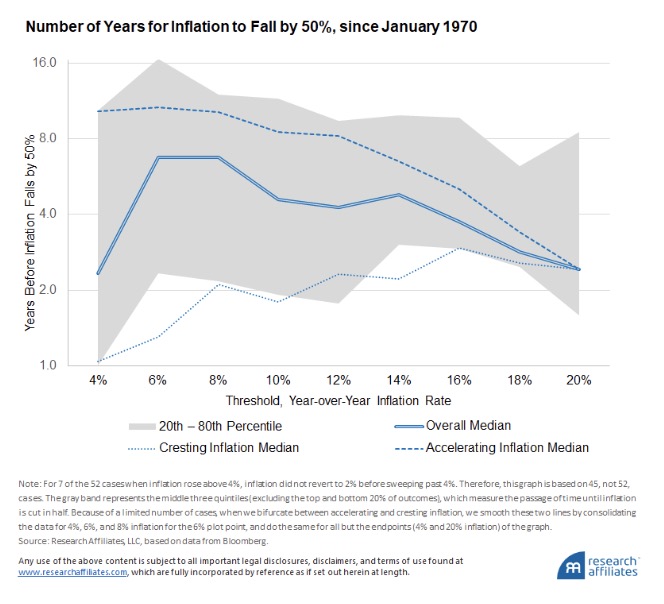
The US Federal Reserve Bank’s expectations for the speed of reverting to 2% inflation levels remains dangerously optimistic.
U.S. equities are mixed in restrained trading, with investors awaiting the next two pieces to complete the October inflation picture.
Review the latest Weekly Headings by CIO Larry Adam.
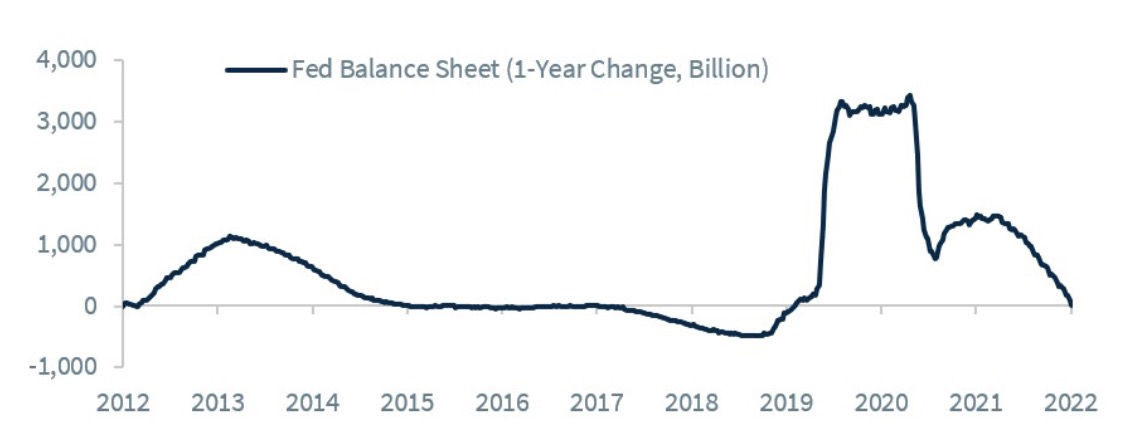
Since June, the market rallied on hopes of a “policy pivot” by the Federal Reserve.
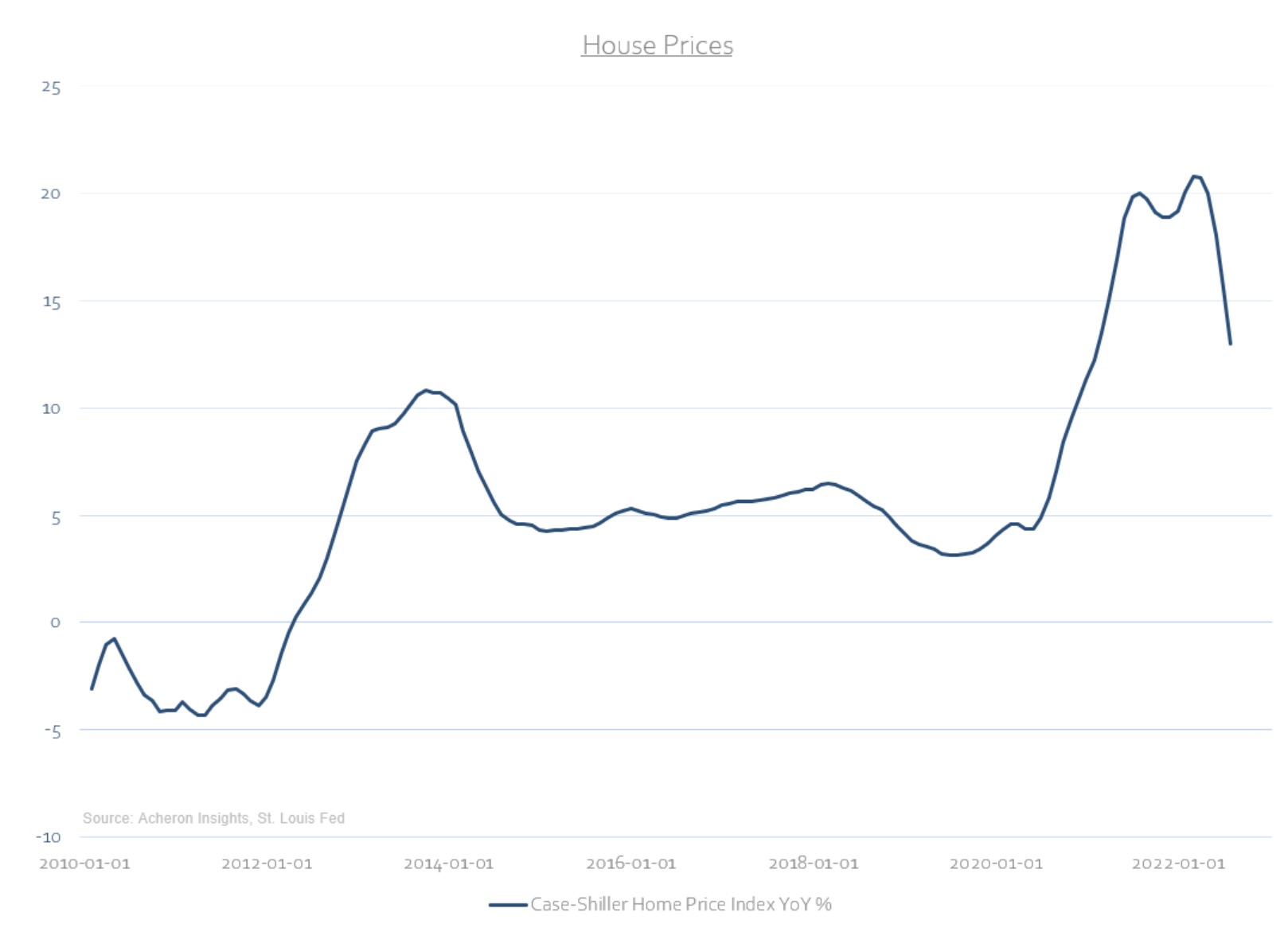
As a result of higher mortgage rates, an oversupply of housing and falling demand, the downturn in the housing market is only just getting started.
Early this week, with the severe inverted yield curve and other signals flashing recession, I planned to use this letter to delve into the data. Then Thursday’s CPI data convinced markets to blow the all-clear whistle.
FTX, until recently the world’s second-largest crypto exchange, filed for bankruptcy as its embattled founder, Sam Bankman-Fried, stepped down as CEO following a liquidity crunch that exposed the firm’s improper use of customer assets.
Chief Economist Eugenio J. Alemán discusses current economic conditions.
U.S. stocks posted its biggest daily gain since 2020 following data on October’s consumer price inflation (CPI), which came in cooler-than-expected.
Core inflation came in below expectations for October and should moderate in 2023, but likely with bumps in the road ahead.
While a divided US government may look appealing, there are long-term risks amid resulting gridlock, according to Head of Franklin Templeton Institute Stephen Dover.
What a difference a decade makes!
Since starting The 10th Man in 2014, I’ve written about gold maybe a dozen times.
Our survey on corporate health in the third quarter painted a picture of an economy in transition. Even as some key fundamentals showed a marked deterioration from the previous quarter, others, notably the outlook for corporate credit, displayed surprising resilience.
An astounding $200 million dollars per day, every day, is spent gambling in Las Vegas casinos.
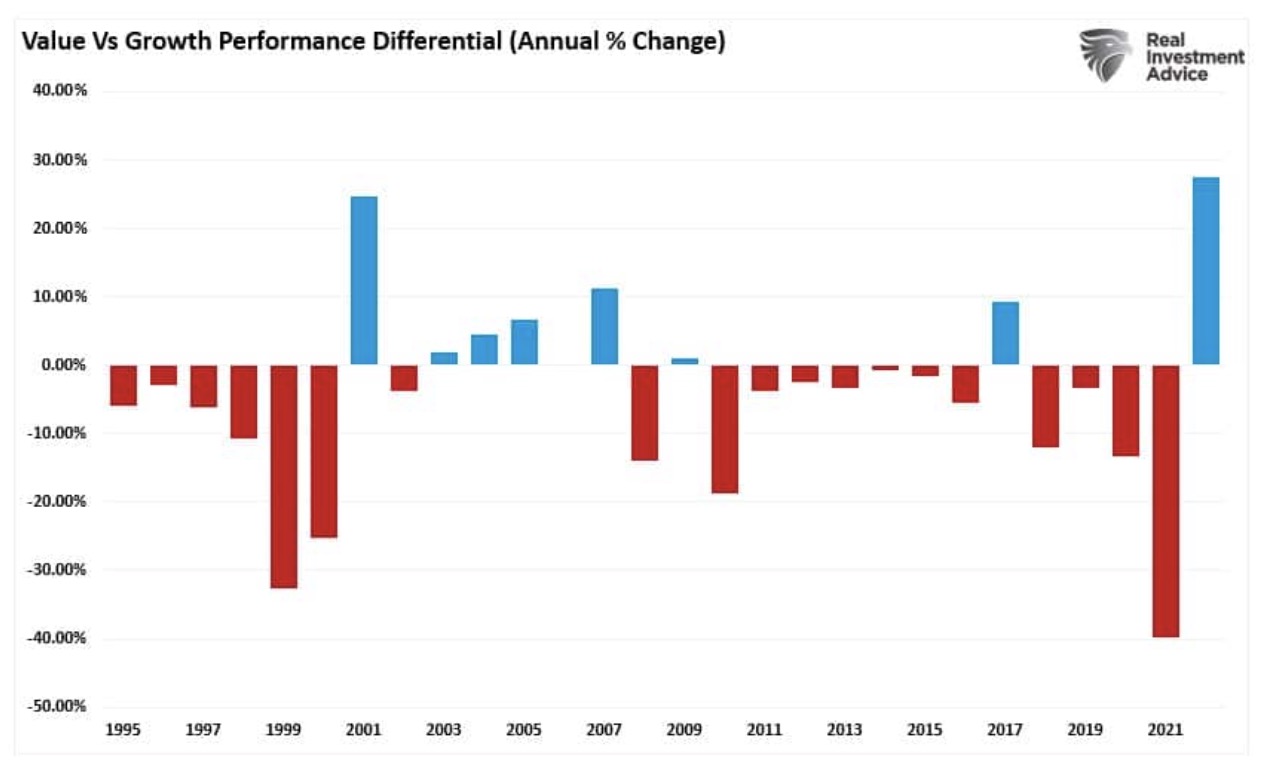
Are the FANG stocks dead?
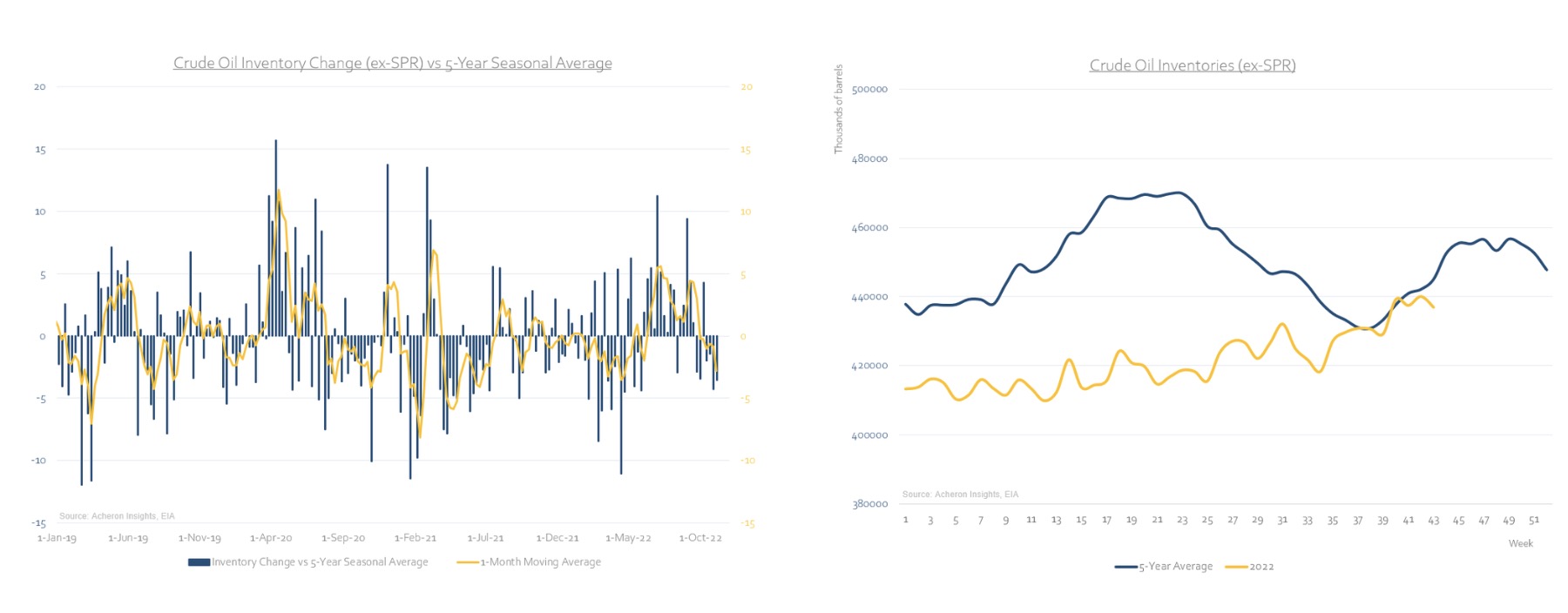
The physical market for energy continues to be tight, signally demand continues to outpace supply.
Inflation is receding and real interest rates are climbing in EM after a year of tightening monetary policy.
In February of this year, I posted a subscriber request video titled: “5 Premier Dividend Growth Stocks With A Margin Of Safety.”
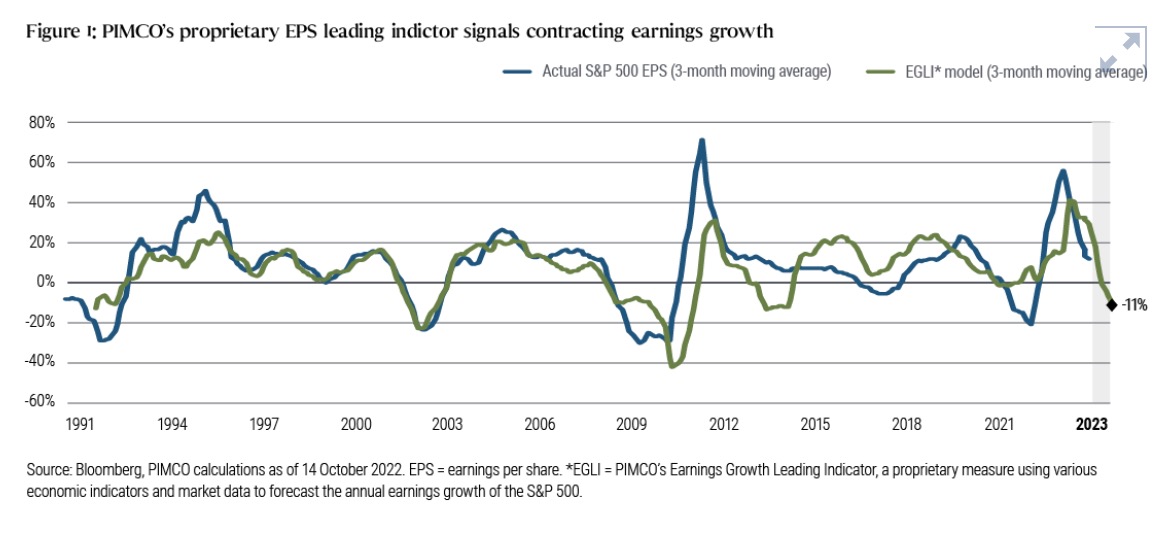
Equity investors have sustained significant losses this year and are facing a long list of new uncertainties.
U.S. equities are lower as the global markets await the final results of the U.S. midterm elections as the control of the Congress remains undetermined.