Think interest rates are peaking? If so, agency mortgage-backed securities (MBS) deserve a look. Think rates have further to climb? MBS may still earn a place in your fixed-income allocation. In this article, I weigh the pros and cons of MBS at current yields, explain what will drive future returns, and share how individual investors can gain exposure.
Join the experts at GraniteShares and VettaFi for a product due diligence session that explores why autocallables are taking center stage in the 2026 income story and how to get autocallable exposure.
Discover how strong corporate earnings, AI capex cycles, and 5%–10% fixed income yields outweigh midterm election and Fed rate uncertainties.
Many advisors first look to securitized assets for income, and for good reason. These sectors have often offered attractive spreads relative to similarly rated traditional fixed income securities. In many cases, those spreads reflect market complexity and specialized research requirements rather than simply higher credit risk.
S&P 500 investors have doubled their bets on the top 10 stocks, so their performance is twice as dependent on those 10 stocks. Is that a good bet? Who knows, but it is a large bet. Time will tell.
Gold slipped as bond yields stayed elevated despite falling energy prices, with traders assessing the outlook for the Federal Reserve’s interest-rate path.
Call it the nerd mindset. Silicon Valley has spent the last few years believing that whoever built the smartest artificial-intelligence system would rule the industry. Today, that calculation is starting to look misguided.
Chips stocks and troubled artificial-intelligence bellwether CoreWeave Inc. are rising, helping stocks rebound after the worst week for the tech-heavy Nasdaq 100 Index since the tariff turmoil of April 2025.
There is a general framework to inflation, and it is older than any of us. Prices can rise because buyers are bidding for scarce goods with money they’ve actually earned. Or prices can rise because the cost of producing something has jumped for reasons unrelated to demand.
American Electric Power Co. is working with Amazon.com Inc. to evaluate plans for a 960-megawatt nuclear plant in Indiana using a new reactor design, a project that would rely on unproven technology while potentially advancing efforts to promote next-generation fission.
United Airlines Holdings Inc. this month joined other major carriers in reducing the importance of frequent flying for its loyalty program. Status on United, Delta Air Lines Inc. and American Airlines Group Inc. now only comes from how much you spend, not how much you fly.
The third quarter of 2026 emphasized an increasingly divided macro regime for financial advisors and institutional allocators alike. On one end, broad market hopefulness drove steady capital deployment into broad-market beta, while on the other end, raised rate volatility and geopolitical tension forced strategic pivots across fixed income, real assets, and systematic strategies, according to BlackRock’s Q3 earnings call, released October 14.
Over the last decade, a series of policy decisions in DC support the reindustrialization of the United States. Key policy movers include investments in infrastructure, tax policy that allows significant tax benefits for corporate capital expenditures (capex) and domestic research and development, the CHIPS & Science Act and tariff policies, especially the sector-specific 232 tariffs.
In this commentary, we look at three themes shaping our thinking: a shift in who is leading the market, the return of income as a meaningful source of return, and an economy that, in our view, is growing steadily rather than heading toward either extreme.
Corporate bond yields are high, but spreads are low. Low spreads are supported by strong corporate fundamentals, and high yields might help offset potential price declines.
Matthew Bielski, founder and CEO of Defiance ETFs, recently joined Scarlet Fu and Eric Balchunas on Bloomberg’s ETF IQ to discuss the Defiance Autism Impact ETF (ASD) and the personal family experience that helped inspire its development.
As we enter the final quarter of 2026, the investment backdrop remains constructive but increasingly differentiated. Economic growth and corporate earnings have remained resilient, while continued investment in artificial intelligence (AI) and other productivity-enhancing technologies has supported capital spending and market sentiment.
Today, we are going to look at some of the cracks which are becoming visible in the AI space. It will change the nature of index investing, the economy and portfolio management for the next decade. And generally, not in a good way as far as current AI investors are concerned.
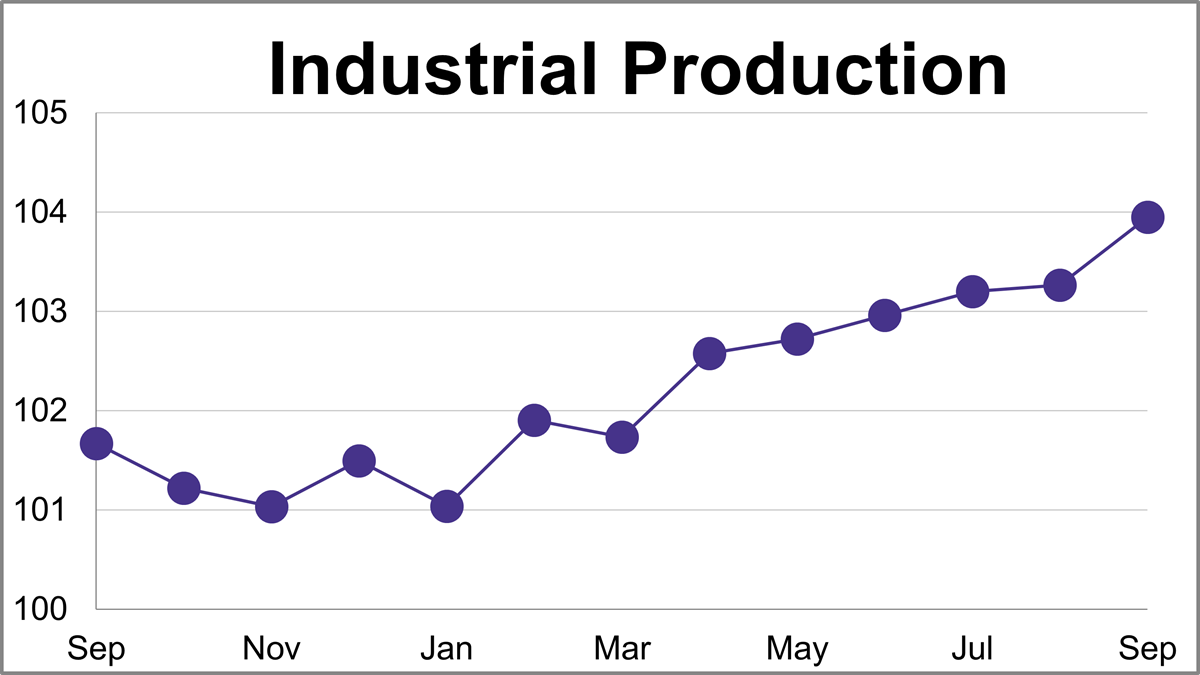
Industrial production grew 0.7% in September after August's 0.1% growth. This was lower than the expected 0.4% growth and marks a 2.8% increase compared to one year ago.
Elon Musk’s decision to wade into US mobile-phone services sets up a challenge distinct from anything he’s previously pursued. This is not a new market or an added twist that fills an industry gap such as his innovations with electric vehicles, broadband from low-earth orbit or an online payment system — the areas where Musk made his riches.
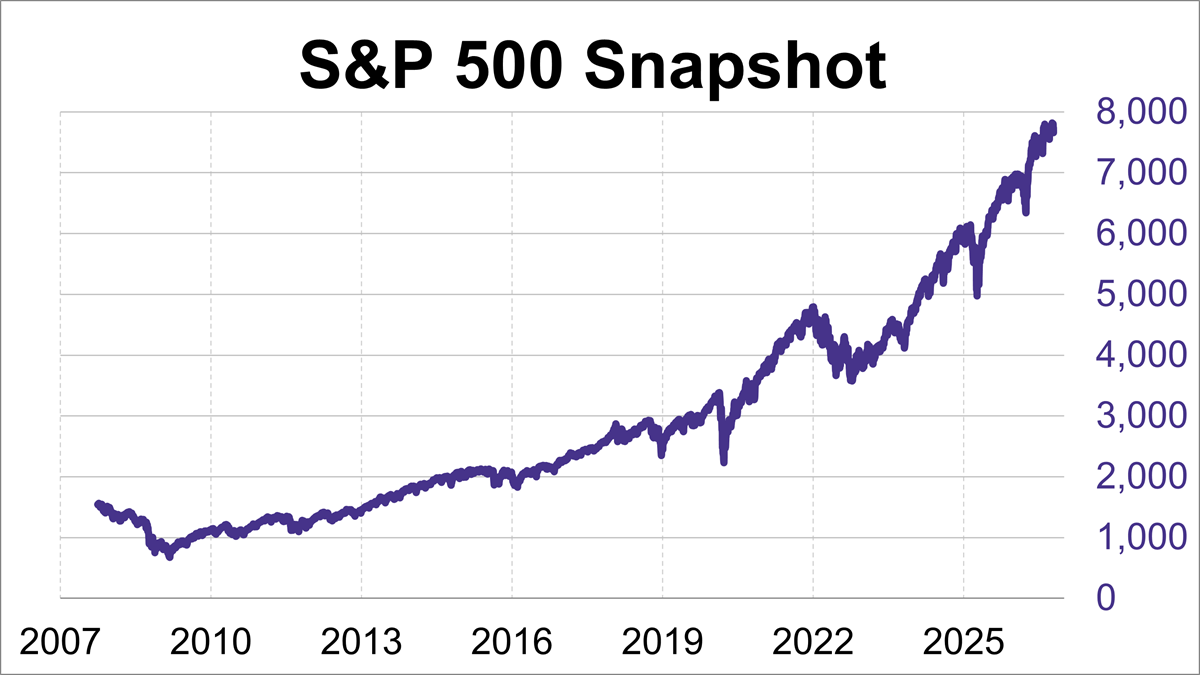
The S&P 500 slid 1.95%, capping off its worst weekly showing since late June.
Join the ETF experts at REX Shares for an educational webcast exploring the peptide economy.
In more normal periods like today, hiring broadly matches the labor force growth, and unemployment holds steady. Labor force growth has slowed to about 0.5% a year, so payroll gains have slowed too. Payrolls rose only 29,000 in September and averaged about 45,000 a month over the past year, yet unemployment is still a low 4.2%.
CoreWeave Inc. has become caught in a tug of war between investors who see rising bond yields as a potential rally killer for the AI trade and those who think demand for computing power will make those concerns seem passe before long.
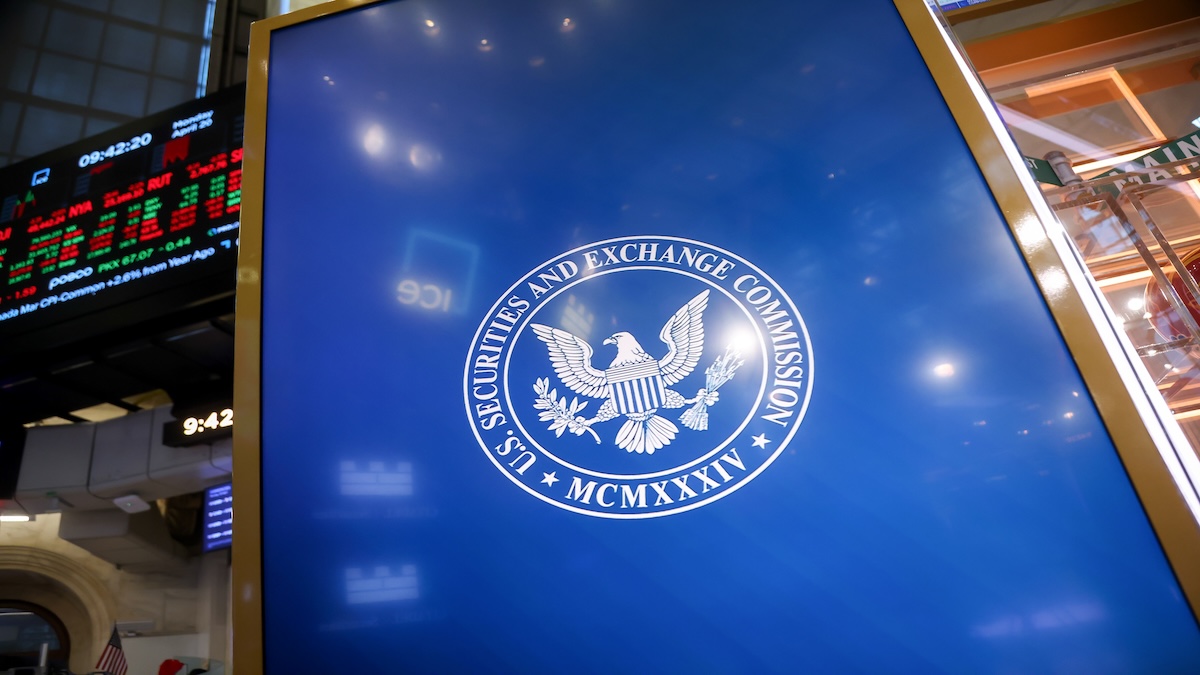
In a potential test of the law of unintended consequences, the Securities and Exchange Commission has released a rule proposal that would make it far easier for private equity, venture capital and private capital fund managers to attract — and tap into — the savings of retail investors.
Big bank earnings offered little to alter the dimming views on the sector mired in the longest losing streak since the financial crisis. The bright spot: equities trading.
With Brent crude above $100 a barrel for most of the past month and diesel prices more than twice as high, you might imagine that the world’s poorest fossil fuel importers would be hitting crisis conditions right now.
We agree that the economy has appeared remarkably resilient at the aggregate level, and that modest further rate increases may not put overall growth at risk. But the more important question for portfolios is not the level of inflation; it is its sensitivity to rates.
If markets are good at one thing, it's reminding investors that stock prices don't simply go up, uninterrupted, forever. I have updated this report several times since it was initially published in 2008, and given recent market volatility, it made sense to do so again.
Project Vault, the US government-backed critical-minerals stockpile, plans to choose an initial group of more than a dozen American manufacturers that could receive up to $1 billion in loans to help procure key materials.
In the AI-led markets of recent years, companies with distant profit potential have been favored. But higher interest rates could change the equation and create a new advantage for value stocks, whose businesses tend to have more visible cash flows in the shorter term.
An income projection can provide an important starting point for year-end tax planning. Explore key 2026 tax brackets and income thresholds that may help inform planning decisions before year-end.
Learning how to value stocks starts with a question you already understand: What am I getting for the price I’m paying?
Central banks are tightening, and stocks are still within reach of their highs. The Fed hiked on September 16 for the first time since 2023, and the 10-year Treasury yield touched 5.34% this month, its highest level since 2002. Even so, the S&P 500 sits within roughly 2.5% of its record, and Japanese equities recently set fresh all-time highs.
As we round the three-quarter pole and head into the final stretch of 2026, the prevailing investment narrative has, of course, been AI, along with its pros and cons. Since March, when the Iran conflict began, there has been a secondary drumbeat that continues to get louder and louder: the narrative surrounding bond prices, interest rates, inflation, and the economy.
In light of accelerating global fragmentation and geopolitical conflict, many governments and businesses are investing in resilience. That imperative has coincided with the emergence of AI, a technology that can expand the frontier of what is possible. As a result, technology security is becoming a pillar of national economic security strategy.
Q3 was a period of transition in the bond market thanks to Federal Reserve changes, a surge of AI-driven debt issuance, and rising interest rates.
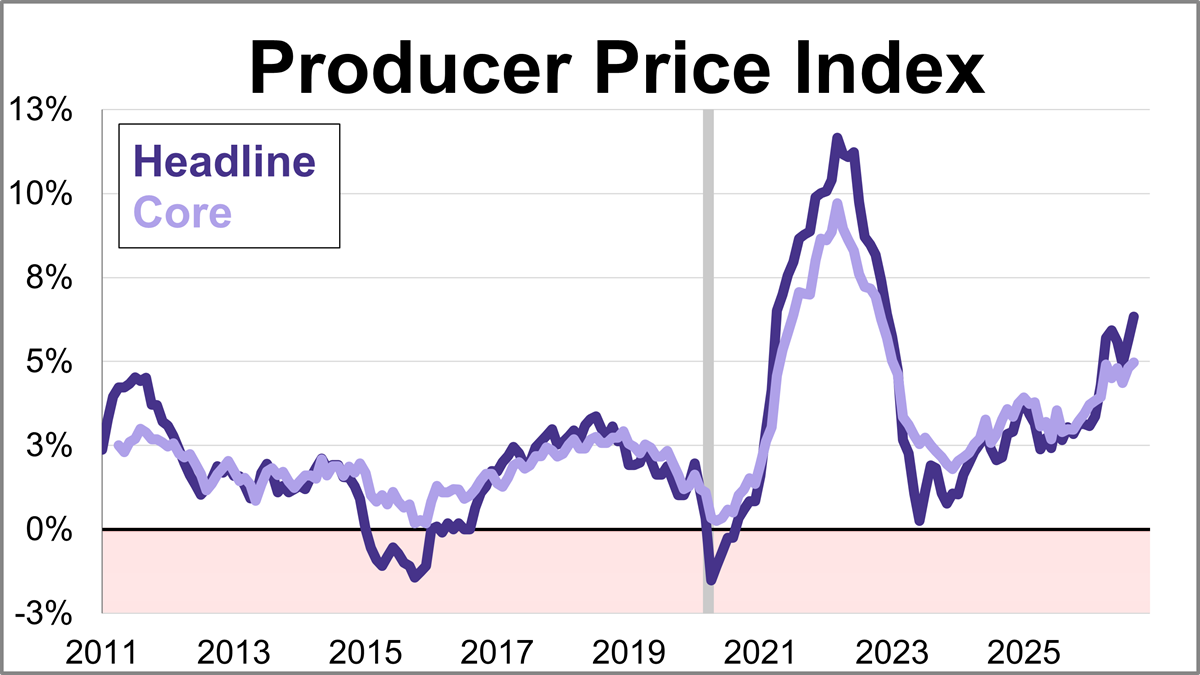
The Producer Price Index (PPI) was up 1.3% in September, better than expectations.
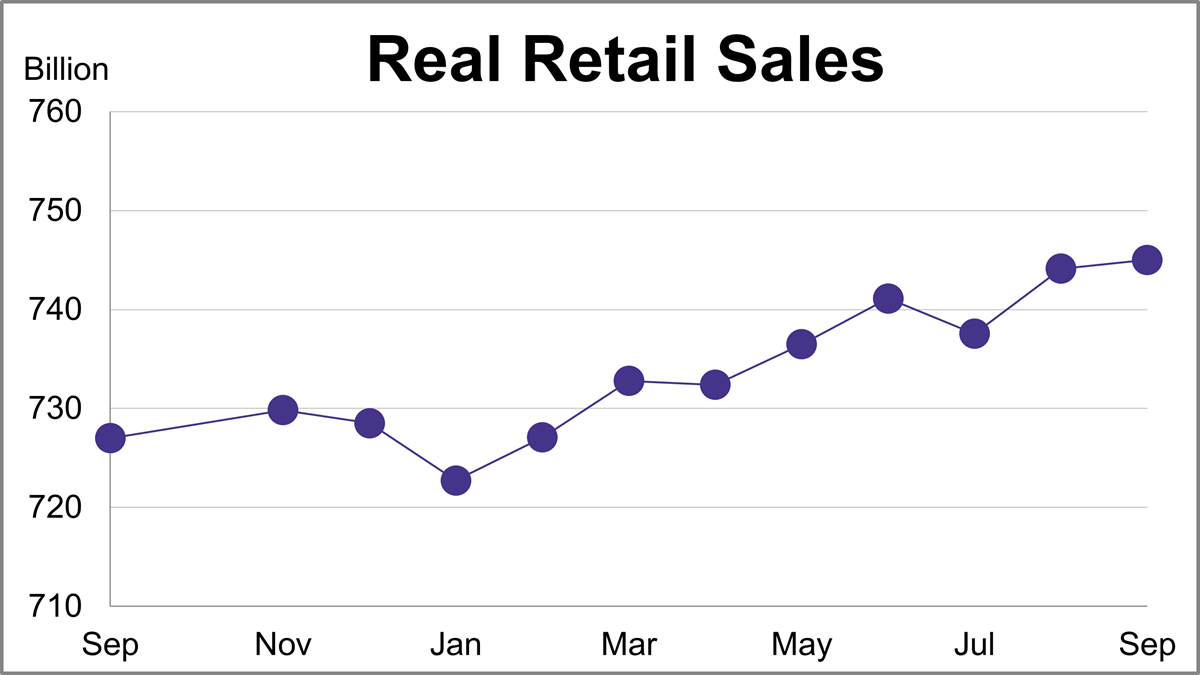
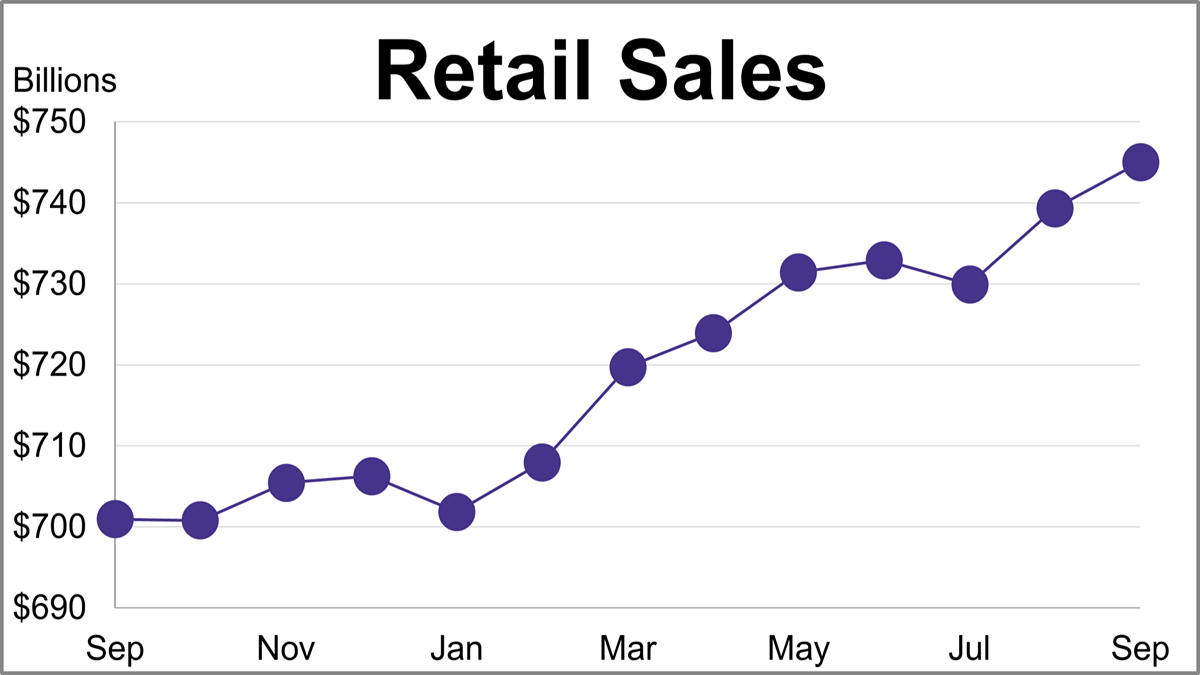
Nominal retail sales were up 0.8% month-over-month and up 6.3% year-over-year in September. After adjusting for inflation, real retail sales were up 0.1% month-over-month and up 2.5% year-over-year.
U.S. headline retail sales grew 0.8% in September to $745.0 billion, while core retail sales increased by 0.9% to $605.2 billion.
Join the experts at J.P. Morgan Asset Management and MassMutual Strategic Distributors for an educational webcast covering some of the most critical topics influencing today’s market environment.
As AI in wealth management becomes more prevalent, recent research from Vanguard suggests that technology may actually increase investors’ appreciation for human expertise.
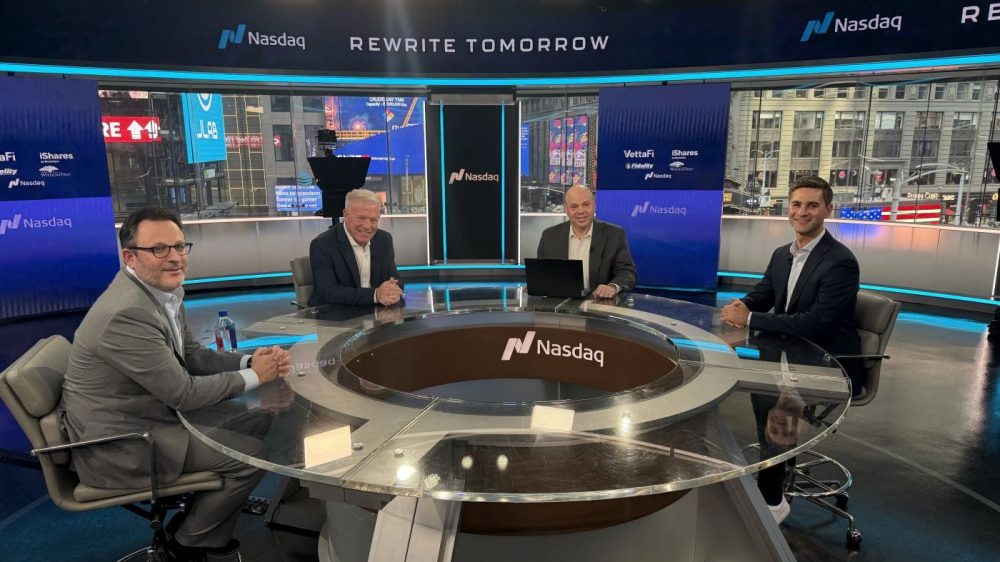
BlackRock, WisdomTree, and Fidelity Investments had representation at the recent Nasdaq VettaFi Asset Allocation summit.
In a recent webcast, Ari Polychronopoulos, TMX VettaFi’s head of RAFI Indices™, and Brent Leadbetter, TMX VettaFi’s head of RAFI Distribution, discussed growing market concentration risk.
Last week, the NEOS Nasdaq-100 High Income ETF (QQQI) crossed $15 billion in assets under management. This major milestone was the result of investor demand. In the first nine months of 2026, the tax-efficient options-based ETF had $7.0 billion in net inflows. With the help of the $13 billion NEOS S&P 500 High Income ETF (SPYI), NEOS has firmly established itself as a premier manager for enhanced income ETFs.
Charles Schwab Corp. reported earnings that beat estimates as retail investors continue to pile into the stock market.
An AI rendering of a 19th-century Jon Gray, complete with pitchfork, waistcoat and straw hat, flashed up behind the Blackstone Inc. president at a recent meeting with investors.
As chip stocks shed $1 trillion in market value, ETF investors are pouring billions into the selloff, putting a fund that triples their daily exposure to the sector on pace for record weekly inflows.
US Treasuries led a global bond rally as a selloff in artificial-intelligence shares deepened, spurring demand for haven assets.
We are often asked to predict interest rates, typically because investors hope to invest at the most opportune moment. The motivation is understandable, but the ability to consistently identify that moment is questionable. Voluminous economic data, geopolitical events, shifting monetary policies, and ever-changing economic conditions make forecasting interest rates an unrealistic exercise.