Inflation, geopolitical fragmentation and concentrated, AI-driven markets have put a premium on investors’ ability to navigate directional moves across asset classes. We think systematic trend-following strategies can help chart a course. But how they’re designed matters.
Many investors underestimate the AI exposure already embedded in diversified portfolios. Michael McNurney explains how to evaluate AI enablers, creators and beneficiaries while balancing long-term opportunity against short-term valuation and concentration risks.
Monthly checks for nearly 72 million Americans receiving Social Security benefits will increase by 3.6% in 2027, the most in four years.
While redemption pressure in nonlisted BDCs (funds that invest in small and midsize private U.S. businesses) has eased from its peak, it remains materially above the industry standard 5% quarterly redemption threshold. As a result, capital continues to leave the asset class, forcing managers to look to preserve liquidity, moderate deployment, and, at the margin, tighten financing conditions.
One of the hallmarks for the U.S. economy over the last few years has been its resiliency. This calendar year has been no exception as the war in the Middle East led many a market prognosticator to pencil in the potential for a recession stemming from the effects of the Middle East war.
In a week marked by continued concerns about rising interest rates, the bond market found some relief after two large Treasury auctions of 10- and 30-year securities were well received by investors. The week’s most significant development came Thursday, when questions emerged about OpenAI’s revenue. Reports suggested revenue was running at a $50 billion annual pace, well below the $70 billion investors had expected.
In this article, Russ Koesterich discusses how tech strength is hiding broader market weakness, as higher rates begin to weigh on rate-sensitive sectors.
Gold and silver finally put a winning week on the board. But the more revealing development is what happened while prices were falling: investors poured billions into gold-backed funds, and China stepped up its purchases of physical gold.
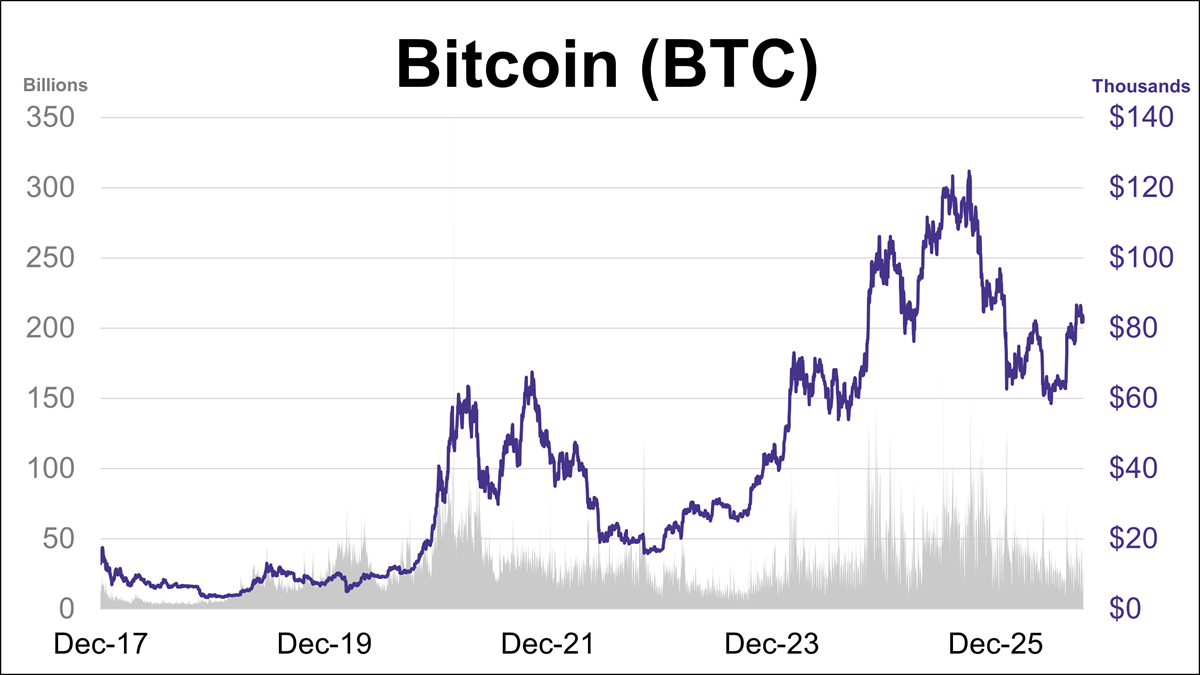
Bitcoin's closing price was down 2.9% this week. BTC is currently down approximately 5.0% year-to-date and sits about 33% below its October 2025 record high.
Your leaders probably don’t know what the right thing is to measure and motivate, so they just picked something. Give them an alternative, while showing them you are engaged and want to grow. Their approach to motivation might change as a result.
Technology can make individual marketing tasks faster, but it doesn't address who is responsible for keeping the larger process coordinated and moving. What’s missing is a marketing integration owner: one person with explicit responsibility for making sure the marketing system works as a whole.
Was Anthropic’s Claude for Financial Advisors announcement a heavily glossed nothingburger, or a seismic shift in advisor tech? Time will soon tell, but what’s undeniable are the significant questions (and concerns) echoed by firms across North America in response.
Leaders at advisor firms generally see two paths for using artificial intelligence tools: broaden capacity downmarket through efficiency, or swim upstream through excellence. It’s fair to say our industry has done a better job with the efficiency part of the equation.
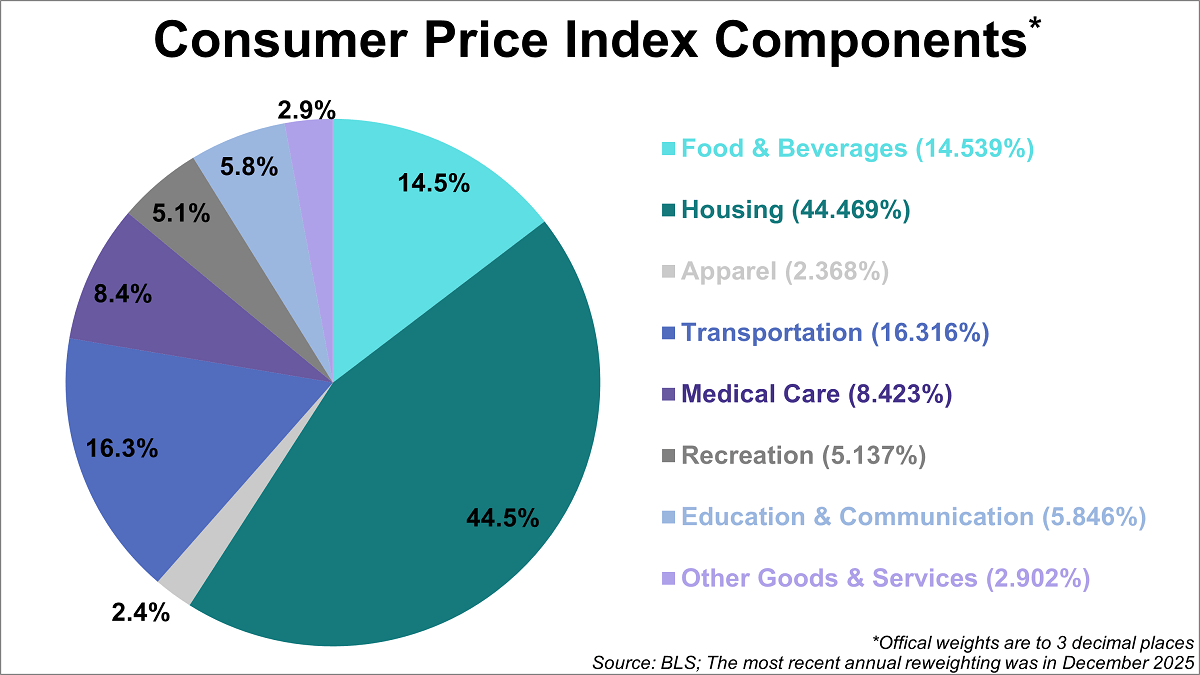
Inflation affects everything from grocery bills to rent, making the Consumer Price Index (CPI) one of the most closely watched economic indicators. The Bureau of Labor Statistics (BLS) tracks this by categorizing spending into eight categories, each weighted by its relative importance.
Apple unveiled its new attempt at a home device at an event in New York on Tuesday, the company’s second attempt to “win” the home. The first was its HomePod, released in 2018, and it left very little impression on consumers (other than those who owned one and found it left a little white stain on their furniture).
JPMorgan Chase & Co. has updated its approach to financing the energy transition, in a move the biggest US bank says will help it meet a historic surge in demand while also supporting affordability and security.
US consumer prices advanced in September at the fastest pace in five months and a gauge of underlying price pressures rose by more than expected, keeping the squeeze on household budgets ahead of November’s midterm elections.
The dollar strengthened to the highest level in over a year as a hot US inflation reading pushed traders to add to bets that the Federal Reserve will raise interest rates.
BlackRock Inc. pulled in $205 billion of new money in the third quarter as revenue surged at the world’s largest asset manager, which is now a full year into a major transformation to push further into higher-fee private markets.
Every time I clean out my wardrobe, I find items I have not worn in years but cannot quite bring myself to give away. Maybe they will come back into fashion. Maybe they’ll fit again one day. Or maybe getting rid of them simply feels harder than buying them did.
Sound and stable money promotes long-term economic growth. And “independent” central banks are more likely to deliver it. For most of the 1800s, the US was on the gold standard, which meant policy was insulated from political interference. But once the Federal Reserve was created in 1913, it became susceptible to political pressures.
A new peptide ETF launched today, holding the drugmakers behind GLP-1 weight-loss treatments along with the companies that make and deliver them.
Stocks enjoyed a profitable week in the lead-up to third quarter earnings season. The tech-heavy NASDAQ started the week strong, ending Monday at a record high.
Global income strategies offer a compelling value proposition for investors: a steady stream of income generated from dividend-paying equities, government bonds and structured instruments like equity-linked notes (ELNs) from around the world.
We see a reason for advisors to evaluate the support surrounding the strategy. Questions about onboarding existing holdings, applying restrictions, monitoring tax budgets and managing ongoing trading belong with the implementation provider. Understanding exposures and portfolio fit is where our consultation team can help.
Global equity markets finished the third quarter only modestly higher, but the path beneath the surface was anything but calm. The AI and momentum trade that powered markets in the first half unwound sharply in July, leadership broadened through August as capital returned to areas that had been left behind, and the market narrowed again in September.
While the current bull market celebrates its fourth birthday next week, the average bull market lasts about five and a half years. Yet there has been nothing average about this one.
Bank lending rarely commands the attention that payrolls, inflation or consumer spending do. But it helps determine how much momentum the economy can sustain. The Role of C&I Loans: Commercial and industrial (C&I) loans, the workhorse of corporate finance, pay for everything from working capital to machinery and software.
The Northern ETF SKOR crossed the $1 billion AUM threshold following $247 million in recent inflows amid surging corporate bond yields.
The case for nuclear has continued to build from multiple fronts, as regulatory reform, technology milestones, expanding government involvement, geopolitical uncertainty, and sustained private investment converge to reshape the industry's outlook. This session looks beyond the currently AI-dominant headlines and examines the myriad factors that could have lasting implications for the future of global nuclear energy adoption.
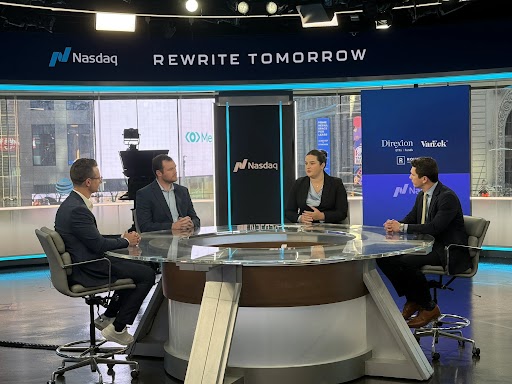
The recent Nasdaq Vettafi summit on asset allocation saw issuer leaders talk thematic ETFs, AI, and leveraged ETFs.
Assets under management tell you what a client is worth today. Upward mobility and enjoyment tell you what the relationship is worth. Build your practice around the second number, and the first one tends to follow.
If you already own a home, the purpose of this process is not to second-guess your home-buying choices or put pressure on yourself to sell a house you love. The point is to consider the value of your living space and the price you pay for it in a personalized, emotional way.
Small-capitalization stocks may now provide greater diversification and less valuation risk than many of the market’s largest blue-chip companies. Moreover, it appears to us that this is just the beginning stages of a change in leadership, and it is possible small-capitalization stocks could outperform large stocks for the next few years.
Americans have been relentlessly spending their paychecks despite rising prices, buying pickup trucks with diesel near record highs and steak dinners even as the cost of beef soars.
US equity futures held firm Tuesday despite a deepening selloff in chipmakers, as traders sorted through a slew of bank results from JPMorgan Chase & Co., Goldman Sachs Group Inc. and other lenders in the start to third-quarter corporate earnings season.
You’ve surely heard the standard advice that people should own more bonds than stocks as they age because stocks are riskier and older investors have less time to recover losses. I’ve always thought it was a half-baked idea, and rising interest rates show how costly it can be.
CLOs simply offer strong yield potential that often outpaces corporate bonds with similar credit ratings. Given that the ‘income’ portion of fixed income is often a key priority for investors, attaining high yield on a consistent basis gives CLOs a compelling use case.
UnitedHealth Group Inc. raised its profit outlook for the year after reporting better-than-expected earnings in the third quarter, a sign of progress in the turnaround of the largest US healthcare conglomerate following a disastrous 2025.
Skeptics of the artificial investment boom are doubling down. Billionaire Ray Dalio warned last week that the bubble was near its bursting point, while Michael Burry of the Big Short fame brought forward the timeline for his bearish thesis. SoftBank Group Corp. founder Masayoshi Son’s attempt to set up another $100 billion AI-focused venture capital fund will only give the doubters more ammunition.
The outlook for government policy, bond markets, and monetary policy appears less settled than it has been for much of the post-COVID period. The debate about public debt, the functioning of the Treasury market, inflation persistence, and the future path of interest rates has intensified. Global bond yields have been soaring.
Criticism of the AI and data center investment boom often centers on two distinct employment concerns. The first is that broader AI adoption could displace workers across industries as firms increasingly automate certain tasks. The second is that while data center construction generates jobs, these facilities require relatively few permanent employees once operational.
With the 10-year Treasury yield at its highest level since 2002, buying bonds at 5% is the first real alternative that stock investors have had in nearly two decades.
Our Senior Portfolio Manager and Head of Global Sustainable Investing, Kris Nelson, sees markets balancing several competing forces this week, from renewed oil-price volatility to softer labor data and increasingly demanding expectations around AI earnings.
Taylor Topousis and Christian Galipeau discuss high-conviction insights that go beyond media headlines.
Earlier last week, a supertanker loading crude in the Gulf of Oman was fixed at $1.01 million a day for a voyage to Asia, with another deal reportedly agreed at $1.16 million.
Higher interest rates are dominating the news of late, raising more questions than answers. Why are they moving up? Can they be tamed? And in the credit world, the question has arisen: as rates rise, are we at risk of loans underperforming?
The market continues to hold near all-time highs despite pressure from higher bond yields. This week brought relatively little economic data, but the important takeaway is that the underlying economy still looks strong. High-frequency indicators, jobless claims and consumer spending data continue to point to solid growth, while this week’s CPI, PPI and retail sales reports will provide the next important test for both the economy and the Federal Reserve.
For most of the past year, investors have been trying to answer what seems like a fairly straightforward question: How can the stock market continue to rise when interest rates keep moving higher? The conventional answer is that interest rates simply do not matter as much as they used to.
As Election Day approaches, investors may be asking what the upcoming midterm elections could mean for policy and markets. While there may be potential shifts in control, the policy impact is likely to be limited. Meanwhile, political rhetoric tends to heat up as elections draw closer, which could lead to an uptick in market volatility.