Defiant Capital Group
Q3 2026 Market Recap & Q4 Outlook: Rates, Oil and the Midterms
The S&P 500 hit a new record high in 3Q as strong earnings offset headwinds from oil returning to $100/bbl, the Fed hiking rates, and the 10-year Treasury crossing 5%.
Trump Accounts for Business Owners: Two Decisions, Not One

Most coverage of Trump Accounts treats them as a parenting question, or a discussion comparing them to 529s. For founders and business owners the analysis of them is slightly more nuanced.
August 2026 Market Update: Record Highs, Narrow Breadth, and a Fed That Might Hike

The S&P 500 gained 2.7% in August 2026 and four indexes hit all-time highs, but only five of eleven sectors rose and the Fed’s speech at Jackson Hole put a rate hike back on the table.
Margin of Safety

Margin of safety has nearly vanished from today’s market, as heavy AI debt, off-balance-sheet financing, and a stressed bond market leave stocks little room for error.
July 2026 Market Update: The AI Selloff, Middle East Tensions and What it Means for Your Portfolio

The S&P 500 was flat in July 2026 as semiconductors fell 29%, energy gained nearly 13% on higher oil, and long-term Treasury yields reached their highest levels since 2007.
Private Equity for Individual Investors: What the Minimums Really Mean

Private equity has become easier than ever for individual investors to buy. Founders, executives, physicians, and business owners now regularly see private funds offered through banks, wealth platforms, feeders, evergreen vehicles, or registered interval funds. However, just because these funds are more readily available, and at lower minimums, does not mean they should immediately be invested in.
2026 Q2 Market Recap (Mid-year Review) & Q3 Outlook

Stocks staged a powerful recovery in Q2. The S&P 500 gained 15% and closed near record highs as oil round-tripped back to pre-conflict levels, AI enthusiasm returned, and the rally broadened well beyond the handful of names that led the market for three years.
Mag 7, Memory and Semiconductors: The Quiet Market Rotation

The Mag 7 has been the single largest driver of the stock market’s performance three straight years, accounting for over 20% of the S&P 500’s performance. However, there is a performance divergence happening in 2026 as the S&P 500 continues to go up, while the Mag7 go down.
83(b) Election for Startup Equity: What Founders Need to Know

Startup equity decisions often happen before a founder has a full advisory team in place. Formation documents get signed, vesting schedules are approved, and the tax consequences may not feel urgent because the company is still young.
More Moving Parts Than Usual: A Mid-2026 Market Perspective

Halfway through 2026, this market perspective is harder to write with confidence than most. That’s not a phrase I use lightly. Over four decades of markets, there have been plenty of uncertain moments, but the number of significant, unresolved issues I’m watching right now is unusually high.
When Should a Founder Hire a Wealth Advisor? A Guide for Entrepreneurs

The most consequential decisions a founder will face, equity gifting before valuations increase, trust structures timed ahead of a sale, QSBS qualification built while eligibility still exists, all must be decided before liquidity. Once the transaction closes, much of what was available earlier is simply gone.
Mid-Year 2026: 9 Tax Planning Strategies We Are Working On With Clients Right Now

We are halfway through 2026, and the planning priorities that have defined our client work this year are in focus. Some of what we are doing is recurring: fixing compliance errors, correcting quarterly estimate miscalculations, and keeping tax positions aligned with economic reality.
The S&P 500 Hit Record Highs, but Eight of Eleven Sectors Ended May in the Red

May’s 5.3% S&P 500 gain masked a deeply uneven market: technology surged 16% on AI spending momentum while most sectors declined, and a surprise inflation rebound flipped the Fed narrative from cuts to potential hikes.
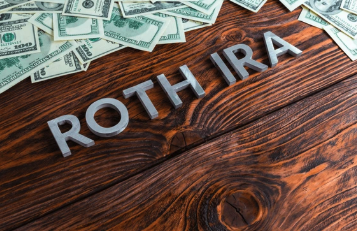
Roth Conversion Strategy for High Earners: When It Makes Sense and When It Does Not

The most attractive conversion opportunities appear when income temporarily drops. Early retirement before Social Security and RMDs begin is the classic window. Sabbaticals, business transition years, the gap after a company sale, years with unusually low K-1 or bonus income. These are all potential openings.
New Highs, $100 Oil, and the AI Bet That’s Splitting Tech in Two

The complication is that the ceasefires stopped the escalation without resolving the underlying disruption. The Strait of Hormuz, which carries roughly 20% of global oil supply, remains effectively closed. Oil prices fell sharply on the ceasefire announcements (including the largest single-day decline since 2020), then climbed back above $100 per barrel.