Advisor Perspectives welcomes guest contributions. The views presented here do not necessarily represent those of Advisor Perspectives.
Key Takeaways
- The $5 trillion target date investment industry is evolving toward personalization, but distinguishing risk capacity from risk tolerance is critical for effective implementation. Most personalization mistakenly relies on risk capacity when it should use risk tolerance.
- Personalized target date accounts (TDAs) aim to improve upon target date funds (TDFs) by tailoring risk to individual participants because investing is personal. There is a better path to achieving this important goal.
- Rich people with high risk capacity want to stay rich, so they have low risk tolerance. Poor people with low risk capacity might want a shot at not being poor by taking high risk.
- Non-defaulted (self-directed) participants want to engage, so they should use TDAs. For defaulted participants, the plan’s sponsor should use the TDA structure to create a custom TDF for all as the Qualified Default Investment Alternative (QDIA).
Investing is personal for the 70 million people in 401(k) plans, but only half of the investments in 401(k) plans are currently personalized. Half of the $10 trillion in 401(k) plans is held by people who want to engage – meaning they self-direct -- so their investment decisions are personal.
But the other $5 trillion in 401(k) plans is held by people who default their investment decision to their employer, who selects a Qualified Default Investment Alternative (QDIA) that is typically a target date fund (TDF). This $5 trillion is not personally invested, but a movement is underway to change that.
Although personalization is catching on, the current path to personalizing QDIAs is still in its infancy and needs improvement. The next improved versions will distinguish between defaulted and non-defaulted participants, and will use smarter input to accomplish personalization.
Where Personalization Stands Now
In "What Advisors Need to Know About Personalized Target Date Funds," Great Gray Trust Company praises the movement to personalized target date accounts (TDAs) that aim to improve upon regular old one-size-fits-all-set-it-and-forget-it target date funds (TDFs).
It’s a good article that describes the benefits, but the path to personalization can and should be much smarter, especially for baby boomers, because they are in the retirement risk zone (the years just before and after retirement.)
Most current TDAs rely on recordkeeper data to make a risk decision. This is a mistake because the wrong data is used. While current TDA approaches conveniently require zero effort from defaulted participants, this lack of engagement is actually a major flaw.
Better Personalization Uses Risk Tolerance
Current personalization addresses the challenge of deciding for people who do not want to talk to you by using wealth (risk capacity) revealed in recordkeeper data. Personalization today assumes that the richer you are, the greater risk you can afford. But the fact is that rich people want to stay rich, so they have low risk tolerance.
We’ve long understood the important distinction between risk capacity and risk tolerance. In 2014, financial expert Michael Kitces published "Separating Risk Tolerance From Risk Capacity – Just Because You Can Afford To Take Risk Doesn’t Mean You Should." The investment industry took heed and directed its attention to advancing an investment theory that came to be known as Post-Modern Portfolio Theory (PMPT).
Rich people with high risk capacity want to stay rich, so they have low risk tolerance. Some poor people with low risk capacity might like to stop being poor – by taking high risk. You can only know risk tolerance by asking, and therein lies the dilemma: Defaulted participants do not want to tell you their tolerance, primarily because they don’t know it.
The Future of Personalization
Even though defaulted people won’t share their risk tolerance, non-defaulted self-directed participants want to discuss their risk preferences, including tolerance. Consequently, TDAs should be driven personally by non-defaulted participants.
On the other hand, plan sponsors should use the TDA structure to design a custom TDF for all defaulted participants as the QDIA (Qualified Default Investment Alternative). Custom TDFs have caught on a little, but they rely on the glidepath provided by a consultant. Under a TDA approach, the plan sponsor can blend several risk-based glidepaths to conform to the demographics of the workforce, as recommended by the DOL.
Conclusion
The $5 trillion TDF Industry is evolving. It can and will get better. Personalization is high on the list of improvements because investing is personal. But we need to be careful in delivering personalization and to recognize the important distinctions between risk capacity (the ability to take risk) and risk tolerance (the willingness to take risks). After all, most rich people like being rich and some poor people might like to take a chance at getting rich by taking risk.
Participants in 401(k) plans need to know how their savings are being invested. Non-defaulted participants do know because they decide. By contrast, those who default into a QDIA trust their employer to make the right decision for them, That decision is generally high risk for baby boomers near retirement, with 85% risky assets — 55% equities plus 30% long-term bonds. Personalization might change this, but defaulted participants need to look, and to move to safety if necessary.
More articles by Ron Surz:
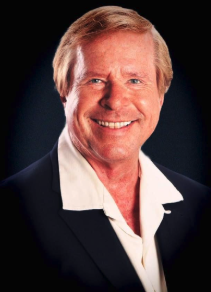
Ron Surz is president of Target Date Solutions, developer of the patented Safe Landing Glide Path and Soteria personalized target date accounts. He is also co-host of the Baby Boomer Investing Show. Surz’s passion is helping his fellow baby boomers at this critical time in their lives when they are relying on their lifetime savings to support a retirement with dignity, so he wrote a book, “Baby Boomer Investing in the Perilous 2020s,” and he provides a financial educational curriculum.
For anyone who relies on TDFs — or advises those who do — Surz’s new book is a must-read guide to understanding the risks, solutions, and future of a secure retirement.
A message from Advisor Perspectives and VettaFi: Discover something new! Click here to register for our upcoming webcasts.
Read more articles by Ron Surz
 Advisor Perspectives welcomes guest contributions. The views presented here do not necessarily represent those of Advisor Perspectives.