What's next for global growth? Our Macro Strategies team shares a regional breakdown of their growth expectations across the globe.
Structural changes in the world’s energy systems represent significant investment potential across an array of sectors. Analysts on our equity research team offer insights into the impact and opportunities.
New findings from EBRI’s recently released 2023 Retirement Confidence Survey reveal what’s top of mind for American workers and retirees. Below, we look at two key findings – alongside ways the industry is responding.
Given the challenges presented by today's market environment, private credit can be a valuable and versatile tool in sourcing incremental growth and income, dampening portfolio volatility, and hedging the corrosive impact of inflation. Read this paper for an in-depth look at the types of private credit, potential benefits and how to access them.
Choppiness in the equity market continues as investors look to see a debt limit deal approved.
David Dali, Head of Portfolio Strategy, provides his 12-month outlook for global equity markets.
Thoughts on the current US debt challenge and the long-term implications for markets and the economy from Stephen Dover, Head of Franklin Templeton Institute.
Nick Goetze discusses fixed-income market conditions and offers insight for bond investors.
After a continued rally in April, markets largely pulled back in May. Exceptions here were the Nasdaq, which rose, and the S&P 500, which was essentially flat.
The collapse of Silicon Valley Bank and Signature Bank heightens the Federal Reserve's policy dilemma over fighting inflation while maintaining financial stability. We analyze what the crisis means for the banking system and the economy.
Leading into the weekend, when the debt ceiling had not been settled, markets were exhibiting very interesting positioning.
Inflation is one way the U.K. is paying for leaving Europe.
See why we believe that market uncertainty may create opportunities for active managers to identify companies that can weather a slowdown.
Wall Street veteran Bob Michele is eyeing opportunities in intermediate government bonds and investment grade credit as the US edges toward a recession by the end of the year.
The US Federal Reserve is adrift, and it has only itself to blame. Regardless of whether its policy-setting committee announces another interest-rate hike in June, its top priority now should be to address the structural weaknesses that led it astray in the first place.
Review the latest Weekly Headings by CIO Larry Adam.
The Federal Reserve’s higher interest rates, the work from home trend, ESG distractions, increases in crime, etc., are having far reaching effects on our economy and investors.
Investors have been loading up on T-bills and money market funds this year, but according to our Total Return team, that is not a sustainable strategy as it exposes investors to both reinvestment risk and inflation while creating an asset/liability mismatch.
Inflation has proven sticky, even as growth weakens. Markets are realizing that policy rates are set to stay higher for longer. We like quality in stocks and bonds.
While markets are often efficient, the current market environment exposes a number of select areas within the bond market that exhibit less efficient behavior. Investors taking a value-oriented bond management approach may find ways to exploit the inefficiencies.
I received many emails and questions on “why” we are adding the U.S. Treasury bond to our portfolios. The question is understandable, given its dire performance in 2022, where bonds had the biggest drawdown since 1786.
Central bank digital currencies (CBDCs) are the next step in financial innovation. The government will do what it deems in its best interests. CBDCs will replace physical currency; it's just a question of when.
A debt ceiling deal is within sight.
Several key economic indicators come out every week to help provide insight into the overall health of the U.S. economy. Policymakers and advisors closely monitor these indicators to understand the direction of interest rates, as the data can significantly impact business decisions and financial markets.
Chief Economist Eugenio J. Alemán discusses current economic conditions.
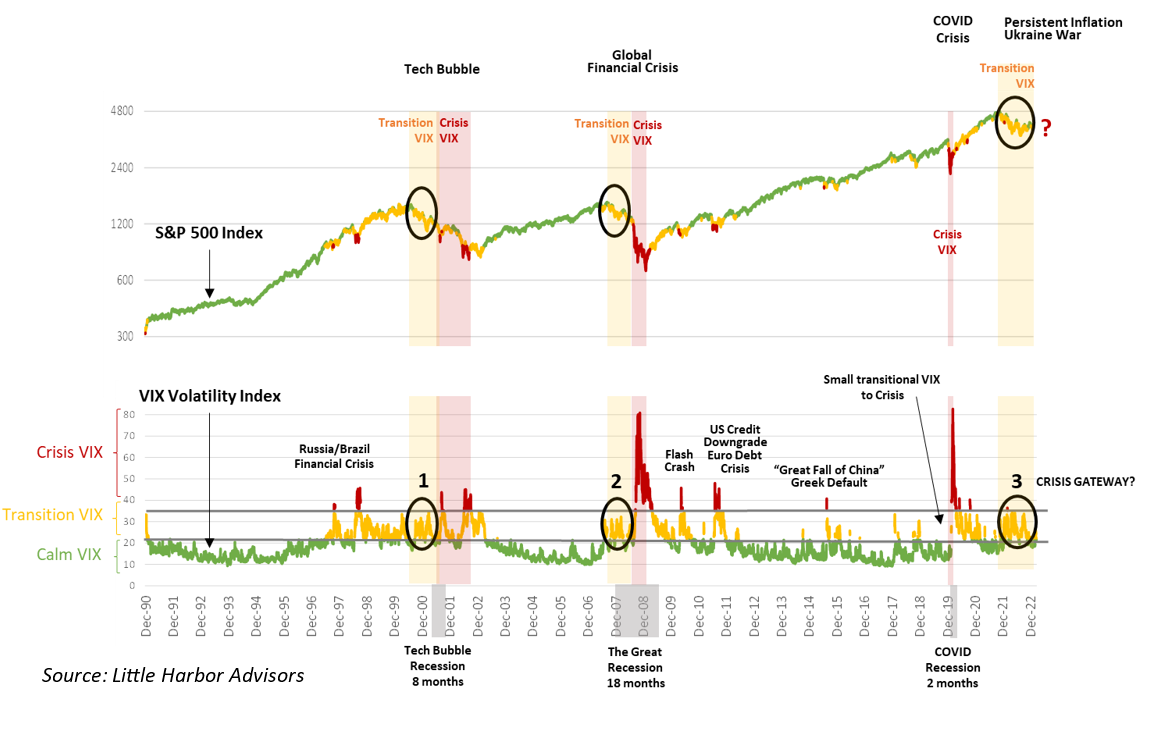
A range-bound VIX between 20-35 has common markers and dynamics which signal a “crisis gateway” that deserves a defensive posture.
Treasury bills maturing in the first half of June rallied as trading resumed following the Memorial Day holiday after a deal to lift the debt ceiling eased concern over the prospect of a calamitous US default.
As the debt ceiling fight in Washington heads down to the wire with the risk of a technical default looming, investors are growing nervous.
For this edition of Bull vs. Bear, Elle Caruso and Karrie Gordon discussed the pros and cons of investing in fossil fuels.
The Northern Trust Economics team shares its outlook for major markets in the months ahead.
As other nations seek to become less dependent on the U.S. dollar, rumors of the greenback’s potential demise continue to swirl. Can the dollar remain king of the world’s reserve currency?
The financial markets are giving off mixed signals of late, and credit investors may wonder whether to be downbeat or optimistic.
Swiss money manager Felix Zulauf is a crowd favorite at SIC. His 2022 presentation was right on target, so I asked him back to tell us what he expects for the rest of 2023 and beyond. Unfortunately, he thinks a slowdown is coming that will hit markets hard.
If you were doubting whether the age of AI has arrived, NVIDIA’s stock performance this week may have given you second thoughts.
According to the company’s investor relations page on this REIT, Simon Property Trust (SPG) is a real estate investment trust engaged in the ownership of premier shopping, dining, entertainment, and mixed-use destinations and an S&P 100 company.
Last week the VettaFi Voices gathered to reflect on a year at VettaFi under the firm’s new name. The team celebrated wins, and time spent together, and shared their favorite insights and highlights from a busy twelve months.
Republican and White House negotiators are moving closer to an agreement to raise the debt limit and cap federal spending for two years, according to people familiar with the matter, as time grows short to avert a catastrophic US default.
First-quarter earnings largely surprised to the upside, but expectations also had been guided down. What does the latest earnings news mean for stock investors? Carrie King, Global Deputy CIO of BlackRock Fundamental Equities, offers three observations.
Hong Kong’s currency and financial stability are not under immediate threat.
Rick Rieder and team argue that a series of small, but more probable, wins in fixed income can pave the way for portfolios to outperform benchmarks in 2023.
The semiconductor cycle is dead, long live the super cycle!
War, inflation, rising rates, banking chaos, and recession are among the challenges facing markets. Investors must balance these shorter-term risks with the long-term return prospects of equities.
Stocks are having a great year, but gold is doing even better. Year-to-date global equities are up roughly 9% in dollar terms; gold has advanced more than 10%.
The 60/40 portfolio – and diversification in general – is undeniably justified.
Most of us spent moments of our childhood, crayon in hand, connecting numbered dots that gradually revealed a picture that we couldn’t deduce simply by looking at the separate dots. With experience, we got better at looking at those isolated dots and mentally connecting them into a coherent “gestalt.”
We prefer private to public credit long term on better return potential. It’s the mirror image in equity: We prefer public stocks as risks fade in the medium term.
The most famous “Hail Mary” in American football history happened in 1984. On the very last play of the Boston College football game, an undersized quarterback named Doug Flutie threw a bomb into the end zone to teammate Gerald Whelan. Boston College had won the game!
Debt limit talks in Washington have hit a fresh impasse with negotiators far apart on key issues, especially the spending cuts demanded by Republicans, as time runs short to avert a historic US default.
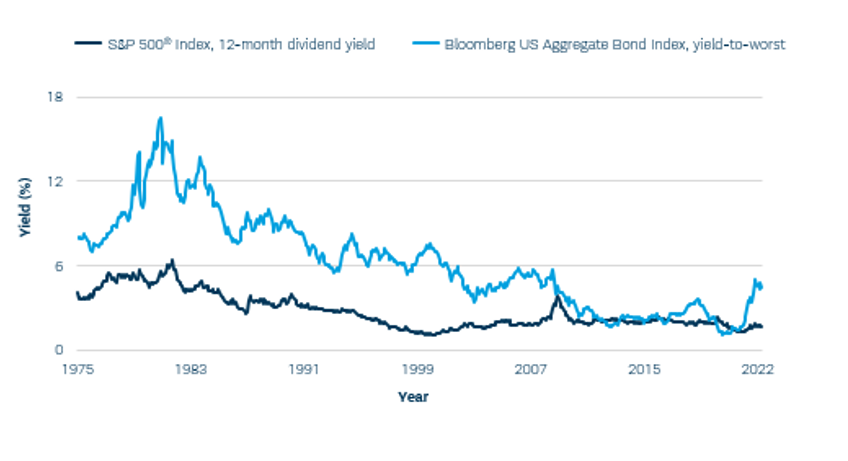
One metric I look at fairly often for various countries is the relationship between the performance of stocks vs. bonds. The idea is straightforward enough: when stocks are outperforming bonds, it tends to be associated with a growing economy.
Both domestic and external forces may limit China's growth prospects.