This video highlights the major economic news from the week of July 28th-August 1st.
Private markets have surged to $15T, but access remains complex. We explore two ways to gain exposure to private credit and asset managers without traditional hurdles.
A long-feared change to Wall Street’s plumbing is paying off — and it’s freeing up billions.
Last week brought a wave of headlines for investors to digest – on both the macro and micro fronts.
A sharp shift in Fed expectations may trigger bond-market volatility while concerns about the economy may impact equities.
Some things change in markets and some don't. The dollar partially reversed its year-to-date decline in July, and US equities had their first moment in the sun relative to international peers thus far in 2025.
In this article, Russ Koesterich discusses resiliency in the tech sector and why he believes adding further to core positions in the space is justified.
Tom Lee, Co-Founder of Fundstrat Global Advisors, unpacks the impressive success of the Fundstrat Granny Shots US Large Cap ETF (GRNY) and offers his outlook on Ethereum’s future. Cinthia Murphy, Investment Strategist at VettaFi, spotlights the top 20 ETF launches since early last year.
Post April, many people enjoyed a well-deserved vacation from the stress, cost and downright annoyance of tax season. However, for investors looking to harvest losses to reduce the impact of capital gains, the cost of this year’s tax vacation could have been significant.
If you have health insurance through the Affordable Care Act marketplace, you are likely to see dramatic increases in your costs next year.
The fixed income market exhibits traits that can lead to inefficiencies and mispricings, giving active managers the chance to use their expertise to potentially generate higher returns.
The degree to which growth in Europe slows, along with inflation developments, will be key in determining the path ahead for the European Central Bank.
Stocks continued to rally in July, but complacency is creeping in. Below the surface, familiar concerns are returning: narrow leadership, policy uncertainty, and slowing inflation progress.
Gold doesn’t need a black swan to deliver. Explore how investors can use gold for portfolio balance, income generation, and long-term stability.
U.S. trade strategy is a top worry among economists.
In this video, Chuck Carnevale, co-founder of FAST Graphs, aka Mr. Valuation discusses Dividend Aristocrat Community Financial System Inc. (CBU) as a strong investment candidate for retired or income-focused investors. CBU is a Dividend Aristocrat that has increased its dividend for 32 consecutive years.
On this episode of the ETF of the Week podcast, VettaFi’s Head of Research Todd Rosenbluth discussed the T. Rowe Price Capital Appreciation Equity ETF (TCAF) with Chuck Jaffe of Money Life. The pair discussed several topics related to the fund to give investors a deeper understanding of the ETF overall.
The dollar’s bounceback in July is convincing some emerging-market investors to bet it will keep rising in coming months.
Wall Street had a lot riding on whether this week’s big-tech earnings would meet increasingly high expectations. By and large, the companies delivered.
Strategic versus tactical asset allocation is an age-old debate in the world of asset managers, fiduciaries, and everyday investors alike.
Cutting to the chase… prepare to muddle through. I should point out that I felt that 2025 would be a Muddle Through year at the beginning of the year. We will talk about that below plus look at a lot of charts and yesterday’s rather poor employment data…
A strong GDP rebound was quickly overshadowed by a weaker-than-expected jobs report and hotter-than-anticipated inflation.
Invesco is no stranger to the active ETF arena, and they continue to make strides in fixed income with the introduction of the Invesco Core Fixed Income ETF (GTOC) and the Invesco Intermediate Municipal ETF (INTM).
Chief Economist Eugenio J. Alemán discusses current economic conditions.
On July 4, President Trump signed into law the “One Big Beautiful Bill Act (OBBBA)”, a far-reaching piece of legislation that will impact the U.S. investment landscape for years to come.
For families with a loved one who has special needs, planning ahead can feel overwhelming.
Signs of market fatigue and elevated expectations suggest that caution may be warranted.
It happened quickly. One minute, the focus was on the furious nature of stocks’ rebound off the April 8 lows. The next minute you start hearing strategists, including ourselves, making references to 2021.
Emerging markets (EM) could finally be in the throes of a comeback, and there are already signs it could be in its early stages.
Investors in US Treasuries will scour employment data Friday for clearer evidence of a hiring slowdown that could open the door to the Federal Reserve cutting interest rates in September.
A wise man once said that generally accepted accounting principles (GAAP) is where you start. It may not be the most economic way of looking at a business for various reasons.
Fixed income investors often think of changes in US Treasury rates as the tide that lifts or lowers all other domestic bond yields.
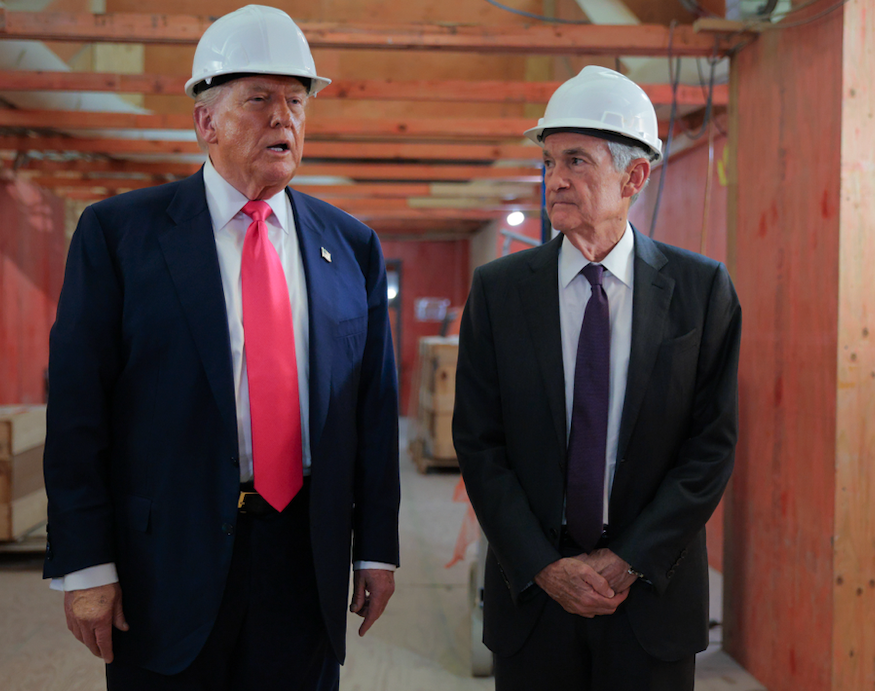
Federal Reserve officials leave short-term interest rates unchanged but appear to open the door for a potential rate cut later this year.
Thanks to AI, cloud computing, and renewable energy reshaping the global economy, one under-the-radar sector surging to the forefront is utilities. Long considered a sleepier, more defensive, “old economy” play, utilities stocks and ETFs are quickly becoming the backbone of the digital and green revolution.
The US-Japan deal may mark a pivotal moment for global equity investors, according to Dina Ting, Head of Global Index Portfolio Management. Find out why.
For the fifth meeting in a row, the Federal Open Market Committee (FOMC) decided to keep rates unchanged, leaving the Fed Funds trading range at 4.25%–4.50%.
Speculation may be running rampant—much like past bubbles—but that’s exactly why long-term investors should be optimistic. As past bubbles eventually gave way to investment opportunities, this environment could set the stage for powerful long-term returns.
The Federal Reserve kept benchmark interest rates unchanged on Wednesday but edged closer to a resumption of cuts, perhaps as soon as the next monetary policy meeting in mid-September.
Judging by soaring asset valuations in the wake of President Trump backing away from the worst-case tariff scenario, one could believe that the threat posed by upending the global trade framework has been removed. We are more circumspect.
Doug Drabik discusses fixed income market conditions and offers insight for bond investors.
Tell me if this rings a bell. You worked hard your entire life. You maxed out your 401(k) every single year of your career and invested those assets inside your employer 401(k).
On Tuesday, consumer products giant Procter & Gamble reported its latest quarterly results. Given the mixed signals on where inflation and tariffs stand for the long term, advisors and investors were eager to hear how the company is doing and what it’s doing to position for the long term.
Retirement saving in a 401(k) plan requires patience and discipline. Our Mike Dullaghan explains why it’s important to automate contributions, diversify, and stay committed to your plan.
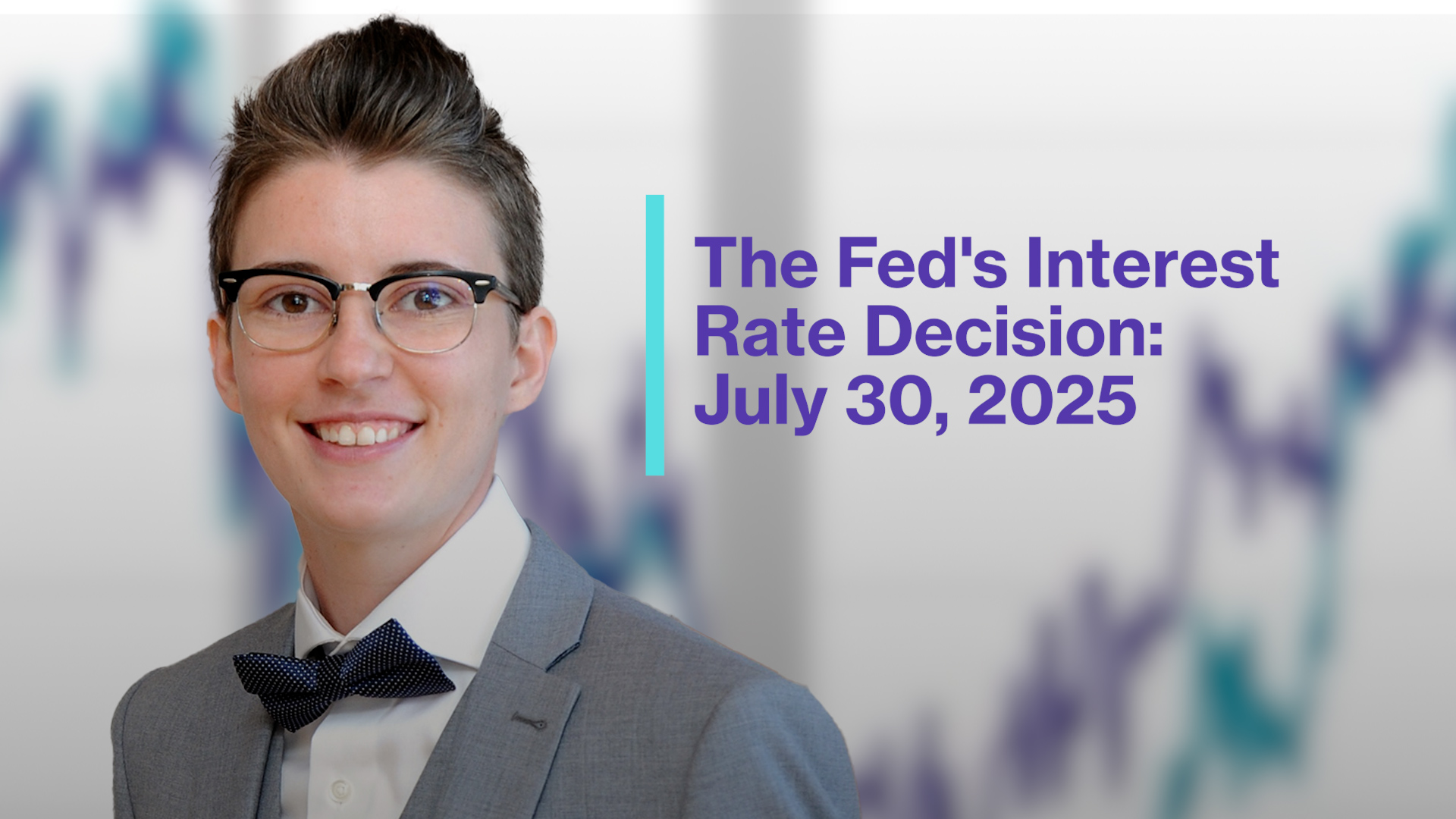
The Federal Funds Rate (FFR) is the interest rate banks charge each other to borrow money overnight. It's set by the FOMC and is one of the Federal Reserve's primary tools to implement monetary policy and is a key driver of economic activity. This video examines the Federal Funds Rate and reviews the Fed's interest rate meeting on July 30, 2025.
Constant threats are souring U.S. relations with its trading partners. Stop-gap deals of the kind agreed recently will not mark the end of the trade war, as the pacts leave high tariffs in place.
US equities underperformed global markets in the first six months of 2025, but continue to trade at a premium to foreign markets. ClearBridge Investments outlines the case for global diversification.
When markets decline—especially after long periods of sustained growth—the familiar advice resurfaces: “Be patient. Stay invested. Ride it out.” The rationale? The market always goes up over time. But there’s a critical flaw in this narrative.
Bob Elliott, Co-Founder and CEO of Unlimited, highlights the value of hedge fund strategies and how his firm is making them more accessible through innovative hedge fund replication ETFs. Todd Rosenbluth, Head of Research at VettaFi, breaks down the latest ETF headlines – from Invesco’s plans to restructure QQQ, to Global X’s launch of “PureCap” ETFs, new covered call sector ETFs from State Street, and growing investor interest in momentum ETFs.