Hot and sour soup is a South Asian dish that delivers a distinctive blend of spiciness from chili peppers and acidic flavor from vinegar. U.S. officials have been dishing out a similar flavor profile, giving heartburn to many.
Constant threats are souring U.S. relations with its trading partners. Stop-gap deals of the kind agreed recently will not mark the end of the trade war, as the pacts leave high tariffs in place. Protectionism appears to be the U.S. administration’s preferred policy as it seeks to reshore industrial activity to the United States.
With trade in retreat, a period of slower growth and increased uncertainty lies ahead. America’s actions are a potential recipe for economic underperformance.
Following are our thoughts on how top markets are faring.
United States
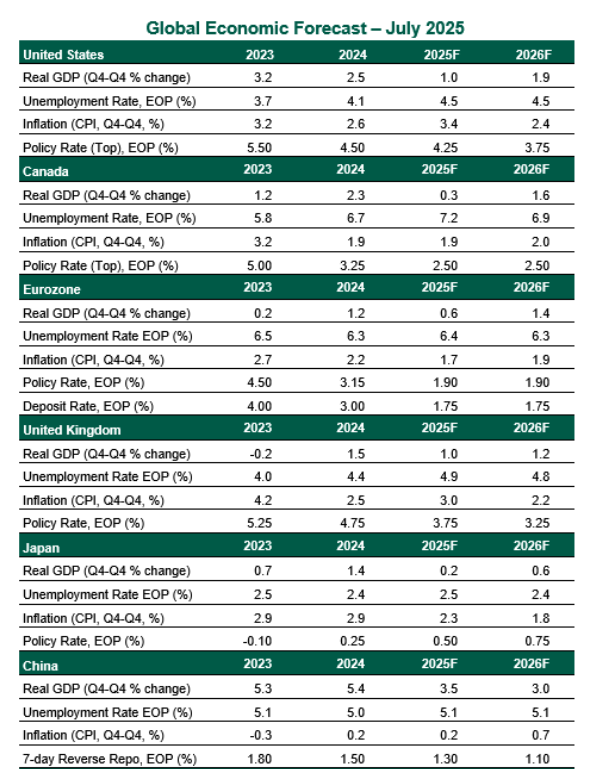
- The U.S. economy is in an unsteady state: holding on to a soft landing, but also at risk of a downturn. Fundamental data is holding up well, as fears of policy-led inflation or job loss have not yet come to pass. The new fiscal bill averts the near-term prospect of a U.S. government default, but will compound long-term debt problems. As long as the worst uncertainty remains behind us, we believe the domestic economy will continue to grow.
- A balanced jobs market and sticky inflation justify the Federal Reserve’s patient posture. At its June meeting, the Fed left rates unchanged, but offered an outlook that reflected some differences of opinion. The median forecast called for two rate cuts before the end of the year, but a growing contingent expects no changes until 2026. Despite intense pressure from the White House, we believe that the Fed will reduce rates very slowly over the next year.
Canada
- President Trump has threatened to raise tariffs on Canadian goods to 35% on August 1. Reports suggest that the higher levy will only apply to goods not compliant with the United States-Mexico-Canada Agreement (USMCA), which are already tariffed at 25%. Therefore, the incremental duty will have only a limited additional impact on growth. With defense spending set to increase and a limited scope of tariffs, the Canadian economy may end up avoiding recession. But the risks are still very much tilted to the downside given Canada’s deep linkages with the U.S. economy.
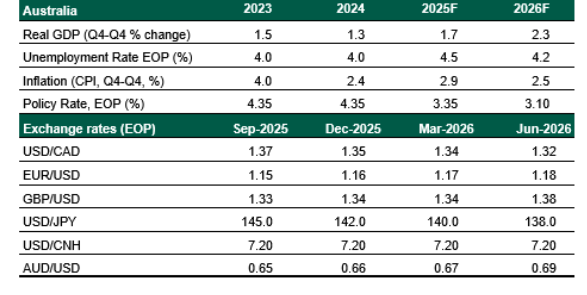
- Firmer inflation and labor market data will prevent the Bank of Canada (BoC) from lowering interest rates at its July meeting. Canada’s retaliatory tariffs and the depreciation of the currency could keep inflation measures elevated in the near-term. Further on, the drag from reorientation of trade flows will force the BoC to prioritize supporting growth. We now expect one more cut of 25 basis points in October.