Morgan Stanley’s strategists see US stocks and bonds outperforming their emerging markets peers next year, according to a note to clients.
Starting in 2024, IBM will replace its 401(k) plan matching contributions with a new benefit earned within its overfunded DB plan, which has been frozen since 2008. This move essentially un-freezes the tech giant's DB plan.
Wall Street’s so-called Magnificent Seven has been living up to its name again, but none more so than Microsoft Corp.
With less than two months left in 2023, this maybe another disappointing year for broad-based ex-US developed market equity funds. This includes a slew of passive exchange traded funds.
Just six metrics can effectively assess sovereign issuers’ sustainability and provide guidance for both issuers and investors.
We’ve always intended for the unique collaboration between AllianceBernstein (AB) and Columbia University to serve the broader asset-management industry. Asset owners and managers alike are eager to explore the complex issues of climate change and its potential effect on investments and investment decision-making.
Nvidia bulls are starting to throw around an adjective rarely used for a stock that’s more than tripled in less than a year: cheap.
Global investing is easily accessible through the financial markets. Many investors prefer to stick to companies and industries they are familiar with.
The bond market giveth and the bond market taketh away. The S&P 500 Index closed in the red Thursday, blowing its widely-hyped chance at a nine-day winning streak, which would have been its best run since 2004.
Exploring federal budget data is a journey through endless rabbit holes, some of which are eerily close to Alice in Wonderland insanity. Countless variables interact in unexpected ways. Seemingly small changes can cascade into billions of dollars within a few years.
Our Franklin Templeton Fixed Income CIO Sonal Desai sees this market reaction as an excess of exuberance that sets the stage for more volatility. She shares her latest insights on the policy outlook and the implications for investors.
The direction of interest rates was the biggest factor moving markets in the third quarter. Sentiment on technology stocks appeared to shift. Money market assets reach historic high, but returns lag stock market.
Given the likelihood that economists are again myopic in their inflation forecasts and bond traders are betting on such projections, I see a day soon when a disinflationary or deflationary reality hits the bond market and bond yields plummet.
User engagement is up on LinkedIn. How can you capitalize on it? Here are six steps to cultivate a LinkedIn network.
Following a strong first half of 2023, third-quarter returns were more challenged across almost all asset classes. One outlier was high-yield debt, which often serves as a way to de-risk equity exposures when stocks are under pressure.
Policy changes at the Bank of Japan could potentially reverse capital flows, shift global yields higher, contribute to a stronger yen, and increase the value of Japanese stocks.
For years, Dutch payments fintech Adyen NV’s founders and management ran things their own way, thanks to some blowout growth.
Sam Bankman-Fried’s widely anticipated guilty verdict has been rendered. But Michael Lewis’ book raises many questions, including the existence and extent of an actual crime.
Michael Lewis’ book on SBF is woefully incomplete, rather like a canvas that Rembrandt inexplicably left half blank, for the book elides three major questions.
While often difficult, investing rules can help us maintain our focus and investment discipline in volatile or uncertain markets.
A prospect that might have seemed unthinkable just a couple short weeks ago is coming into view for bond traders: The potential for US Treasuries to post an annual gain for the first time since 2020.
In Q3, the strongest performance among factors was seen in developed ex-U.S. large cap and small cap and U.S. small cap, where Value outperformed by 4.9%, 3.3% and 3.3%, respectively. The weakest performance among factors was in U.S. small cap, where the Size factor underperformed by -2.4%.
Our 2023 Manager ESG survey reveals that while more investors are implementing engagement and proxy voting strategies, there is still room for improvement.
Recent economic data, we believe, suggests sticky inflation with positive GDP growth is more likely in 2024 than a soft landing. We expect that interest rates will stay higher for longer on the back of increased Treasury supply and hawkish Federal Reserve rhetoric.
Investment taxes can have a real impact on a portfolio. Investors should be aware of four key tax realities they currently face. Without a plan to manage these taxes, investors may find their ability to retire comfortably could be compromised.
As with most new expressions, “smart beta” is in the process of seeking an established meaning. It is fast becoming one of the most overused, ill-defined, and controversial terms in the modern financial lexicon.
A recent survey asking economists about the probability of recession next quarter shows a retreat in expectations from a high of 47 percent at the end of 2022 to just 34 percent, according to the Philadelphia Federal Reserve.
Meeting or beating a trading benchmark doesn't equate to good portfolio performance. In order to measure the success of a transition, utilizing a T-Standard transition performance measurement methodology is critical.
Less than a third of Gen Z feels financially secure while just more than half feels “very or extremely worried about not having enough money,” according to a recent study by consulting firm EY. “Welcome, the water’s warm!” says every American millennial.
Recently, I was asked by a client what my return expectations are for the next three years.
Inflation has been coming down since its peak in the summer of 2022. Because the U.S. has so far avoided a recession, soft-landing hopes have risen along with the decline in inflation.
Franklin Equity Group portfolio managers Daniel Scher and Blair Schmicker make the case that REITs are more than just a “collection of assets,” as they were once viewed, and instead offer exposure to quality business models and professional management teams with long track records of value creation.
Households are better off today than before the pandemic.
The S&P 500 closed at 4,117 on Friday, more than 10% below its recent peak in late July. Some are saying it’s a brand-new bear market for stocks.
Forging connections with beneficiaries sends the message that you not only safeguard the individual's interests but genuinely care about the long-term prosperity of their family. Here’s how this benefits your client and your firm – and how to do it effectively.
While getting your loans wiped out in one fell swoop can seem like a lifesaver, it may come with some negative financial implications. I cover what you need to know.
Goldman Sachs Group Inc. lifted its long-term growth estimates for the US and many other major economies as generative artificial intelligence is set to boost productivity over the next decade.
If you believe that an easy solution to improve lower-class standards of living is to raise the minimum wage, or you are curious about what university presidents spend their time on, Angus Deaton’s new book provide insightful answers to those and many more questions that, taken together, challenge the relevance of modern economics and the capitalism it supports.
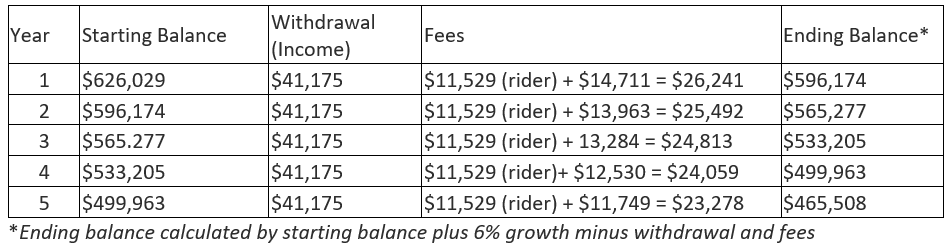
I analyze the math of annuity income riders and how you pay the insurance company to draw down your own assets. It is highly unlikely the insurers will pay a dime, which makes those riders questionable.
Much like Halloween, it has been a scary time for investors.
Credit volumes witnessed some strong highs and lows in the third quarter. Notably, July—a month where trading volumes are generally steady—saw very inconsistent flows over the month. September, meanwhile, followed historical trends with an increase in primary market supply, reflecting higher volumes in the secondary.
The ancient Greeks had a word κάθαρσις, which in English we now spell as “catharsis,” although it’s pronounced basically the same. It originally referred to purifying religious ceremonies, medical treatments, and so on.
Despite progress on bringing down inflation from mid-2022 highs, data from online job postings suggests that wage pressures may be reaccelerating. Beneath the surface, growing divergence in wage gains across occupation categories may be adding a layer of complexity to the outlook for labor markets.
The ideal rebalancing range varies by investor and depends on an investor’s risk tolerance and market views, among other factors. In a prolonged equity bull market, wider rebalancing ranges will result in higher returns, but also increase a portfolio’s risk.
Private credit is being sought—with the goals of income and capital preservation—to achieve real capital growth and drive portfolio returns among retail and institutional clients alike.
The calendar third quarter of 2023 was a messy one for financial markets at large, and we were not immune to its lack of charms. Nonetheless, it’s been a pretty good year for our small-cap strategy.
The longer the U.S. debt is left to grow, the harder it will be to correct.
Since taking a big leap upward in the 1940s and 1950s, the homeownership rate in the US has been remarkably steady since the 1960s, with close to two-thirds of households owning their homes.
Andrew Altfest has had a unique journey through the advisory profession. He joined the firm founded by his father, Lew Altfest, and rose to become president of Altfest Personal Wealth Management. He then founded the technology firm, FP Alpha, and became its CEO. Andrew will walk us through his journey to become an advisor and how that experience led to the creation and evolution of FP Alpha. The expectations of advisors and their clients continue to change, which is what led to the introduction of advanced technologies based on AI. This allows firms to scale their practices with innovative technologies.
The strength in consumer demand has been one of the defining characteristics of a very resilient U.S. economy and September’s retail and food services sales report confirmed that the U.S. consumer is alive and well.