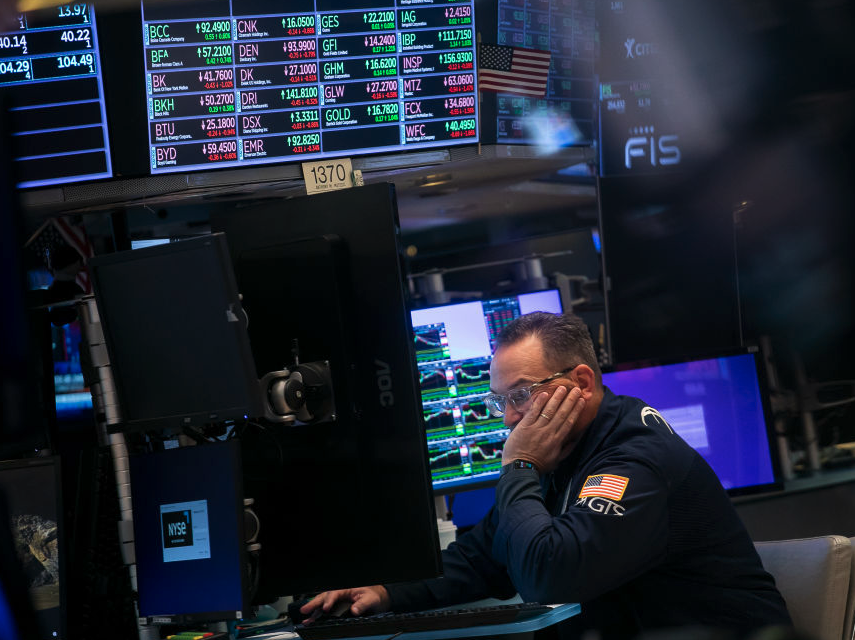
A tense global trade war, policy uncertainty and other investor concerns in recent weeks have unleashed the sharpest market swings in years, with the CBOE Volatility Index (VIX) spiking to 52.3 on April 8.
Famous gold skeptic Warren Buffett is right about the dangers of inflation when it comes to non-producing assets, but he’s never been a fan of gold. Monetary Metals has transformed gold into a productive asset by generating a yield on gold, paid in gold, proving Buffett wrong about gold and giving investors new ways to own this timeless asset.
Stable value funds can offer capital preservation and stable returns. Our Mike Dullaghan explains the key role of stable value in long-term retirement savings.
Doug Drabik discusses fixed income market conditions and offers insight for bond investors.
The Treasury Department said it’s now looking at “enhancements” to its buybacks of older US government debt securities, just weeks after Scott Bessent hinted at the potential to beef up the program in the event of any major market turmoil.
Sharp losses in investment grade (IG) corporate bonds this month have reminded us of the potential advantages of rules-based fixed income ladders.
While most market watchers have focused on the wildly yo-yoing stock market over the last few weeks, the Treasury bond market has been flashing warnings.
In this video, Chuck Carnevale, co-founder of FAST Graphs, aka Mr. Valuation, evaluates three major defense companies—General Dynamics (GD), Lockheed Martin (LMT), and RTX (formerly Raytheon/United Technologies)—through the lens of FAST Graphs, a fundamentals-based research tool. He emphasizes that this analysis should be just the beginning of deeper due diligence.
Treasury Secretary Scott Bessent has a plan to prop up a government-bond market destabilized by Washington’s chaotic economic policies: Let banks load up on federal debt.
Although President Trump has said he has no intention of firing Fed Chair Powell, the Trump administration may be testing the laws underpinning Fed independence.
With uncertainty rising and credit markets flashing early warning signs, RBA explains why now might be the time to sidestep risk—and where investors can still find attractive, high-quality returns in fixed income.
High-yield bonds may be an attractive choice for investors looking to rebalance portfolios.
Gold has been a high-performing investment over the prior year. It has rallied on the back of falling short-term interest rates and recently increased uncertainty about global trade and economic growth.
The “Sell America” trade that gripped markets this month has left a potentially lasting dent in investors’ willingness to hold the US government’s longest-maturity debt, a mainstay of its deficit-financing toolkit.
Historically the United States dollar strengthens when U.S. Treasury yields rise. But the reverse happened in April after the White House announced widespread tariffs.
U.S. policy uncertainty and the ebbs and flows of AI advancement are likely to stoke continued volatility in the world’s stock markets.
There's a tectonic shift unfolding in global finance—subtle in appearance, but profound in implication. The traditional signposts of market anxiety—stocks, bonds, even crypto—are being bypassed in favor of something far older: gold.
This week's economic data revealed a split in the housing market. New home sales unexpectedly surged while existing home sales declined.
Treasuries jumped after comments by a Federal Reserve official bolstered odds that the central bank will cut interest rates as early as June.
Downgrades and defaults can detract from corporate bond portfolio performance. Let’s look at how applying fundamental credit research may help reduce these risks.
Risk-assets struggled amidst extremely volatile price action as investors weighed the probabilities of tariffs hitting profits and valuations.
A historic sell-off enhances value, with high yields, strong fundamentals, and ample reserves mitigating policy risks.
Even with tariff uncertainty, there’s no stopping the engine of ETF creation. More than 288 new ETFs have already launched this year.
Rising tariffs and the weakening dollar are casting a shadow on companies’ profit guidance this earnings season, with more damage seen unfolding over the coming quarters.
Recent volatility has pushed yields to historically high levels, potentially creating opportunities in municipal bonds, especially for higher-net-worth investors.
The bond market has been extremely volatile the past couple of weeks since the introduction of global tariffs by the US. Bond yields have sold off almost 50 basis points, and today we'd like to examine why did that occur, what's next, and how should investors think about duration in this environment?
Coming off a wild ending to a disappointing first quarter, investors must navigate unsettled capital markets and decipher a wave of incoming policy news.
Chief Investment Officer Larry Adam notes with volatility on the rise, maintaining a long-term view is key.
Big US banks are navigating a choppy environment just two years after the last round of turmoil, this time with almost no one questioning the industry’s ability to ride out whatever is coming.
Many investors are wondering what to think of the volatility and uncertainty that has been pulsing through financial markets over the past few weeks.
Practically every financial meltdown or crisis can be traced back to a misunderstanding of which assets are “risk-free.” Investors think they have a risk-free asset — it could be a mortgage-backed security, shares in a Bernie Madoff fund, Greek debt — and are surprised when it turns out not to be.
Eitelman began by assessing the health of the U.S. economy through hard and soft data. He explained that hard data refers to measures of actual spending and economic activity, while soft data refers to how companies and consumers respond to surveys.
Tariff uncertainty, a weakening US dollar, and surging Treasury yields are flashing warning signs for investors. Explore how political risks, fiscal policy, and global volatility are reshaping capital flows and market confidence.
U.S. defensives and international lead.a
Compare corporate and municipal bonds, including risks, returns, and tax benefits. Learn which bond type fits your investment goals.
As we have learned repeatedly, the Fed will take extensive emergency measures if it perceives liquidity problems. Even above their congressional mandated objective of managing employment and prices, the Fed's top priority is preserving the banks.
Markets were rattled by tariff announcements in early April. Here are three takeaways for investors considering preferred securities, investment-grade and high-yield corporate bonds.
The first quarter of 2025 marked a significant departure from the preceding two years, which had been characterized by an improving global economy and correspondingly positive market returns. Market performance in Q1 was dominated by abrupt, short-term policy shifts rather than longer-term economic trends, and tariffs became the foremost concern for market participants.
Retail sales surged as consumers seemingly bought ahead of tariffs while a volatile stock market experienced a sharp mid-week sell-off.
While the April 2 tariff announcements were more severe than anticipated, Vanguard’s active fixed income managers were well-prepared for the subsequent market reaction.
The deferral of “reciprocal” tariffs on most U.S. trading partners suggests that the peak of tariff uncertainty may have passed.
If I had a dollar for every time I heard or read the word recession in the last week, well, I’d have enough not to be financially worried about one. Add a dollar for every mention of tariffs and I’d be comfortably flushed with cash.
This month’s panic-driven selling across municipal bonds — fueled by the boom in ETFs — is proving a mixed blessing for investors in a normally sedate market corner.
While we remain open to changes in market conditions, as well as periodic “fast, furious, prone-to-failure” advances that can relieve the oversold “compression” produced by market losses, we are presently on high alert for a possibly abrupt and cascading market and economic dislocation in the weeks ahead.
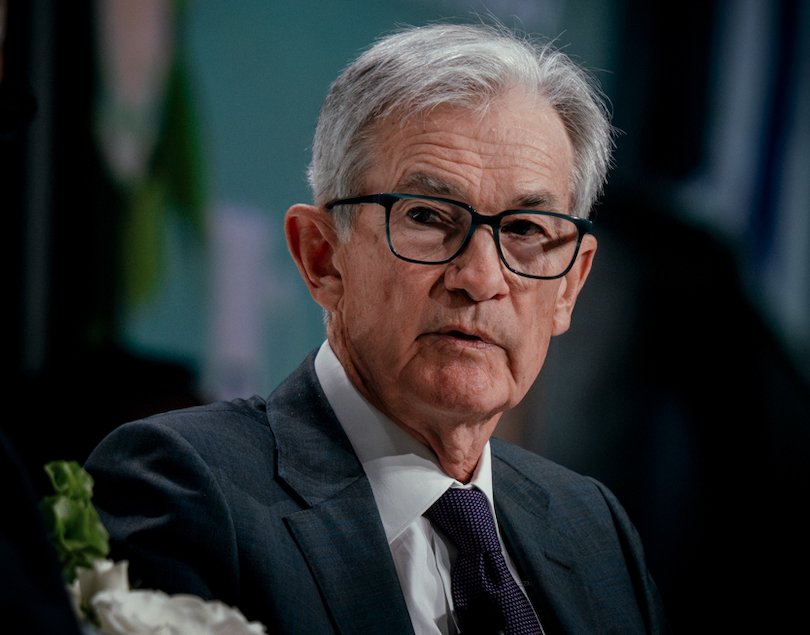
US Treasuries fell, snapping three days of gains, as traders pared bets on Federal Reserve interest-rate cuts after Chair Jerome Powell reiterated his commitment to keeping inflation in check.
CIO Sean Taylor assesses a better-than-expected quarter for emerging markets and takes stock of the drivers that may support the asset class in what could be difficult months ahead for global markets.
JPMorgan's Jon Maier spoke with VettaFi about active management in the ETFs space approaching investing in the current environment.
A three-day rebound in US Treasuries will be tested on Wednesday as investors await commentary from Federal Reserve Chair Jerome Powell as well as key data and a bond auction.
Last week, the S&P 500 was up 5.7%, the strongest week for the market since November 2023.
While the US experiments with reordering the world’s trading system, uncertainty rises and volatility ensues. We are reminded of the delicate balance between safeguarding domestic interests and promoting a cooperative global trading system.