Last week brought a wave of headlines for investors to digest – on both the macro and micro fronts.
For too long, British oil company BP Plc denied, obfuscated and played down its troubles. The market and the media, rather than the company, was the issue.
What's the outlook for private equity in the second half — and the retail investors potentially interested?
With AI becoming more entrenched in financial systems, the importance of balancing innovation with stringent regulatory oversight will only grow. It is through this careful balance that the financial industry can fully harness the power of AI while protecting the integrity of global markets.
The degree to which growth in Europe slows, along with inflation developments, will be key in determining the path ahead for the European Central Bank.
If you’ve been following the luxury sector, you’ve probably seen your fair share of sobering news.
U.S. trade strategy is a top worry among economists.
Wall Street had a lot riding on whether this week’s big-tech earnings would meet increasingly high expectations. By and large, the companies delivered.
Swiss stocks dropped as the market reopened after a holiday, on worries about the impact from US President Donald Trump’s punitive 39% export tariff and a push for drugmakers to lower prices.
Over the past year, financial headlines continue to flood investors with doomsday predictions about the U.S. dollar. Whether it’s social media influencers waving “dollar collapse” charts or YouTube personalities warning about debasement, the noise has become deafening.
Cutting to the chase… prepare to muddle through. I should point out that I felt that 2025 would be a Muddle Through year at the beginning of the year. We will talk about that below plus look at a lot of charts and yesterday’s rather poor employment data…
Chief Economist Eugenio J. Alemán discusses current economic conditions.
The opportunity set for emerging market (EM) equities has changed dramatically over the past three and a half decades – geographically, at a sector level, and in terms of market capitalization.
Emerging markets (EM) could finally be in the throes of a comeback, and there are already signs it could be in its early stages.
For the fifth meeting in a row, the Federal Open Market Committee (FOMC) decided to keep rates unchanged, leaving the Fed Funds trading range at 4.25%–4.50%.
Speculation may be running rampant—much like past bubbles—but that’s exactly why long-term investors should be optimistic. As past bubbles eventually gave way to investment opportunities, this environment could set the stage for powerful long-term returns.
Consider the humble bank note. Wrinkled and torn as it may be, it’s the only government-issued legal tender — the only direct obligation of a central bank — to which most people have access.
Doug Drabik discusses fixed income market conditions and offers insight for bond investors.
Tell me if this rings a bell. You worked hard your entire life. You maxed out your 401(k) every single year of your career and invested those assets inside your employer 401(k).
Meeting AI is no longer a nice-to-have — it’s become a core part of the advisor tech stack almost overnight.
Constant threats are souring U.S. relations with its trading partners. Stop-gap deals of the kind agreed recently will not mark the end of the trade war, as the pacts leave high tariffs in place.
With the August 1 trade deadline fast approaching, America’s trading partners are racing to finalize agreements in hopes of securing more favorable terms before the higher tariffs announced by President Trump take effect.
US equities underperformed global markets in the first six months of 2025, but continue to trade at a premium to foreign markets. ClearBridge Investments outlines the case for global diversification.
When markets decline—especially after long periods of sustained growth—the familiar advice resurfaces: “Be patient. Stay invested. Ride it out.” The rationale? The market always goes up over time. But there’s a critical flaw in this narrative.
In the latest edition of Market Week in Review, Senior Investment Strategist and Head of Canadian Strategy, BeiChen Lin, unpacks the European Central Bank’s (ECB) latest policy decision, provides an update on U.S. trade negotiations ahead of the August 1 deadline, and previews next week’s interest rate decisions from the Federal Reserve and Bank of Canada (BoC).
Trying to do too much without a focused strategy reaps negligible results over time — it also causes burnout.
President Trump announced higher tariffs were on the way almost as soon as he took office. As a result, businesses focused on buying foreign goods in advance, to front run those tariffs, putting some of their purchases from domestic producers on the backburner.
If there’s one thing I’ve learned after decades in the investment world, it’s that government policy is a precursor to change.
US Congress passing the GENIUS Act paves the way for stablecoins to move from niche to mainstream.
We believe several forces—tariffs that weigh on U.S. household income, shifts in fiscal and economic policy abroad, and evolving macroeconomic conditions—could compress growth differentials between the United States, Europe, Japan, and China.
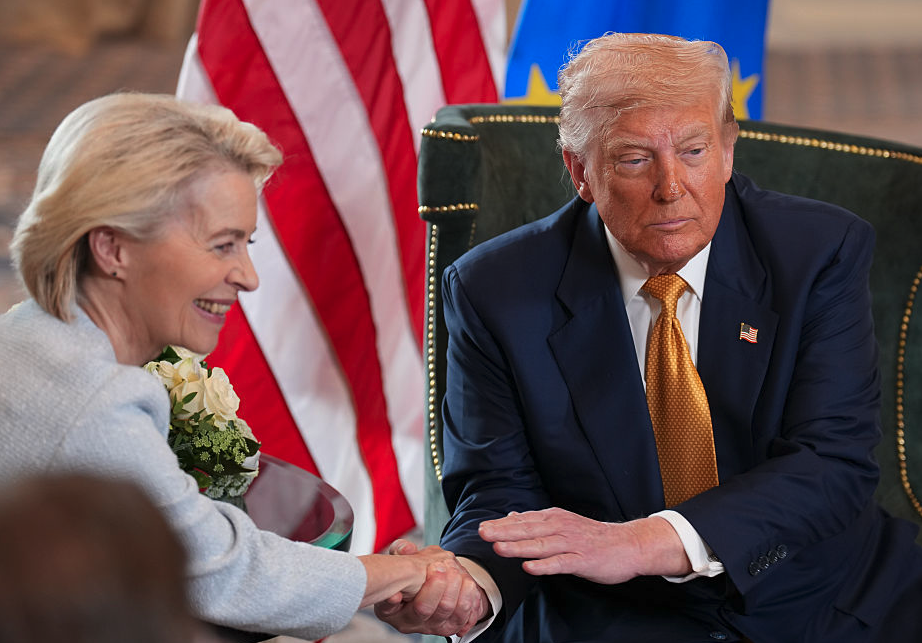
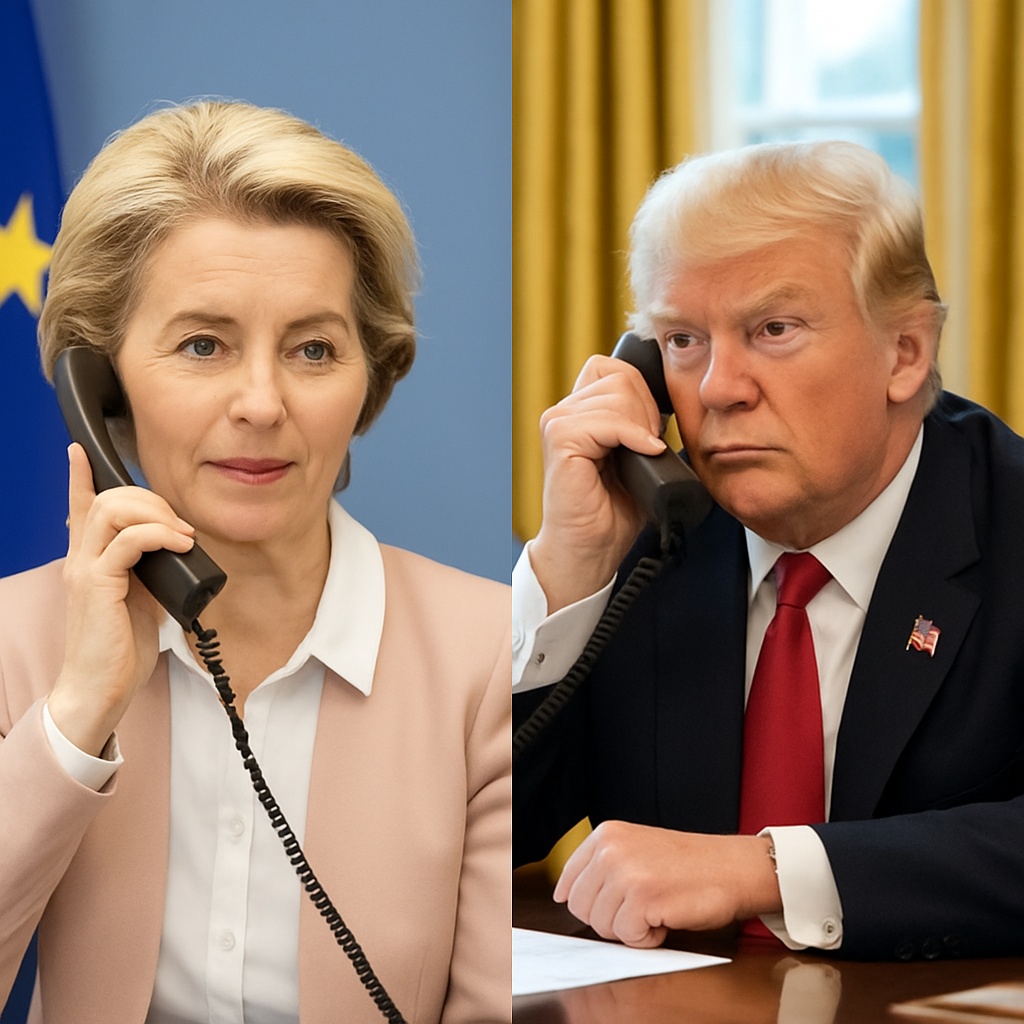
Donald Trump’s world tour of arm-twisting on trade has landed its latest deal: A 15% baseline tariff on European Union goods, lowered from the recently threatened 30%, in return for an apparent smorgasbord of continental investments into the US and huge purchases of energy and military equipment.
AI is rapidly increasing the speed and accuracy needed for financial market research and trade execution.
The US and European Union agreed on a hard-fought deal that will see the bloc face 15% tariffs on most of its exports, including automobiles, staving off a trade war that could have delivered a hammer blow to the global economy.
Wall Street has a long history of selling the newest shiny object to Main Street just as the trade begins to sour. If the music stops at this private equity party, you don’t want to be the last one still dancing.
Understanding How Options Work, Why They Matter, and How Investors Can Use Options
All the pieces are falling into place for silver’s bull market to accelerate, with a breakout into the $40s now looking increasingly likely in the near term.
Trade is an economic alliance that benefits both countries. There are no losers only winners…And trade helps strengthen the free world.
Income-seeking equity investors don’t need to sacrifice growth to capture the power of dividends.
Retail speculation is once again gripping the markets. A recent Wall Street Journal article highlighted how the latest retail gambling vehicle—zero-days-to-expiration (0DTE) options—has exploded in popularity.
When we started gathering the economic and financial metrics we so often include in these letters, we found that for the second quarter in a row little had changed.
The big banks kicked off earnings season last week when they reported results for the second quarter.
As the market marches to new highs, just two months after a violent 20% selloff in equities, we ask ourselves how the narrative has shifted so quickly.
The record-breaking rally in US equities continued on Wednesday as President Donald Trump reached a trade deal with Japan and investors geared up for the first round of big tech earnings later today.
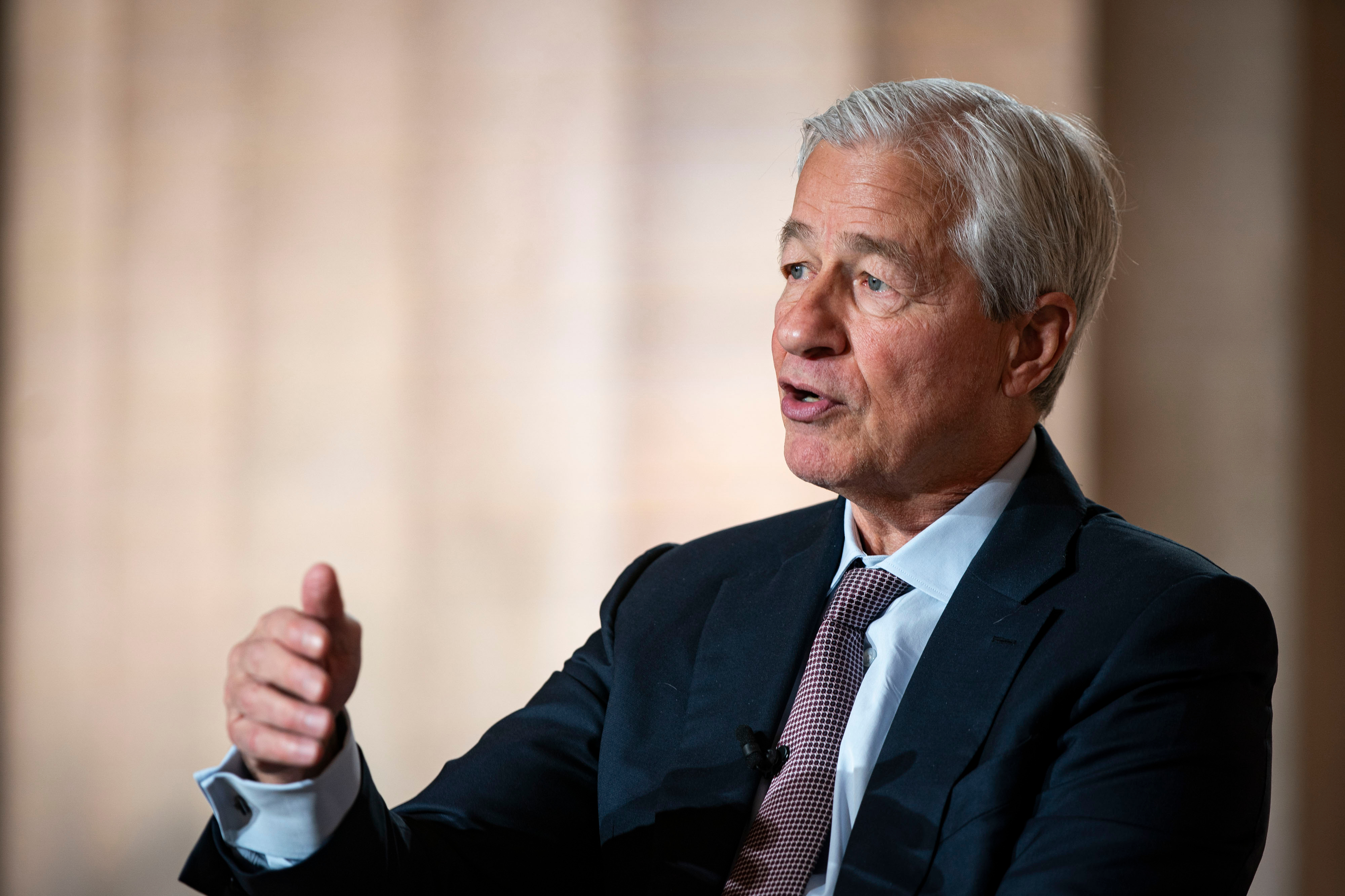
“The size, scale and scope of JPMorgan Chase also offer huge advantages,” Jamie Dimon wrote in a letter to shareholders — his first as chief executive officer at the end of 2005.
By rooting your practice locally, you can build deeper relationships, provide more contextually relevant advice, and grow your business through word-of-mouth and trust — two things no digital marketing funnel can replicate.
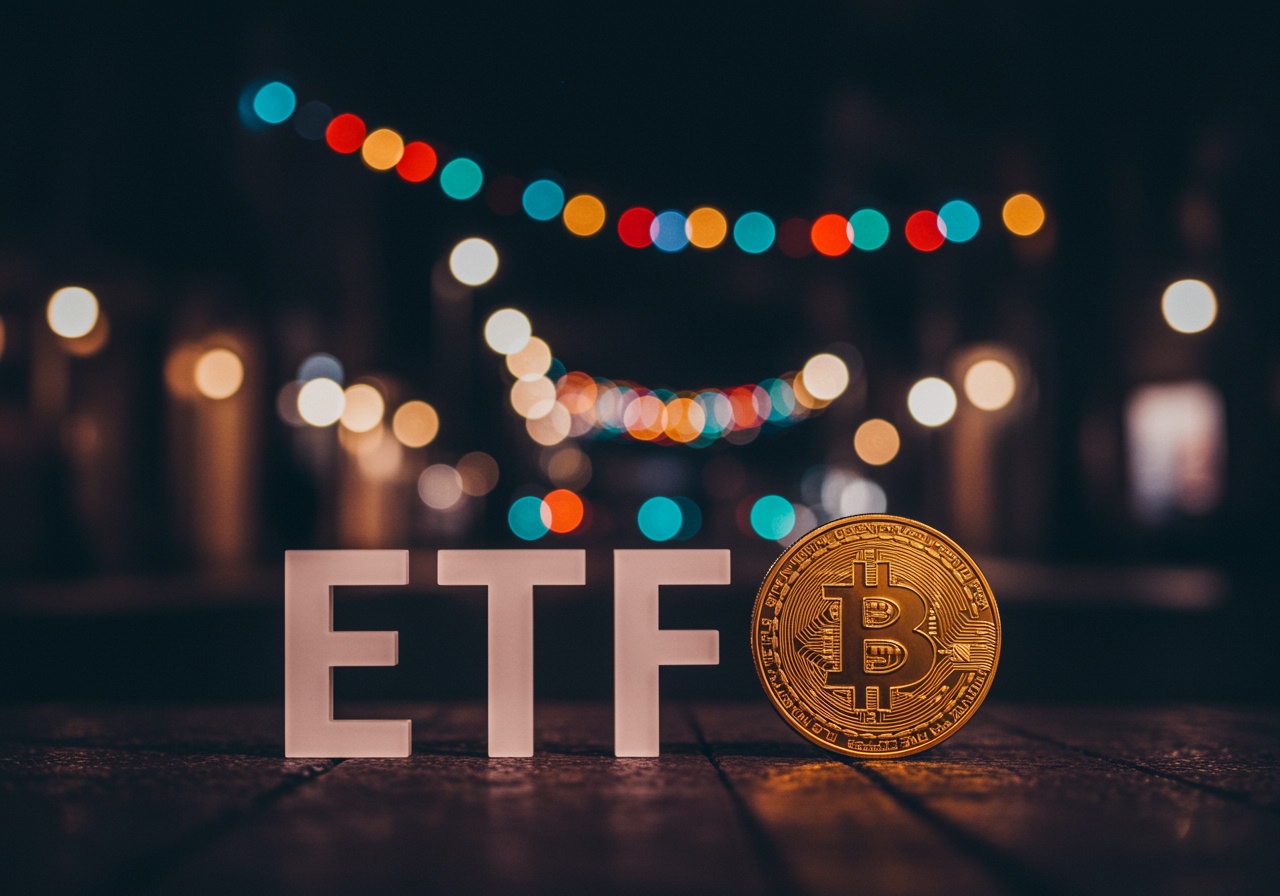
Jérémy Le Bescont, editorial manager at CoinShares, recently sat down with Eric Balchunas, senior ETF analyst at Bloomberg to discuss the intersection of crypto and ETFs.
The new “Trump Account” provision in the “One Big Beautiful Bill” is being promoted as a game-changing way to help American families.
Last week, we covered my concerns about AI’s impact on jobs. This week, we’ll take a look at its impact on energy demand and who pays for that energy.
After it emerged from the rubble of Lehman Brothers, Trilantic Capital Partners exemplified the success of private equity’s vast middle market for more than a decade.
As we move into the second half of 2025, it is an opportune moment to reassess our market outlook and provide updated insights for investors.