With the pause button pressed on this year’s huge AI rally in Chinese tech stocks, clarity on global economic policies and concrete signs of core business improvement may be required to get things rolling again.
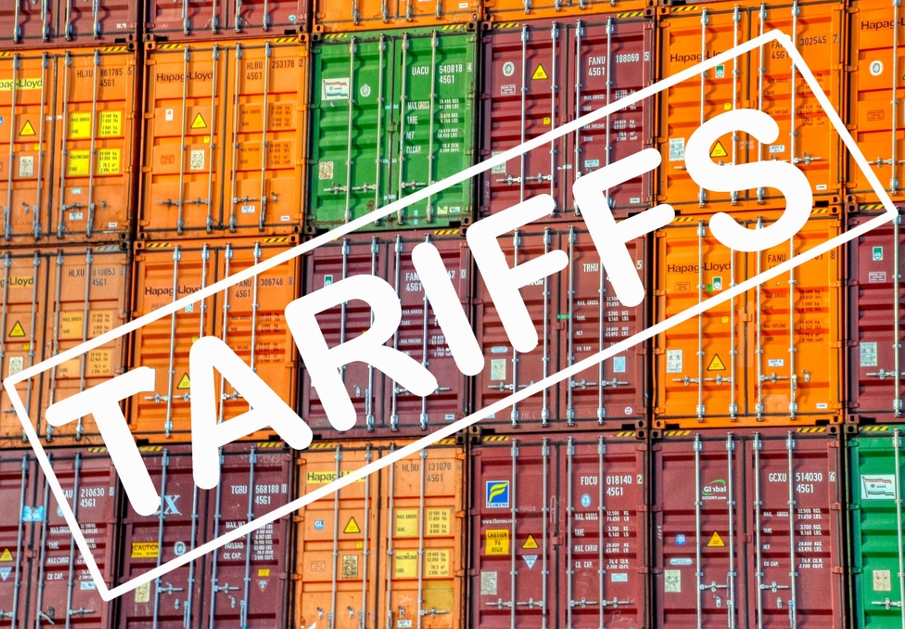
From New York to London and Hong Kong, investors are cutting back risk ahead of next week’s tariff announcements, while keeping cash ready to pounce the moment opportunities arise.
Long-maturity Treasury yields reached the highest levels in a month Thursday as investors demand compensation for the risk that tariffs will spur US inflation.
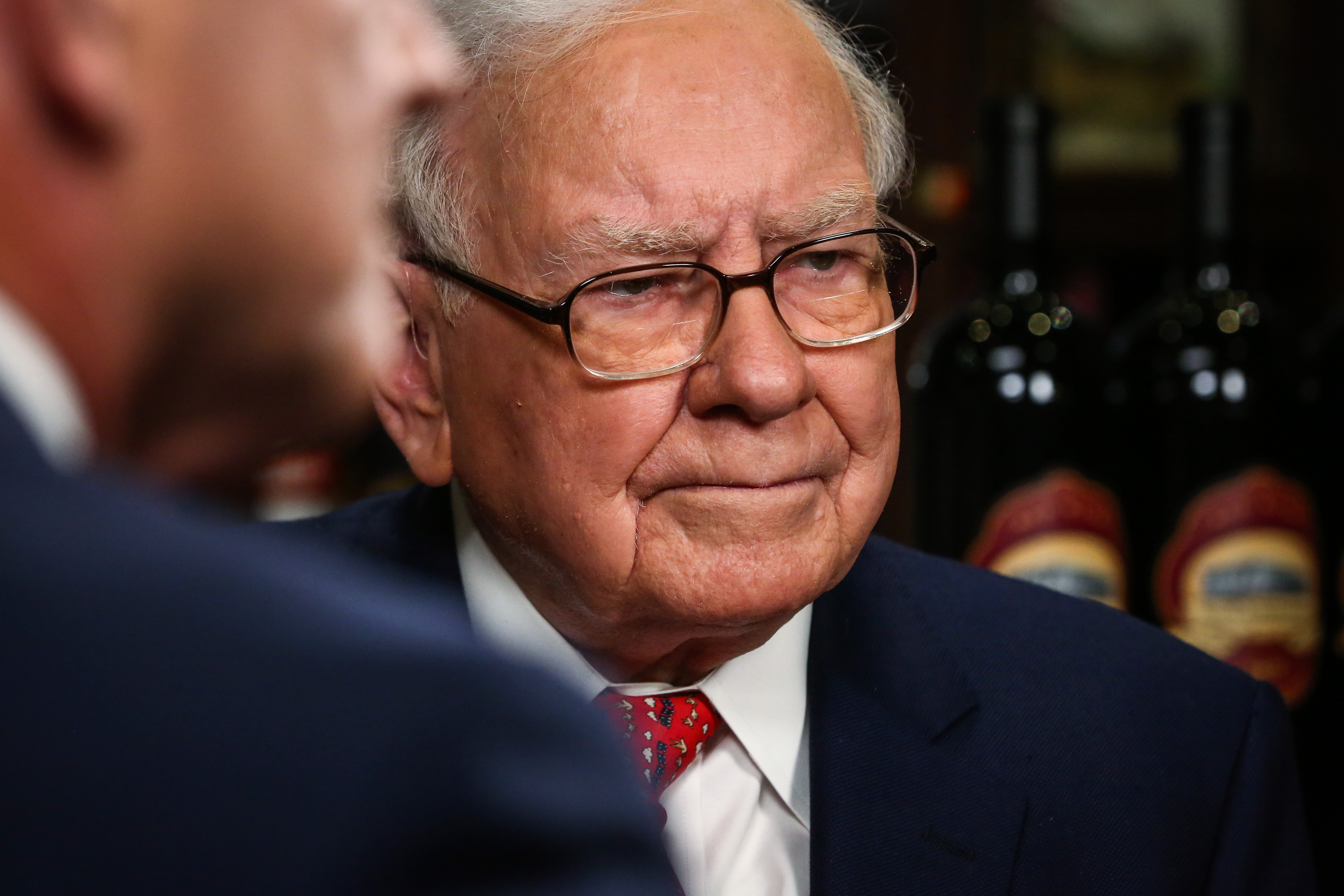
One is known as the Oracle of Omaha, the other as Superman. Warren Buffett and Li Ka-shing are the two most revered investors in the West and East.
If you log onto Chinese social media these days, you may encounter many young people expressing the “involution” or neijuan mentality. It’s become a buzzword for a generation of college students and recent graduates beaten down by society’s relentless competition, and roughly translates to rolling inwards.
A Columbia University student recently shone a light on a disturbing corner of today’s job market. Roy Lee, 21, was fed up with the antiquated way that large tech firms were testing job candidates with computer coding riddles you had to memorize, so he created a tool that his peers could use to beat the system.
When UBS Group AG acquired Credit Suisse in March 2023, its board of directors thought they were doing their duty.
In this video, Chuck Carnevale, Co-Founder of FAST Graphs, aka Mr. Valuation will compare Home Depot (HD) and Lowes (LOW). We are going to decide which one is the better one for your portfolio.
US President Donald Trump’s focus on “reciprocal tariffs,” rather than balanced trade, does not suggest that his administration intends to use tariffs strategically to cut the country’s chronic trade deficit. But Democrats must stop dismissing outright a policy tool that they themselves embraced under Biden.
How recent market volatility has contributed to a sharp reversal in global equities.
We’ve written quite a bit on tariffs already this year, and appropriately so. Developments on this front have been significant and are of global consequence.
While systematic investing often relies on models and financial data, Pozharny emphasizes that Bridgeway’s process is differentiated by its acknowledgment of unknowns and its method for adjusting ratings based on external events. The team grades stocks on a scale from A to F, with adjustments made when externalities—such as leadership changes, regulatory shifts, or geopolitical risks—threaten to undermine model assumptions.
As the first quarter comes to a close, there is one word that has become the new go-to term to describe the investment backdrop: uncertainty.
Portfolio Managers John Kerschner, Nick Childs, and Jessica Shill discuss the AAA CLO ETF landscape and highlight the most important considerations for investors.
When you grow up with a father who worked in the brokerage business, you hear a lot of stories.
VettaFi examines free cash flow yields for midstream MLPs and corporations using 2025 estimates and compares with energy and the S&P 500.
Investing requires more than just understanding global markets. Geopolitical risk matters, from China to Russia to Europe and more.
Total assets held by actively run ETFs in the US have hit the $1 trillion milestone, as investors sink cash into a new generation of strategies — shaking up the passive reputation of this booming corner of money management.
Junk bonds don’t seem quite so junky anymore. US investors are piling into an asset class that has grown a little safer in recent years, and in recent weeks has drawn investors seeking a safe harbor from market turbulence.
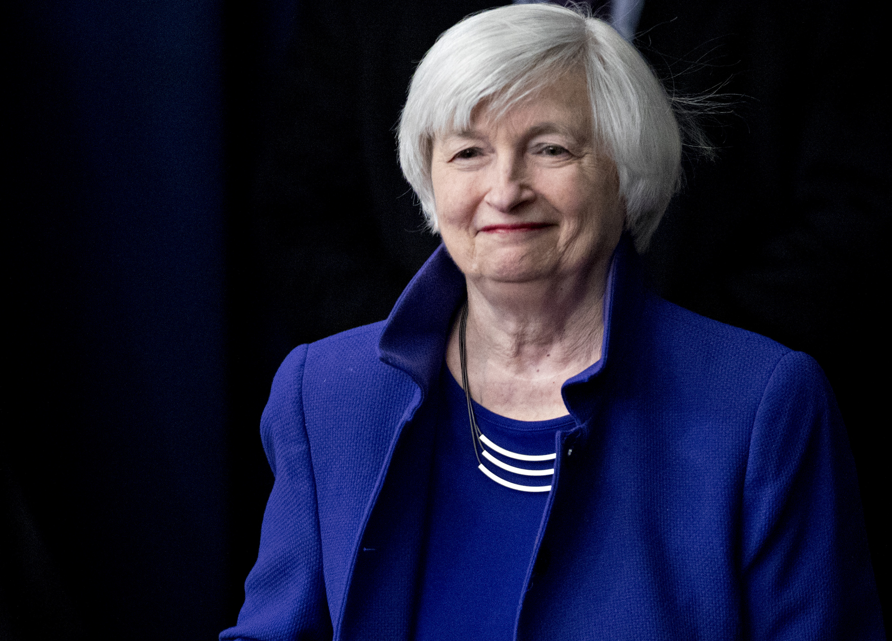
Former Treasury Secretary Janet Yellen is joining Pacific Investment Management Co.’s global advisory board, along with former Governor of the Reserve Bank of India Raghuram Rajan.
OpenAI expects to more than triple its revenue this year to $12.7 billion, fueled by the strength of its paid artificial intelligence software, according to a person familiar with the matter.
Discord Inc., a social communications platform popular with video-game players and programmers, is working with Goldman Sachs Group Inc. and JPMorgan Chase & Co. on an initial public offering, according to people familiar with the matter.
While we sympathize with consumers who have had difficult interactions with the healthcare system, we believe that much of the antipathy toward health insurers is misplaced. Their role as middlemen is a vital and increasingly important one in a U.S. healthcare system that struggles to balance between the incentives of providers and consumers.
Since May 2020, inflation (CPI) has gone from a low of 0.1% to a high of 9.1% and back to 2.8%. It is no wonder why any investor might at least pause in this period of uncertainty.
The canal is a vital and valuable trade route.
The global economy is undergoing an unprecedented wave of industrial and infrastructure expansion, driving relentless demand for commodities across energy, metals and agriculture.
When dealing with digital assets it’s important to keep records and consult a tax professional. Our Bill Cass explains the taxation rules around cryptocurrency.
Over the last couple of weeks, the market sell-off eclipsed 10% on an intraday basis, sending investor sentiment plummeting to levels usually seen during more significant declines and previous bear markets.
The parallels between the AI narrative driving the current market and the dot-com bubble of a quarter century ago raise important concerns for investors.
For taxable investors with sizable gains in their brokerage accounts, the decision when to realize that capital gain is intensely personal—depending of course on individual circumstances, while also factoring in market return expectations and the prevailing tax structure.
Inflation uncertainty makes it tricky to foresee the Fed's next moves. In moments like these, it may be time to turn to active fixed income.
Changing market narratives in the third quarter led to ongoing market volatility.
The Chicago Fed's National Activity Index is a monthly indicator designed to gauge overall economic activity and related inflationary pressure. It is a composite of 85 monthly indicators across four broad categories. The CFNAI is a forward-looking indicator that suggests how the economy will likely look in the near term and has been called one of the "most important and overlooked economic numbers". The index is constructed so a zero value for the index indicates that the national economy is expanding at its historical trend (average) rate of growth. Negative values indicate below-average growth, and positive values indicate above-average growth.
Margin debt is the amount of money an investor borrows from their broker via a margin account. Trading with a margin debt can magnify gains because an investor can benefit from the upside of any stock without having to invest 100%, resulting in greater profit. On the flip side, trading with margin debt can also exacerbate losses because if a stock's value were to depreciate, the investor may face a margin call and would need to come up with additional cash to reach the minimum requirement.
BlackRock Inc., fresh off a $28 billion deal spree to transform into a major player in alternative assets, is integrating complex private investments into its ready-made portfolios for individuals.
When a testimonial is shared in a compliant manner, it remains entirely in the client’s own words – free from advisor influence – making it one of the most transparent and credible marketing tools available.
The Federal Reserve has raised some questions with its recent decision to slow the pace at which it’s shrinking its more-than-$4-trillion pile of Treasury securities.
Fort Knox, home to much of the nation’s gold reserves, doesn’t get many visitors. That may soon change: President Donald Trump and his sidekick, Elon Musk, claim there’s a chance someone has stolen the shiny stuff. They want to visit and see it with their own eyes.
Amazon.com Inc. shares are starting to look like a bargain, a word that has rarely been used to describe the stock.
Electronic market makers like Citadel Securities LLC and Jane Street Group have been gobbling up market share from investment bank rivals, but to really get ahead they’ll need a helping hand. They might be about to get it from a surprising source: Some of those same banks.
The truth is, if you’re having to follow up with your prospect, you’ve already lost them. The sale was over at “hello.”
Last year was a record for S&P 500® stock buybacks, led by the now “Lag 7” companies, though the SPX buyback yield dropped to a 2-year low.
In 2024, the S&P 500 delivered a total return of 25%, while gold finished the year up 27%. This marks the first time in recent financial history in which gold and stocks achieved gains exceeding 25% within the same calendar year.
Without a robust regulatory framework that incentivizes stablecoin issuers to register in the United States, stablecoin activity will migrate to countries with weaker rules, increasing the likelihood of financial instability. Fortunately, the US can still head off these risks and reap the technology’s benefits.
This week, and according to many, Federal Reserve (Fed) officials jumped onto the uncertainty bandwagon, along with consumers and businesses, waiting for more policy clarity from the Trump administration.
The time is right to let the Fed's balance sheet level off.
Last week, I had the pleasure of presenting at a Commonwealth conference. I love spending time and sharing ideas with our advisors. They are the best in the business.
As policy uncertainty grows, we consider how tariffs and other government actions might impact inflation, interest rates, and market sentiment.
The stock market sell-off appears to be signaling a recession. However, we believe the bond market disagrees.
Morale has taken a quick turn for the worse since the middle of February.