Life’s challenges often force us to become more present, to experience each moment fully. In doing so, I discovered the importance of celebrating small victories – not just the major milestones, but the everyday wins that mark progress.
ETF Prime Host Nate Geraci is joined by Bloomberg’s Eric Balchunas, along with VettaFi’s Cinthia Murphy and Todd Rosenbluth, to spotlight the year’s most anticipated ETF event and discuss the industry’s hottest trends.
I suspect many people yawned when the popular online brokerage Robinhood Markets Inc. announced it will offer sports and other prediction market derivatives, starting with betting on the NCAA March Madness basketball games.
The Securities and Exchange Commission and the Commodity Futures Trading Commission are expecting new leadership put in place by the Trump administration to usher in different enforcement priorities and a shift in how firms and individuals pay fines.
The $5 trillion industry is embarking on a campaign to change the way taxes for indebted businesses are tallied. Leading lobbyists want to tack two letters — DA — back to an earnings formula used to help calculate tax deductions, a change potentially worth billions.
The US economy looks set to disappoint this quarter. A number of economists have lowered their forecast for growth in real gross domestic product due to a widening trade deficit and sluggish consumer spending. An uncertain trade war and tepid labor demand have also clouded the outlook for the rest of 2025. Conflating the two would be a mistake, though.
Recently I have realized that cryptocurrency might be something even bigger and stranger than currency. It is not just digital money; it’s a bet on the huge global demand for financial autonomy.
Investors under 40 have little interest in reaching out to humans for financial advice. Rather than collaborating directly with a professional, many investors under 40 prefer a do it yourself (DIY) method that enables them to find stock market information online.
In today’s hyper-competitive environment, delivering an institutional-caliber portfolio isn’t just table stakes – it’s a fiduciary mandate that exceeds the scope of an individual advisor. Here is a checklist to help advisors evaluate whether their current approaches align with institutional best practices.
Though you may not agree with my view on all seven of these terms, it may be beneficial for you and your clients to at least consider them.
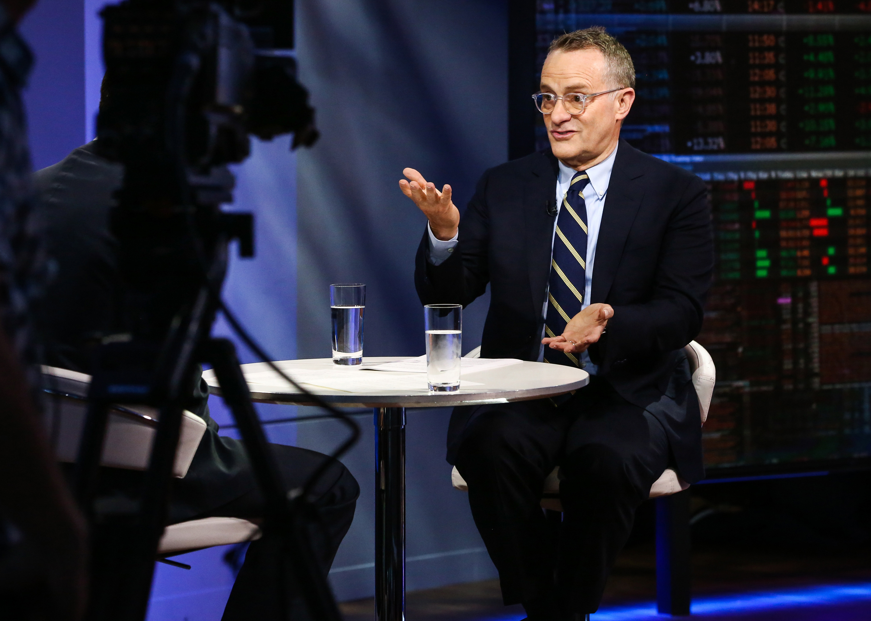
The world is a risky place, and high-yield debt spreads to safe US Treasury securities are close to historic levels of stinginess, signaling complacency in markets — at least on the surface. But legendary investor Howard Marks says that’s the wrong way to look at it and long-term investors should consider allocations to credit.
First, the market is rallying on news that the targeted tariffs that Trump is planning to introduce on April 2 may be more limited than initially feared. Let’s hope that is the case.
Happy National Countdown Day! Yes, you read that right—today is a day to celebrate the excitement and sometimes anxious anticipation that comes with planning for an upcoming event.
Whenever political questions arise, we always encourage a broader view: politicians don’t control the economy, and policy changes rarely move markets. But the past month has raised serious questions over that assertion.
It has been an interesting correction. The average retail investor was “buying the dip” despite having an extremely bearish outlook.
Emerging markets offer the potential for long-term diversified investment returns but they can endure challenging periods of volatility and uncertainty. Head of Portfolio Strategy David Dali maps out the issues to consider when constructing and managing a portfolio for emerging markets.
It’s been a rough start to the year for US equity investors. Yet the volatility hasn’t been too far out of the ordinary in historical context.
In spite of severe polarization on so many issues, there is at least one thing that Americans agree on across the entire political spectrum, left, right, and center. That is: At some point in the past sixty years, or so, something major went wrong with the US economy and it is still causing problems today.
On April 2, the U.S. is preparing to announce additional tariffs on a wide range of imports and countries. Here's the assessment of those policies, and their possible impacts.
n this video, Chuck Carnevale, Co-Founder of FAST Graphs, aka Mr. Valuation, is going to take a deep dive into Merck (MRK) and Pfizer (PFE), two of the biggest pharmaceutical companies out there.
Green bond issuers tend to excel at reducing greenhouse gas emissions, per a Bank for International Settlements study.
With a name reflecting its expertise in smart indexing, Indexperts is carving out a balanced strategy that recognizes market realities.
This article highlights several SimpleVisor tools we use to track sector and factor rotations. These models help us better forecast tomorrow’s possible rotations and try to stay a step ahead of the market.
Recently, downside-protected ETFs have garnered a lot of investor attention. These products are long the stock market – via different indexes – and use options to create downside-protected payoffs.
Quantitative easing has created serious inflation threats. The only way out is to increase tax receipts and reduce government spending, neither of which is in the Fed’s purview. Otherwise, serious inflation lies ahead, regardless of Fed actions.
On this episode of the “ETF of the Week” podcast, VettaFi’s Head of Research Todd Rosenbluth talks about the American Century U.S. Quality Value ETF (VALQ) with Money Life host Chuck Jaffe. The pair covered a range of topics related to the fund, providing investors with a deeper understanding of the ETF.
This week, and according to many, Federal Reserve (Fed) officials jumped onto the uncertainty bandwagon, along with consumers and businesses, waiting for more policy clarity from the Trump administration – and who could blame them with policies in daily flux?
When breakthroughs occur, researchers get the lion’s share of the credit. But they owe a big debt of gratitude to those who collect and organize the data with which insight is manufactured.
For years now, way before artificial intelligence became the hot new thing on Wall Street, Daniel Mahr has been making money on stocks, courtesy of his machine-learning model.
The sense of gloom on Wall Street is putting pressure on some of the most committed backers of American exceptionalism: South Korea’s risk-seeking retail investors.
US economic data are diverging wildly, fueling a debate over whether rising anxiety from President Donald Trump’s trade policies will push a moderating economy into a serious downturn.
Banks’ businesses don’t change radically year to year so nor should their capital requirements.
Removing the carbon dioxide we’ve put into the atmosphere and storing it back on Earth might sound like a fantasy, but the sprouts of an entire industry aiming to do just that are emerging.
The theme among so many writers seems to be “vibe shift.” And indeed, there is a concern the economy is slowing and may even be in a recession.
Despite NVIDIA’s stock flashing a bearish “death cross”—its 50-day moving average slipped below the 200-day moving average for the first time since January 2023—the energy at the conference was electrifying. Every major industry was represented, from health care to defense, signaling that artificial intelligence (AI) is expanding at a white-knuckle clip.
Last week's economic landscape was marked by pockets of resilience amid growing concerns and heightened uncertainty. Retail sales offered a mixed bag.
Despite recent pullbacks, history shows that periods of market fear often present opportunities, as seen with Amazon, Apple and Nvidia in past downturns.
Investment-grade floating-rate notes prices tend to be more stable than their fixed-rate counterparts, so they may be worth considering during periods of volatility.
We have certainly seen an uptick in this sentiment accompanying the increase in market volatility since the start of the year.
At their March meeting, Federal Reserve officials left the policy rate unchanged at 4.25%–4.5% and signaled further patience on rate cuts as they navigate greater uncertainty about the economic outlook.
The equity market tends to see a correction every 18 months. If it's not a recession-induced bear market, it may be a buying opportunity.
For the second meeting in a row, the Federal Open Market Committee (FOMC) decided to keep rates unchanged, leaving the Fed Funds trading range at 4.25%–4.50%.
Emerging-market (EM) equities are off to a strong start in 2025, up 4.5% through March 14 in US-dollar terms. But investors could be excused for being wary. After all, emerging markets have struggled over the past decade.
On the latest edition of Market Week in Review, Director and Global Head of Solutions Strategy, Van Luu, discussed the latest rate decisions from key central banks. He also talked about fiscal reform in Germany and reviewed recent U.S. market performance.
Hear firsthand how financial advisors are leveraging these strategies to safeguard portfolios from market volatility and protect their gains. Don’t miss this opportunity to gain valuable insights and stay ahead of the curve.
US Treasuries consolidated gains in a choppy trading session with markets remaining confident that policymakers at the Federal Reserve are still on a path toward lower interest rates.
Despite the talk of austerity — and amid the possibility of a global trade war, the reality of a stock-market correction and fears of a US recession — there is still a chance that President Donald Trump’s agenda could increase economic growth. As usual, it will depend on the execution.
The Federal Reserve’s decision to leave interest rates unchanged was right — but easy to misinterpret.
The US stock market is on edge. The S&P 500’s recent 10% correction has investors worried, though a highly uncertain policy environment and an unusually top-heavy market obscure just what is spooking stocks.
he central bank made a technical move on the balance sheet, reducing the pace of permitted runoff in its Treasury holdings from $25 to $5 billion per month.