CIO designate Sean Taylor discusses his investment outlook for the year ahead and how he sees 2024 unfolding for emerging markets, regionally, economically and thematically.
A small cadre of Wall Street economists who’ve been surprised by the economy’s resilience in 2023 are doubling down on expecting pain for American households and businesses in the new year.
Will Beijing take the necessary steps to restore confidence in its economic policies? Sinology explores.
Kathlyn Collins, Head of Responsible Investment and Stewardship, says a renewed purpose among regulators and pressure from investors is yielding breakthroughs in the governance and the capital efficiency of Japan’s-listed companies.
In this video, Chuck Carnevale, Co-founder of FAST Graphs, a.k.a. Mr. Valuation provides a detailed analysis of seven stocks in the Communication Services Sector, focusing on their valuation, growth potential, and dividend yields.
Municipal bonds posted their best performance of the year, and we believe municipal credit conditions remain strong.
As is our custom, we conclude the year by reflecting on the 10 most-read investment and planning articles over the past 12 months. Tomorrow, we will highlight the 10 most-read practice management articles.
As is our custom, we conclude the year by reflecting on the 10 most-read practice management articles over the past 12 months. Tomorrow, we will highlight the 10 best articles you probably missed.
As 2023 is nearing its end, tax-loss harvesting season is in full swing. This is often top of mind for advisors and their clients. But Capital Group is seeing some advisors hesitate to harvest losses due to ongoing volatility in the equity and bond markets, and general uncertainty about 2024.
My guest, Courtney Wolf, joins me today to talk about why to deploy cash and use tax-loss harvesting via active fixed income ETFs. Courtney is a muni portfolio manager at Capital Group and the principal investment officer for the firm’s active muni ETF, CGMU. With nearly two decades of muni investing experience, Coutney will offer her forecast for munis more broadly in 2024 as well.
GMO has published a new 7-Year Asset Class Forecast
Treasuries rallied along with global bonds, sending benchmark yields to multi-month lows, as traders bet the world is entering a new, disinflationary period by wagering on more interest-rate cuts next year.
The economics teams looks back at the most significant stories we covered during 2023.
Today's uncertain economic climate is putting particular pressure on four market segments. Here's what to watch out for in the months ahead.
It’s exciting times in the ETF industry. For example, we might be headed for a photo finish in the ETF leader board. As of December 15, two ETFs stood above the rest.
The use of “factors,” or broad and persistent drivers of investment returns, has grown rapidly in equity markets, but with less adoption in fixed income.
The first actively managed exchange traded funds came to market in 2008. But 2023 may be remembered as the year when the asset class matured, paving the way for broader long-term adoption.
If the prices of the magnificent seven outperformed their fundamentals, it will be much harder for a repeat performance in 2024.
Investors were taught a lesson in 2022 when equities and fixed income delivered double-digit, negative returns. No longer could the major asset classes be counted on for diversification. That outcome has led to a surge of interest in alternative investments. My guest today will argue why alternatives are important for advisors to consider and how doing so in a cost-sensitive way is important. Hedge funds and private equity can provide significant alpha but are often unobtainable for retail, non-accredited investors. ETF structures offer advisors and their clients access to those types of investments in a liquid, transparent way.
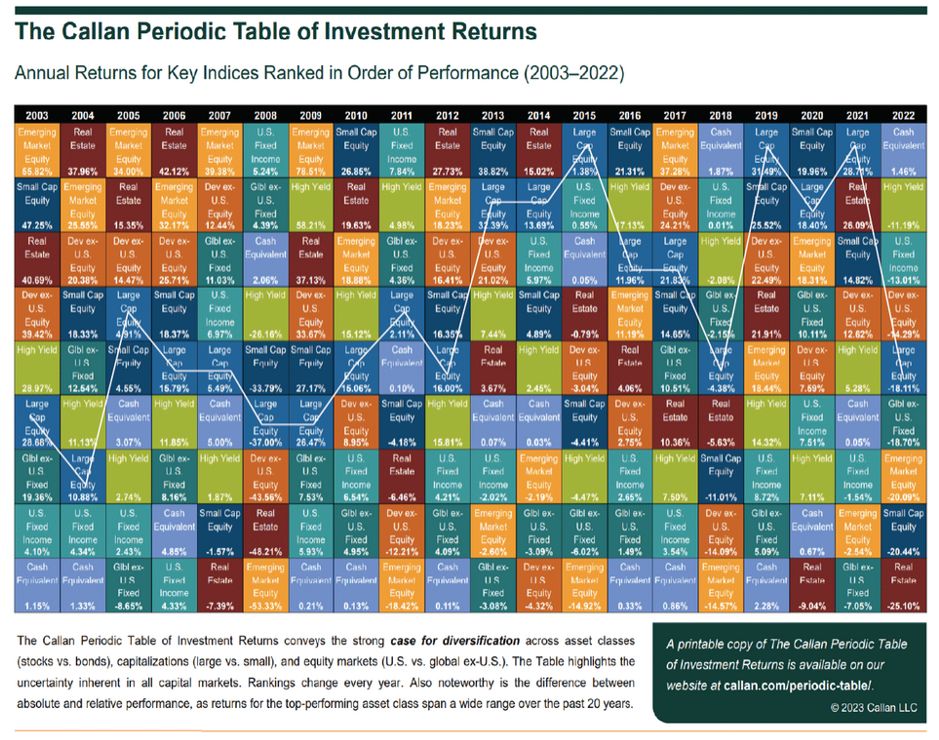
The cornerstone of diversification is the allocation of investments to counterbalance losses and dampen volatility. But what happens when traditional assets, like stocks and bonds, move in lockstep as they are now?
The “addiction to prediction” can have detrimental effects, as it shifts focus from the financial health of companies to baseless forecasting, often leaving investors vulnerable to market volatilities.
A profit warning in the week leading up to Christmas is never a good look. This year’s shock has been provided by Superdry Plc. With just a few shopping days to go until the holiday, investors should be braced for more bad news from other retailers.
Jonathan Hoffman, John Bonello and Jonathan Tipermas share more than just similar first names. They’re the driving force behind a gigantic wager on government debt that’s been giving regulators sleepless nights.
In the same way that a swimmer can make the biggest splash by jumping off of a higher diving board, so too fixed income asset returns can appear prospectively most attractive after a prolonged back up in rates.
High yield fixed income has always been considered a riskier investment relative to other bonds. But strong corporate fundamentals are making this asset class far less risky these days. And that makes so-called junk bonds currently a bit of a misnomer.
Over the last few months, we have highlighted that the Fed should be done with its tightening cycle based on real-time, high-frequency data that suggested that economic growth and inflation were cooling.
In this video, Chuck Carnevale, Co-Founder of FAST Graphs, a.k.a. Mr. Valuation will analyze the healthcare sector stocks and discuss the value of different companies within it.
What was the biggest story in ETFs in 2023 for you? What has the potential to have a lasting impact on the industry? Or is there something you think was a flash in the pan?
As 2023 draws to a close, what will 2024 have in store for investors? It appears this Fed rate hike cycle is over and now we pivot to potential rate cuts. But not until inflation has sufficiently cooled. As we've seen before, a lot can happen in the meantime.
Our 2024 Economic & Market Outlook covers:
There are many risks for 2024 including those that are an ever-present part of investing and not unique to the outlook for any particular year. We've highlighted our top five.
VettaFi’s Todd Rosenbluth discusses whether some of the year’s biggest equity ETF stories can carry momentum into 2024. State Street’s Matt Bartolini recaps 2023 ETF flows and highlights three missed opportunities for ETF investors.
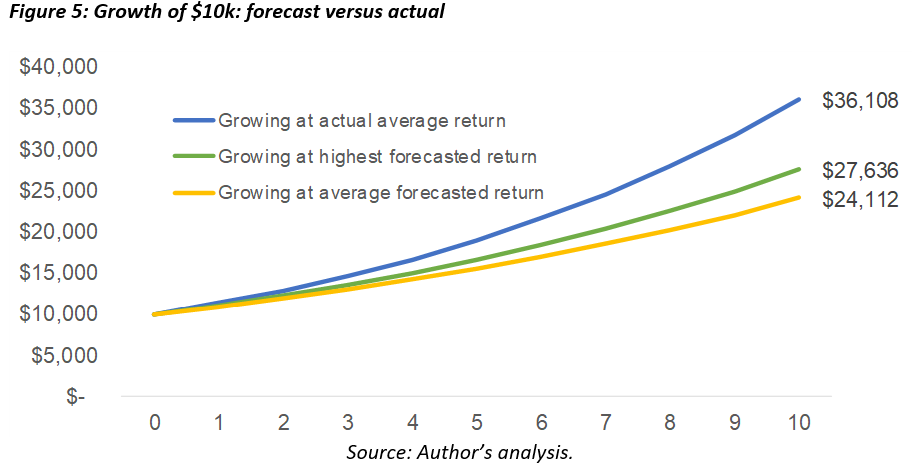
If a retirement income plan is entirely reliant on the accuracy of its CMAs, then success is more a matter of faith than any statistically verifiable fact.
The US Federal Reserve and its chair, Jerome Powell, are betting that they can have the best of both worlds — that they’ll be able to defeat excessive inflation without forcing the economy into recession.
BlackRock’s Rick Rieder said that market expectations for the Federal Reserve to begin cutting interest rates in March are likely too early.
A New York money manager has netted a 64% gain from a strategy riding the big plunge in volatility across the stock market in this expectations-busting year on Wall Street.
The 60/40 portfolio composed of stocks and bonds, respectively, has somewhat fallen to the wayside in the past decade. But with optimism flooding the bond markets for 2024, it could make a comeback.
For multi-asset income investors, adapting portfolios for equity defense, credit potential and duration exposure should be on the docket for 2024.
Markets cheered a “dovish” December Federal Reserve meeting, seen as an early gift to investors. But has the battle against inflation been won? Franklin Templeton Fixed Income CIO Sonal Desai weighs in.
Earlier this year, many industry observers and investors were expecting an imminent slowdown with markets. But with rates coming back down and the risk outlook improving, the outlook on fixed income has improved.
November’s inflation numbers delivered good news for the Federal Reserve (Fed) even though the Consumer Price Index (CPI) was higher than what markets were expecting, with shelter costs surprising to the upside.
Although cash donations are appreciated, donating securities may be more impactful for both the charity and the donor.
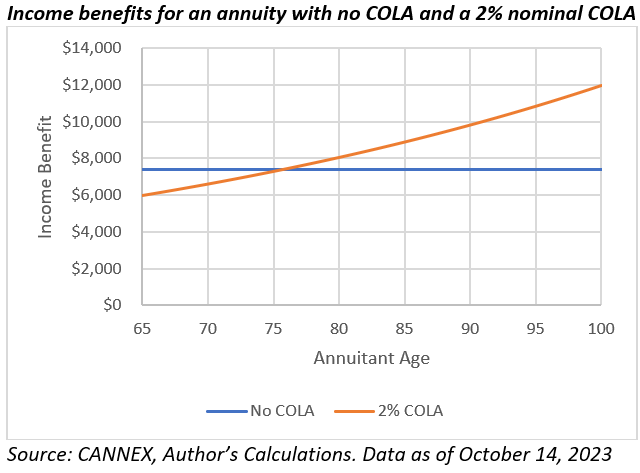
While fixed COLAs with SPIAs may seem like an attractive way to address inflation in retirement, they actually increase inflation risk, not reduce it.
Investors were pleased about the Federal Reserve’s latest policy announcement — perhaps a touch more so than Chair Jerome Powell and his colleagues might wish.
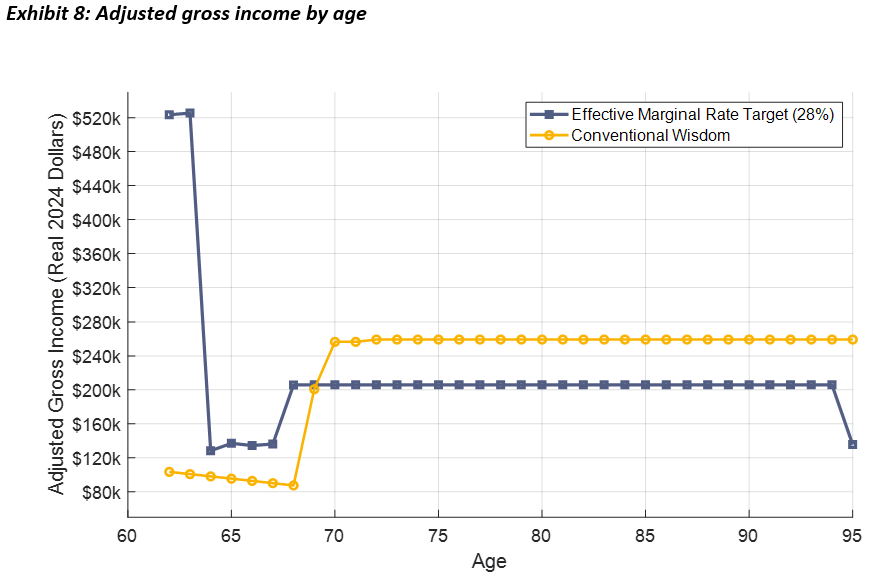
We analyze a case study for a wealthier couple with $5.5 million in investment assets and a larger retirement spending goal.
There are many ways a bank can lose money. Top of the list are credit and financial market losses but beneath, there’s a whole taxonomy of issues that industry insiders brand “operational risk.” These result from bad internal processes, people and systems or from external events.
A vehicle used to track longer-dated US government bonds surged into a bull market, as investors seek to end three years of pain on the Federal Reserve’s willingness to consider interest-rate cuts.
Starting portfolio yields may be a better guide to optimal spending than knowledge of future market returns.
It’s worth noting that despite the recent market advance, our own investment discipline, and even Treasury bills, have outpaced the S&P 500 and Nasdaq 100 during this period, with less volatility.
This year proved a difficult one for bonds as the Federal Reserve aggressively hiked rates for much of the year. With the rate narrative changing moving into 2024, investors moved back into bonds in a big way beginning in October, including municipal bonds.
If the last year or two have taught investors anything, it’s that alts can play a big role in portfolios. As recently as 2022, bonds struggled amid significantly low interest rates, with their role as a contrast to stocks weakened.
There's more to an overlay program than just cash equitization and systematic rebalancing. The flexibility of the program allows for several other exposure management strategies.