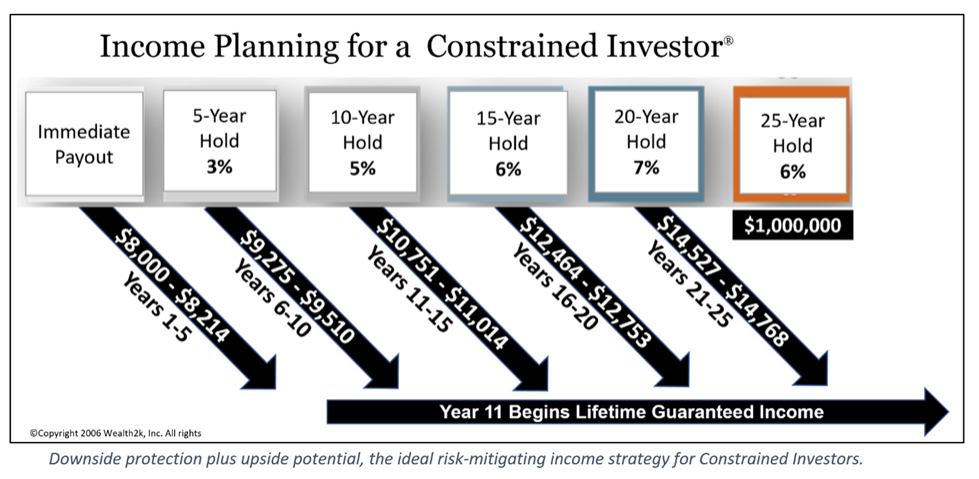
In this article, I will explain how to structure an income strategy that best serves the needs of constrained investors. Demographic, economic, cultural, and social forces argue for a new approach to retirement planning.
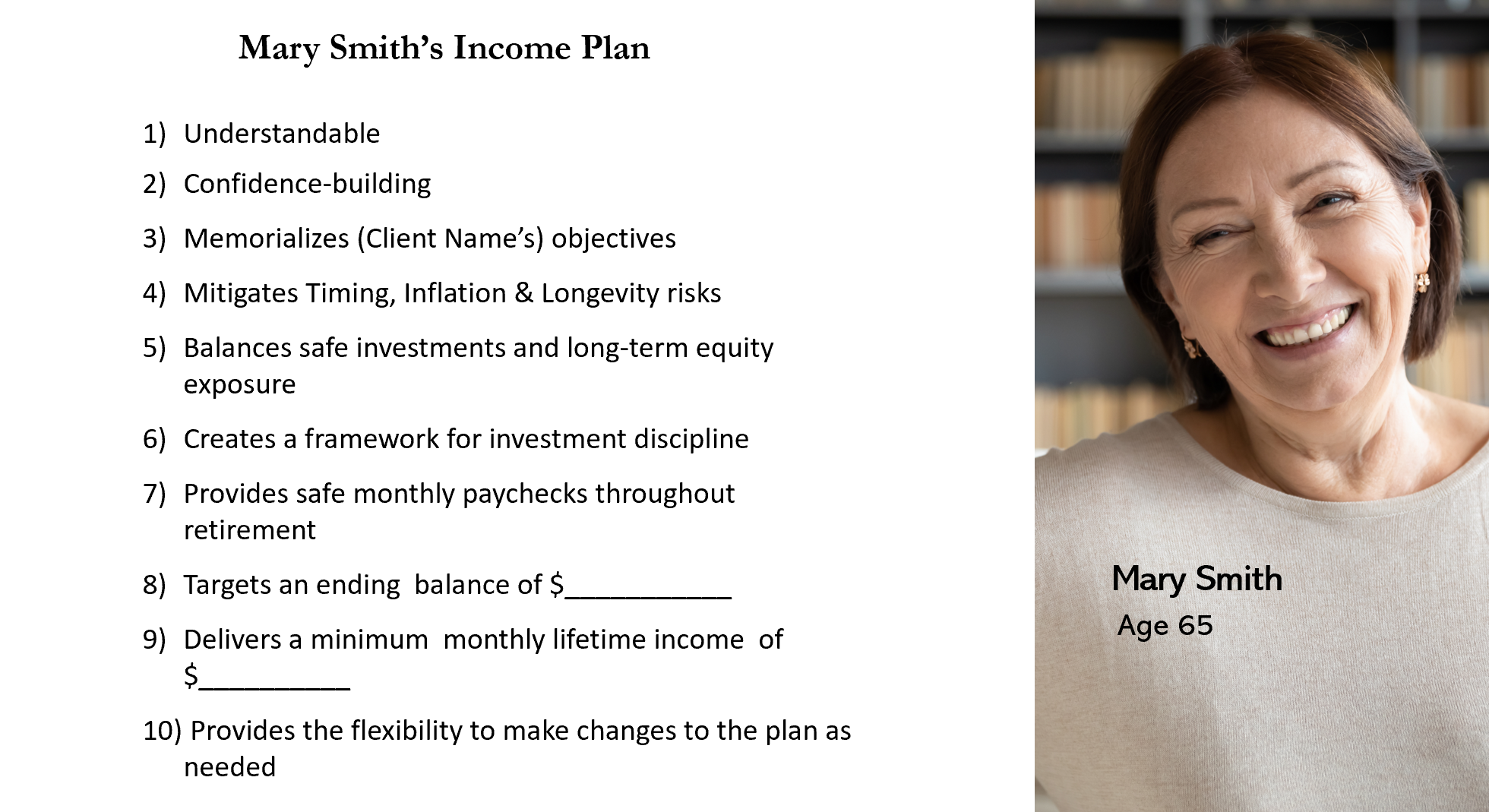
RIAs must align their communications, planning methodologies, and product set with the needs of retirees, especially women, whose chief priority is reliability of income more than return on investment.
The war in Ukraine has further complicated the investment backdrop, and fears of a recession are rising now that the U.S. yield curve has inverted. Given so much uncertainty, we are focusing on what we can control and maintaining a defensive posture
Will the cloud drive massive increases in productivity and wealth – as the internet did before it? That is the central question asked by Mark Mills in his stunning new book, The Cloud Revolution.
You have to feel sorry for active managers.
The last decade and a half rewarded investors with healthy stock and bond returns. But high valuations, low interest rates and high inflation are signals to reassess risk tolerance and asset allocations.
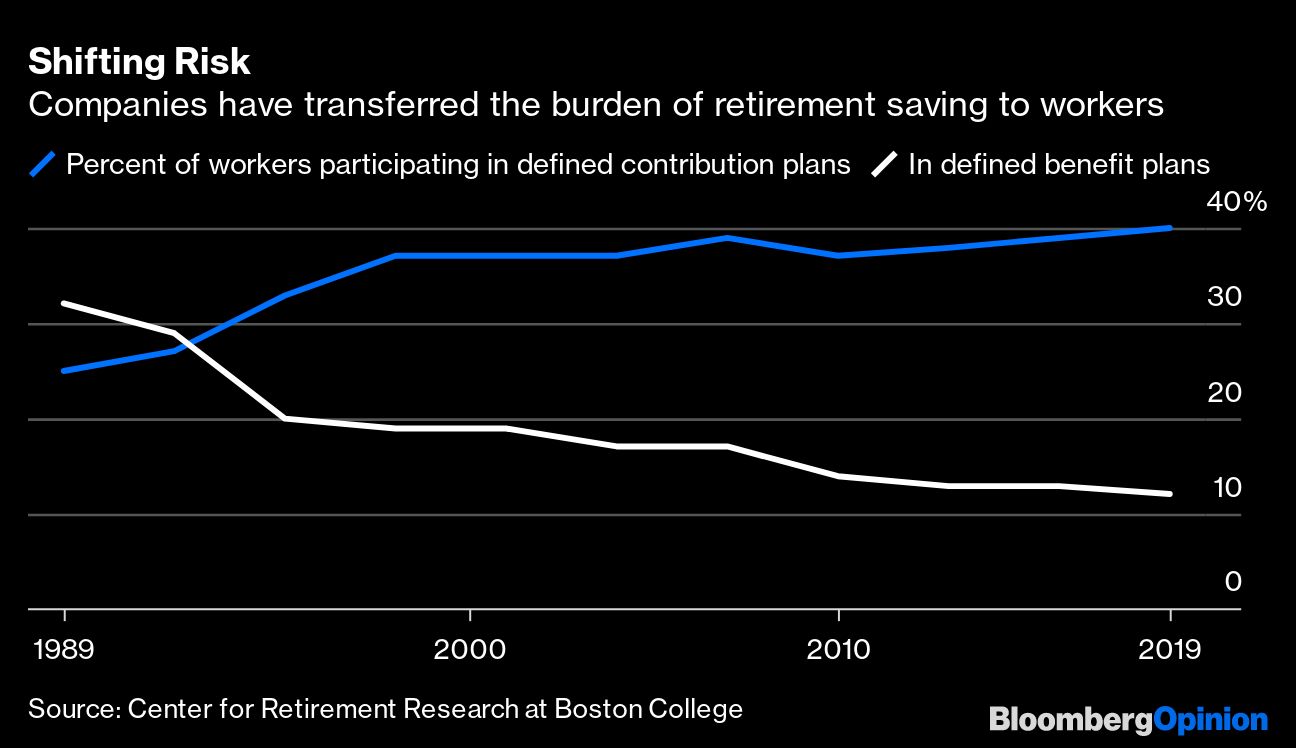
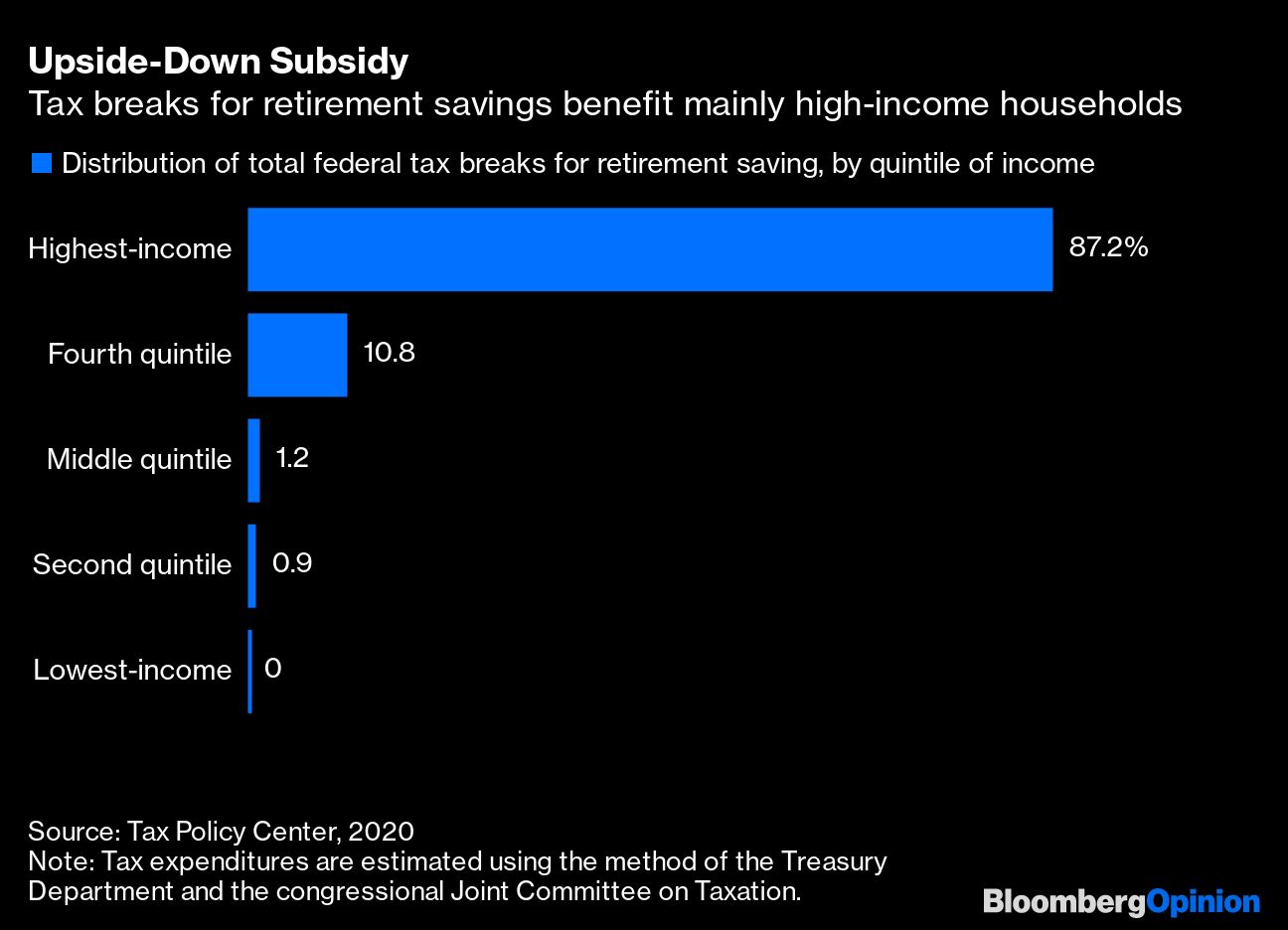
It’s hard to imagine a social program more dysfunctional than America’s morass of retirement-saving accounts. It costs hundreds of billions of dollars a year, excludes tens of millions of workers, and fails to ensure a comfortable old age for many who do participate.
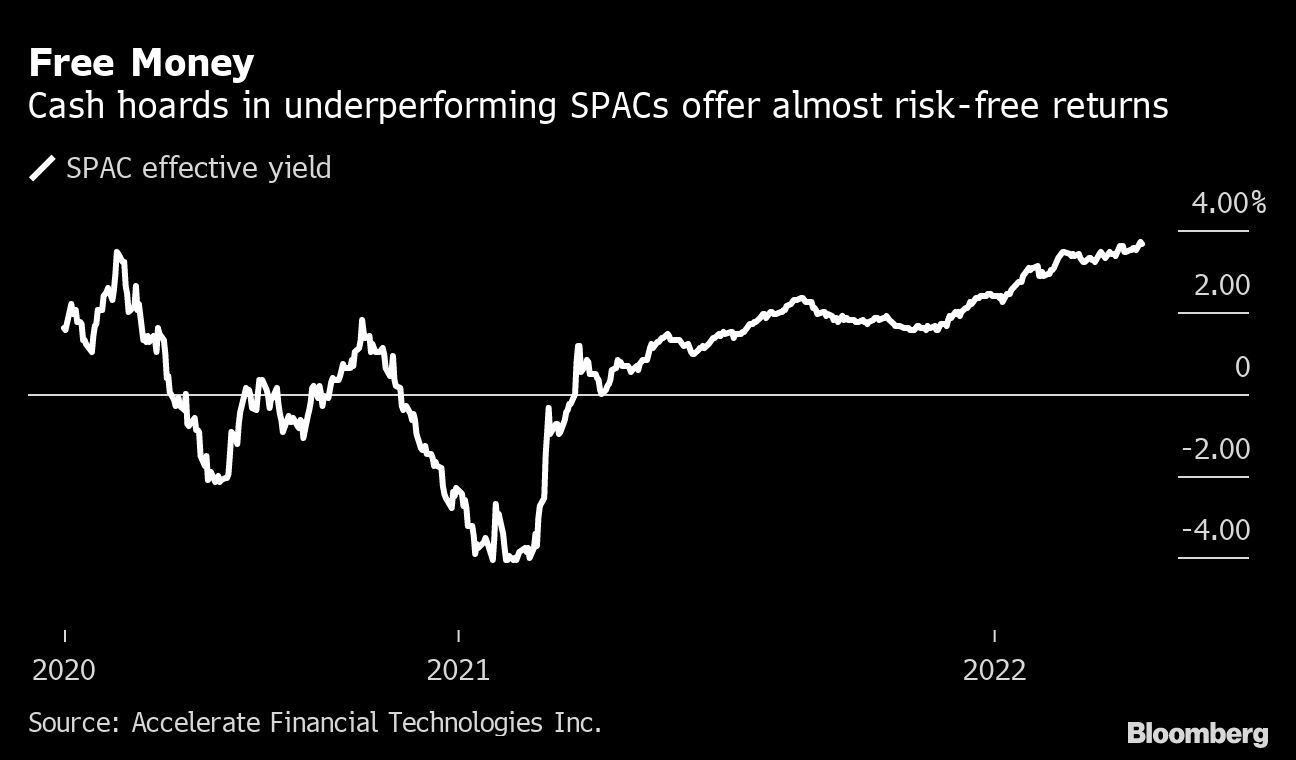
Blank-check companies have taken an epic battering, but for patient investors, the collapse creates a chance to make some easy money from a quirk in the structure of these vehicles: their holdings of Treasury bills.
The fastest inflation in decades and the resulting rush by central banks to raise interest rates are stoking recession fears in financial markets -- worries that are being compounded by the impact of aggressive coronavirus lockdowns in China and the war in Ukraine.
An unusually strong tug of war between economic forces is playing out in global markets, with a booming economy and low unemployment offset by the effects of the Russian invasion of Ukraine and expanded inflation. Expectations over the timing and magnitude of Fed interest rate increases rapidly evolved as clarity began to emerge around central bank responses to inflation.
Value has trounced growth this year, and high dividend companies have outperformed. Matt Wagner discusses the global dividend investment opportunity: emerging markets.
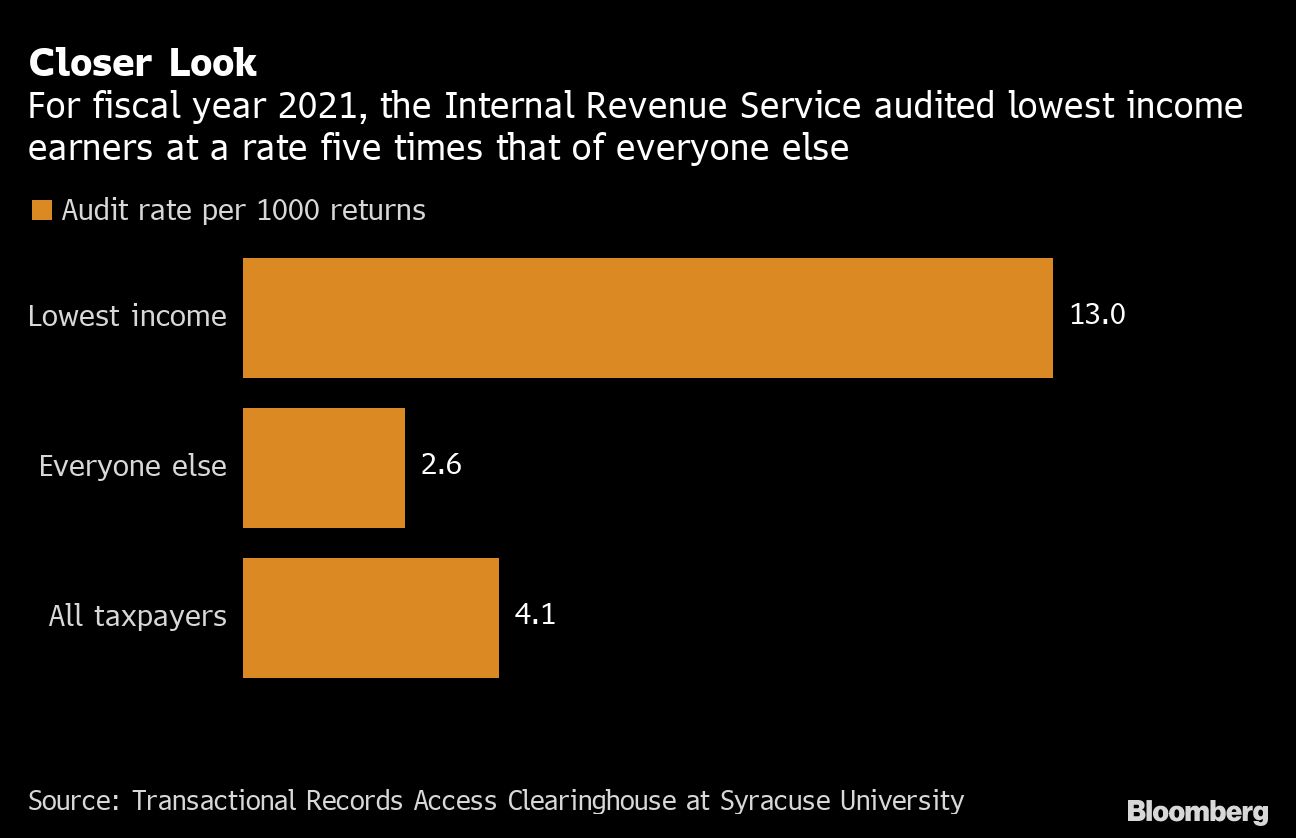
Audits are a risk that all should heed, but especially the lowest-income earners. The IRS looked at their returns at a rate five times greater than all other taxpayers in the 2021 fiscal year, according to data from the Transactional Records Access Clearinghouse at Syracuse University.
U.S. retail sales picked up in March, helped by a surge in gas station receipts that masked mixed results in other large spending categories as consumers contend with decades-high inflation.
What does baseball have in common with exchange-traded funds (ETFs)?
To start, let’s discuss what diversification is and what it is not.
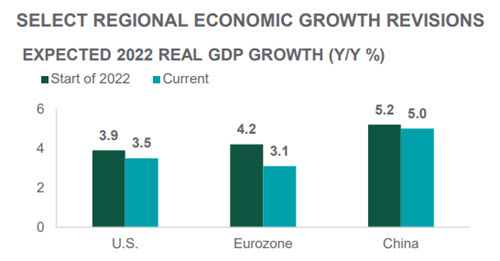
While Beijing has set an ambitious growth target this year with a generous fiscal stimulus plan, new COVID-19 waves are adding to mounting headwinds amid a slowing global economy.
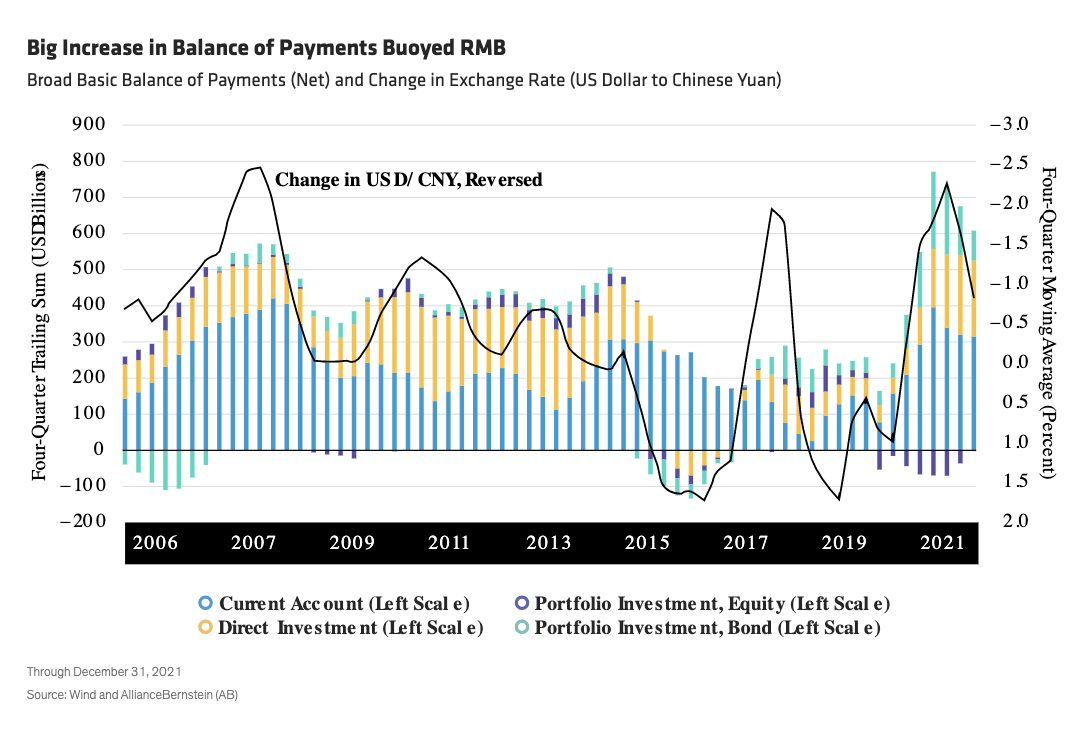
China’s currency, the renminbi (RMB), remains strong even though many of the factors that have driven its performance over the last two years have weakened.
The war in Ukraine is shifting the conversation on what a post-COVID-19 world will look like.
Central to my market and macro outlook at present is the likelihood we are amid a growth cycle downturn that is looking to decelerate meaningfully in the coming months.
In his federal budget for fiscal year 2023 that he unveiled earlier this month, President Biden proposed a huge new tax increase on America’s wealthiest citizens.
ICYMI: In this roundup, we’re highlighting the five most popular pieces of content from the previous week.
It’s the next big market call that could enrich traders across Wall Street: The raging global energy crisis and ever-more hawkish central banks knock key economies into 1970s-style stagflation. It’s a long shot for now, but anxiety is building among money managers that this market scenario -- out-of-control inflation just as growth slumps -- will eventually come to pass, especially in Europe.
Here’s how to customize your calendaring system so that you weed out unqualified prospects and spend your time talking to qualified ones.
I’m going to focus on getting tax information from prospects and demonstrating how working with you will prevent them from overpaying the IRS.
Covid-19, global supply-chain disruptions, frictions in reopening economies worldwide and now Russia’s invasion of Ukraine are spawning many winners and losers in economies, financial markets and political structures. Six of them are driven by transfers of incomes and assets. Five more are fundamentally the result of repricing goods and assets that I’ll cover in a separate column.
The Russian invasion of Ukraine has added pressure to the inflationary cycle that began in late 2020.
Markets rebounded in March, but it was not enough to offset earlier losses in January and February.
Did Goldman Sachs destroy a persistent myth about investing in stocks? Sam Ro recently suggested such was the case for the “sacred CAPE ratio.”
Rising rates are a direct shot at your bond portfolio. But there's a real opportunity to address your equities and position them optimally for a rising rate environment.
Federal student loan borrowers have been granted another reprieve, but for those who can afford it, the most prudent thing to do is to just fork over the money. Almost everyone has been taking advantage of the moratorium, which allows borrowers to press the pause button on payments without any interest accruing. Just 500,000 borrowers out of 43 million, or 1.1%, were still making payments a year after the freeze was initiated in March 2020 as part of pandemic relief efforts.
Most Americans say the most important problem facing the country is inflation — and President Joe Biden just made it worse. His administration announced last week it would extend yet again the emergency suspension of student loan repayments, even as his frenemies on the left are urging a program of complete forgiveness of all student debt.
As expected, on March 16, the Fed signaled its intention to hike the Fed Funds rate by 25bps. My guest today, Matt Dines, the CIO of Build Asset Management, sees three big takeaways from its report. First, the Fed’s guidance on the path of the policy rate telegraphed its commitment to addressing the rising price levels afflicting the economy. Second, the FOMC’s guidance on the Fed Funds rate joined other key and important rate curves in the global financial system in inversion – i.e., the level for longer-dated maturities lies below those that come before them. Third, the strong rally across financial assets after they digested the FOMC's report was an understanding that the "Fed Put" will be in play the next time trouble arises.
A look at the recent shift in bank loan and high yield bond correlations and why it matters for fixed income investors.
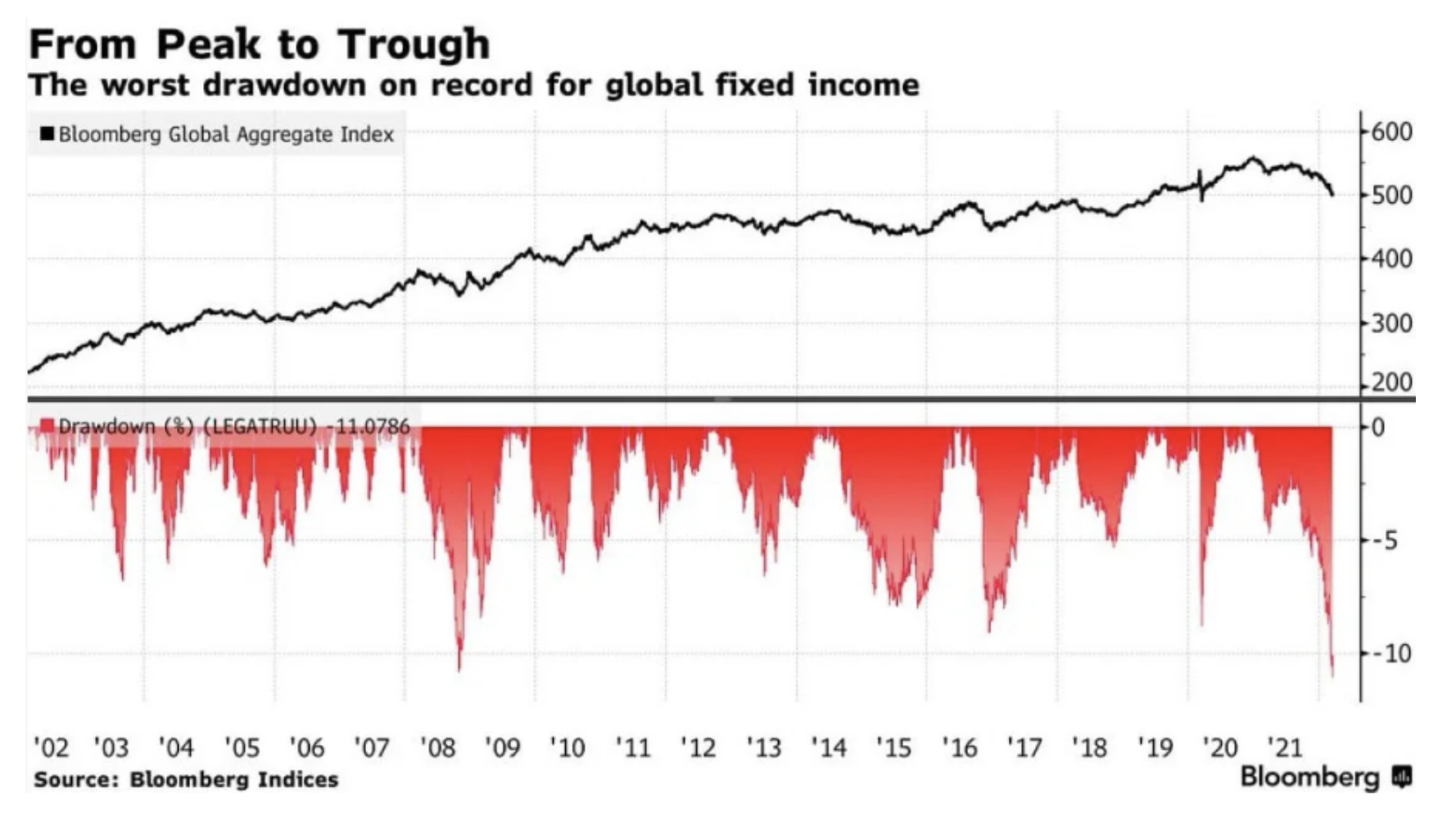
With many major market forces still to be determined, it is likely that 2022 will be characterized by transitions. One such transition, a rising rate environment, has historically resulted in the underperformance of traditional fixed income. As rates increase, fixed income exposures typically fall short, leaving investors with the need to reevaluate and consider alternative solutions to enhance their current allocations. Emerging markets debt, investment grade floating rate notes and business development companies (BDCs) may provide investors with alternative yield options while also offering liquidity, credit and quality.
It's no secret that in fixed income markets, excess performance above the benchmark is difficult to achieve over the long run.
Given that (1) investors have benefitted from a market environment that reliably produced a source of positive returns from a 60/40 mix, and (2) we’ve just completed the best period for that mix in nearly 70 years of tracking, why would an investor want to consider a change?
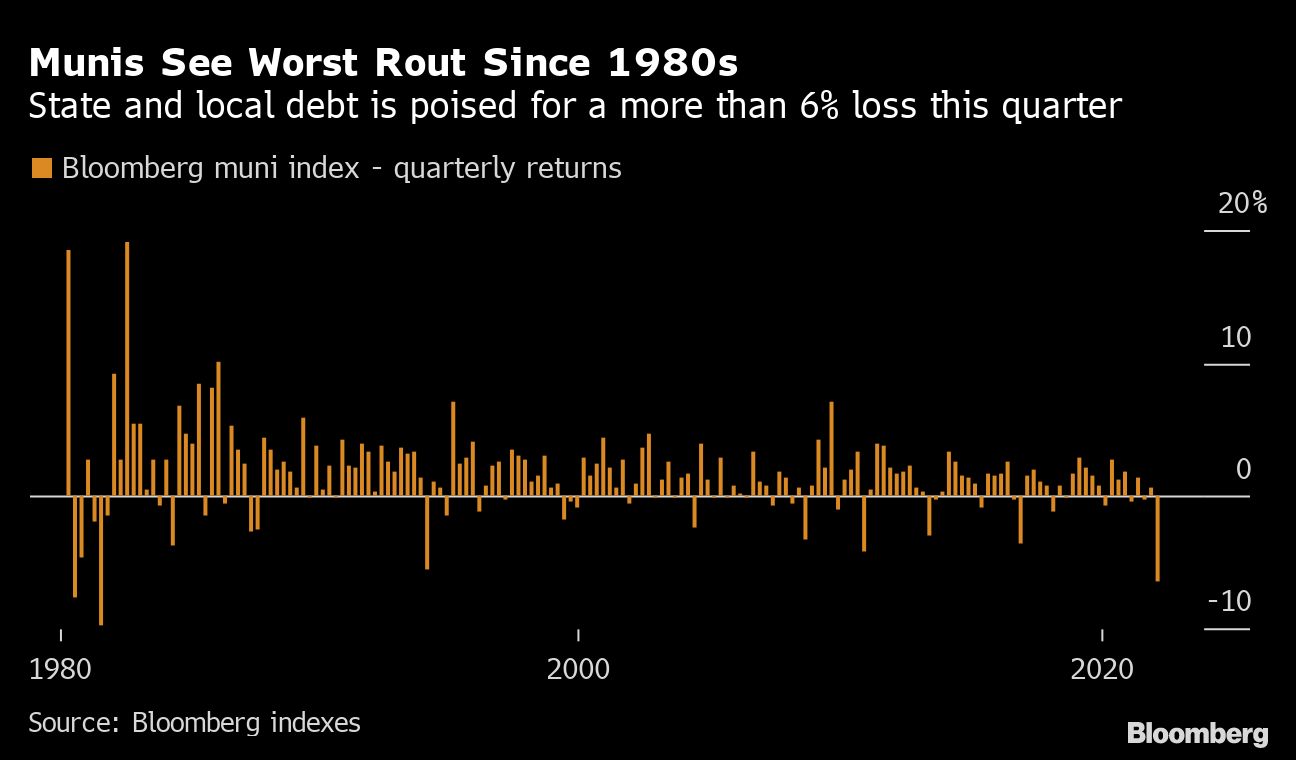
The municipal-bond market is ending its worst quarter in about 40 years with a 6.4% loss, a dramatic pullback for an asset class that investors favor for its stability. The loss so far this year is in line with bonds globally as central banks increase interest rates to combat the fastest inflation in decades. The municipal market is still underperforming U.S. Treasuries, heightening investor concern.
As a solar panel was raised onto the roof of their mud-brick home in a Tanzanian village in sight of Mount Kilimanjaro, Akida Saidi and his wife felt giddy at the prospect of entering a new era. In a place where most residents make do with pit latrines instead of toilets and till their fields of maize and pigeon peas with hoes, suddenly having electricity would catapult them into the 21st century.
Europeans enduring an unseasonal April cold snap may be forgiven for thinking winter is back. But for the natural gas market, summer has arrived. April 1 marked the start of a new year in the energy calendar, moving the focus to injecting enough gas into storage during the coming low-demand months in preparation for next winter. It’s a race Europe cannot afford to lose, but one it will struggle to win following Russia’s invasion of Ukraine.
The Bluetooth logo is a bind rune merging the Younger Futhark runes(Hagall) (ᚼ) and (Bjarkan) (ᛒ), Harald’s initials.
John Vail, Chief Global Strategist at Nikko Asset Management, discusses Nikko AM’s Global Investment Committee views on current global market drivers as well as expectations for the markets moving forward.
Watch replays for CE credit. We recap the webinars presented at our Market Outlook Summit.
Retirement income planning is the key to your future success. Winning the confidence of "Boomer" women investors is the key to your future success. Shifting how you think about annuities is the key to your future success. Wait! Which one is the key to my future success? The answer is, they all are!
The first quarter of 2022 brought violence that rocked communities – and markets – internationally. We look at what aftershocks may still be yet to come.
Diverse opportunities in Global Convertibles, as well as structural features, provide tailwinds to counter rising rates and equity volatility. In rising rate environments, convertibles have historically done quite well relative to longer-duration traditional fixed income investments.
The news of Berkshire Hathaway’s purchases in Occidental Petroleum (OXY) has been seismic in our minds, but to most investors it has been but a whimper
I discuss cultural and technical challenges and ideas that will lead to a successful client relationship when working with this group of great clients.
The U.S. Commerce Department announced on Thursday that consumer spending fell 0.4% in February from January after adjusting for inflation. This may not seem like much, but real spending has dropped in three of the last four months. Without strength in household outlays, the economic expansion is doomed.
The March Employment Report was strong. Nonfarm payrolls rose by 431,000 – less than expected but with upward revisions to January and February (a 562,000 monthly average in 1Q22).
The U.S. government has long offered myriad contrivances and enticements to get Americans to save enough for a comfortable retirement — so far with woefully inadequate results. But why should it be involved at all? Why can’t people be responsible enough to prepare for an entirely foreseeable event?





























 Retirement income planning is the key to your future success. Winning the confidence of "Boomer" women investors is the key to your future success. Shifting how you think about annuities is the key to your future success. Wait! Which one is the key to my future success? The answer is, they all are!