Franklin Mutual Series believes that fewer value investors in the market today may mean better opportunities for those who remain.
In this piece, we update our valuation charts and commentary, with additional details on our methodology available upon request.
A new study shows just how difficult it will be for younger Americans to copy that success.
Bond yields may keep rising, but a significant driver of yields is done selling.
There are early signs that US consumers, who have been largely resilient in the face of relentless inflation, are beginning to balk at high prices.
Investors are facing a make-or-break week for some of Wall Street’s most influential tech stocks in a historic year for the group marked by a plunge into bear market territory.
It is difficult to convince yourself that if things are going a certain way they will not continue down the same path indefinitely.
Student loans haven’t delivered their promise of a middle-class life for millions of Americans, and the US system of financing higher education via individual borrowing is making inequalities in the country worse, according to a new study.
I cannot emphasize enough the importance of including a conversion page in a site build.
U.S. stocks are trading mixed in pre-market action.
There are lots of “total return” bond funds these days, almost a half century since I innovated the concept in 1987.
Clients often assume that their need for life insurance ends when they stop working. I spoke with Neil Drzewiecki, the head of life products for MassMutual Life Insurance Company, about how whole-life insurance can play an important role in your client's retirement income strategy.
I built a 4.36% real (inflation-adjusted) systematic withdrawal portfolio using a 30-Year TIPS ladder.
Life Insurance Awareness Month just wrapped up in September. It’s a good time to dispel some common myths around this important financial product.
Is it time to move beyond I bonds?
To President Joe Biden’s credit, his policies didn’t cause many of the economic problems we face today.
Investors love easy-to-follow “rules.” The simpler, the better.
The heated debate about how central banks should respond to high and persistent inflation has focused primarily on how high interest rates should go and how long should they stay there.
When you plan for exiting your advisory practice, start by asking three questions.
“Recession Fatigue” is setting in as consumers struggle under rising interest rates, high inflation, and a declining stock market.
With mortgage rates more than doubling from ~3% to over 7% today the difference in cost between buying a home twelve months ago compared to today is very big.
Key Takeaways
Macro uncertainties and tightening financial conditions are pressuring the real estate investment market. Tim Wang, Head of Investment Research for Clarion Partners, discusses the challenges and opportunities in this current environment.
Investors today probably feel a bit like the joker and the thief from Dylan’s classic, “All Along the Watchtower” – there’s too much confusion, they can’t get no relief. But our Core Equity team believes there is a way outta here – investing in dominant companies that pay growing dividends.
With this week’s announcement that the White House is deploying nearly $3 billion to boost domestic output of EV batteries and the minerals used to make them, it may be time for investors to take notice.
The Treasury market was upended Friday by a surge in wagers that circumstances will allow Federal Reserve to slow its pace of rate increases as early as year-end.
Treasury Inflation-Protected Securities can be a buffer against long-term inflation, but it's possible for TIPS price declines to outpace principal adjustment in the short term.
The battering of bonds this year from inflation and higher rates has made long-term municipal securities so cheap that investors who usually shun them may be buyers.
Fear and uncertainty in financial markets driven by inflation-fighting central banks, slowing economic growth and geopolitical tensions has driven risk-off investor behavior. While this can be disorienting, the U.S. Value team at Artisan Partners, led by portfolio manager Daniel Kane, views the current market drawdown as a healthy readjustment to the cost of capital. This comes after years of central bank interventions that distorted asset prices and provided a tailwind for growth stocks. It drove less selective managers to pay higher price multiples. He will explain why today’s shifting financial landscape will create more attractive investment opportunities, particularly for disciplined value investors.
Independence means doing things your way. Advisors go independent with a variety of goals in mind. Some want to design every aspect of their Registered Investment Advisor (RIA) firm, while others simply want to be able to focus on their clients. Some want to build equity in their business, while others prefer to join a firm and negotiate for income and an equity percentage in a larger asset.
Much attention has been paid to the elevated risk (and announcement) of a recession, but investors should instead focus on signals coming from leading economic indicators.
It's no secret that delaying the start of Social Security benefits typically means you'll get more money in retirement. And waiting just got even more worthwhile thanks to the program’s big cost-of-living adjustment set for next year.
Blame the Fed, war and fiscal profligacy all you want. But big trouble was lurking in many widely followed portfolio strategies long before those threats took hold.
While the Fed continues to hike rates to combat high inflation levels aggressively, history shows that deflation will become a more significant threat when something “breaks” in the financial or credit markets.
If the prolonged period of declining and ultra-low interest rates is over, what does that mean future corporate profits, cash flows and dividends?
The Fed remains singularly focused on containing inflation but has made little headway so far.
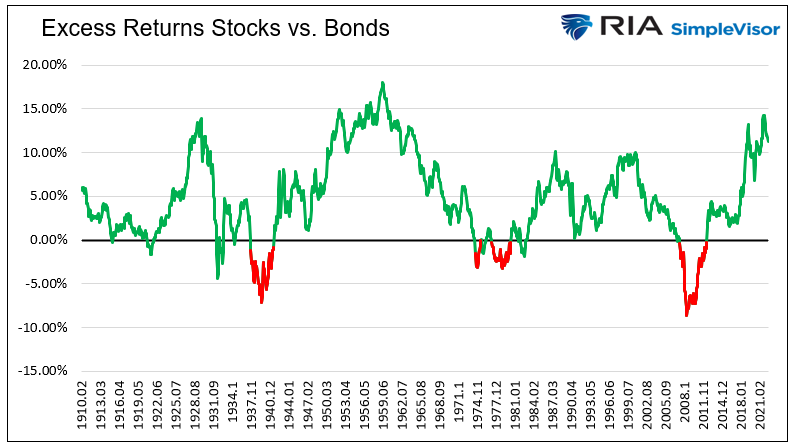
I look back to other periods when bonds outperformed stocks. This analysis allows us to assess specific stock traits and specific industries that over- and underperformed in those eras.
The difficult capital markets saga of 2022 continued through the third quarter with few safe harbors as rates rose and growth slowed.
From an investment standpoint, aggressive regime shifts like the current one often create price dislocations as allocators restructure their portfolios, according to K2 Advisors.
Bill Gross pioneered the “total return” strategy in the 1980s that revolutionized the once-sleepy bond market.
Mortgage rates above 7% have put the housing market on ice as affordability challenges put off a lot of buyers. Newer, younger homeowners who locked in their mortgage at a low interest rate — and whose next move probably would be trading up — are content to stay where they are until mortgage rates fall.
The IRS has given US cryptocurrency holders a bit more clarity about how to report digital assets on their 1040 income tax forms, a likely precursor to regulatory guidance.
Exchange-traded fund investors are preparing for the possibility that peak bond pain has passed.
The biggest increase to Social Security checks since 1981 was good news for retirees. But it also served as a stark reminder that the program is expensive, with cuts to the benefits looming unless it is retooled in coming years.
While many perceive the S&P 500 Index to be a broad innovation-heavy index, in a way it is and in a way it isn’t.
The long-simmering idea that the US government should stand ready to buy back Treasury securities from investors to improve market functioning is moving closer to reality.
Goldman Sachs Group Inc.’s traders once again helped rescue results from a sharp slowdown in investment banking just as the firm prepares for a reorganization that will combine the two business units.
The sleeper hit of 2022 investing is about to lose some of its luster — but it still might be one of the best places to store your cash.
Investors are looking beyond a looming global recession and they see one country – and its financial markets – emerging strongest on the other side.
U.S. equities are beginning the new week sharply higher, getting a boost from the U.K.'s decision to abandon nearly all its tax cut plans.