As the second quarter came to a close, the Fed’s elusive soft landing appeared to be within reach. However, inflation resurfaced during the third quarter, substantially complicating the near-term economic outlook.
When your system, whatever it may be, is working extremely well, we used to say it’s “firing on all 8 cylinders.” What does that mean?
The spike in bond yields presents an opportunity for fixed income investors to earn capital gains and diversify portfolios.
Amazon.com Inc. crowed over this week’s Prime Day sales, boasting that the two-day discount promotion “outpaced” last year’s event. Such a flashy description suggests the unofficial kickoff to the holiday season has set up the broader retail industry for a bright few months.
After three quarters of improving economic outlook amid increasing expectations for a painless decline in global inflation, markets and pundits alike have become less optimistic about a soft landing as they reacted to frustration from the Fed.
However, $22 billion moved into fundamentally weighted equity index ETFs, while dividend and momentum ETFs had outflows. This is sizable and warrants some added attention.
Slower growth and rising interest rates have tapped the brakes on private deal activity this year. But as banks continue to retreat from lending, we see plenty of opportunity for investors to pick their spots across the broad private credit universe.
The first nine months of 2023 have seen significant growth. Despite this growth, questions remain. Income is top of mind as many investors worry about the potential of a recession, the ongoing high-rate environment, and market uncertainty. Enter the Income Strategy symposium.
A liquidity gap is growing as banks curtail specialty lending, providing specialty finance investors opportunities for potential better risk-adjusted returns than we’ve seen since the GFC.
In this second episode, Franklin Templeton Institute’s Tony Davidow discusses opportunities in alternative credit strategies with Richard Byrne from Benefit Street Partners.
In his latest memo, Howard Marks provides a follow-up to Sea Change (December 2022). He argues that the trends highlighted in the original memo collectively represent a sweeping alteration of the investment environment that calls for significant capital reallocation.
Like a watched pot that refuses to boil, the much-anticipated recession of 2023 has yet to materialize. In our latest Strategic Income outlook, we examine the reasons and discuss what might finally cause the temperature to rise.
Making the case for municipal bonds today with Stephen Dover, Head of Franklin Templeton Institute.
The Federal Reserve (Fed) only controls one rate of interest, and it is a very short-term rate called the federal funds rate, the rate that banks charge each other for overnight, intra-bank loans.
The financial planning landscape is undergoing a great transformation, driven by emerging trends that have accelerated in recent years.
“Very strict enforcement” is a euphemism used by the American Automobile Association to warn motorists of places where even minor traffic violations will likely be caught and punished with heavy fines.
Most voters aren’t going to get hot under the collar about battles in Washington, DC, over bank capital requirements, but they definitely relate to stories about home loans becoming more expensive or less available. That doesn’t mean debate is straightforward, especially once each side starts throwing numbers around.
After investment losses tore through the US financial system this year, a fresh slump in bank stocks shows some investors fear the problem — which at its most extreme claimed a handful of lenders — hasn’t gone away.
As the Federal Reserve signals it will keep interest rates higher for longer, the market appears to be reflecting the uncertainty about the path of policy going forward.
Advisors have choices to face with their fixed income allocation. Should they take on credit risk to be rewarded with a high level of income? What about taking on interest-rate risk and owning longer-duration bonds?
When you are trying to build trust with a new prospect, one of the worst things you can do is sell your “value proposition” – an extinct notion that no longer applies in today’s highly competitive market.
In the next year, we will see the introduction of the fully functioning, digital-human financial advisor.
For two decades, Amy Wu Silverman has tracked fear and greed across Wall Street by keeping a close eye on the twists and turns in the Cboe Volatility Index.
Even as stocks rallied back during the monetary panic last week, big disruptions in the world of Treasuries threaten fresh pain for a host of hedging strategies on Wall Street.
Medical Properties Trust is a very controversial healthcare REIT. Most estimates range the fair value somewhere between $10 and $20 a share and the stock trades at around $5, just a little bit better than $5 a share.
With the widely followed Markit iBoxx USD Liquid High Yield Index down almost 3% over the past month and in the red on a year-to-date basis, this might not be one of those times.
When the media speaks of the yield curve, they are likely referring to the Treasury yield curve. It is the point of reference for interest rate levels and investment comparison.
VettaFi’s Roxanna Islam discusses the underwhelming debut of ethereum futures ETFs. Baird’s Rich Lee talks recent ETF trading volumes, S&P 500 concentration risk, active management, and ETFs moving to T+1 settlement. Texas Capital’s Ed Rosenberg spotlights the Texas Capital Texas Equity Index ETF (TXS).
The reasons people choose to live in high-cost-of-living locations are clearly emotional.
Advisor Perspectives has announced its Venerated Voices™ awards for commentaries published in Q3 2023.
Michael Kitces just published the results of his new software survey. Many of the results confirmed what Joel Bruckenstein and I have been reporting for years. But there were some key differences.
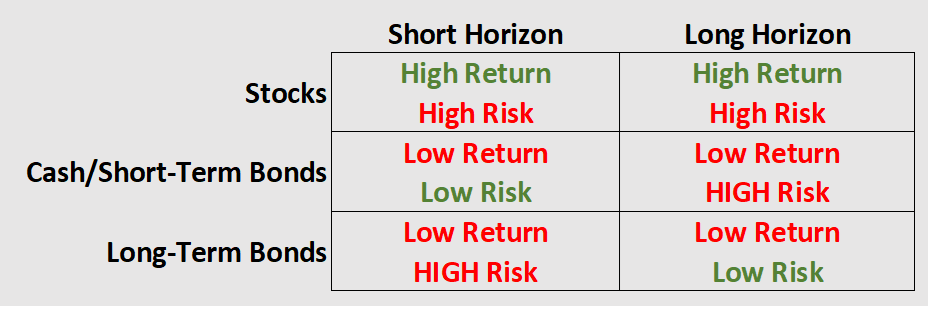
In investing, you can have a safe present or future value, but not both!
Denied the dubious spectacle of a cage match between Elon Musk and Mark Zuckerberg, the world may yet be treated to a contest pitting the Tesla chief executive against an underdog from Indiana.
When Congress voted in 2018 to give regional banks a break from stiffer post-crisis capital rules, it created a two-tier banking system in the US.
Once again, due to the ongoing lack of fiscal responsibility in Washington, the markets and the economy faced a Government shutdown.
Risks remain tilted to the downside. Uncertainty about the strength and speed of monetary policy transmission and the persistence of inflation are key concerns. The adverse effects of higher interest rates could prove stronger than predicted, and greater inflation persistence would require additional policy tightening that might expose financial vulnerabilities.
Global central bank hiking cycles have dominated financial market headlines for the last 18 months, keeping many investors on the sidelines, hiding out in cash as inflation and the resulting rate hikes were serious headwinds to returns.
Rising rates and inflation acted as a wrecking ball to investment portfolios in 2022. U.S. equities and investment-grade fixed income witnessed double-digit declines, leaving investors scrambling for protection.
The U.S. Treasury yield curve is currently inverted, with yields on short-term bonds higher than yields on longer-term bonds. Some expect this to unwind with short-term bond yields falling faster than longer-term yields. Amid these expectations, those investors are wondering if they should consider reallocating to shorter-term bonds.
Following last year’s calamity in the bond market, it’s not surprising that advisors and investors are looking for new avenues through which to source income. That search is leading many market participants to options-based exchange traded funds, including covered call ETFs.
Corporate defaults and bankruptcies are on the rise, but we don't believe it should be a concern for investors who hold highly rated corporate bond investments, like those with investment-grade ratings.
The US economy has been more resilient than many pundits had anticipated over the past year—but can this resilience continue? Stephen Dover, Head of Franklin Templeton Institute, recently hosted a discussion with economists from across our firm to explore where the risks and opportunities for investors lie today and into year-end.
One mark of true brilliance is the ability to make complex ideas seem simple. I think this is why so many of us fondly remember our early schoolteachers.
Japanese stocks have outperformed global equities by a wide margin this year. Is this a false dawn or can inflation continue to breathe life into the market?
South Florida has a reputation as a leading indicator of housing market trouble, so the Cassandras are understandably watching the region closely these days.
Bill Gross is right: bond ETF activity has been frenzied in the grip of Wall Street turmoil.
Investors had gotten used to smooth sailing with the economy remaining resilient, the equity market soaring double digits, and volatility remaining (mostly) subdued.
Expectations of "higher for longer" U.S. interest rates has helped drive the dollar's recent rally.
The fiscal year ended last week, alarms went off both literally and figuratively, and a last-minute deal was reached to keep the government open for another forty-five days.
Housing affordability has been stretched thin across the United States. Joe Prestamer and Michelle Luu discuss some of the ways municipalities are tackling this complex issue.