When the Fed increased the M2 money supply by over 40% during the COVID crisis, our instinct was that the implications would extend far beyond a temporary boost to the U.S. stock market and higher inflation. That intuition is proving accurate. We’re now seeing the long-term ripple effects play out in real time across multiple asset classes and global markets.
Join the experts at Aberdeen Investments as they discuss today’s small cap equities market, how current events are shaping opportunities for the asset class, and where small caps may fit within your equity allocation.
Financial advice is going to be in more demand than ever in 10 years. Is your firm ready for the challenge?
For good reasons, many investors have a love-hate relationship with commodity investments. Operationally, the annoying K-1 form complicates tax filing, although thankfully the industry has started to launch “no K-1” funds.
Your firm's culture should reflect your values and your mission.
This year’s formidable challenges have clarified strategic lessons for equity investors to apply in the coming months
Investors may be tempted to imagine how much higher the S&P 500 Index would be if three of its most influential stocks weren’t lagging behind.
JPMorgan Chase & Co. is developing a new service to tokenize carbon credits and is partnering with a trio of carbon companies for an initial trial.
Treasuries are set for a second daily drop heading into a double whammy of labor data, following an unexpected jump in US job opening numbers.
The marathon Senate budget vote took center stage early and stocks slipped from yesterday's all-time highs. Job openings, Powell, and manufacturing data are top of mind.
Goldman Sachs entered the ETF market nearly 10 years ago, yet two of its most popular products in 2025 are relatively new, both with less than a two-year track record.
Netflix Inc. investors face a dilemma: Continue to bet on a stock that has delivered best-in-class returns over the past year or reconsider shares that increasingly look like they’re priced for perfection.
India has seen foreigners leaving the market for most of 2025. For this and other reasons, India has become one of the bigger shorts in our Systematic Global Macro Strategy’s equity portfolio
As direct lending matures and other private credit areas expand, active investors can apply relative value strategies across sectors – and even entire markets – to pursue enhanced outcomes.
Markets notched fresh all-time highs on Friday with a positive tone and geopolitical outlook. Swift retreat in oil back to pre-strike levels, combined with friendlier NATO negotiations and de-escalated fighting in Iran restored risk appetite.
For sophisticated investors, this technical shift marks a subtle but powerful pivot in monetary mechanics. It could create demand for Treasuries, improve market liquidity, and push yields lower at a time when the economy is slowing.
In a speculative market chasing AI and high beta, this report makes the case for the steady power of compounding dividends reminding investors that, especially late in the cycle, a bird in the hand may truly be worth two in the bush.
Only a subset of subsidies will be rolled back.
A potential conflict with Iran has consistently appeared in our monthly Market Risk Monitor for over two years. Now that risk has materialized. Our equity portfolio managers assess the implications for global markets.
The European Union is willing to accept a trade arrangement with the US that includes a 10% universal tariff on many of the bloc’s exports, but wants the US to commit to lower rates than that on key sectors such as pharmaceuticals, alcohol, semiconductors and commercial aircraft.
With the market roughly at the midpoint for 2025, investors and advisors are still assessing how changing macroeconomic conditions could affect their fixed income portfolio.
Easing trade tensions and hopes the Senate could pass a budget gave stocks an early lift after Friday's record highs. The week is packed with jobs news and Powell talks tomorrow.
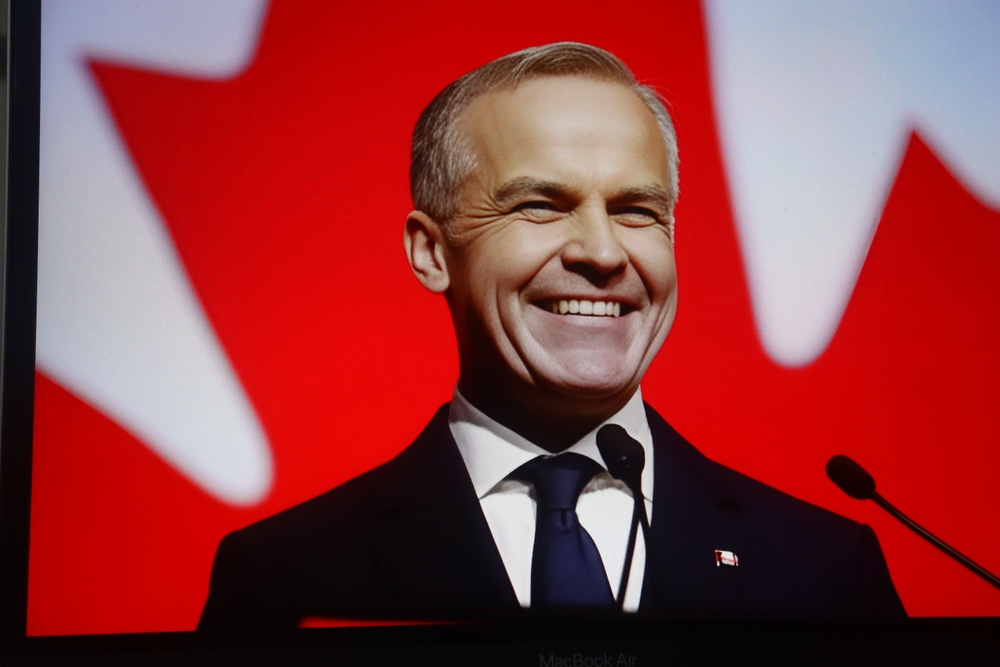
Canadian Prime Minister Mark Carney handed US President Donald Trump a win in the hope of making bigger gains in trade negotiations.
There are a number of considerations to put in place before you start any change effort, transition or project. These can help save endless hours of wasted time trying to undo things that didn’t work or going back to fix it again.
CAIE offers efficient single-ticker exposure to a diversified portfolio of laddered autocallables—seeking to deliver consistent, high monthly income through the structural advantages of an ETF.
Victory Capital’s Lance Humphrey walks through the VictoryShares ETF lineup and shares his perspective on the current market environment. VettaFi’s Kirsten Chang highlights key takeaways from the firm’s Mid-Year Market Outlook Symposium, offering insight into how advisors are approaching portfolio allocations for the remainder of the year.
The words you use are not just tools for communication; they’re signals. Signals that tell your prospects whether you’re someone they can trust or someone they should avoid.
Margin loan recommendations are often presented by brokers as tax-savvy strategies that allow clients to access “tax-free” cash while keeping their portfolios intact. In many cases, however, the math benefits the advisor more than the investor.
True fiduciary duty isn’t fulfilled by following the crowd. It’s fulfilled by doing the harder thing: making the right call even when it’s the unpopular one. The world doesn’t need more advisors playing not to lose. It needs more who are willing to lead — even if they walk alone.
US job openings unexpectedly rose in May to the highest level since November, largely fueled by leisure and hospitality, and layoffs declined, pointing to a stable labor market despite economic uncertainty.
US lenders are on a tear and hedge funds are snapping up shares at a furious pace, underscoring Wall Street’s increasing conviction that their record-breaking rally has more room to run.
A turf war is breaking out in the vast world of digital payments — and the incumbents are suddenly on defense.
UniCredit SpA will offer its professional clients a structured product tied to BlackRock Inc.’s iShares Bitcoin Trust ETF that features full protection against losses, as European banks seek new ways to tap into appetite for digital assets.
Almost everything said about Tesla Inc. these days ranges from bad to worse.
Just a few decades ago, Europe led the world in adopting nuclear. It relied on the technology for more than 30% of its electricity and accounted for more than 40% of global production.
Readers of a certain age will no doubt recall President Ronald Reagan launching one of the most ambitious military buildups in American history.
Market breadth can help gauge strength or weakness. Methods include tracking the number of stocks trading above or below moving averages or making new highs or lows.
Growth is expected to decelerate, but not come crashing down.
In a recent newsletter, we explored the explosive growth of ETFs and the implications for portfolio construction. In this follow-up blog post, Lauren and I wanted to take that conversation a step further—diving deeper into how advisors can navigate the ever-expanding ETF universe while staying true to their investment philosophy.
Chief Economist Eugenio J. Alemán discusses current economic conditions.
Thematic investing has experienced cycles of popularity over time. In less cautious market environments, investors often turn their attention to ambitious ideas — such as disruptive technologies or other transformative future trends — looking beyond traditional equity ETFs.
In 1852, Karl Marx said "Men make their own history, but they do not make it as they please; they do not make it under circumstances chosen by themselves, but under circumstances directly encountered and transmitted from the past."
This article will help you evaluate whether it’s still a good time for clients to gain Bitcoin exposure—even after its recent all-time high—and how to do so responsibly. You’ll learn how Bitcoin fits into a diversified portfolio, what leading financial institutions forecast for its future, and why spot Bitcoin ETFs offer a regulated, practical entry point for long-term investors.
The United States’ tariff announcement on April 2, 2025, created significant market volatility, as the tariffs were perceived as higher, broader, and more punitive than expected, and the implementation sooner.
Market uncertainty needs a tailor-made approach to fixed income for advisors to construct the ideal portfolio for their clients. There’s an easier solution that encompasses an active management approach, various income sources, and low cost. It’s the Vanguard Multi-Sector Income Bond ETF (VGMS).
Join the experts at KJLK & Co., LLC as they explore a strategic approach to alternative, private market exposure and unpack why it matters in today’s market environment.
Stocks are wrapping up a stellar quarter at all-time highs amid signs of progress in US trade talks while hopes the Federal Reserve will resume its rate cuts drove Treasuries toward their biggest first-half stretch in five years. The dollar eyed its longest monthly slide since 2017.
For years, Americans have lamented that rising housing prices and elevated mortgage rates have made homeownership unaffordable for too many first-time homebuyers, while prompting many homeowners to stay put rather than sell.
Thematic ETFs are making a comeback, and one theme in particular dominates conversation. Artificial Intelligence remains top of mind for investors. TMX VettaFi’s Zeno Mercer and Todd Rosenbluth discussed the disruptive technology.
Despite concerns regarding the electrical power grid, there are solutions to meet the surge in AI-driven energy demand. For example, nuclear energy is making a comeback.