Borrowing can offer flexibility and align with long-term financial goals.
Advent is working on an offer to acquire U-blox Holding AG in a deal that could value the Swiss maker of positioning chips at more than 1 billion Swiss francs ($1.2 billion), according to people familiar with the matter.
July’s Consumer Price Index (CPI) report showed headline year-over-year inflation remained steady at 2.7%, below the anticipated level of 2.8%.
A checklist comprising above-average income, attractive valuations, and positive correlations to possible interest rate cuts may sound daunting
Active emerging markets ETFs can provide that international performance even if international equities broadly don’t spike as they did earlier this year.
Traders are snapping up risky assets of all stripes in the hope that falling US interest rates will add rocket fuel to an economy that’s so far been able to withstand the effects of Donald Trump’s trade war.
Apollo Global Management Inc. is aiming to invest in artificial intelligence, defense and infrastructure in Europe, where trillions in spending is needed, its co-head of European credit Tristram Leach said in a Bloomberg TV interview.
Despite headline noise from U.S. tariffs and mixed earnings, India’s structural growth pillars—credit expansion, services exports and infrastructure delivery—remain firmly intact in 2025.
For many investors, land ownership is part of the American Dream. But what happens when the land you own sits idle?
Main Capital, a Dutch buyout firm focused on software deals, is pushing to more than double its assets under management to €15 billion ($17.5 billion) in the next three years, betting on rising demand from US investors for European assets.
Some market observers say that the biggest wave of corporate treasury adoption of cryptocurrency has come and gone. However, some studies point to a long runway for corporations to bring crypto into their portfolios.
Investors seeking a Goldilocks option to balance yield and rate risk may want to consider intermediate bonds.
With 90% of S&P 500 companies having reported second quarter results, corporate America has handily topped expectations, displaying resilience in the face of a challenging policy environment.
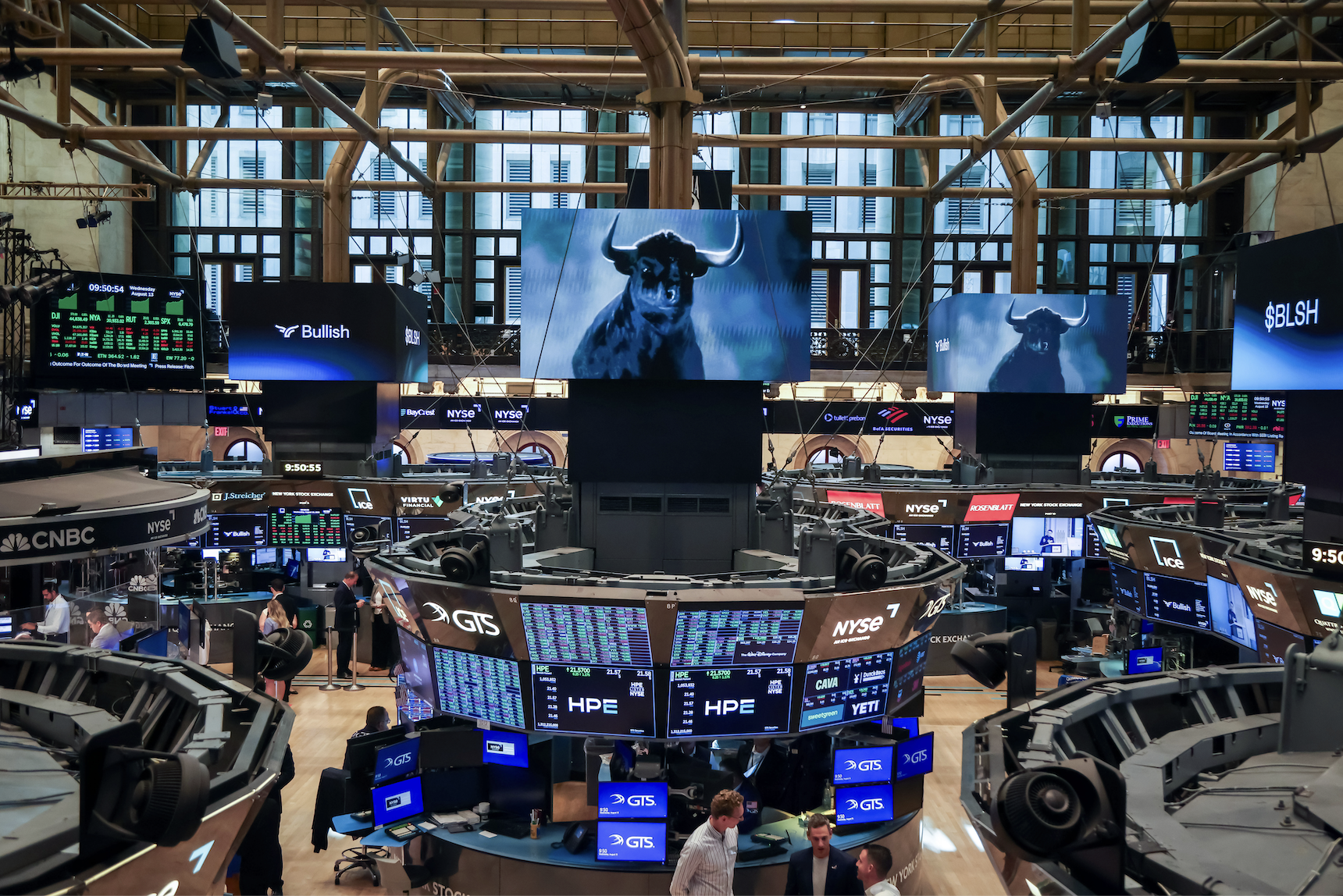
Bullish shares jumped 84% from the IPO price after the digital-asset exchange operator and owner of media outlet CoinDesk raised $1.1 billion in an initial public offering.
The word “bubble” gets tossed around quite a bit. Usually, it comes in the form of verbal arguments about whether prices have advanced to a point that’s “too high” in some sense. We can do much better than that. A bubble is a mathematical object.
China’s economy slowed across the board in July with factory activity, investment and retail sales disappointing, suggesting Beijing’s crackdown on destructive price wars and spillovers from Donald Trump’s tariffs are casting a pall over the world’s No. 2 economy.
Hedge funds added exposure to technology giants including Microsoft Corp. and Netflix Inc. in the second quarter, a stretch that saw an initial surge in volatility due to President Donald Trump’s trade policies but ultimately ended with major benchmarks posting significant gains.
A pair of new bond exchange-traded funds is making it easier than ever for investors to avoid taxes on coupon payments.
UnitedHealth Group Inc. shares jumped after funds piled into the company, which has been hampered by a federal probe into its business practices and weakening results.
The One Big Beautiful Bill Act, signed into law on July 4, 2025, introduces significant changes to the federal student loan system. The legislation aims to simplify repayment options, adjust borrowing limits and modify the structure of educational financing.
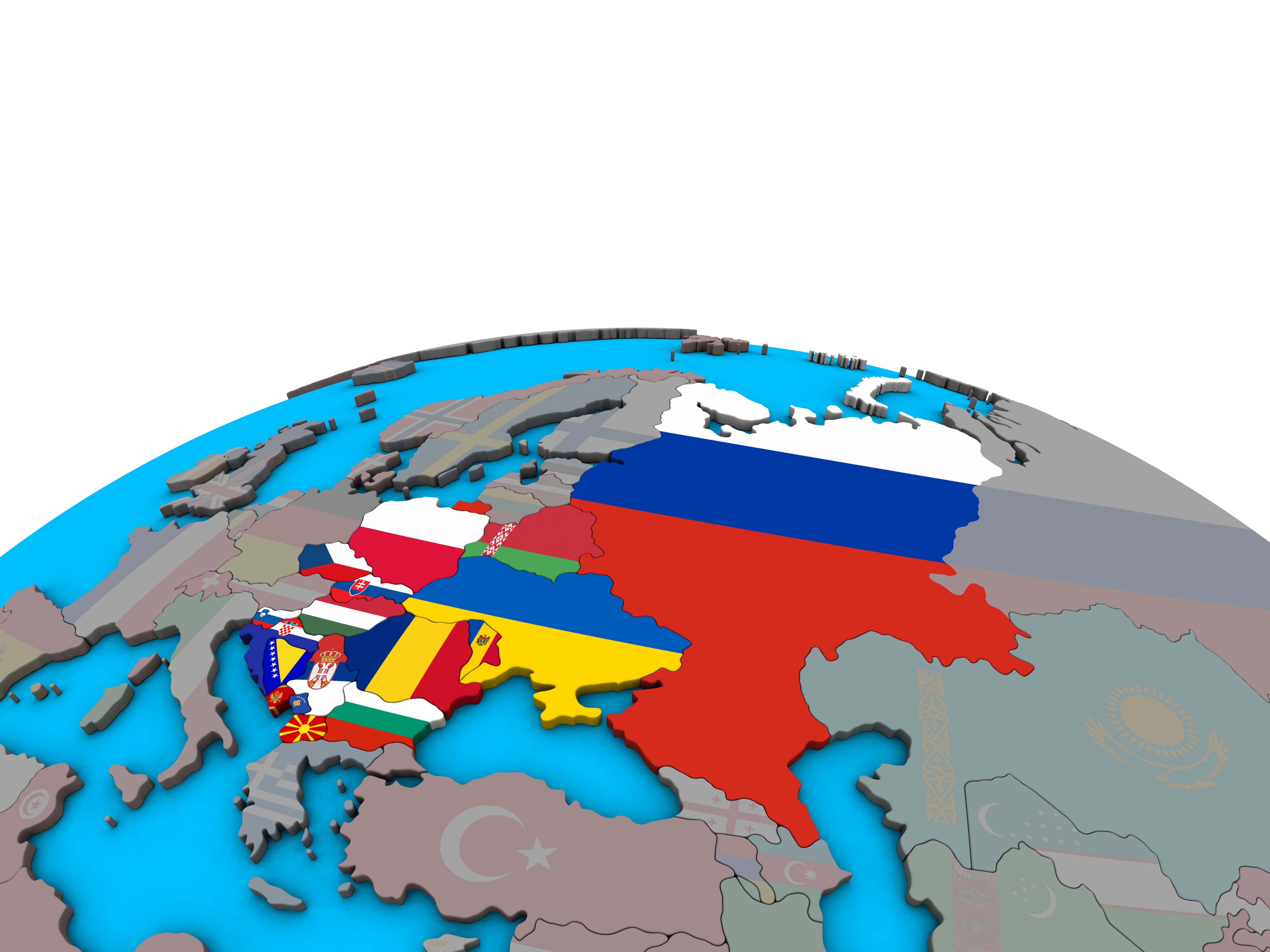
Last summer, we highlighted the investment potential in Eastern Europe.
Japan represents a compelling investment case, where local insight and rigorous research can uncover under-owned assets with the potential to deliver strong returns.
Economic resilience allowed the Fed to remain in wait-and-see mode in July, but July’s non-farm payroll report may cloud the horizon.
Wall Street banks are starting to cover firms that are not publicly traded. JPMorgan Chase & Co. kicked off the trend with a report on OpenAI Inc. Citigroup Inc. followed suit a week later with a list of roughly 100 large private companies it will focus on, predominantly in the tech sector.
President Donald Trump’s chaotic tariff policies have upended global trade and led to questions about whether the days of US exceptionalism and leadership that attracted capital from around the world are over.
The July CPI data indicated moderate price inflation and boosted optimism for a September interest rate cut, even though monetary inflation is on the upswing.
Portfolio Manager Dan Lyons and Research Analyst Luyi Guo explain recent developments in proposed pharmaceutical tariffs and “most favored nation” drug pricing and what both could mean for the biopharma industry.
The 24-hour news cycle reminds investors that tariffs still remain a factor. As such, for those looking to get commodities exposure as a portfolio diversifier will want to make sure they allocate strategically.
The U.S. economy grew at a surprisingly strong annualized rate of 3.0% in the second quarter of 2025, which far outpaced the post-2000 average of 2.3% and easily beat expectations.
As investors re-evaluate their allocations to US assets, we think they should consider euro-denominated bonds.
As we move through the final peak week of earnings season, the blended growth rate for S&P 500 has now moved into the double digits, hitting 11.8% with 90% companies reporting.
Income diversification is necessary considering that rate cuts could be ahead. One area that could help bridge the gap — private credit.
This video examines two key market valuation metrics: the Trailing Twelve-Months (TTM) P/E ratio and the more reliable P/E10 ratio. Using data through July 2025, we explore their differences, historical context, and what they reveal about the current market's valuation.
America is a free country. People are allowed to take all sorts of ill-considered risks.
President Donald Trump’s move to extract a 15% sales tax from Nvidia Corp. on certain semiconductors sold in China did nothing to damp investor enthusiasm for the world’s most valuable company.
Apple Inc. is plotting its artificial intelligence comeback with an ambitious slate of new devices, including robots, a lifelike version of Siri, a smart speaker with a display and home-security cameras.
US short-dated bonds yields fell to their lowest levels in more than three months, reflecting conviction among traders that the Federal Reserve will cut interest rates in September.
Sam Altman has a good problem. With 700 million people using ChatGPT on a weekly basis — a number that could hit a billion before the year is out — a backlash ensued when he abruptly changed the product last week.
We have been pleasantly surprised by how well stocks have handled the sharp increase in tariffs. Since the market low from the early April tariff scare, the S&P 500 Index has gained more than 28%.
It’s always fun to return to classic novels for summer reading and accordingly, this year’s Charts for the Beach returns to the time-honored basics of the economy and of investing.
For the second straight month, consumer borrowing was weak, indicating Americans might be close to their credit limits.
While the One Big Beautiful Bill Act (OBBBA) has something for each constituency in President Trump’s political coalition, we think it could be a squandered opportunity to alter the unsustainable trajectory of federal debt.
Doug Drabik discusses fixed income market conditions and offers insight for bond investors.
The first step toward offering participants lifetime income is to address misperceptions.
If you’re fighting an antitrust lawsuit that might end up breaking your company into pieces, one defense is to argue that those pieces would wither away if separated from the mother ship, thus creating a worse outcome for the consumer.
The summer months and October are known being tough on stocks, but seasonal trends don’t always repeat. Even when they do, it’s not necessarily a call for long-term investors to move away from equities. This year could be an example of a good time to remain invested during the summer doldrums.
Join the experts at CoinShares for an interactive product due diligence session, where you’ll have the opportunity to explore two strategic approaches to Bitcoin investing and get your questions answered in real time. Come curious, the team is here to help you gain clarity and confidence.
When going through a merger or acquisition, business continuity can be tricky. But advisor teams that make sure they are combining with firms with aligned cultures, services or business trajectories have a much higher chance of a successful transition — and retaining clients.
The ETF landscape continues to grow and change, and this time, it’s Neuberger Berman adding to the space.
Your clients need to plan for long-term care, and you need to help them do so. The best way to start that process is to dissuade them from assuming that LTC equals a nursing home.