Dollar strength resulting from central banks' independent policies on rate cuts is unlikely to be tampered by China's deflation or geopolitics.
The dynamics of fiscal and monetary policy are now entering a new phase. Due to the emergence of negative Net National Saving (NNS), the law of diminishing returns can no longer fully capture the harmful effect of debt on economic growth.
Sales of new homes in the US bounced back broadly in March as an abundance of inventory helped drive prices lower.
Rising interest rates and the fear of giving back stock market gains are pushing pension fund managers to move capital from stocks to bonds.
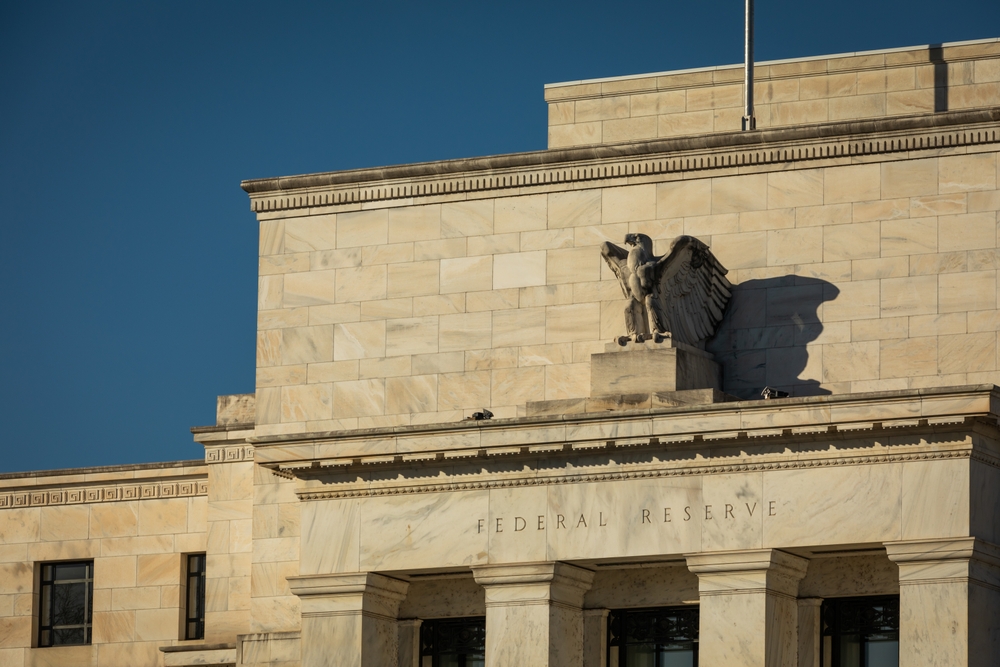
The Federal Reserve’s difficult task suddenly looks even harder. The central bank’s goal has been to restrain demand enough to push inflation gently back to its 2% target without tipping the economy into a recession.
VettaFi examines the opportunities the growing hydrogen industry presents to the traditional midstream space.
Stronger economic growth is allowing the Fed to stay patient. That means a likely delayed start for expected interest-rate cuts.
Dr. Bernanke found significant shortcomings in the BoE's forecasting.
In this article, Russ Koesterich discusses why a higher rate environment may still allow stocks to end the year higher.
We put the recent market movements in perspective, which have been driven by time (it has been a while since we had a 5%+ pullback), overly optimistic, complacent market sentiment, and higher Treasury yields amid persistent inflationary pressures and signs of a more patient Fed.
Economic “reflation” is becoming the next bullish narrative as equity valuation increases continue to outpace earnings gains, at least according to Gold Sachs and Tony Pasquariello.
The economy continued to grow in the first quarter at what we estimate is a 2.6% annual rate. That’s a slowdown from the 3.1% rate in 2023, but still good compared to the past couple of decades when the average growth rate has been 2.0%.
The world’s financial markets are encountering a force they didn’t bet on for 2024: A strong dollar is back and looks set to stay.
The Federal Reserve is expected to lower interest rates, but the economy and stock market don't need stimulation.
Copper traded near $10,000 a ton, hitting a new two-year high on its way, as investors continue to pile in on a bet that miners will struggle to service a surge in demand for the bellwether industrial metal.
I have indicted the securities industry for spreading “a web of deceptions that have become conventional wisdom.” But a small part of the industry does provide products and services that are beneficial and necessary. That is the subject of this article.
Our outlook on the 11 S&P 500 equity sectors.
The impact of high inflation on individuals’ finances is not something to take lightly, especially in the U.S., because for almost 40 years we have had no experience with such an event and have no clue how to deal with it or how to try to minimize its negative impact.
Monetary authorities saved the day again in the first quarter, but over-reliance on them is looking to be increasingly risky for investors. The new boss is geopolitics and that is where investors should be looking for guidance.
Copper is trading at a 52-week high, oil is above $90 a barrel and the S&P 500 Energy Index just hit a fresh all-time high.
Inflation concerns are top of mind again, with consumer prices and producer prices rising higher last week.
So far this year, the US equity market has shown remarkable resilience and US inflation has remained sticky. Against this backdrop, a recent survey of our chief investment officers offers analyses and perspectives on key areas, such as Federal Reserve rate cut expectations, geopolitical risks, uncertain corporate earnings and opportunities in different asset classes.
Three months of discouraging inflation data coupled with some hot economic data points are considered headwinds for U.S. Treasurys.
A string of disappointing inflation data has forced the Federal Reserve to reset the clock on its first interest-rate cut and re-evaluate the trajectory of price growth.
US Treasury Secretary Janet Yellen acknowledged the concerns of Japan and South Korea over sharp declines in their currencies during a trilateral meeting of finance chiefs that may offer Tokyo and Seoul more scope to defend the yen and the won.
Ben Graham, the value investor and Warren Buffett mentor, famously said the market is like a voting machine in the short run, but “in the long run it becomes a weighing machine.”
Inflation, one of many inputs to multi-asset decision-making, cooled substantially last year, but upside surprises in early 2024 for the US and Europe have many investors concerned that the path back to normal has hit a roadblock.
The Northern Trust Economics team shares its outlook for key APAC markets.
In this edition of Bull vs. Bear, staff writers Nick Wodeshick and Nick Peters-Golden ask whether rate cuts will still happen in 2024.
Q2 weakness is causing traders to up their bearish bets on bond prices, but it presents an opportunity for value-seeking investors.
When does a strong dollar become too strong? “Right now” would be the cry of most emerging-market currencies, not to mention policymakers in Japan. Even the European Central Bank says it’s paying attention to the foreign exchange market.
The highest US yields since November are beginning to attract some opportunistic buyers, even as negative sentiment remains firmly entrenched throughout the Treasury bond market.
The Northern Trust Economics team shares its outlook for U.S. growth, employment, interest rates and inflation.
For the last several years, world leaders have made big promises and laid out bold plans to mitigate the climate crisis and help the neediest countries adapt. At this year's World Bank/IMF Spring Meetings, they must demonstrate that they can fulfill these promises, rather than simply touting new ones.
For a typical consumer, the two most hot-button topics are food and energy. Both play a significant role in household spending, and just as importantly, both are highly visible.
The S&P 500 index reached a record close this week, rising 0.4% and marking its strongest Q1 in five years with a 10% increase since the end of 2023.
Japan has had two big moments in the last month, with the Nikkei 225 equity index breaking above the highs set in 1989, and the Bank of Japan (BoJ) raising interest rates for the first time in 17 years.
Advisors weigh in on how you should approach account withdrawals after retirement in order to make your assets last.
It appears investors are heading for the exits on U.S. Treasuries and towards the entranceway of European bonds.
Federal Reserve Chair Jerome Powell is making life tougher for his peers around the world as the prospect of higher-for-longer US interest rates reduces room for easier policy elsewhere.
US mortgage rates climbed to a four-month high last week, potentially signaling a bumpier recovery for the residential real estate market.
With the end of great inflation scare in sight, it's time the central bank hive mind contemplated what it might learn from the failure of its economic models.
While immigration has positively impacted economic growth and disinflation, this story has a dark side.
Mistakes in both geopolitical and fiscal policies compound over time, often leading to more mistakes.
We had expected the Federal Reserve to start cutting rates in June. But as more of our audiences asked why, we saw the case was not strong. This week’s inflation reading seals the deal: we now expect the easing cycle to start in September.
We have always maintained it is better to accept what the market has on offer than to stretch for returns. Thanks to the inverted yield curve and our flexible mandate, the current environment is making it easier than ever to be patient while we wait for fat pitches.
Our investment leadership team convened twice on Sunday to discuss the conflict between Iran and Israel, its key watchpoints in the days ahead, and the pertinent risks onto markets, our investment portfolios, and our clients. The team broadly agreed that maintaining a slightly defensive posture across portfolio strategies remained appropriate.
Gold prices have shot up to historic highs – outshining broader markets and driving up demand for gold ETFs.
VettaFi’s Todd Rosenbluth and Kirsten Chang discuss year-to-date ETF flows, along with tackling the challenges presented by fixed income right now. etf.com’s Kristin Myers previews their upcoming 2024 industry awards ceremony and highlights several hot ETF topics.
While major indexes have seemingly been calm this year, there are notable and stealthy sector leadership shifts that have happened under the surface.