I haven’t always taken the most conventional approach to economics. In a world where many practitioners construct elaborate models to arrive at conclusions, I often find more value in simply following my instincts. During stressful times and paradigm changes, thinking outside of the equations is essential.
After a week of traveling abroad to meet with clients and discuss our outlook for the US economy and financial markets, we returned feeling the need to address a growing misconception, both in the United States and overseas, regarding the differences between the US and Chinese economies.
My goal with this letter will be to not interrupt your long weekend too much. But there are some things that are happening that are important. My basic thesis for quite some time has been that we are in a Muddle Through Economy, which I’ve always meant that to me the GDP will grow slightly south of 2% over time.
The “K-shaped” divide endures even as it evolves. Higher-income households keep benefiting from equity gains, home price appreciation, and solid earnings, while lower-income households face mounting pressure from elevated costs and tighter credit. But recent data suggest the story is becoming more nuanced.
Cerulli projects a $2 trillion surge in advisor-held alternatives over five years, as interval funds reshape how RIAs access private markets.
What if you could capture the potential gains of the S&P 500, but limit your losses if the market goes down? Or earn above-market income given the right stock market conditions? How about gaining some market exposure while protecting principal with FDIC insurance, up to applicable limits?
For the past six weeks, we’ve walked through the forces creating America’s K-shaped economy, housing, healthcare, education, wages, incentives, and the political consequences when enough people decide the system is not working for them. This week let’s look at the situation from a more optimistic angle.
Products and services often benefit from great marketing. A catchy commercial, headline, or gimmick can attract potential customers. Sometimes marketing can be so effective that customers seek or support an average or even inferior product.
After several challenging years, important parts of the health care sector appear to be reaching an inflection point. Policy uncertainty has weighed on pharmaceutical companies, constrained biotech funding has pressured the drug-development ecosystem and the normalization of pandemic-era has challenged select tool and device companies. More recently, however, several of these headwinds have begun to moderate.
For many investors, years of disciplined saving, equity compensation, business ownership, or a handful of exceptional investments can produce a portfolio that grows faster than expected. While that may sound like an ideal outcome, it can also create what we often think of as a wealth overhang: a situation in which the complexity of your wealth begins to outpace the financial plan supporting it.
Emerging-market (EM) equities have benefited enormously from the global AI investment boom. But headline market gains show that EM leadership has become concentrated in a handful of mega-cap technology stocks. In our view, today’s EM benchmark is far less diversified than many investors assume, creating opportunities to seek differentiated sources of return.
Famous market bubbles share some characteristics, but it's nearly impossible to predict how big a bubble might get and when one is about to burst.
Global fixed income and equity ETF strategies posted gains and saw inflows surge in August, even amid ongoing macroeconomic turbulence and elevated long-term borrowing costs. International equities maintained their year-to-date lead over U.S. stocks throughout the month, led by notable strength in emerging markets.
Stocks have enjoyed a powerful run off the spring lows and have largely shrugged off concerns around growth, inflation, higher interest rates, the effects of artificial intelligence (AI), geopolitics, and policy uncertainty. As the calendar turns to September, however, they are entering what has historically been, from a seasonality perspective, the most challenging month of the year for equities.
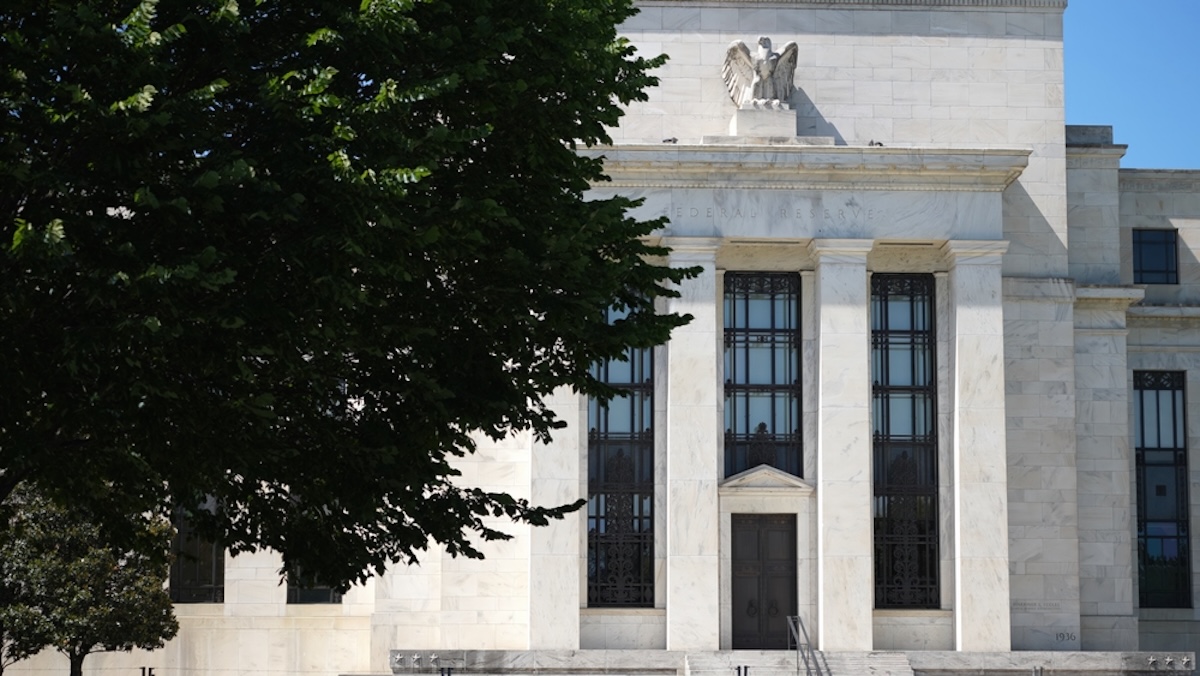
Kevin Warsh's Jackson Hole speech struck a decidedly hawkish tone and was arguably the clearest signal yet that the Federal Reserve is actively considering additional tightening. Markets responded by raising the probability of a September hike to roughly 60% and pricing approximately 60 basis points of cumulative tightening through the middle of next year.
With recent data weakening the case for an immediate increase in rates, markets have sharply pared expectations for near-term tightening, with a hike no longer fully priced before early 2027.3 This moderation in rate-hike fears has been supportive for gold.
The saying “May you live in interesting times” is becoming relevant in the bond market for all the wrong reasons. “Interesting” usually means “trouble.”
On Wednesday, September 2, State Street Investment Management announced the debut of the State Street SPDR UC Investments 90/10 Endowment Strategy Index ETF (UCBG). Notably, this fund was created through a collaboration between State Street and UC Investments, the investment arm of the University of California.
By enhancing the input that goes into so much of what we do—intelligence—AI’s potential to drive higher economic growth is enormous. But with fears of the technology's unintended consequences affecting the pace and depth of adoption, the promise of long-term gains must be set against more immediate risks.
August 2026 was a blockbuster month for ETF acquisitions.
Anchoring is one of the most powerful—and underestimated—forces in financial decision‑making. Once an emotional label attaches itself to an idea, it becomes the lens through which people interpret everything that follows.
House poised to pass bill to avoid government shutdown, two new members set to join the House, Fed chair speech boosts rate hike possibility, and national debt hits $40 trillion.
Geopolitical headlines can quickly move markets, but investors do not need to predict every headline to identify potential opportunity. The more useful question is what governments, businesses and consumers are doing in response to a changing strategic environment, and which companies may benefit.
The month of August reminded many investors that the markets rarely move in a straight line. A combination of encouraging economic fundamentals, uncertainty in the bond market and renewed geopolitical turmoil led to increased volatility and shifting market leadership. But the underlying backdrop reinforced that the US economy continues to expand at a sustainable pace.
The topic d’jure is that Kevin Warsh just gave his first Presser (Oh yes, we love that word) as new Chairman of the Federal Reserve, and it was fascinating, although in fairness, I have a Zen and the Art of Motorcycle Maintenance streak in me that delights in what others might consider head-rolling minutiae.
In this article, Russ Koesterich explains how strong fundamentals have supported stocks, but rising bond yields may soon begin to challenge market valuations.
Interim data takes center stage, with Costco, Ford, Robinhood and Charles Schwab offering fresh reads on consumers, autos and retail trading
US Treasury Secretary Scott Bessent made waves with his recent announcement that the Treasury would at least double the size of its buybacks of long-term debt in the coming months. He argues that long-term yields do not reflect fundamentals, suggesting that the Treasury's intervention is aimed to restore proper market functioning.
Markets opened on a sour note on Monday after Treasury Secretary Scott Bessent unveiled “Operation Economic Outcast.” This initiative was to include sweeping sanctions against Iran and the networks that enable the regime to evade existing restrictions. Bessent did not explicitly mention Iran’s enablers, but many assumed China was the primary culprit.
It’s back-to-school season, and the ETF market is closing out a summer that proved anything but slow. August brought $180 billion in fresh net ETF asset inflows and saw the number of new ETFs coming to market cross 1,000 for the year. August also saw a barbell strategy against macro risks become a popular approach with ETF investors.
August was a good month in financial markets, with the S&P 500 up around 2.7%. The market leaders came from the commodity complex, with gold and bitcoin (not sure how this should be classified) being the two top performers.
This summer has delivered "blockbuster" returns, both positive and negative, while the possibility of quick and seemingly easy gains continues to draw investors toward speculative areas of the market. In his latest insight, Richard Bernstein, Global Head of Macro & Customized Investing, shares five charts that cut through the noise and highlight important shifts in credit creation, inflation, global growth, market leadership, and asset class performance.
Record fixed income ETF inflows in August pushed year-to-date ETF totals past $1.4 trillion, with short-term bonds leading the surge.
Most people experience transportation through roads and airports. Traffic jams on highways and delays at major hubs are familiar frustrations. But the world's most important transportation network lies largely out of sight.
Kevin Warsh’s Jackson Hole speech was notably hawkish. But I came away from the speech even more confident in Warsh and thought it was one of the best speeches I’ve heard from a Federal Reserve chair. Most importantly, Warsh is refocusing on factors missing from the Fed’s framework for years: an explicit recognition that money supply and bank credit matter for the Fed’s inflation outlook.
Highly concentrated US equity markets have been a consistent theme in recent years. Now, after the latest reconstitution of a major US equity benchmark, concentration is taking on a new form, with the Magnificent Seven’s grip loosening and semiconductor stocks gaining more influence. In essence, millions of passive investors received a new portfolio without making a single decision.
AI-driven scarcity is allowing companies perceived as lower quality to post the revenue growth, margin expansion and rising returns that investors associate with quality, lifting estimates, multiples and stock prices.
The high-yield market appears expensive at first glance. Spreads sit near the tight end of their historical range, which implies limited compensation for credit risk. However, spreads relative to their historical levels do not capture the full opportunity set of the asset class. Corporate fundamentals remain healthy, defaults are low, and the quality of today’s high-yield universe is higher than its long-standing reputation might suggest.
The backup in global yields since late February has reignited the debate over the potential knock-on effects for corporate borrowers, particularly through higher refinancing costs and weaker debt-servicing capacity.
Should the recent value rotation be viewed as a regime shift-driven change in market preference, or a simple reversal trade? We think there is a compelling case to be made for the former. In a regime of higher interest rates and stubbornly above-target inflation, the market is increasingly focused on capex intensity, free cash flow conversion, and the cost of capital.
State Street’s top inflows for its SPDR ETFs during the year-to-date period and the past four weeks suggest that while investors have confidence in U.S. large caps, they’re still looking to hedge their bets by allocating to gold.
The autism care economy is expanding across healthcare, technology, education, and behavioral services. As a result, investors are beginning to look at the companies serving it through a broader investment lens.
Artificial intelligence is quickly becoming a bigger part of financial advisors’ workflows, but the technology is still in the early stages of adoption. LPL Financial experts share how agentic AI can help advisors with workflows
In Part I of Indexing Redefined, the foundational strategies comprising Research Affiliates’ fundamental indexing methodology (RAFI) were introduced. With the baseline premise established, there is one myth to debunk: Some detractors may assume that RAFI is merely a niche value strategy.
Massive AUM may earn an RIA a buyer’s attention, but it does not automatically earn a premium valuation in the rapidly evolving M&A landscape.
The first two articles in this series were about behavior. This one is about arithmetic. There are three numbers that decide most of your investing life. Let’s do the math Wall Street skips, one number at a time.
Despite ongoing geopolitical tensions, growing questions about the scale of AI-related spending and steadily rising bond yields, market volatility remained remarkably subdued this summer.
Federal Reserve Chairman Kevin Warsh used his Jackson Hole speech last week to lay out what he thinks of monetary policy. Two things jumped off the pages of his speech.
A credit-allocation problem is complicating the Fed’s dual mandate, with current policy restrictive for many consumers and weaker borrowers, but less so for large corporates, higher-quality issuers, and borrowers with access to private credit.
In a week that saw NVIDIA, the largest company in the world, report strong earnings that sent its stock sharply higher and reinvigorated optimism in the artificial intelligence (AI) trade, fiscal and monetary policymakers continued to provide the biggest headlines.