Central banks’ climbdown from the post-pandemic inflation peaks commenced amid both optimism and trepidation.
With economic growth rising at a stronger rate than expected for this part of the cycle and inflation holding above the 2.0% target, the Fed appears more cautious about the need for rate cuts.
The modern Chinese political system emphasizes stability and control, qualities that enabled the country to become the world’s “ultimate producer.” But these qualities imply tight control over social norms and individual behavior, and they are far less applicable to official efforts to boost household consumption.
Taxes are on my mind. Do I factor in whether a dividend is considered qualified or ordinary when making my recommendations?
The Exchange Team is full of gratitude for our sponsors and the community coming to the 2025 financial services conference.
The Conference Board Leading Economic Index (LEI) increased slightly in November. The index rose 0.3% from the previous month to 99.7 after eight consecutive monthly declines.
On Friday December 6th, the U.S. stock market pushed to the most extreme level of valuation in U.S. history
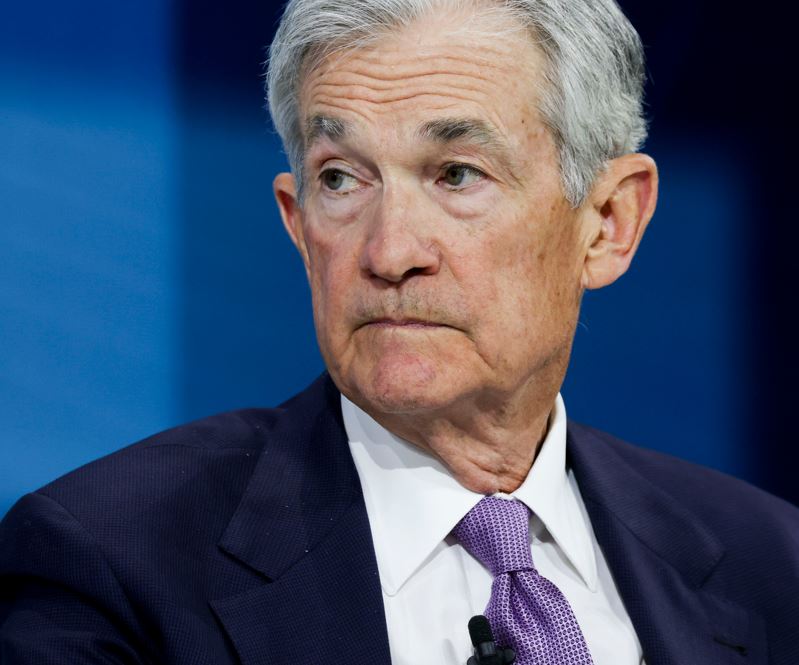
Almost exactly one year after sparking a furious rally in financial markets, Federal Reserve Chair Jerome Powell did the exact opposite on Wednesday, staking out a cautious view on interest-rate cuts in 2025 that stunned investors.
At a time when the American consumer’s resiliency has been questioned amid signs of a slowing economy, Walmart Inc. has thrived. The world’s largest retailer, famed for its discount prices but increasingly known for its pursuits in advertising and an online marketplace, is headed for its best year since 1998.
As we approach the start of a new year, it is a good time to take a fresh look at your portfolio to ensure that it still aligns with your long-term goals.
As cash yields dwindle, the case for fixed income becomes increasingly compelling.
The range of potential economic outcomes is wide, but a solid starting point suggests resilience.
U.S. stocks retreated as the Fed indicated it likely would lower rates only twice in 2025. The Dow dropped more than 1,000 points, and the S&P slid almost 3%. The Nasdaq lost 3.6%.
In his 2025 investment outlook, Head of U.S. Fixed Income Greg Wilensky outlines the most likely scenarios for the U.S. economy and which asset classes he believes will be best positioned under each scenario.
At the time of year where everyone is reflecting on the things that matter most to them in their personal lives, it is important to also consider what matters when it comes to investing. In this investment commentary, Johnson Financial Group shares what really matters as you put your money to work.
A conversation with our stock selection team, part two.
Brent Olson and Thomas Ross, fixed income portfolio managers, believe that high yield bonds offer comfortable driving for now, but investors might need to negotiate more difficult terrain later in 2025.
Surprises most often are hiding in plain sight. Being aware and prepared with a plan for the unexpected are keys to achieving goals.
Understanding the trajectory of corporate earnings is crucial for investors, as these earnings significantly influence stock valuations and market performance.
The U.S. economy is experiencing a remarkable period of economic stabilization and growth
VettaFi discusses the significant improvement in MLPs over the last decade.
Morningstar’s Ben Johnson reflects on a record-breaking year for ETFs and highlights key stories to watch in 2025. VettaFi’s Todd Rosenbluth discusses new polling data on how advisors are viewing financial markets heading into the new year.
New exchange-traded funds riding buzzy investment themes are helping fuel record industry growth this year. Yet, it’s also shaping up to be a banner era for money managers revamping their tried-and-tested mutual funds into the tax-efficient product.
MicroStrategy Inc.’s entry into the Nasdaq 100 opens up the largest corporate holder of Bitcoin to a new — and untapped – investor: the index-tracking juggernauts.
We expect gears to shift as potential policy changes under the Trump administration add to uncertainty about inflation and the global economy.
As we approach next week’s Federal Reserve FOMC meeting ... it would be interesting to ask ourselves what we would do if we were members of the committee.
Every year, most investors face a near-certain reality: taxes on their investment portfolio.
Tax cuts alone can’t save a weak business, but high-quality companies can put a tax-break windfall to good use for investors.
Short-term bond exchange-traded funds (ETFs) can provide yield seekers with a viable alternative to money market funds.
While bitcoin may continue higher, proving MicroStrategy's CEO Michael Saylor a genius, investors should at least appreciate what may happen if things do not go according to plan. We now present the other side of the story.
This has been a year of market highs, puzzling signals, and a few head-scratching moments.
Jeremy Grantham’s valuation-oriented investment firm is famous on Wall Street for trumpeting the contrarian, and decidedly bearish, views of its co-founder, seemingly every passing year.
The clouds hanging over Boeing’s operations finally appear to be clearing.
In his 2025 investment outlook, Portfolio Manager John Lloyd shares his views on the attractiveness of a multi-sector approach to fixed income investing.
"Trump Trade 2.0" fueled U.S. equity and digital asset rallies, while real assets faltered under a strong dollar.
Rice paddies that lay fallow for decades in some of Japan’s most far-flung regions are now its hottest properties.
At some, point a steepening yield curve will result, leading to yield opportunities for long-term bond exchange-traded funds.
In the latest episode of ETF 360, Kirsten Chang was joined by Rockefeller Asset Management’s Director of Fixed Income Alex Petrone.
The transition from bank-dominated lending to a diversified financing ecosystem offers unprecedented opportunities for private credit investors.
When US Federal Reserve Chair Jerome Powell faces the media after the central bank’s policy-making meeting next week, he’ll probably get a politically fraught question: How will the Fed incorporate president-elect Donald Trump’s stated plans — including tax cuts, tariffs and deportations — into its economic outlook and monetary policy?
Federal Reserve officials will lower interest rates this month for a third straight time and pare back the number of rate cuts they anticipate next year, according to economists surveyed by Bloomberg News.
From Wall Street funds to small-time day traders, those who dared to bet big on Elon Musk’s business empire are closing out the year with hefty payoffs, as Donald Trump’s US election win turbocharges the fortunes of the world’s richest man.
Collectively, we’re spending more and more on Christmas each and every year. This happens despite concerns about the economy and politics—and the fact that US credit card delinquencies continue to climb higher. So, how does this put more money in our pockets as dividend investors?
Portfolio managers and market strategists from Payden & Rygel review the opportunities and risks ahead for four bond market sectors: high yield, emerging markets, global bonds and low duration securities.
In his 2025 investment outlook, Head of U.S. Securitized Products John Kerschner shares his U.S. securitized outlook, identifying the key trends he believes will drive investment returns in the year ahead.
Fixed income markets face key questions that will shape their direction in 2025. This post explores these questions & their potential impact.
Join the experts at abrdn as they discuss the nuances of municipal bond investing, how current events are shaping the opportunities for this asset class as we head into 2025, and where municipal bonds may fit within your fixed-income allocation.
China got a head start on a looming trade war with the US by showcasing a new range of tools it’s prepared to use if Donald Trump makes good on his threat to punish the world’s second-biggest economy with tariffs.
The near-$5 trillion hedge fund industry is having one of the toughest years in decades in convincing fee-conscious investors to fork out cash for new market players.
To most of us, a power plant is a source of electricity. To Exxon Mobil Corp., it’s a machine that converts natural gas into money. And this is a propitious time for doing that.