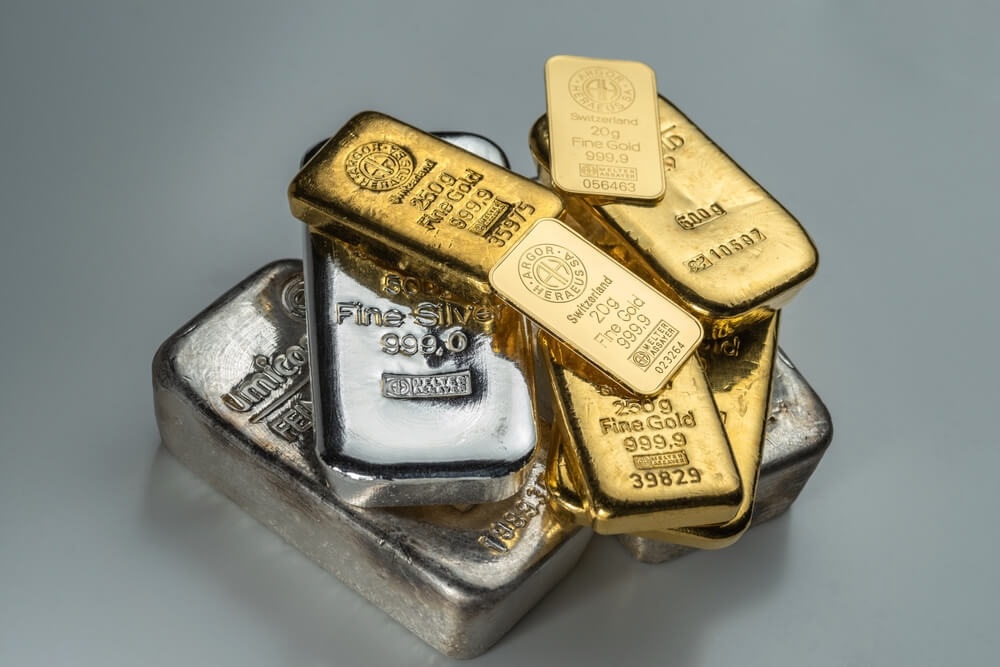
Many of the most critical components of AI infrastructure are produced by a small and increasingly consolidated group of highly specialized companies.
While the Fed left interest rates unchanged, Treasury yields moved notably higher throughout the week, with 30-year yields eclipsing their highest levels in nearly two decades as investors reassessed the outlook for inflation and monetary policy. The S&P 500 ended 1.06 percent higher to close a volatile week of trading, recovering from a mid-week sell-off.
Kevin Warsh considers fewer Fed meetings, the Fed holds rates steady, the Senate moves to avert a shutdown, a new BLS chief is confirmed, and midterms near.
LPL Research highlights strong corporate earnings, AI-driven growth, and a favorable equity outlook while monitoring inflation, oil prices, and risks.
July was an eventful month for both domestic and international markets, with US-Iran tensions flaring up, increasing energy prices and changing investor expectations for the Federal Reserve (Fed) cutting rates.
The financial markets expected the Federal Reserve to leave interest rates unchanged at its recent meeting, and it did just that. However, three members of the FOMC dissented, voting to raise rates by 25bps in an effort to combat stubbornly high inflation.
The Federal Reserve’s preferred gauge of price inflation is set for a methodological update, as the Bureau of Economic Analysis (BEA) is expected to implement revisions to its price index for Personal Consumption Expenditures (PCE) as early as September.
State Street's July Flash Flows report highlights record ETF inflows, and a major rotation into value and dividend strategies.
Social Security’s short-term financing crisis is no longer a distant actuarial projection — it is a near-term event with direct implications for current retirees, individuals approaching retirement, and younger workers. Advisors must understand not only the potential fixes, but also the hard constraints that sharply limit what Congress can realistically do in the next several years.
This summer has offered little opportunity for a lull. Investors have contended with Federal Reserve (Fed) policy uncertainty, renewed tariff-driven inflation concerns, escalating tensions in the Middle East, questions about the durability of AI-related investment spending and a packed earnings calendar.
Treasuries rose on Tuesday as signs of progress toward a diplomatic resolution of the Iran war sent oil prices lower, curbing expectations for more than one Federal Reserve interest-rate hike in the coming year.
The market spent much of this week trying to interpret what Fed Chair Kevin Warsh meant rather than what he actually said and that was entirely avoidable. The decision to leave rates unchanged was defensible. What wasn’t defensible was Warsh’s lack of explanation.
Just as important, the dollar and U.S. Treasuries have continued to behave like hedges in periods of broader market unrest (driven by geopolitics or other conditions). When risk assets come under pressure, Treasury yields have generally fallen, or the dollar has tended to find support.
Lately, it seems like you can’t open a financial publication without stumbling across another article declaring the 60/40 portfolio dead. The pitch is everywhere: bonds are broken, the old rules no longer apply, and investors should modernize by swapping the bonds in their portfolio for Bitcoin, gold, or whatever alternative the asset management industry is currently selling.
The latest earnings reports from Big Tech have laid bare a growing divide in the market's appetite for massive AI spending.
Kevin Warsh became Fed Chair barely ten weeks ago. He has presided over just two sets of monetary meetings and held two press conferences. Nonetheless, more than any chairman since at least Alan Greenspan, he has come under harsh criticism by the press right out of the gate.
In January 1790, the House of Representatives put a simple question to its new Treasury Secretary: what should America make for itself? Alexander Hamilton took almost two years to answer.
Advisors and investors of all kinds are used to closely watching the outcome of each of the Federal Reserve’s meetings, given how critical interest rates are to equity and fixed income markets alike. However, the recent July Fed meeting was particularly crucial. Many were uncertain what direction the central bank would go with interest rates.
The US economy grew less than expected during the second quarter of the year, up 1.5% quarter over quarter, dragged down by strong growth in imports. However, final sales to private domestic purchasers increased by 3.9%, underscoring the strength in domestic demand, which continues to rely too heavily in AI investment spending and strong spending from high-income consumers, or what has been called the K economy.
US stocks rose into the first trading day of the month as attention turned to this week’s heavy slate of earnings reports.
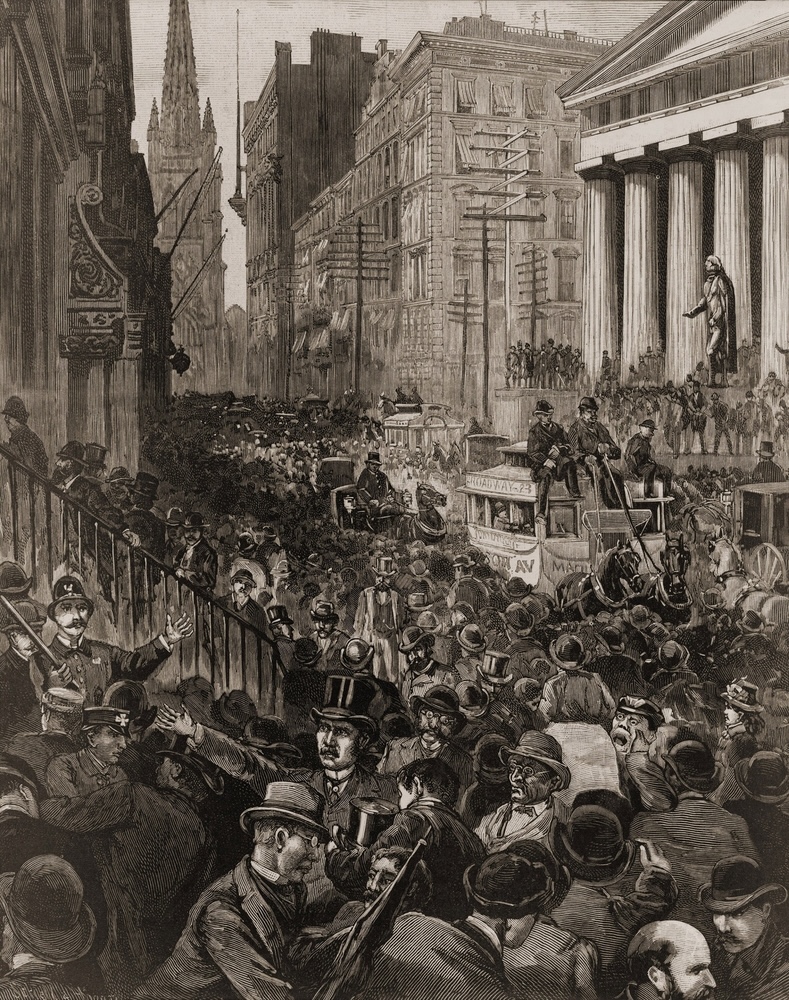
2008. 1929. 1907. 1893. These dates strike fear into the hearts of investors. Panics, crashes, and bear markets have been part of the investing ecosystem for as long as markets have existed. Some say they are the price of progress — others, a flaw in the system. Whatever you think of periodic market crashes, they’re here to stay.
In this article, I explain why baby boomers in target date funds (TDFs) should not feel lucky today or in the near future. There’s a 40% chance that the typical TDF will have at least one losing year during the next five years. These are bad odds, especially since retirement with dignity is at stake.
Chris Galipeau discusses high-conviction insights that go beyond media headlines.
This week’s vote from the Federal Reserve FOMC committee is going to have implications for quite some time. I think most of the pundits who are writing about this have their analysis wrong. This was not just a vote to not raise rates. I think there was a lot more going on behind the scenes.
Schwab Sector Views is our six- to 12-month outlook for stock sectors, which represent broad sectors of the economy. The Schwab Center for Financial Research (SCFR) combines a factor-based approach with a market and economic assessment to determine the ratings.
One of the most noteworthy data points during July was the June CPI report. While some moderation in price pressures was expected, the actual ‘cooling’ in inflation that was reported was greeted as a long sought after welcome development by the financial markets.
Energy markets have reached a precarious moment, with the path of prices over the remainder of the year – and potentially beyond – hinging on two key questions.
Forecasting is always fraught, but geopolitical turmoil makes it especially hazardous. Economic projections are only as reliable as the assumptions behind them, and those inputs can change quickly when conflicts are involved.
GMO’s liquid alternatives are hedge fund strategies (e.g., equity long-short, global macro, event-driven) managed with an emphasis on risk control and liquidity. The GMO Alternative Allocation Strategy (“ALTA”) is a liquid alternative solution combining several underlying strategies; ALTA is available in a mutual fund with daily liquidity.
US stocks rose at the open on Thursday as Microsoft Corp. soared 16% after reporting the fastest cloud unit growth in four years. Top semiconductor companies, like Micron Technology Inc. and Nvidia Corp., gained as well.
The Federal Reserve left its policy rate unchanged in July, with three participants dissenting in favor of a hike. Prior to the meeting, markets had priced roughly a one-third probability of a rate hike, so the hold was dovish relative to market pricing.
Once again, the Federal Open Market Committee (FOMC) decided to remain ‘on hold’, keeping the fed funds trading range at 3.50%–3.75%. Although there had been earlier conjecture in the money and bond markets the Fed may raise rates at the July gathering, that sentiment ultimately faded, and the final result was largely expected.
U.S. equities finished lower last week as investors weighed an escalating conflict with Iran against renewed concern over the scale of AI-related spending. The technology-heavy NASDAQ Composite was the worst performer, falling 2.1 per cent, while the S&P 500, an index of the largest U.S. companies, declined 0.6 per cent.
South Korea and Taiwan are grabbing the majority of financial news headlines when it comes to international exposure, but a peek inside Latin America reveals potential opportunities. Brazil, in particular, could be offering investors ample value in both equities and bonds beyond those aforementioned countries already benefiting from the artificial intelligence (AI) buildout.
A continued escalation in the Middle East, where the Iranian-backed Houthis joined the conflict in an attempt to disrupt Saudi Arabian crude shipments that pass through the Red Sea via the Bab-el-Mandeb Strait, drove oil prices higher, while new tariff announcements and Alphabet's earnings release created headwinds for equities.
Kevin Warsh’s second meeting as Fed Chair saw no change in rates and minimal edits to the Fed Statement, but included a press conference giving insight into what the Fed is focused on.
Considering that the Federal Reserve has been meeting this week, it’s safe to say that inflation is likely front-and-center on the minds of many advisors and investors. After all, energy prices and supply chain constraints have kept inflationary pressures far more persistent than the Fed would like.
In the current macroeconomic landscape marked by higher-for-longer interest rates, investors looking to optimize their short-term capital allocations may want to consider collateralized loan obligations (CLOs) as a higher-yielding potential alternative to traditional cash proxies like money market funds.
The US dollar will weaken if the Federal Reserve leaves interest rates unchanged this week, according to TD Securities.
Leverage, ratings arbitrage, liquidity transformation, and a growing willingness to embrace complexity and illiquidity are becoming more visible across parts of the financial system.
The US economy grew 2.0% in 2025 and it looks like it is growing another 2.0% this year. Real GDP grew at a 2.1% annual rate in the first quarter and, as we set out below, it looks like it grew at a 2.0% rate in the second quarter.
The market encountered its stiffest test in months last week as rising oil prices, higher bond yields, and renewed scrutiny of AI capital spending combined to pressure many of the year’s biggest winners. Easing tensions over the weekend have buoyed stocks. If the Strait of Hormuz was opened, I believe the market would be 5% to 10% higher.
With the US-Iran conflict nearing the five-month mark, equity markets have mostly shrugged off the latest escalation. On one hand, that’s understandable – a healthy economy and record corporate profits continue to support the market’s fundamentals. But a note of caution is warranted.
Without the support of rate cuts by the Federal Reserve, it’s been a lethargic year in terms of performance by municipal bonds and the related ETFs, but that doesn’t mean advisors and fixed income investors should ignore this bond segment.
On a recent episode of the Money Metals Podcast, host Mike Maharrey welcomed veteran market strategist Gregory T. Weldon, publisher of the Global Macro Strategy Report, for a wide-ranging discussion on precious metals, inflation, Federal Reserve policy, artificial intelligence, and global macroeconomic trends.
For many years, globalization felt like a one-way street. Supply chains stretched effortlessly across continents. Companies built “just-in-time” systems that assumed goods, data, and capital would flow smoothly around the world. Investors could buy a global index fund and feel reasonably confident that they were capturing the benefits of ever-closer integration.
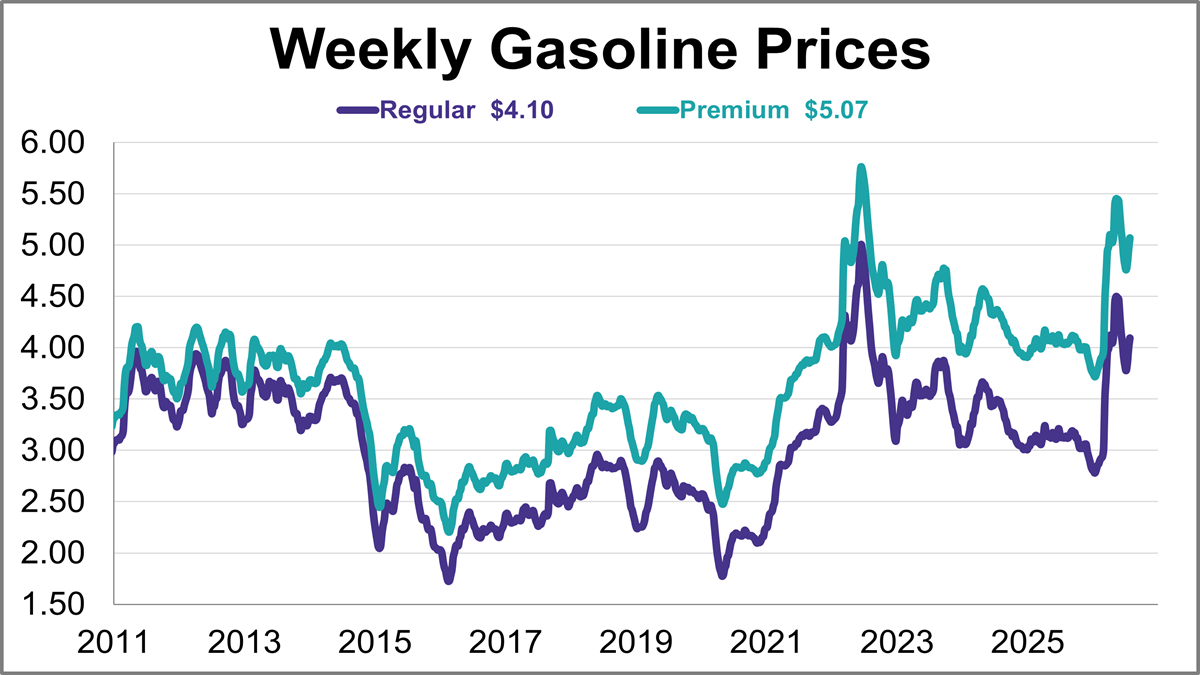
Gasoline prices jumped for a third straight week, reaching their highest level in almost two months.
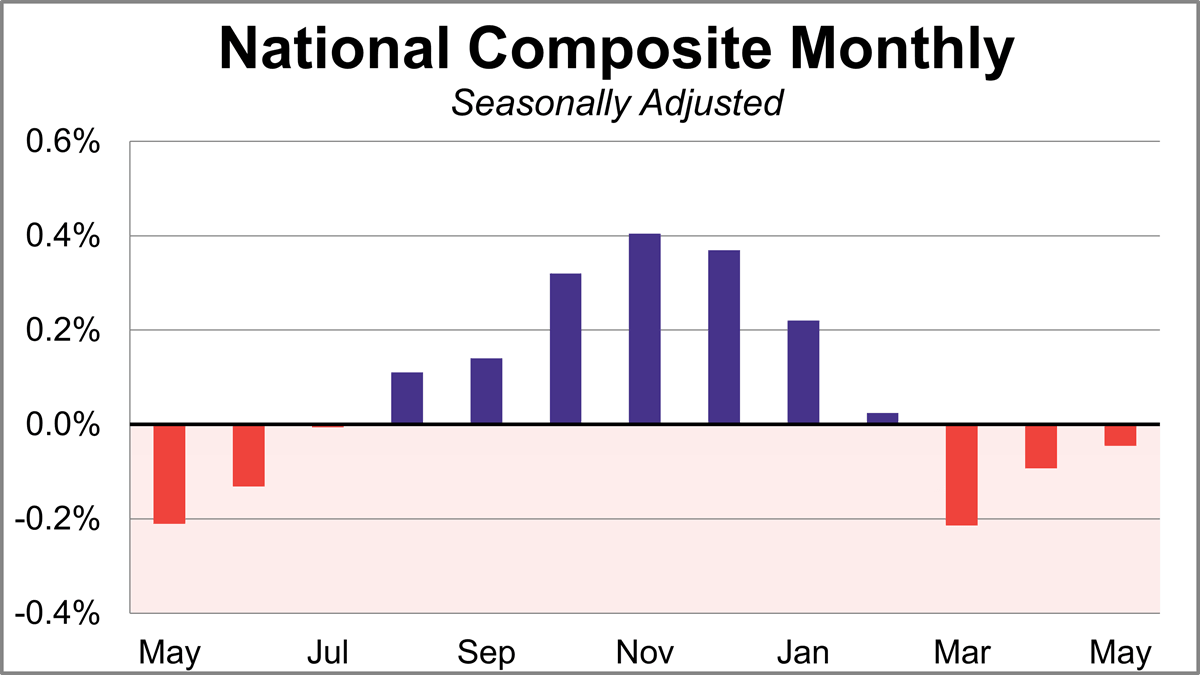
Home prices fell for a third straight month in May according to the S&P Cotality Case-Shiller index, as the housing slowdown continues. On a seasonally adjusted basis, the national index was essentially flat month-over-month and was up 1.1% year-over-year.
Discover Aberdeen’s closed-end funds (CEFs) for high yields, illiquid assets, long-term investments, and resilient income for 2026.