US stocks rose at the open on Thursday as Microsoft Corp. soared 16% after reporting the fastest cloud unit growth in four years. Top semiconductor companies, like Micron Technology Inc. and Nvidia Corp., gained as well.
The S&P 500 Index was up 1% at 9:49 a.m in New York, partially rebounding from a 1.5% drop on Wednesday. The Nasdaq 100 Index rose 2.7%, recovering after the tech-dominated stock gauge closed in correction territory in the prior session.
The Philadelphia Semiconductor Index climbed 7.0%, on track to end a five-day losing streak. The Roundhill Memory ETF advanced 11%. Earlier, Samsung Electronics Co. posted a 250-fold surge in chip profits and now expects memory shortages to worsen next year, reflecting the relentless pace of the global AI infrastructure buildout.
“The recent news of hyperscalers’ strong June-quarter earnings and future AI data center projects implies only good things for semiconductor demand,” Yardeni Research’s Ed Yardeni wrote in a Thursday note.
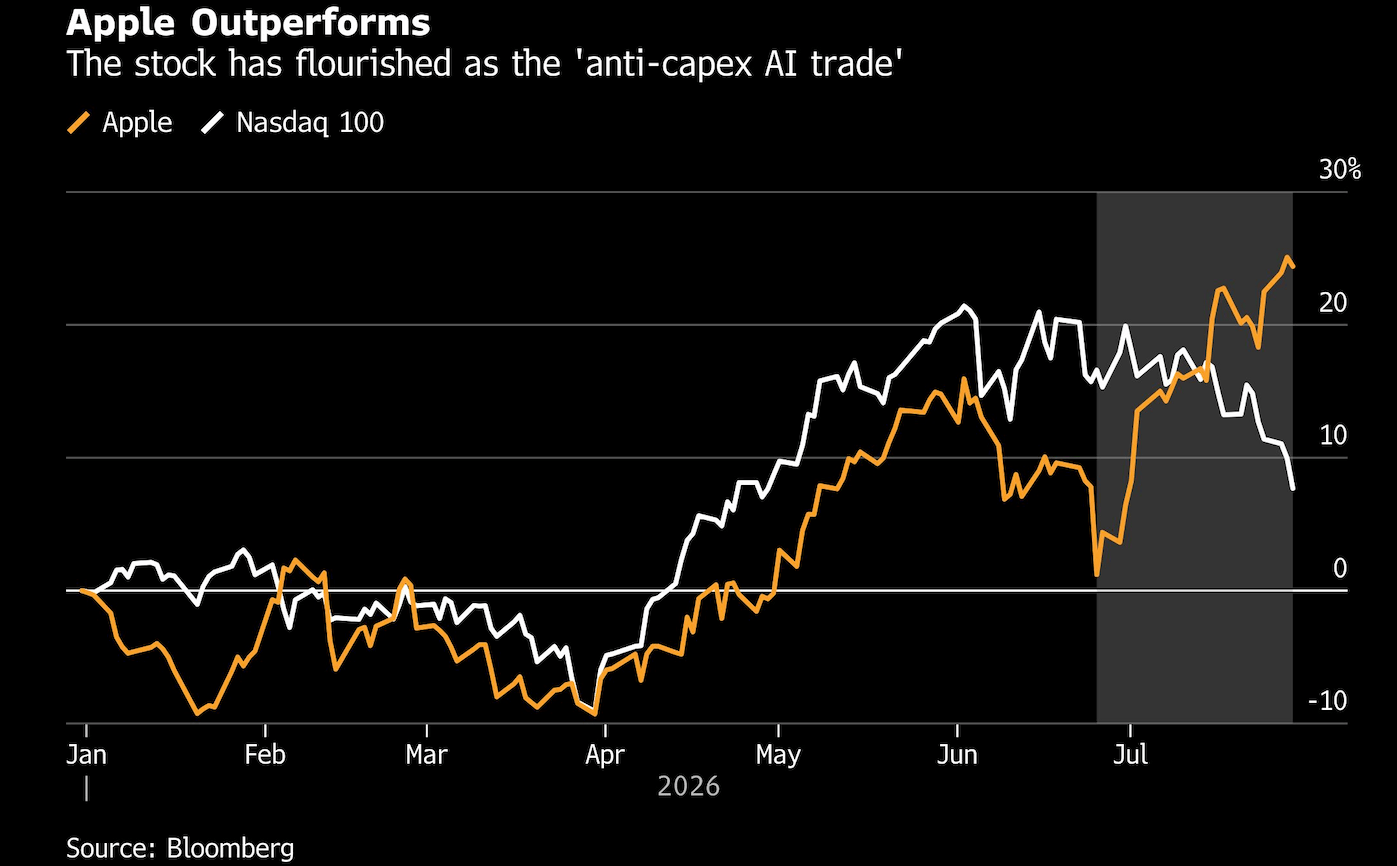
Next up on the earnings front: Apple Inc. and Amazon.com Inc. report after the bell. Apple is this year’s Big Tech stock market star, reclaiming the title of the world’s biggest company with a 24% rally in 2026. Only Apple and Nvidia’s market capitalizations top $5 trillion.

In other earnings news, Meta Platforms Inc. fell 8.7% after reporting free cash flow fell to the lowest level since 2022, while raising the low end of its year forecasts for both capital expenditures and total expenses, adding to concerns about when spending on AI will translate into better growth. Qualcomm Inc. shed 4.3% after issuing a weak profit forecast.
“Credibility Shock”
Investors also continue to digest remarks from Federal Reserve Chairman Kevin Warsh’s Wednesday press conference after the central bank held interest rates steady.
The chairman’s comments delivered a “credibility shock,” according to Corpay strategist Karl Schamotta, as Warsh said that “‘this Fed will not waver’ in its commitment to lowering inflation, but then argued the central bank did not necessarily need to raise rates to bring prices down,” contending higher bond yields had effectively tightened monetary policy.
“It’s hard to know what to make of Warsh’s remarks, which involved a lot of well-turned phrases but little in the way of a coherent macro view,” JPMorgan Chase & Co.’s chief US economist Michael Feroli wrote in a note. “He once again failed to specify how he intended to achieve his stridently-asserted inflation resolve. He also cast doubt on whether PCE inflation will remain the Fed’s inflation target in the medium run. Both of these points raise questions about the new chair’s credibility.”
Feroli pulled his expectation for the next interest-rate hike forward to December from the second half of 2027, adding that “September is clearly a risk if inflation heats up.”
Meantime, oil edged lower, with West Texas Intermediate crude around $84 a barrel.
“Energy prices are emerging as a key market risk,” Sameer Samana, head of global equities and real assets at Wells Fargo Investment Institute, wrote. “Higher gasoline and diesel prices could sustain inflation pressures and push interest rates higher.”
A message from Advisor Perspectives and VettaFi: Discover something new! Click here to register for our upcoming webcasts.
Bloomberg News provided this article. For more articles like this please visit
bloomberg.com.
Read more articles by Felice Maranz