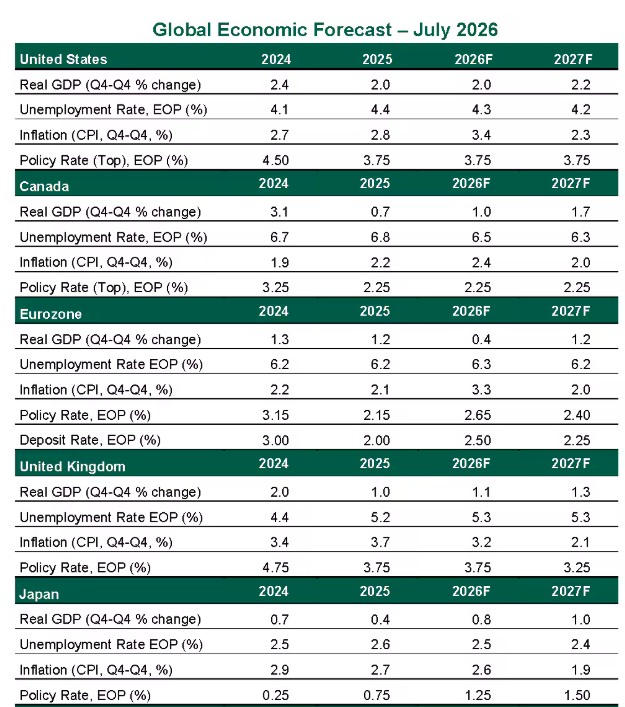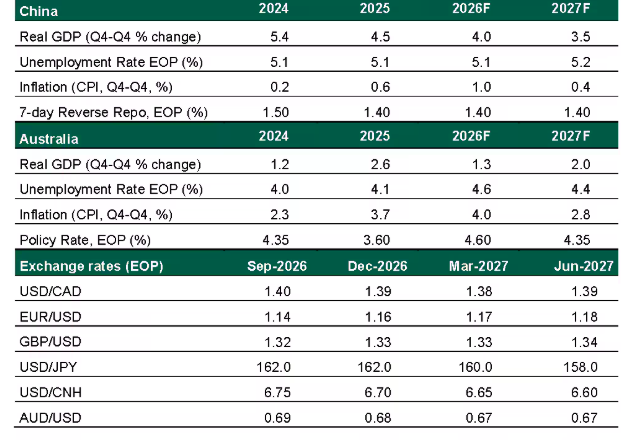
Forecasting is always fraught, but geopolitical turmoil makes it especially hazardous. Economic projections are only as reliable as the assumptions behind them, and those inputs can change quickly when conflicts are involved. Our outlook therefore rests on a baseline scenario in which the Middle East conflict will simmer for an extended period but not boil over.
In this event, resilient energy supply chains should help prevent oil prices from spiraling. Inflation is likely to remain elevated but manageable, placing a ceiling on bond yields and keeping most central banks on hold. Fiscal policy is expected to provide partial cushioning for households and businesses. The result is an outlook for resilience rather than strength: growth should continue, but activity in most economies is likely to remain modest at best.
See more: The Biggest Election Risk: Tunnel Vision
Following are our outlooks for the world’s major markets.
United States
- Consumption has proven surprisingly resilient despite higher gasoline prices. June retail sales continued to grow; core retail sales posted their strongest quarterly gain in four years during the second quarter, suggesting households remain willing to spend. Consumers appear to be absorbing higher costs by drawing down savings, with the saving rate falling to a four-year low. Tech sector gains continue to generate wealth effects, supporting spending.
- Inflation remains the key risk to the outlook. June's consumer price index report provided some temporary relief. Both headline and core inflation moved lower, with little evidence that higher energy costs have yet fed through to broader prices. However, the recent rebound in oil prices could make that respite short-lived. Tariffs are back, and the AI buildout is adding to inflation. With a firm labor market, the Federal Reserve has signaled a willingness to tighten further should price pressures persist. Our base case remains for rates to stay unchanged through 2027, though the balance of risks is shifting more towards hikes than cuts. Our latest U.S. outlook can be found here.