Key takeaways
-
Financial engineering is once again emerging in markets globally, as compressed spreads and scarcer traditional return opportunities incentivize investors to create new sources of potential yield through leverage, complexity, and balance sheet innovation.
-
Evidence of excess is accumulating across markets, including rising investor leverage, rapid growth in leveraged ETFs, increasing use of leverage-on-leverage structures, and deeper connections among banks, private markets, and nonbank financial institutions.
-
Perspective matters. That is, current excesses remain modest relative to the scale of global capital markets and differ materially from the vulnerabilities seen prior to the global financial crisis (GFC). Thoughtful diversification and risk mitigation may make sense for investors as financial engineering evolves.
One observation in PIMCO’s Secular Outlook that generated a lot of interest was the notion that financial engineering was poised to accelerate. We aren’t suggesting a replay of the excesses linked to mortgage markets and other areas that defined the pre-GFC era. Rather, we’re observing a familiar feature of late-cycle markets: When spreads compress and traditional sources of return become scarce, investors and intermediaries often respond by creating new ones.
Leverage, ratings arbitrage, liquidity transformation, and a growing willingness to embrace complexity and illiquidity are becoming more visible across parts of the financial system. So where and how are these financial engineering tools potentially leading to excesses?
What follows is intended to be illustrative, not exhaustive. The examples are not necessarily linked to one another; they are separate expressions of the same underlying dynamic. Individually, most are small. Collectively, they point to financial engineering re-emerging as a defining feature of a maturing cycle.
See more: Taking the Temperature
Leverage in the system is rising
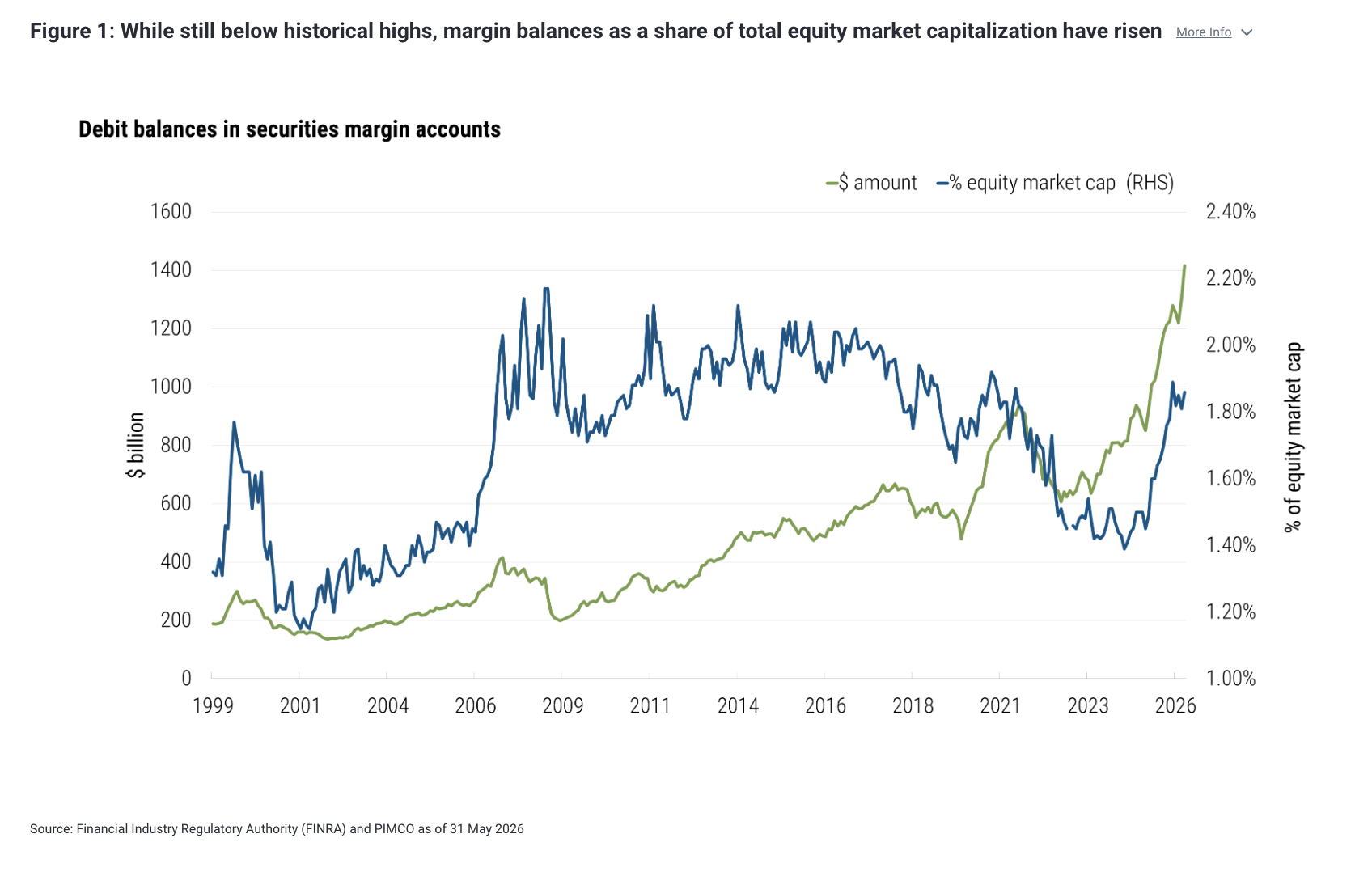
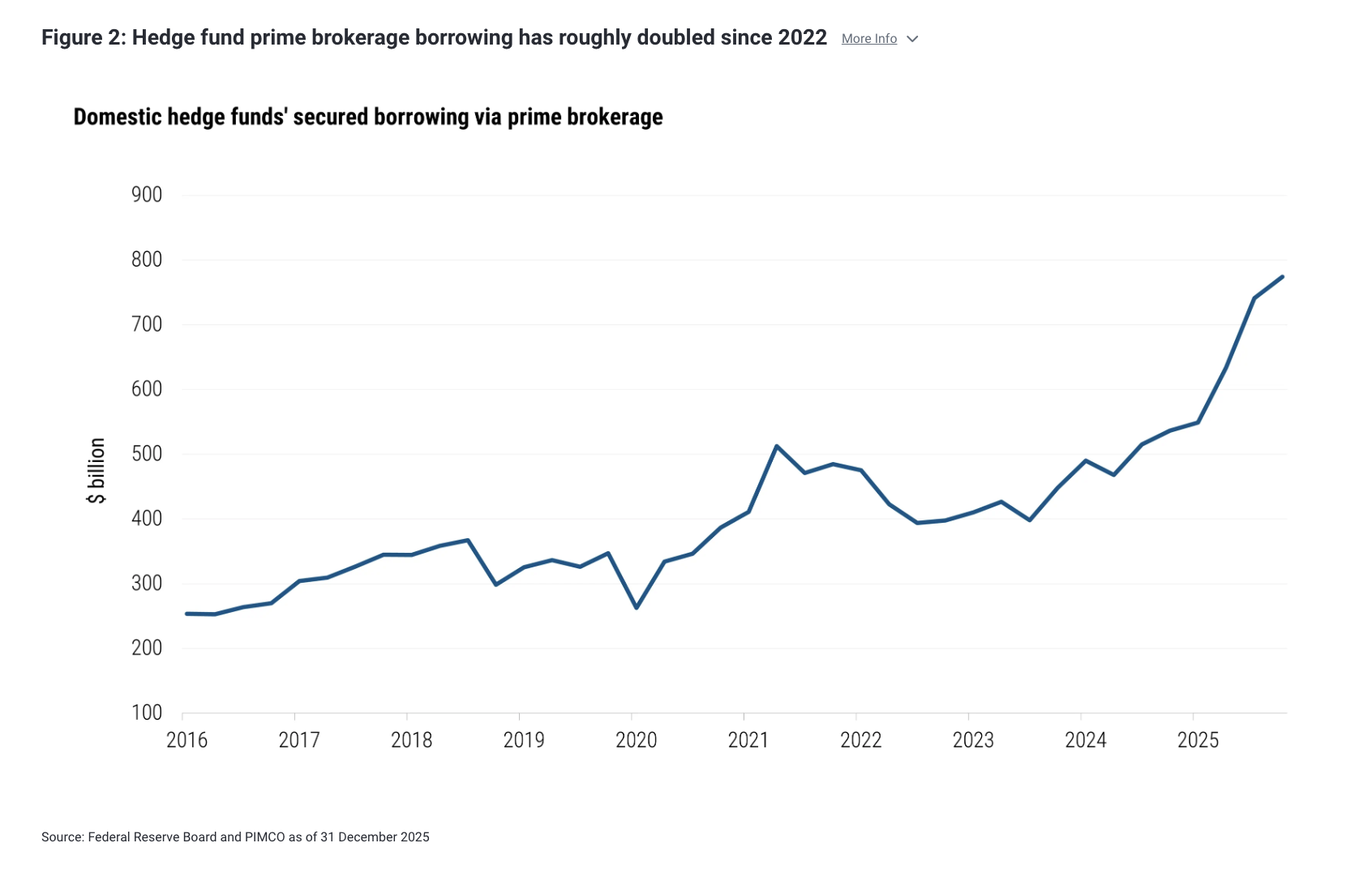
Securities margin balances – a direct measure of leverage employed by equity investors – have picked up meaningfully in recent years. As a share of total equity market capitalization, these balances remain below prior cyclical peaks, but the pace of increase over the past two years is notable (see Figure 1). Margin leverage usually amplifies market moves, and perhaps more importantly, margin calls tend to be triggered by market stress rather than by deteriorating fundamentals, forcing sales into falling markets and increasing the risk of more widespread deleveraging. Aggregate hedge fund borrowing points in the same direction: Federal Reserve supplementary flow of funds data show that hedge fund prime brokerage borrowing has roughly doubled since late 2022 (see Figure 2).
Leveraged ETFs continue to grow at a rapid pace
SEC regulations implemented in 2020 streamlined the ETF launch process and materially lowered barriers to entry. This in turn accelerated the proliferation of increasingly specialized products. Among them are leveraged ETFs that embed daily-reset leverage into vehicles accessible to a broad retail investor base.
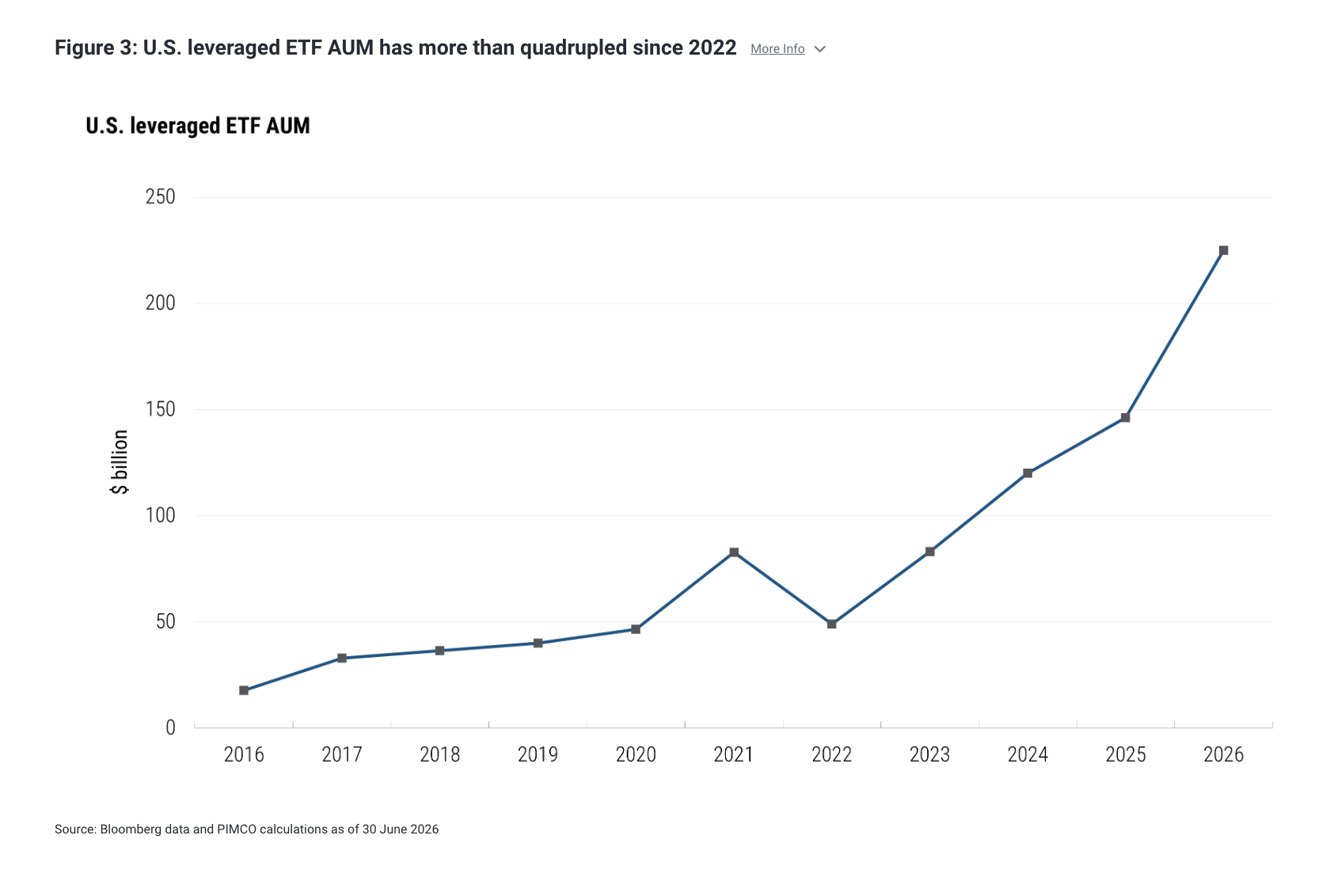
For context, total AUM (assets under management) in U.S. leveraged ETFs has more than quadrupled since 2022 (see Figure 3). While these products generally function as designed, many investors likely underestimate the path dependency of compounded returns and the speed with which volatility can erode capital in a drawdown.
Leverage-on-leverage is back
Borrowing is increasingly being layered on top of already leveraged assets. Net asset value (NAV) lending and subscription facilities – which allow sponsors to borrow against fund assets or investor commitments – are themselves being securitized, adding fresh layers of leverage within the system. Within the broader market for asset-backed securities (ABS), these structures remain very small, at least for now, at around $1 billion in total balance, by our estimates.
Similarly, collateralized fund obligations (CFOs) represent another form of leverage-on-leverage, securitizing portfolios of limited partner stakes in private funds that themselves may employ leverage at either the fund or portfolio-company level. Another example is total return swaps on equity CLO (collateralized loan obligation) tranches, which have also gained popularity.
Banks are on firmer footing than pre-2008 but more enmeshed in the financial system
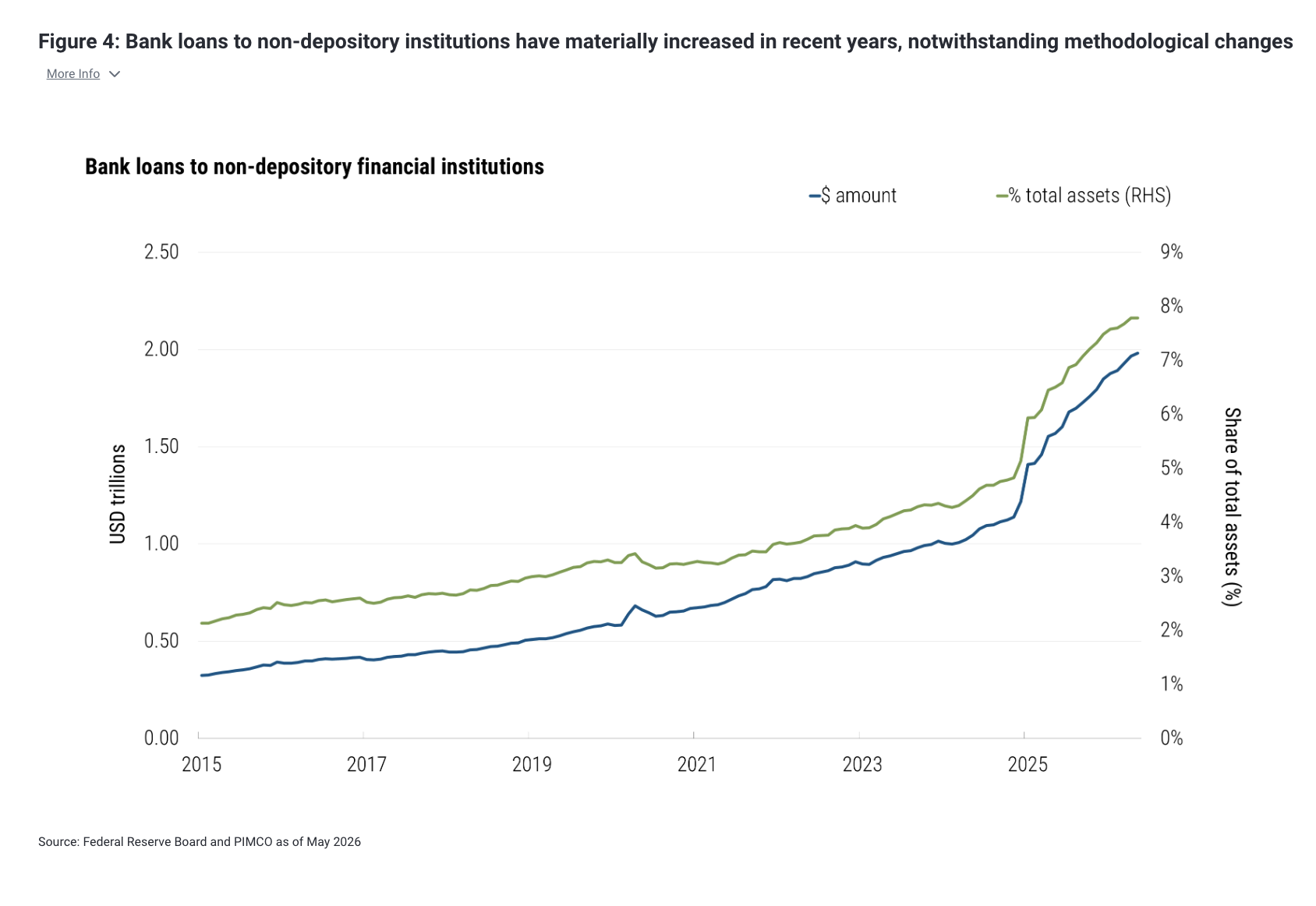
The dramatic rise in bank lending to nonbank financial institutions has been well-documented (see Figure 4). Banks have increasingly become providers of leverage and liquidity to alternative asset managers through subscription lines, NAV facilities, and warehouse financing.
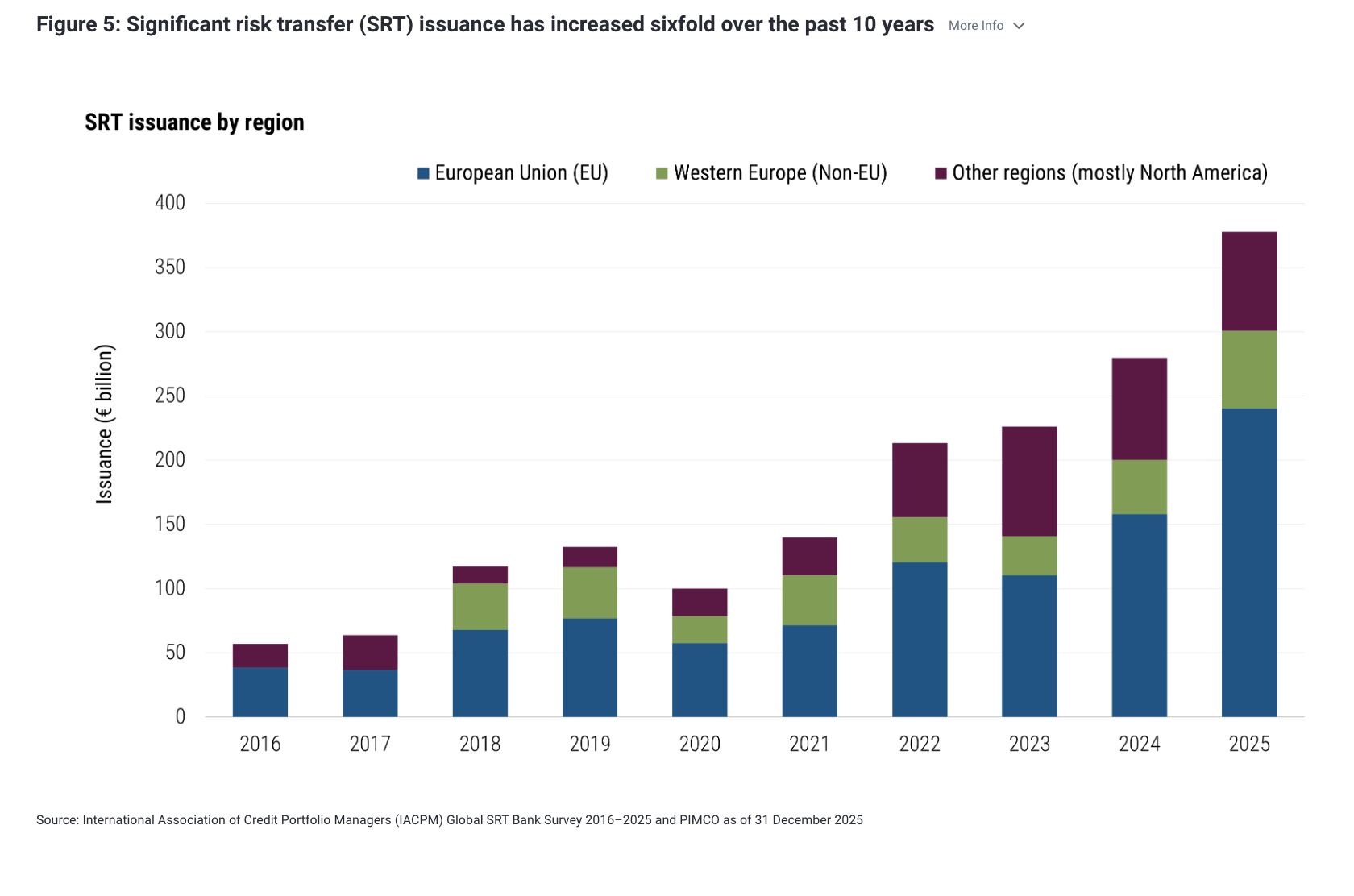
But the linkages run deeper. Figure 5 shows that banks have also materially increased their reliance on significant risk transfer (SRT) transactions to shift credit risk on loan portfolios to insurers and institutional investors. In some cases, the investors ultimately exposed to the underlying risks are affiliated with the same private equity firms that sit elsewhere in the financing chain – as borrowers or sponsors. The result is an ecosystem in which risk is not so much spread across the system more broadly as redistributed among closely linked participants. This means the diversification benefits SRTs are intended to provide can become less meaningful when exposures remain concentrated within a tightly connected network. Put differently, risk may appear to move off bank balance sheets, but at the system level it often remains within the same financial orbit.
Maintain a healthy perspective on financial engineering
These developments matter because financial assets – mainly equities – and housing have been the primary drivers of household wealth creation in the U.S. since the GFC. Thus, a shock that materially impairs either channel could potentially spill into household balance sheets, consumption, and ultimately broader financial conditions.
That said, perspective matters. The excesses highlighted above remain small relative to the size of global capital markets. Take leveraged ETFs, for example: At roughly $225 billion in total AUM, they represent less than 0.5% of the roughly $75 trillion U.S. equity market (according to Bloomberg and SIFMA, the Securities Industry and Financial Markets Association). Moreover, today’s structures don’t resemble the toxic combination of excessive leverage, severe asset-liability mismatches, and housing market speculation that preceded the GFC.
Therefore, the parallels should not be overstated. But the emergence of these structures does point to a cycle in which the marginal returns are increasingly being manufactured rather than earned – and structures built under such conditions rarely reveal their fragilities until there is a negative liquidity shock. As noted in the Secular Outlook, we do not view these risks as systemic, but they bear scrutiny. Thoughtful diversification and risk mitigation may make sense for investors as financial engineering evolves.
Michael Puempel and Gabriel Cazaubieilh contributed to this report.
For more from Lotfi Karoui on evolving credit market dynamics, listen to the Accrued Interest podcast on Apple and Spotify.
Disclosures
Statements concerning financial market trends or portfolio strategies are based on current market conditions, which will fluctuate. Outlook and strategies are subject to change without notice.
Past performance is not a guarantee or a reliable indicator of future results. Forecasts, estimates and certain information contained herein are based upon proprietary research and should not be considered as investment advice. There is no guarantee that stated results will be achieved.
All Investments contain risk and may lose value. Equities may decline in value due to both real and perceived general market, economic and industry conditions. Investing in the bond market is subject to risks, including market, interest rate, issuer, credit, inflation risk, and liquidity risk. The use of leverage may cause a portfolio to liquidate positions when it may not be advantageous to do so to satisfy its obligations or to meet segregation requirements. Leverage, including borrowing, may cause a portfolio to be more volatile than if the portfolio had not been leveraged. Investing in foreign-denominated and/or -domiciled securities may involve heightened risk due to currency fluctuations, and economic and political risks, which may be enhanced in emerging markets. Collateralized Loan Obligations (CLOs) involve a high degree of risk and are intended for sale to qualified investors only. CLOs are typically illiquid, and are also exposed to risks such as default, management, volatility, interest rate and credit risk. Leveraged ETFs are subject to various risks including but not limited to volatility decay, severe drawdowns, path dependency, derivatives and counterparty risk, and higher expenses. Bank loans are often less liquid than other types of debt instruments and general market and financial conditions may affect the prepayment of bank loans, as such the prepayments cannot be predicted with accuracy. Investments in asset-backed securities are subject to a variety of risks including, but not limited to, credit risk, liquidity risk, interest rate risk, operational risk, structural risk, and sponsor risk.
References to specific securities and their issuers are not intended and should not be interpreted as recommendations to purchase, sell or hold such securities. PIMCO products and strategies may or may not include the securities referenced and, if such securities are included, no representation is being made that such securities will continue to be included.
PIMCO as a general matter provides services to qualified institutions, financial intermediaries and institutional investors. Individual investors should contact their own financial professional to determine the most appropriate investment options for their financial situation. This material contains the opinions of the author and such opinions are subject to change without notice. This material has been distributed for informational purposes only and should not be considered as investment advice or a recommendation of any particular security, strategy or investment product. Information contained herein has been obtained from sources believed to be reliable, but not guaranteed. No part of this material may be reproduced in any form, or referred to in any other publication, without express written permission. PIMCO is a trademark of Allianz Asset Management of America LLC in the United States and throughout the world.
CMR2026-0723-5780484
A message from Advisor Perspectives and VettaFi: Discover something new! Click here to register for our upcoming webcasts.
© PIMCO
Read more commentaries by PIMCO