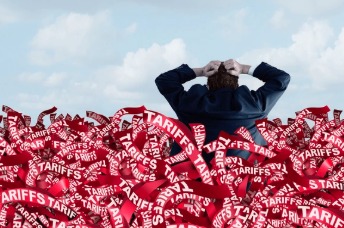
“Liberation Day” feels like a long time ago. Since President Donald Trump shocked markets with sky-high new tariff rates and a hasty U-turn, the S&P 500 Index has rebounded to all-time highs.
We love Roth accounts - really, we do. As long as we don't have to pay too high an entrance fee. Which would be dumb.
Unfortunately, the lush financial terrain we enjoyed from 2008 to 2022 was more like artificial turf. It wears out, gets ugly holes, and eventually needs replacement. But how to replace it without causing other problems? That turns out to be a real problem.
While uncertainty gradually eased in the second quarter, the sustained decline in the US dollar and the ongoing changes in the geopolitical order indicate that markets may continue to be dynamic and offer opportunities for a variety of hedge fund strategies, as well as heightened risks.
The sweeping 900-page tax and spending law signed on July 4 introduces a wide array of provisions that touch nearly every American in one way or another.
Current volatility and optimism are some of the topics being discussed in this new roundtable from Royce Investment Partners.
Last week, Nvidia—whose processors are a key driver of the AI wave—became the world’s first publicly traded company to hit $4 trillion in market value.
The second quarter featured a trade war, armed conflicts in the Middle East and Europe, and continued turmoil in Washington, yet markets continued to rally, likely due to an elevated money supply and an increase in passive investing.
Contrary to popular belief, investors can use TradFi best practices to analyze on-chain KPIs of DeFi networks and the underlying fundamentals of the tokens that drive them.
Not sure which to choose? Here are some things to consider about individual bonds vs. bond funds.
If owning a specific stock is keeping you up at night, then it’s time to sell.
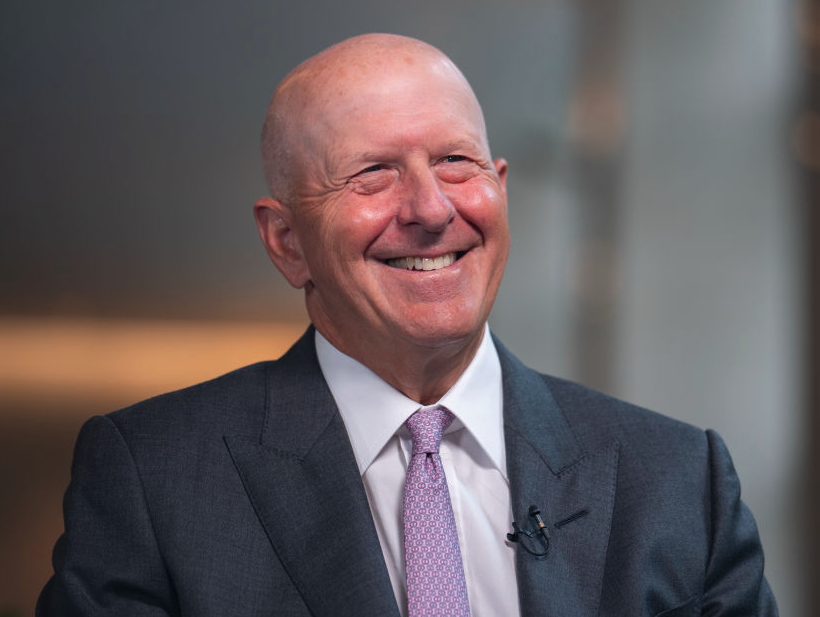
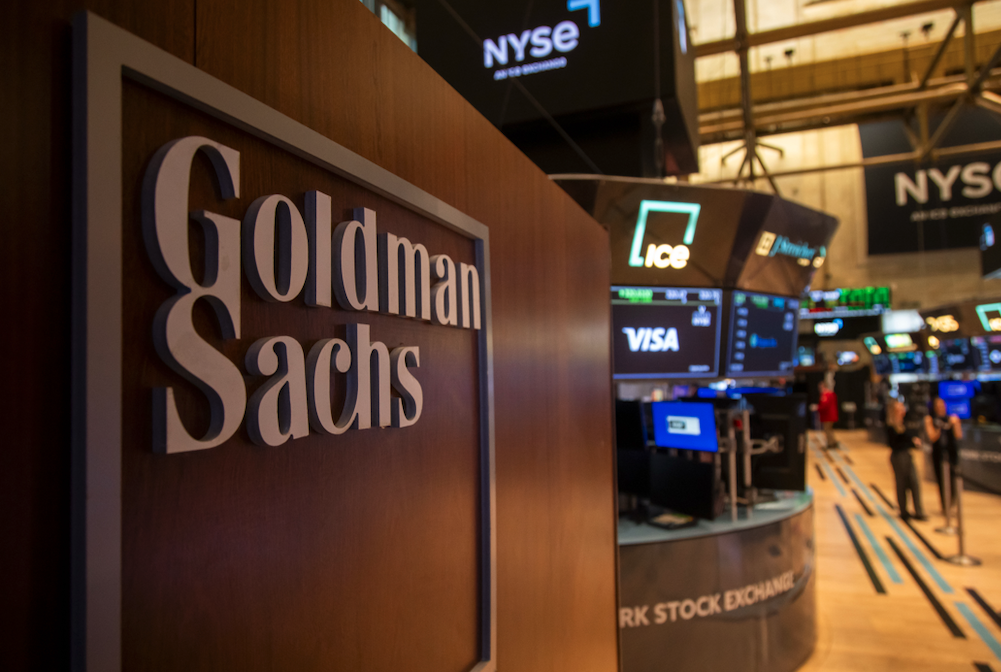
Goldman reported record equity trading revenue in second-quarter earnings on Wednesday and trounced its peers with a rebound in investment banking revenue that was fueled by a 70% jump in deal-making fees versus the same period last year.
June was a month of stabilization and subtle strength for preferreds.
Three themes are worth emphasizing as we reach the midpoint of 2025: tariffs, interest rates, and global diversification. We emphasize these themes even amid recent heightened geopolitical tensions.
The U.S. economy remains resilient despite headline volatility tied to shifting trade and tariff policies. Meanwhile, we continue to see a lot of volatility in the economic data as the world adjusts to these changing policies.
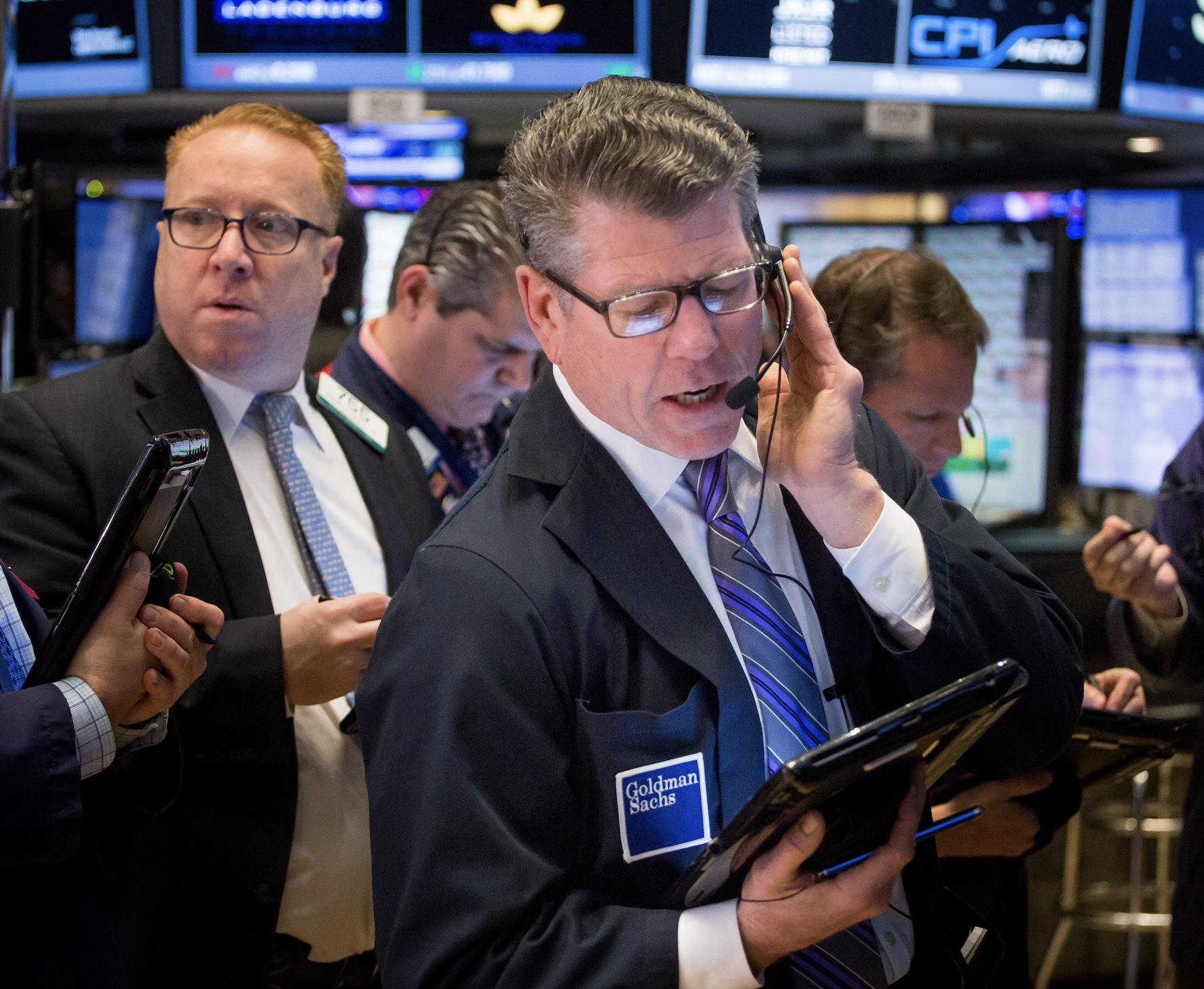
Goldman Sachs Group Inc.’s stock traders posted the largest revenue haul in Wall Street history, as volatility sparked by the Trump administration’s trade war spurred a second straight record quarter for the unit.
What was once dismissed as a fringe fantasy by a niche band of crypto believers is now being tentatively examined by the government-sponsored entities at the core of the US housing market.
Chief executive officers in the US and beyond are becoming accustomed to the policy swings of President Donald Trump and are deciding they can pursue growth ambitions regardless.
Low volatility exchange traded funds are a compelling solution for those looking to dampen risk while staying invested.
For many years, the pension plan has often been a drag on a corporation’s financial positions. Now that’s generally no longer the case, and it’s time to consider what’s next.
The RAFI™ Fundamental Index has a value tilt, but to characterize it as a value index would be an oversimplification that misses the important advantages that the fundamental index offers above standard “value” index approaches.
High yield bonds have historically delivered attractive long-term returns, and since the Great Financial Crisis they have also become higher quality, as weaker borrowers have departed the sector for the private credit and leveraged loan markets.
Drew O’Neil discusses fixed income market conditions and offers insight for bond investors.
A couple of years ago, I wrote about absolute versus relative returns. Given the latest market run, I am getting a lot of questions about chasing returns, and individuals comparing themselves to the S&P 500 index.
Emerging market (EM) countries are often generalized as all the same and driven by commodity prices. The reality can be very different. Here's what you should know about EM stocks now.
With the One Big Beautiful Bill Act (OBBBA) signed into law on July 4, this note briefly discusses some of the implications for energy broadly and the energy infrastructure space.
On Wednesday, Vanguard expanded its fixed income ETF selection with the launch of three new funds.
As 2025 progresses, investors and policymakers are navigating a highly complex economic landscape shaped by three powerful and interrelated forces: evolving trade policy, a cautious U.S. Federal Reserve (Fed), and growing concerns over U.S. fiscal discipline.
Investors who overlook the potential of card reward programs may be missing out on benefits that can contribute to the abundant lifestyle they are looking to build.
JPMorgan Chase & Co.’s investment bankers eked out a surprise gain in the second quarter, signaling what may be the start of a dealmaking rebound after widespread hesitation tied to US tariff policies.
We continue to believe we are seeing a rare opportunity in EM local debt, and our conviction has been strengthened by the Trump administration’s trade and economic policies, which suggest continued dollar weakness and relative strength for EM local currencies.
It is easy to invest when markets are rallying, but it can be tough for investors to stay in their seats when markets inevitably decline again.
As the second quarter earnings season kicks into gear, Wall Street analysts are forecasting modest earnings growth of 4.8% for companies in the S&P 500.
We suspect that for many of our clients, converting to a Roth will make sense, either today or in the near future. We hope this note and our calculator will encourage many of you to give the conversion decision another look.
In this paper, we study the emotional benefits and time-saving value that paid professional financial advice provides to clients.
Next week, the Q2-2025 earnings season will begin in earnest as a barrage of S&P 500 companies report, starting with the Wall Street money center banks on Tuesday and Wednesday. Since earnings drive the market by supporting investor expectations, what should investors expect? Let’s dig into the details.
Fixed income benchmarks have two fundamental flaws. First, their exposures prioritize the needs of borrowers rather than investors. Second, they tend to expose investors to the biggest risks at the worst times.
The resilient job market has supported stock gains, but Washington policy has been a primary market driver so far this year.
There’s a connection between our willingness to let the debt problem fester and investors throwing their money into a wildly overvalued stock market. In both cases, we’ve grown way too comfortable with uncertainty.
Now that we're more than halfway through 2025, let's take a look at the top 10 most-read charts so far for the year.
Last week, the iShares Flexible Income Active ETF (BINC) reached a significant milestone and became the latest member of the $10 billion of the active fixed income club.
Most of us are not prepared for the incredible degree of change Artificial Intelligence (AI), combined with automation, is bringing to society.
At a private markets conference focused on the ultra-rich in London this week, the typically discreet sector was notably candid about its growing interest in private credit.
A full three months since President Trump’s “Liberation Day” tariff announcements sparked panic in financial markets, macro developments have been benign. The passage of the Big Beautiful Bill has brought clarity on the fiscal outlook, but uncertainty on trade negotiations remains. Franklin Templeton Fixed Income CIO Sonal Desai explains what this means for investors going forward.
Advisor Perspectives had a strong mix of pieces in the top 10 articles for views on its leaderboard for the month of June.
Three ETF strategies that launched in June stand out, bringing something interesting to the table for investors.
Compelling bond yields and diverging equity returns offer building blocks for effective strategies.
One of the more storied headlines this year has been President Trump’s disappointment with the Fed for not cutting rates. We should all know by now that the President cannot fire a Fed Chair simply because he/she is not lowering interest rates to their liking.
As we reach the midpoint of 2025, we reflect on the notably volatile trajectory of bond yields so far this year, considering the potential opportunity for tax-aware fixed income investors to harvest losses.
After mid-level performance in Q1, financials sector earnings are seen slowing in Q2, according to analysts, though favorable signs like the yield curve could help margins.