Mike Loukas, CEO of TrueMark Investments, weighs in on the growing debate over buffer products and highlights TrueShares’ innovative structured outcome ETFs. VettaFi’s Roxanna Islam covers a range of topics, including Schwab’s fee cuts, Vanguard’s multi-share class filing, the rise of private assets in ETFs, the potential for spot solana ETFs, and arguments around “first-to-file” with the SEC.
The Senate’s draft tax bill calls for increasing an investment credit for semiconductor manufacturers, a potential boon for chipmakers that the Trump administration is urging to increase the size of their US projects.
The ETF market has hit a symbolic turning point: active funds now outnumber passive ones for the first time, marking a sharp break from the industry’s index-tracking origins — even if actively managed assets still account for just a tenth of assets.
The fund shines through as a prime option worthy of consideration among the vast alternatives present in the muni market. With their rare combination of credit quality and yield, munis are offering fixed income investors prime benefits in a still-uncertain bond environment.
Bonds hit a headwind in May as rates rose, but year to date, they have helped offset some of the volatility seen in stocks. See Table 2 for bond index returns for May 2025, Q1 2025, and YTD.
Michael Browne, Chief Investment Officer at Martin Currie discusses inflation, energy and the art of the possible.
JPMorgan Chase & Co. named Mark O’Donovan head of its international consumer bank, giving him oversight of the firm’s existing consumer offering in the UK, planned launch in Germany and stake in Brazil’s C6 Bank.
President Donald Trump’s announcement on Wednesday of a new trade agreement with China is the kind of headline that gives markets a sense of relief. As I overheard this week at Wealth Management’s EDGE conference, which I attended in Boca Raton, Florida, we may have dodged a recession.
On this episode of the “ETF of the Week” podcast, VettaFi’s Head of Research Todd Rosenbluth discussed the NEOS Enhanced Income 1-3 Month T-Bill ETF (CSHI) with Chuck Jaffe of Money Life. The pair discussed several topics related to the fund to give investors a deeper understanding of the ETF overall.
The ever-louder brouhaha surrounding BBD is much ado about nothing. It is expensive, dangerous, and likely to benefit only bankers and brokerage firms.
Venture capitalists are betting on a product that’s close to their hearts: software for venture capitalists. Juniper Square Inc., a software provider for VCs and other private investors, has raised $130 million in a deal that values the company at $1.1 billion.
Investors are betting the months-long rally in emerging markets has further to run even as tariff threats and escalating geopolitical tensions signal a rocky path ahead.
Last week’s economic signals showed cautious optimism and renewed concern. Inflation saw a slight uptick in May.
It sounded like something that should have come from the sports desk — a $14.3 billion transfer fee for a young up-and-coming prospect as Meta Platforms Inc. looks to rebuild its team for the tough season ahead.
Hiive Markets Ltd., an online trading platform for shares of venture-backed companies, is hoping to raise as much as $100 million as soon as this year, its chief executive officer said.
Lately, the “deficit narrative” has dominated much of the financial media, particularly those channels that are continual “purveyors of doom.” In this post, we will discuss the “deficit narrative,” the likely outcomes, and why the cure for the deficit may be found in Artificial Intelligence.
Rampant uncertainty and ongoing market volatility in 2025 have done little to dampen the ETF industry, with innovative launches ongoing.
Market indexes can be a useful barometer of long-term performance. But the investment opportunity set need not start and end there.
Tariff policy has clouded expectations for the second half of the year, but there are ways to navigate through the fog.
Fears of an impending recession may be fading, but economists are still expecting tepid GDP growth for the year.
Just one day after Prime Minister Shigeru Ishiba likened Japan’s debt situation to that of Greece, the country faced its weakest demand for 20-year bonds since 2012.
Industrial robotics is no longer a niche topic reserved for factory optimization—it is becoming a key lever in national strategies for productivity, labor substitution and supply chain resilience.
In part one of our new series, AI Alpha, we explored the sweeping potential of artificial intelligence (AI) as a transformative force.
Global markets may be more rattled than ever, but advisors can count on closed-end funds to offer yield, portfolio diversity, and more.
Unlike most other US public retirement plans of its size, the Tampa Fire & Police Pension Fund doesn’t invest in hedge funds, private equity or private credit.
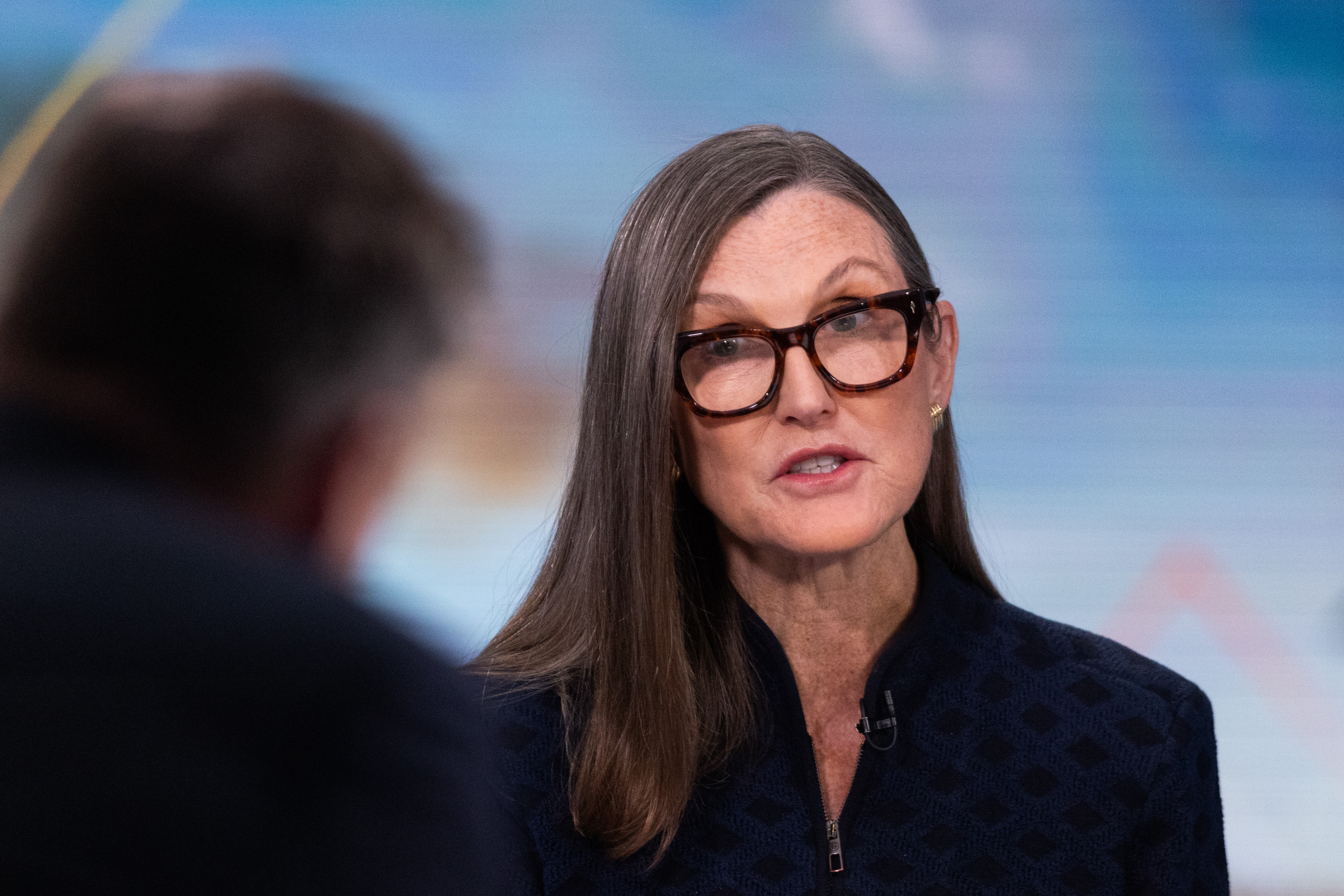
Corporate America is regaining its appetite for risk as expectations build around Donald Trump’s push for deregulation and tax cuts, according to ARK Investment Management founder Cathie Wood.
Vanguard Group Inc., the investment giant famous for low-cost index funds, is seeking regulatory approval to expand its signature tax-saving fund structure — as anticipation grows that the Securities and Exchange Commission under Paul Atkins will soon embrace the design en masse.
For US traders, developing-country stocks have been a surprising source of returns as Donald Trump’s trade war roiled the S&P 500 Index.
The Senate is continuing to work behind the scenes to develop its version of the "One Big Beautiful" tax and spending bill that passed the House by a singe vote in May.
Gold plays a distinct role in the global monetary system. Simply put, it’s perceived as money, and its function as a store of value makes it arguably the world’s most popular hedge against inflation.
In the history of technological progress, there's often a critical misreading. We think the leap is in the product—the engine, the chip, the app.
Head of EMEA and Asia Pacific Equities Lucas Klein and Head of Americas Equities Marc Pinto argue that progress on the trade impasse, further monetary easing, pro-growth reforms, and an innovation revolution should all prove supportive to equities over the mid term once the market moves past near-term volatility.
With tariff news providing constant equity market fluctuations, the case for bonds becomes more compelling. The added uncertainty also punctuates the need for an active management strategy, which one particular Vanguard ETF offers.
Financial markets have been experiencing some of their wildest trading days in history this year. Stock and bond prices have been moving in unison—an alarming scenario for investors and their advisors. With increased volatility, long-term investors might benefit from additional exposure to alternative strategies within their portfolio allocations.
If I told someone with even a little investing experience that I own an asset that pays like stocks but is stable like bonds, they would probably think I was a huckster or a fool. Yet many of the most sophisticated investors claim to own such a thing.
When it comes to inflation, America has reached a “Mission Accomplished” moment. Rule No. 1 of inflation reports is never to read too much into one report, but there have now been several months of fairly low inflation, so it seems safe to call it: The Fed did its job. Pandemic inflation is over.
Despite inflation worries, fiscal deficit concerns, and continued geopolitical conflict, equity markets posted strong returns in May on the back of easing tariff tensions, lower probability of recession, and better than expected US Q1 earnings.
After weeks of hand-wringing around demand for long-term US debt, all eyes are on Thursday’s 30-year Treasury auction for a fresh read on whether spiraling deficits are causing investors to shun the maturity.
The US and China capped two days of high-stakes trade talks with a plan to revive the flow of sensitive goods — a framework now awaiting the blessing of Donald Trump and Xi Jinping.
The first half of 2025 has been driven by headlines that have caused volatility in both the stock and bond markets. While tariff negotiations have commanded the most attention, we are now pivoting to the federal budget deficit, which feels like a perpetual headline over the last 15 years.
Today, Vanguard released its newest bond fund, the Vanguard Multi-Sector Income Bond ETF (VGMS).
Integrating volatile and illiquid assets into the ETF structure is something to be avoided, Doubleline CEO and CIO Gundlach said.
With the world order in flux, investors can look to fortify portfolios by diversifying across global markets and capitalizing on attractive, high quality yields.
This video examines the ratio of unemployment claims to the civilian labor force and its effectiveness as a recession indicator.
Financial institutions shouldn’t underestimate the depth of regulatory complexity coming their way. A misstep in just one area — whether it’s KYC, AML or elsewhere — could unleash severe consequences.
US Treasuries surged as easing US consumer inflation prompted traders to increase their wagers on more than one Federal Reserve interest-rate cut this year.
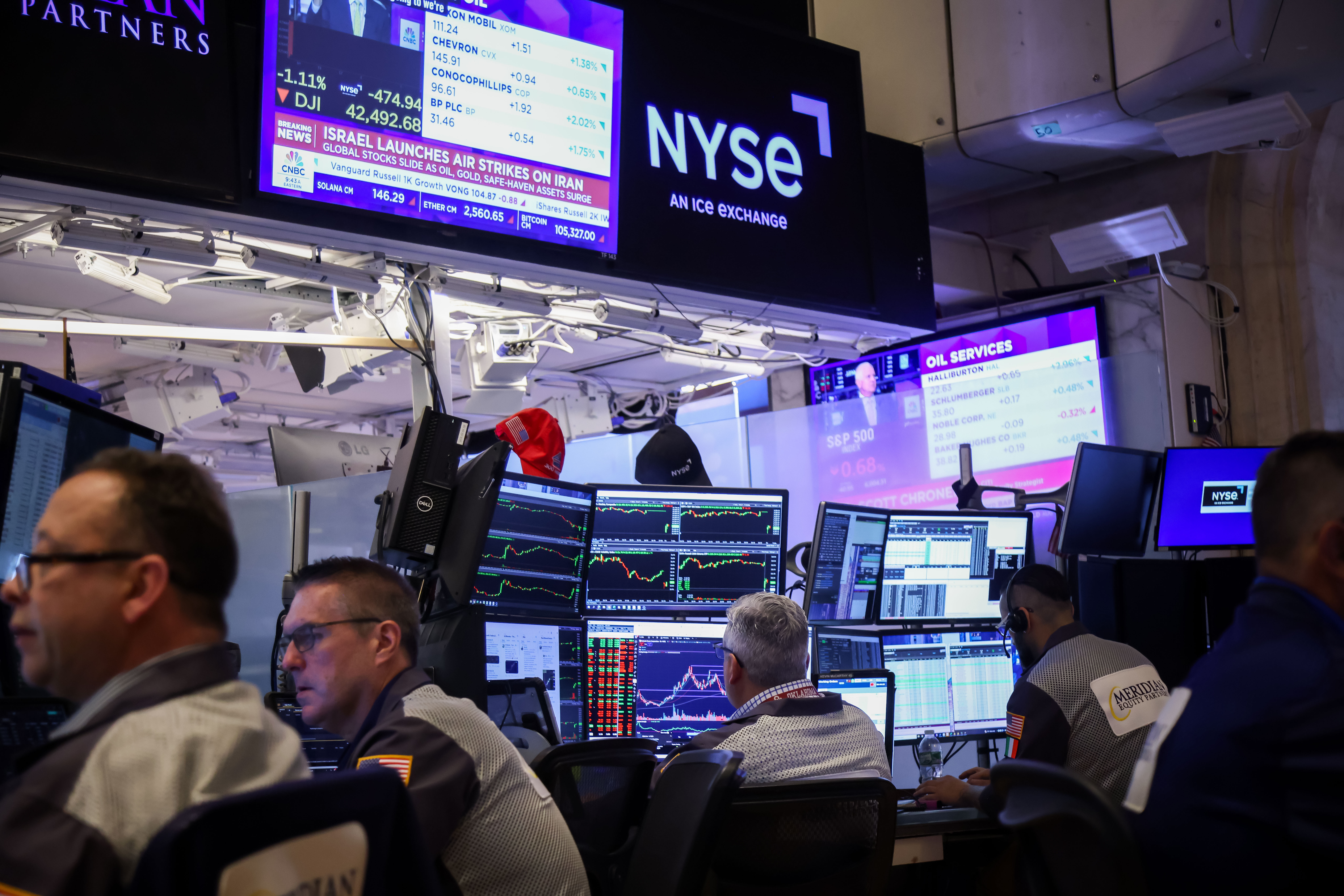
Back in 2016, Intercontinental Exchange Inc., the owner of the New York Stock Exchange, revealed that it was considering an offer for the London Stock Exchange Group Plc.
Wall Street analyst outlooks are typically bullish. If you aggregate every price target on every S&P 500 Index company and weight them to match the index, it’s exceedingly rare for the overall number to fall.
The right custodian will be more of a partner than a vendor. Here are some things to consider when making your selection.
While the immediate path for tariffs may drift lower, the U.S. legislative branch is hammering out a tax and spending bill that seems to favor tax cuts over lower spending, reviving worries over the U.S. budget deficit and a growing debt burden that cannot be ignored.