Global bonds are soaring at the fastest pace since the 2008 financial crisis.
As I start thinking about Christmas this year, I decided I want to be on the nice list again, so I put together some useful year-end actions and ideas for financial advisors.
Economic pain is likely in 2024, but that doesn’t mean stocks will struggle all year, especially if there is a continuation of the rolling recessions that have hit the economy.
A robust growth backdrop, a key input for cross-asset positioning, benefited from pent-up demand and an accommodative fiscal policy stance.
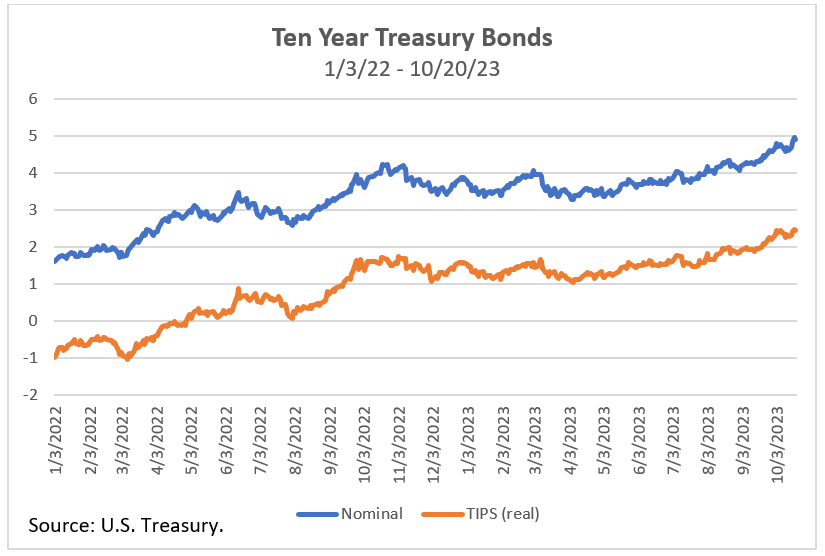
While Treasury inflation-protected securities (TIPS) may seem complex and daunting, it’s important to dive into their intricacies. After all, their current yields present an enticing opportunity and a compelling alternative to conventional Treasury bonds.
In this video, Chuck Carnevale, Co-Founder of FAST Graphs, a.k.a. Mr. Valuation, will be discussing the potential of food stocks as investments. He will cover more than 25 food stocks and provide a high-level analysis of their performance and potential.
How can RIAs avoid missing the mark when it comes to private market investments?
The world’s biggest bond market has clawed its way back after spending chunks of 2023 underwater. Now many US debt watchers see the pathway clearing for a real revival.
Reeling from a bear market last year, beaten-up investors decided to send more than $60 billion to exchange-traded funds focusing on dividends.
Treasury investors are turning increasingly skeptical the Federal Reserve will deliver a soft landing for the US economy next year, elevating concern of a looming recession over the risks posed by inflation and a swelling budget deficit.
US short-term inflation expectations climbed to a seven-month high in November and longer-run price views remained at levels not seen since 2011.
Federal Reserve policymakers at their most recent meeting united around a strategy to “proceed carefully” on future interest-rate moves and base any further tightening on progress toward their inflation goal.
There are clear intersections between artificial intelligence (AI) and cloud computing. But for some reason, the latter has been an afterthought as the former has flourished in 2023.
While the fall in inflation is welcome, the impact of higher interest rates on mortgage borrowers still has some way to play out. The reduction in inflation will help DB members that are drawing on their pension. Pension trustees should consider their investment strategy and support members with their retirement planning.
Fixed income ETF demand has been strong in 2023 led by Treasury ETFs. However, advisors have been rewarded by turning to alternatives in the fixed income space, such as those focused on the collateralized loan obligations (CLOs) market.
Doug Drabik discusses fixed income market conditions and offers insight for bond investors.
A quirk in retirement fund accounting is making corporate pensions look particularly flush now, giving them more incentive to cut risk by dumping equities and buying bonds.
October news on CPI inflation was all the doctor recommended and has markets spinning and repricing the Federal Reserve’s (Fed) potential path forward.
Reasons prompting concern around investing in China may be improving, but volatility is likely to remain characteristic of Chinese stocks in 2024.
The latest inflation report, showing that price increases slowed in October, suggests that the US just might get the “immaculate disinflation” that everyone is hoping for: Inflation will fall to its pre-pandemic levels and remain there, and the US will avoid a recession. Allow me to make the pessimist’s case that we are not out of the woods yet.
For investors stashing record sums in cash, US bond managers overseeing a combined $2.5 trillion have a bit of advice: It’s time to put that money to work.
I show how the best way to utilize bonds in retirement is not to rebalance between stocks and bonds in retirement, but rather to draw down on the bond side of the portfolio first and let the portfolio drift towards a greater equity allocation.
Today's uncertain economic climate is putting particular pressure on four market segments. Here's what to watch out for in the months ahead.
On this episode of the “ETF of the Week” podcast, Tom Lydon discussed the Global X SuperDividend ETF (SDIV) with Chuck Jaffe of “Money Life.” The pair talked about several topics regarding the fund to give investors a deeper understanding of the ETF overall.
For the better part of two years, investors have been primed with hope of a “Fed pivot” that will presumably restore easy monetary policy and supportive conditions for the financial markets.
Let’s examine what the bond market is telling us about inflation and a solution that will pay you and your clients to insure for the possibility of continued high, long-term inflation.
Picking the “right” stock is akin to betting on a game; not only must one pick the right team (beta), but also by how much (alpha).
The Treasury market’s nascent rally is facing its next big test: a bond auction that will help gauge whether investors are confident 2023’s selloff is over once and for all.
Following the surge in inflation, the most aggressive Fed tightening cycle since the 1980s and multi-decade lows in business and consumer confidence, calls for a U.S. recession have been prevalent all year.
The savage sell-off that hit Treasuries in prior months was driven by concerns a buyers’ strike had hit the $26 trillion bond market. It’s now confirmed: at least one set of investors headed for the exits back in September.
Though inflation continues to cool, there remains a potentially longer road ahead to get to the Fed’s desired 2%. In an environment of uncertainty and elevated inflation, the inclusion of managed futures in a portfolio made a significant difference in the last few years as modeled by DBi recently.
Investors should offload risky assets after recent gains as technical and macroeconomic headwinds are building, according to Bank of America Corp.’s Michael Hartnett.
A charismatic entrepreneur pulls in wealthy investors to amass a portfolio of some of the finest prime real estate. Banks and bondholders are persuaded to provide the leverage. What could possibly go wrong?
A movie that I’m quite fond of is 25th Hour, a Spike Lee joint about three friends in post-9/11 New York City. One of them, played by Barry Pepper, is a bond trader.
Just a week after Brazil’s Nu Holdings Ltd announced a yield of 15% on its high-yield savings accounts in Mexico, Argentina’s Ualá is raising its own by three percentage points to 15%.
We understand that many economists/analysts/market participants are already discounting inflation as a serious problem for the U.S. economy. Even if this seems correct on the surface, the problem is very different for those who suffer the most from higher prices – middle- and lower-income individuals.
In the context of fighting inflation, the “‘final mile”’ represents the successful and sustainable achievement of a central bank’s inflation target. Stephen Dover, Head of Franklin Templeton Institute, opines on the Fed’s ability to reach it.
Investors starved for yield since the great financial crisis can now have it merely by holding cash reserves. At least for now (as of November 8), the U.S. three-month Treasury Bill was yielding 5.4%, up from 0.50% at the end of 2021 and 4.4% at the end of last year.
The recent pause in interest rate hikes by the Federal Reserve could finally signal an end to monetary policy tightening. But fixed income investors can keep on reaching for high yield opportunities with a pair of active ETFs from American Century.
In our 2024 outlook, bonds emerge as a standout asset class, offering strong prospects, resilience, diversification, and attractive valuations compared with equities.
On Wall Street, there’s always a lot of excitement around the latest inflation report. Tuesday’s better-than-expected number was an extreme example — bond yields plummeted and stocks surged.
Professional traders entered November wagering Jerome Powell’s campaign to tame inflation was a long way from being won. Now they’re being forced into risky bets that the battle is over.
A normal day for markets became something extraordinary after a hotly anticipated report on US inflation gave traders the greenlight to declare that the Federal Reserve’s most aggressive interest-rate hiking cycle in decades is over.
Like some advances earlier this year, the market's current surge hasn't been defined by strong breadth underneath the surface—which will be key for a sustained, durable advance.
We speak with ClearBridge Investments’ Jeff Schulze about a topic on many investors’ minds: the 10-year US Treasury yield and the path of monetary policy. He also shares his views on the latest US retail sales data and whether consumer resilience will last into 2024.
Senior Investment Analyst Ashley Fritz addresses three major misconceptions around ESG investing in the EM corporate space.
The price of gold just had its best October in nearly half a century, defying tough resistance from surging Treasury yields and a strong U.S. dollar. The yellow metal rallied an incredible 7.3% last month to close at $1,983 an ounce, its strongest October since 1978, when it jumped 11.7%.
Every year, millions of Americans send their hard-earned money to life insurance companies, in return for a promise that it will grow and provide them with regular income in old age.
The promise of artificial intelligence to rewire large swaths of the American economy supercharged tech shares for most of the year before the fever broke this fall. But investors would be remiss in thinking AI’s power to juice returns is over.
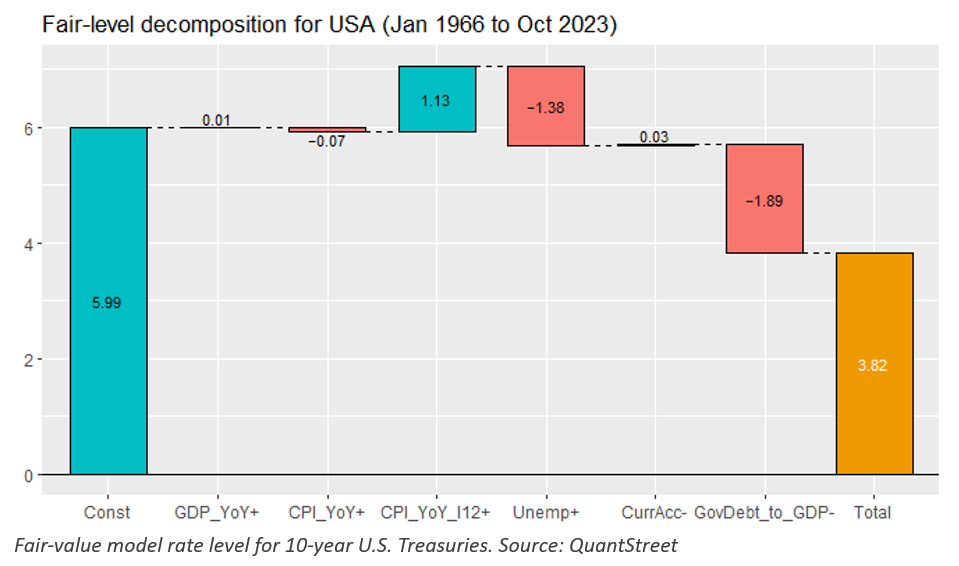
U.S. Treasury rates in the long-end of the curve are 100 basis points too high relative to a fair-value model. The risk-adjusted opportunity in long-dated, low-coupon Treasuries is attractive.