Discover the top 10 most-read charts from the first half of 2026, covering historic market valuations, record margin debt, recession indicators, and global index performance.
Russell Investments is getting new owners. An investor consortium led by B Capital, a global multi-stage investment firm, has agreed to acquire the asset manager from TA Associates and Reverence Capital Partners. The group also includes the California Public Employees’ Retirement System (CalPERS), according to a Thursday press release.
If there's one thing you should take away from it, it's this: these six measures rarely move together. When they have, twice in 250 years, the country entered a period of real upheaval. Right now, they're moving together again.
For investors who have been tracking this space, the signing is a continuation of a policy architecture that has been assembling with surprising speed.
The sharp correction in gold prices during the first half of 2026 has left many investors wondering whether the precious metal's bull market has come to an end. According to Money Metals' Mike Maharrey, however, the market's recent weakness is largely a matter of perspective.
Unpack the latest ICI flow data as long-term mutual funds bleed billions directly into low-cost, model-ready ETFs.
Money flowing into President Donald Trump’s newly created accounts for children will initially be invested in a State Street Corp. exchange-traded fund, as the US Treasury Department prepares to roll out the program.
The Federal Aviation Administration is resurrecting the dream of passengers flying faster than the speed of sound after it recently proposed lifting a ban on supersonic flights over land, which has been in place for more than five decades.
The US equity market, with the S&P 500 hovering near all-time highs, is expensive. This isn’t controversial. Depending on which measure you use, US stocks have arguably been overpriced for several years.
New Hampshire’s executive council voted down a proposal to bring the first Bitcoin-backed bond to the municipal market.
Finance Minister Satsuki Katayama pulled a genuine surprise on Friday when she announced toward the end of a regularly scheduled press conference that the government would pursue policies to encourage its massive pension funds to invest more at home. Details were sparse, and the yen wasn’t mentioned directly.
Silicon Valley has long considered itself an egalitarian utopia — a place where rebelling against hierarchy is encouraged and good ideas are supposed to bubble to the top, regardless of who has them. The reality has always been more complicated.
The Great Moderation has given way to a more volatile era, where inflation shocks and market dispersion favor flexibility and diversification.
As we move through 2026, the political and geopolitical landscapes remain key drivers of policy uncertainty. For the midterm elections, our base case is a Democratic House and Republican Senate, a historically favorable outcome for equities.
This video explains why the phrase "buy and hold" is often misunderstood and why successful long-term investing requires much more than simply buying stocks and never selling them. Chuck Carnevale, Co-founder of FAST Graphs, aka Mr. Valuation argues that buy-and-hold can be an excellent strategy, but only when investors purchase high-quality businesses at sensible valuations.
The action in Emerging Markets ETFs this year has been really interesting to watch. From record-breaking asset flows to impressive results, albeit massively dispersed, this category of funds has had quite a ride so far in 2026. What comes next could be equally interesting.
Central bankers expect de-dollarization to continue over the next several years, with gold and other currencies taking on a growing role in the global monetary system, according to a survey by the Official Monetary and Financial Institutions Forum (OMFIF).
One of the bigger questions facing advisors and investors right now revolves around credit. Inflation, volatility, and Fed rate hikes all loom, potentially heightening credit risk for portfolios. Navigating that risk may be a crucial task in the second half of this year.
Chief Investment Officer Sean Taylor reviews a strong second quarter for emerging markets, where AI and reindustrialization were key drivers of investor returns.
Assessing the year so far, much of the portfolios’ declines have been a compression of valuations, not a deterioration of earnings. For many of our holdings, the two have moved in opposite directions. Revenues, profitability, and cash flow have continued to build, even as the multiples placed against them have fallen.
The articles that dominated the views in June were very much focused on the realities of investing, addressing everything from how inflation can affect your returns to incorporating AI into retirement evaluations.
Investors are often drawn to healthcare for its innovation and long-term growth potential. Yet in practice, allocations are often concentrated in a few large pharmaceutical companies, whether through direct stock picking or index weightings.
Join the experts at GraniteShares to hear all about their autocallable ETF suite and find out how it could improve your income conversations with clients.
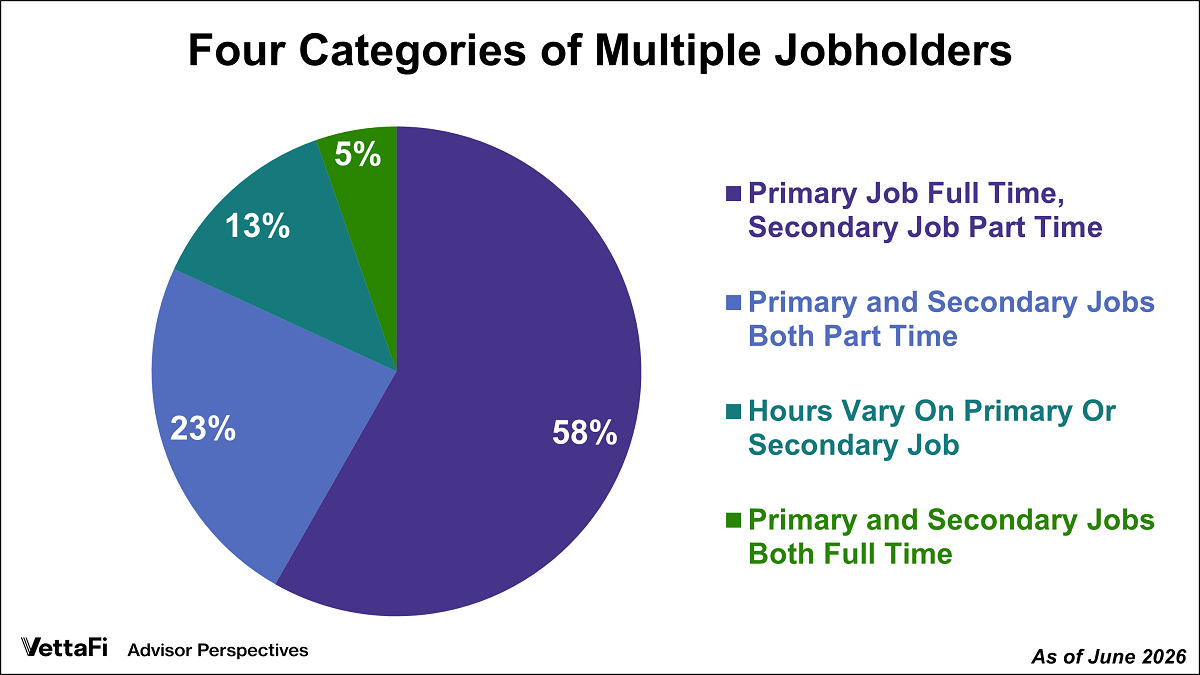
Multiple jobholders accounted for 5.2% of civilian employment in June.
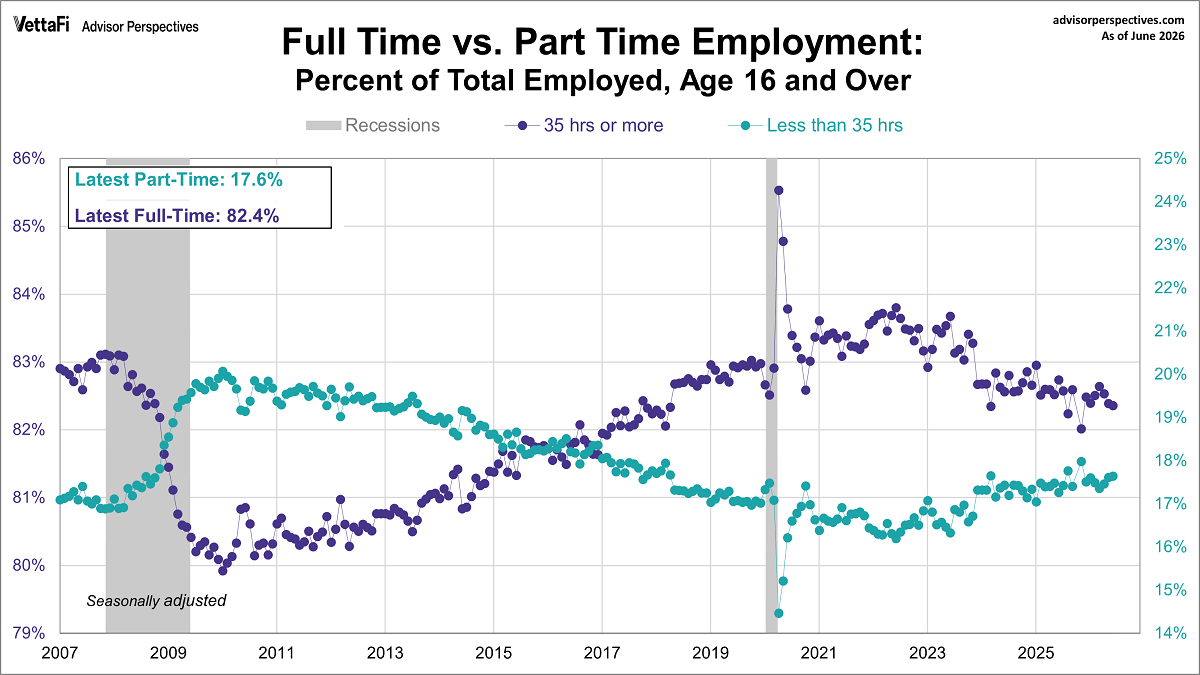
June's employment report showed that 17.6% of total employed workers were part time and 82.4% of total employed workers were full-time.
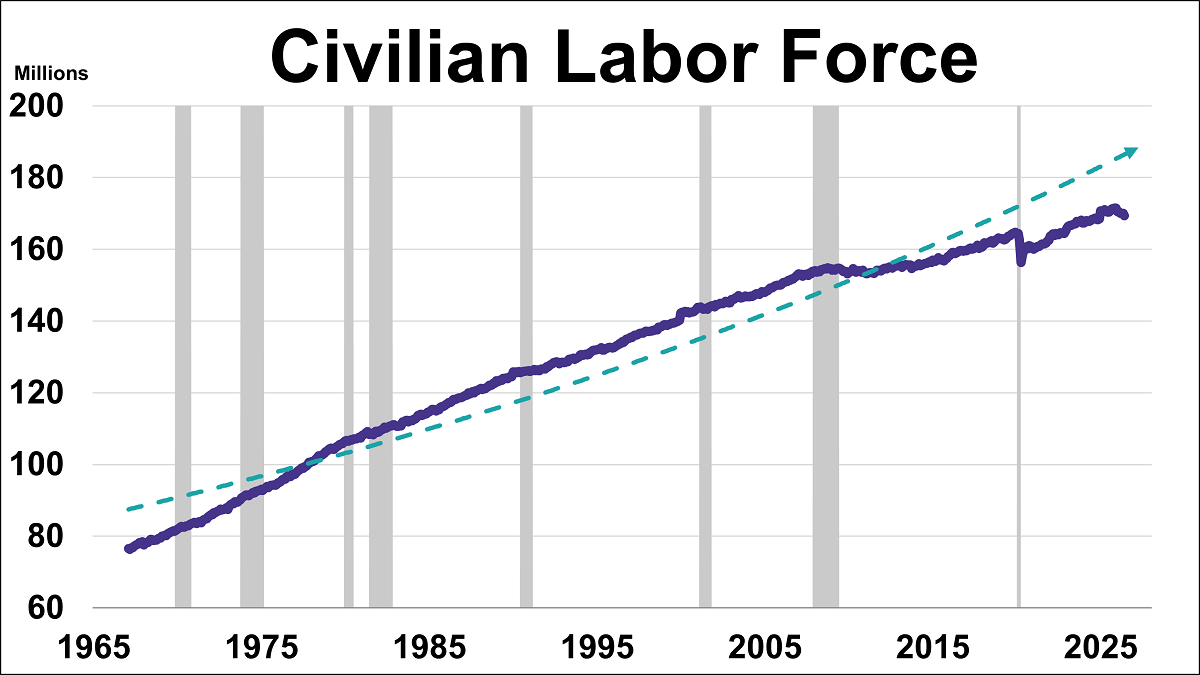
What does the ratio of unemployment claims to the civilian labor force tell us about where we are in the business cycle and recession risk?
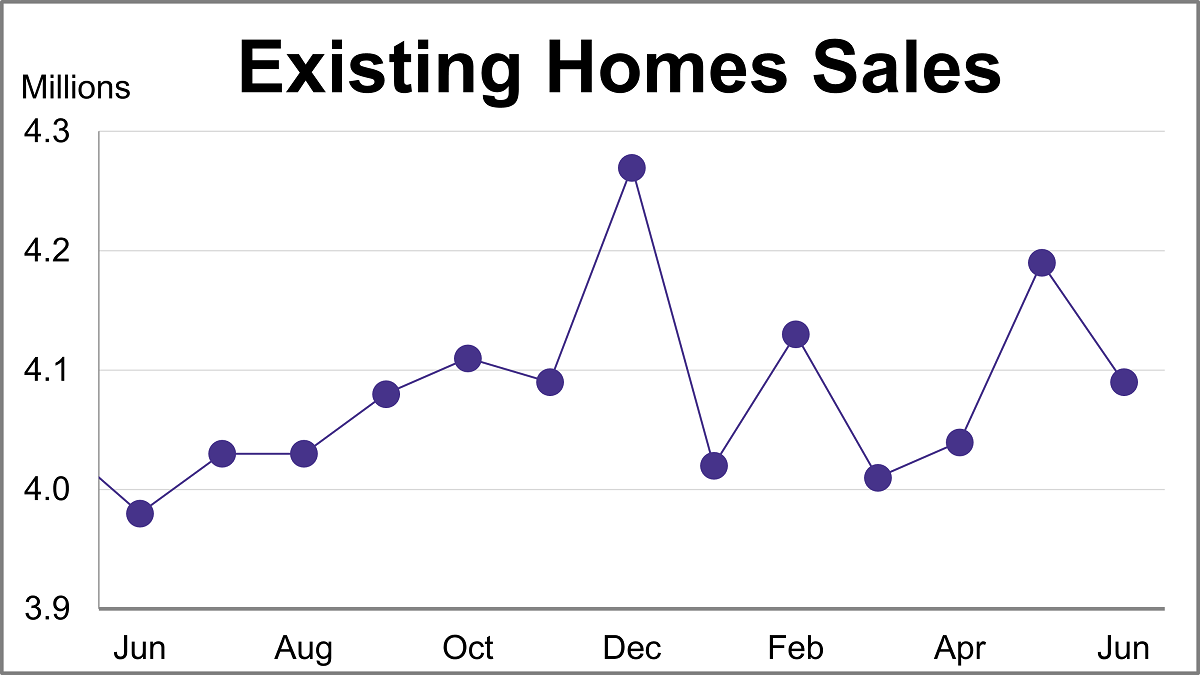
Existing home sales unexpectedly fell 2.4% in June as the median home price surged to a record high of $440,600.
Americans like their electric vehicles to come with a side of gasoline. Sales of conventional hybrid vehicles, which combine internal combustion and electric drivetrains but don’t plug in to recharge, jumped by almost a fifth in the first half of 2026, year over year, while pure battery EVs slumped by a quarter.
Almost two decades ago, when trillions of dollars in private housing debt proved unsustainable, governments had to step in to prevent the worst financial crisis since the Great Depression from eclipsing it.
The busiest airport in New England is tapping the municipal bond market to remodel its facilities and keep up with passenger growth.
It used to be a considered something of a tawdry question, although it could be flattering as well: “What’s your number?” Nowadays, your inquisitor is probably asking about retirement — as in, how much you think you need to retire. And, as it often was before, it’s the wrong question.
The small-cap stock rally we highlighted back in April has continued over the past few months, driven by factors such as robust U.S. economic growth disproportionately benefiting smaller, domestically focused businesses and the AI capital spending boom spreading to smaller tech and energy companies.
One notable group has been absent from the 2026 stock rally: the American tech giants that have charged a nearly four-year bull run.
ClearBridge Investments: Although markets often pause to digest after large gains, history suggests these episodes usually prove fleeting, meaning major indexes could move higher in the second half of 2026.
Markets move on data, earnings, interest rates, and economic conditions. But they can also be heavily influenced by human behavior. Even experienced investors can fall into emotional or psychological patterns that affect decision-making, particularly during periods of uncertainty or market volatility.
As economies become increasingly electrified and power demand grows, the transmission, storage and infrastructure needed to support reliable electricity delivery are evolving. In our view, these trends are creating attractive opportunities across the technologies and infrastructure that underpin the energy transition.
For much of the last decade, investing felt relatively one dimensional. Falling inflation, near zero interest rates and abundant liquidity rewarded long duration growth assets, compressed dispersion and made passive exposure difficult to challenge.
The June jobs report underscored our thesis that while the labor market remains in the 'economic plus column,' some of the prior months' increases in new hiring seemed a bit too high.
Congress is in recess from June 30 through July 13 for the annual July 4 break, so it's relatively quiet in the nation's capital. But there is still plenty worth paying attention to.
On June 30, Defiance debuted the new Defiance KSM TipRanks Analyst ETF (RANK). With an expense ratio of 60 basis points, this fund aims to leverage Wall Street’s highest-rated analyst consensus data to capitalize on U.S. market momentum.
Over the first half of 2026, markets faced some expected — and unexpected — tailwinds and headwinds, ranging from geopolitical developments, blockbuster corporate earnings, increasing artificial intelligence (AI) scrutiny, resilient economic data, and a new Federal Reserve (Fed) Chair.
The capital markets have become an increasingly complex space for investors, complexities that are heightened by the sheer number of ways one can invest.
Model portfolios are seeing billions in inflows, and part of that success may be from how these strategies implement ETFs and private assets.
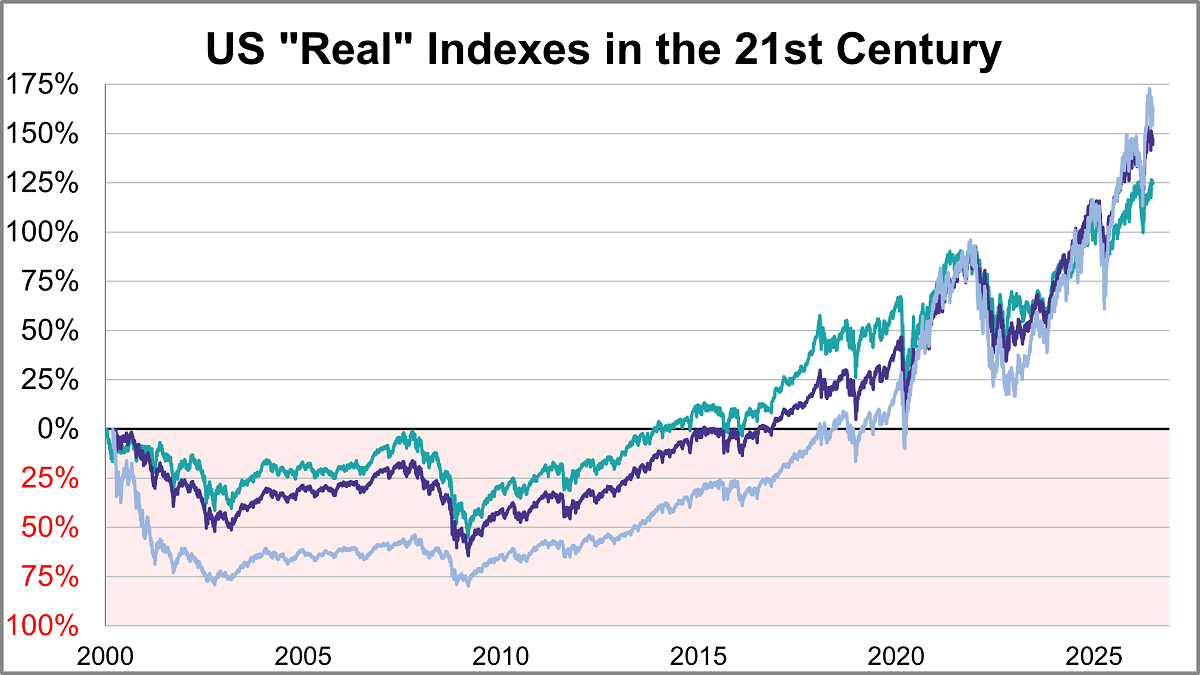
Here is a look at real (inflation-adjusted) charts of the S&P 500, Dow 30, and Nasdaq composite since their 2000 highs. We've updated this through the June 2026 close.
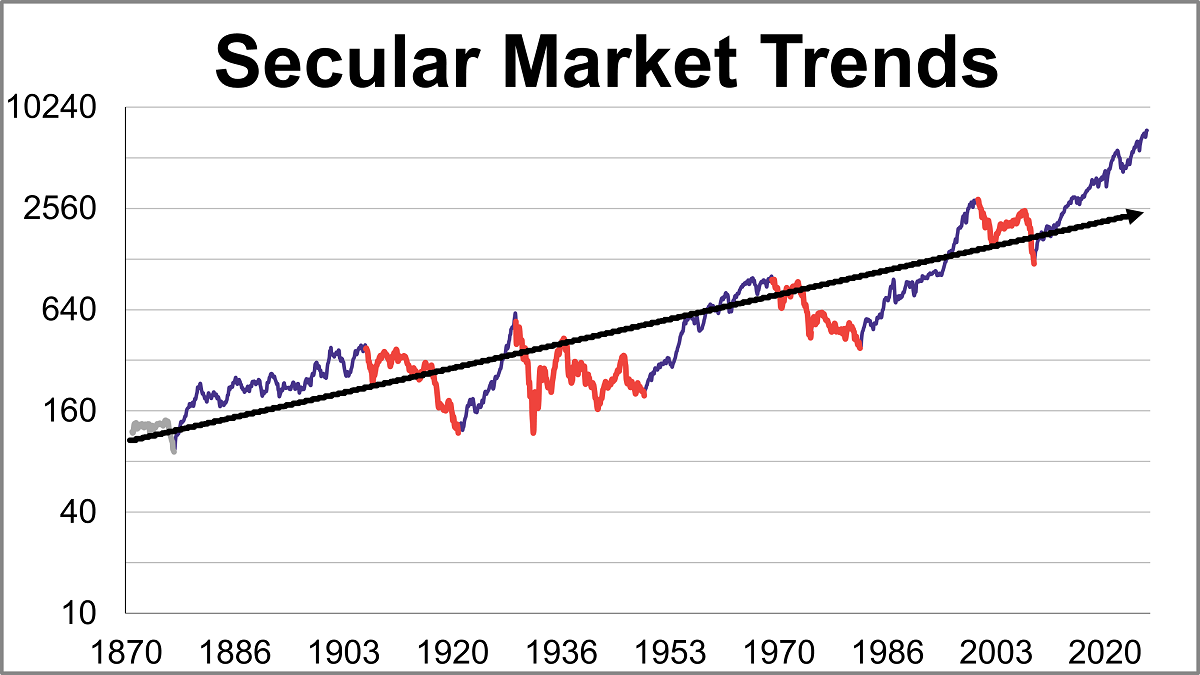
The S&P 500 real monthly averages of daily closes reached a its all-time high in May 2026. Let's examine the past to broaden our understanding of the range of historical bull and bear market trends in market performance.
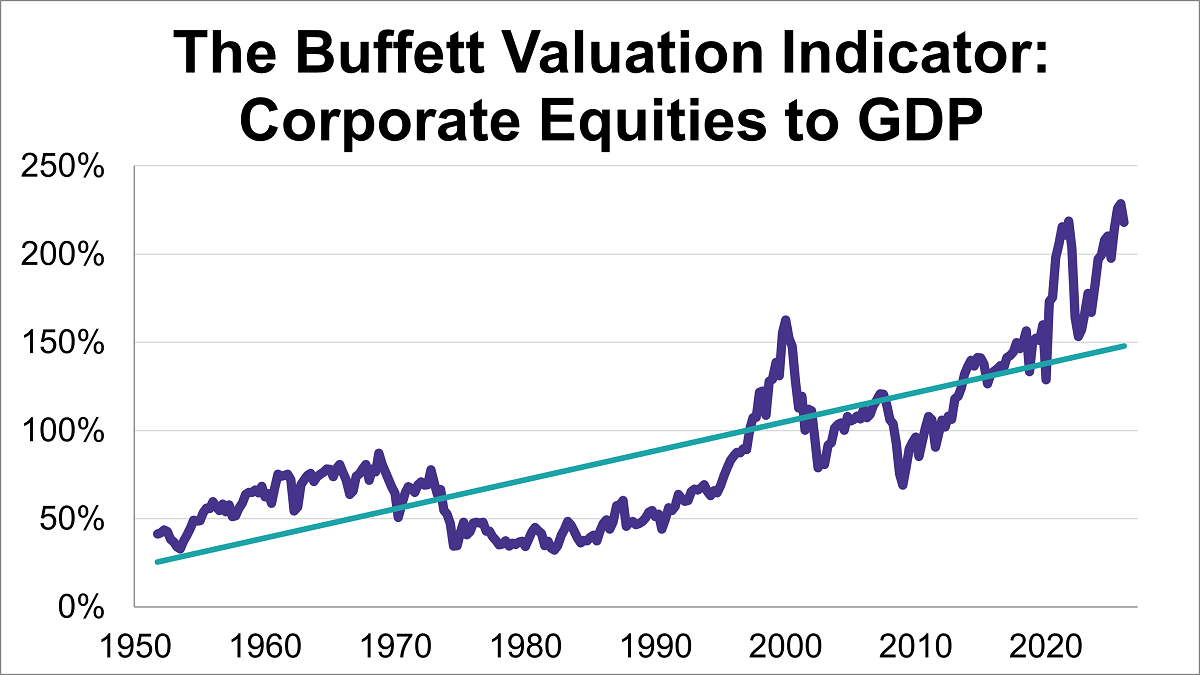
Following the Q1 GDP third estimate, the 'Buffett Indicator'—the ratio of corporate equities to GDP—now stands at 218.1%. This marks the fourth-highest reading in history.
Join the experts at SS&C ALPS Advisors and CIBC Private Wealth for a product due diligence session covering the ALPS Clean Energy ETF (ACES).
Widowhood does not happen on paper. It happens in the middle of grief, changing income, tax questions, family expectations, housing decisions, administrative demands, and a profound shift in identity. The math may still work, but the human operating system has changed. And that is why advisors need to stress test — not only for portfolio survival, but for survivor usability.
After years of working with advisors and studying client behavior, the reasons clients leave come down to three core patterns. They are predictable. They are preventable. And they almost always trace back to a conversation that never happened in the first meeting.
I have spent the better part of my career watching how organizations manage access to sensitive data — who has it, who should have it, and how long it takes anyone to notice when those two things stop matching. In financial services, that gap tends to be measured in months.