A wave of profit taking in the gold market has brought a three-year bull run to an end, but there’s little evidence yet that investors are putting on large-scale short positions in anticipation of further declines.
In 2003, the Pentagon’s Defense Advanced Research Projects Agency made a visionary attempt to use prediction markets for geopolitical forecasting. However, it created a huge controversy in Congress and was quickly killed.
During the June 30, 2026, World Cup round of 32 match between France and Sweden at the 82,500-capacity MetLife Stadium, the logistical scale of a global mega-event was on full display. Moving 80,663 fans safely through a sprawling transit corridor and securing a massive open-air venue demands complex engineering. Underpinning the operation is a capital-intensive ecosystem of physical AI, advanced sensors, and automation software.
Rising prices increase the value of collateral in every margin account, which automatically increases how much each investor can borrow under Reg T. Debt rises BECAUSE the market rose, not the reverse. That single fact is what breaks the ratios we’re about to examine, and it lies at the core of why margin debt risk is so often misjudged.
Royce Investment Partners: In this second quarter recap, Francis Gannon discusses how US small-and micro-cap stocks have continued to lead the US equity market in a robust period for equities.
Fixed income transition costs are increasingly driven by what happens in credit markets. As credit trading becomes more efficient, the cost of transitioning fixed income portfolios is coming down, and how those transitions are executed is changing too.
The shortened trading week brought the second quarter of 2026 to a positive close. Stocks ended slightly lower for month, but closed the quarter on a nice uptick. The US and Iran resumed peace talks, helping stocks push higher.
It feels like gold has tanked this year, but the yellow metal was only down about 7 percent through the first six months of 2026. The sharp price rally to kick off the year exacerbated the scope of the ensuing correction. Gold is down about 28 percent from its record highs.
The first half of 2026 has provided a considerable amount of news for investors to digest. Notably, equity markets were higher by nearly 10%, oil prices spiked over 50% before retreating nearly back to where they started, there is a new Chair of the Federal Reserve in Kevin Warsh, and AI infrastructure spending surged.
Stocks staged a powerful recovery in Q2. The S&P 500 gained 15% and closed near record highs as oil round-tripped back to pre-conflict levels, AI enthusiasm returned, and the rally broadened well beyond the handful of names that led the market for three years.
Significant interest appears to be accumulating around capacity expansion in the market. The primary mechanism driving this activity may be a structural capital expenditure cycle (CapEx). One where a prevailing market dynamic could transform one company’s CapEx directly into another company’s revenue. .
AI may reshape the labor market in ways that are difficult to predict, and it won’t be the first time this has happened. In the short term, the labor market appears to have stabilized and there are some early signs of acceleration.
Bitcoin tumbled as renewed geopolitical tensions rattled digital asset markets, eclipsing what had been a muted reaction to Strategy Inc.’s latest sale of the token earlier in the week.
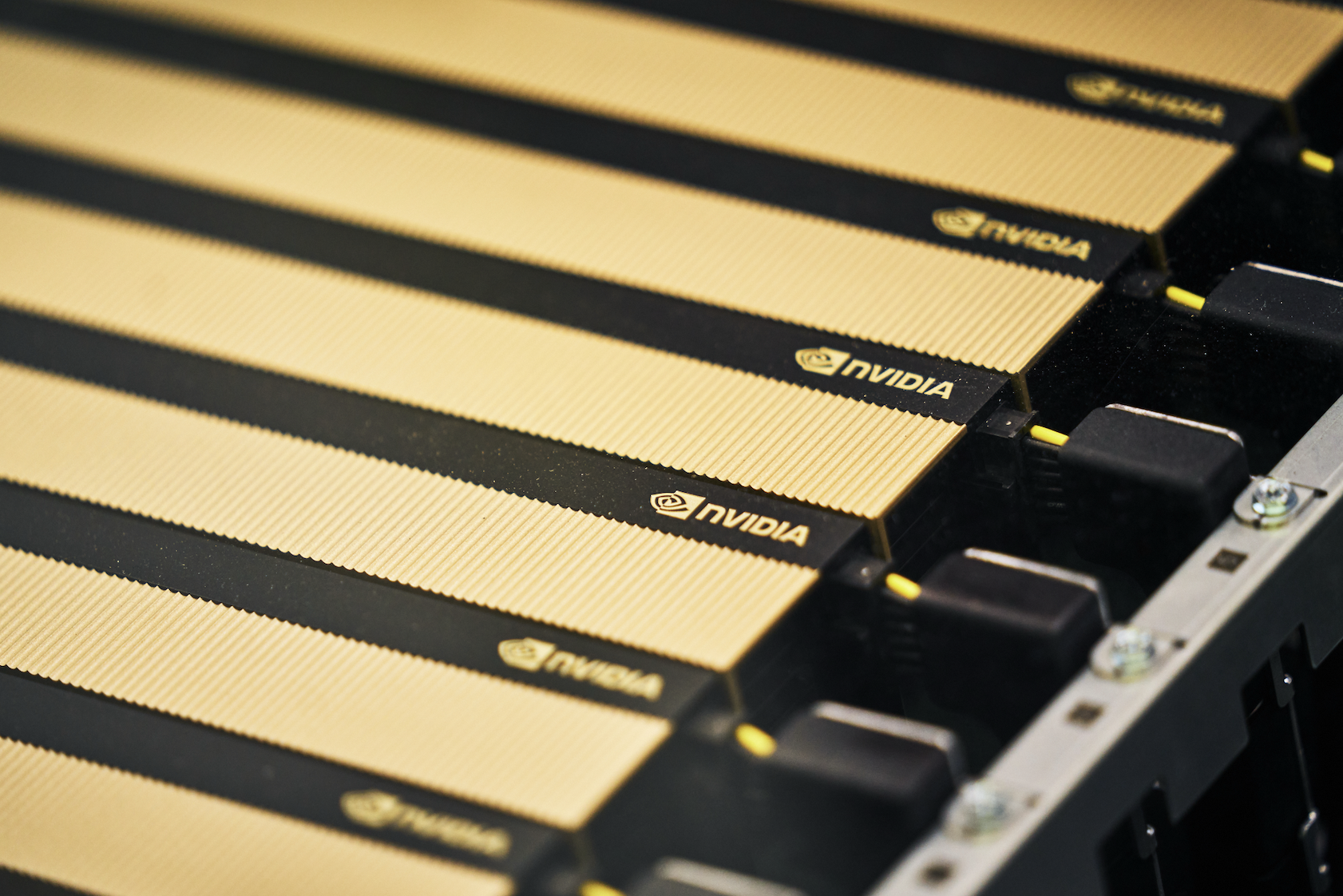
After losing roughly $1 trillion in market value in less than two months, Nvidia Corp.’s stock is the cheapest it’s been since before the AI boom kicked off and sent the shares into the stratosphere.
AI represents a huge shift for financial advisors, who are always learning and adapting to a shifting investing landscape.
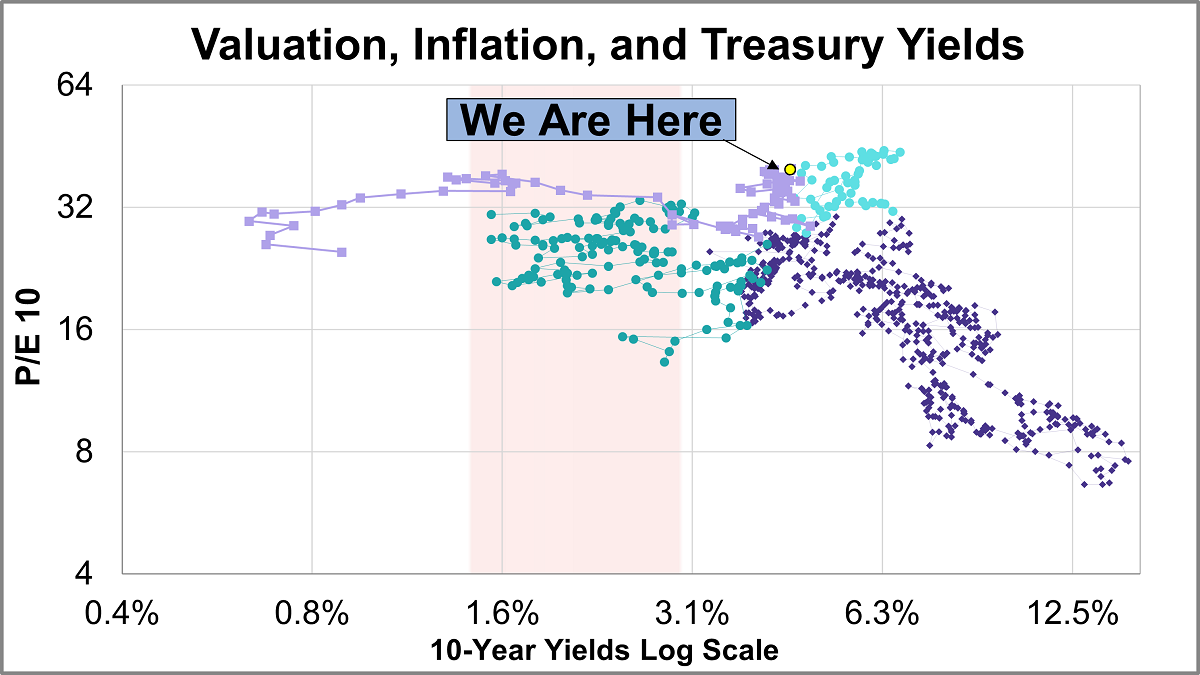
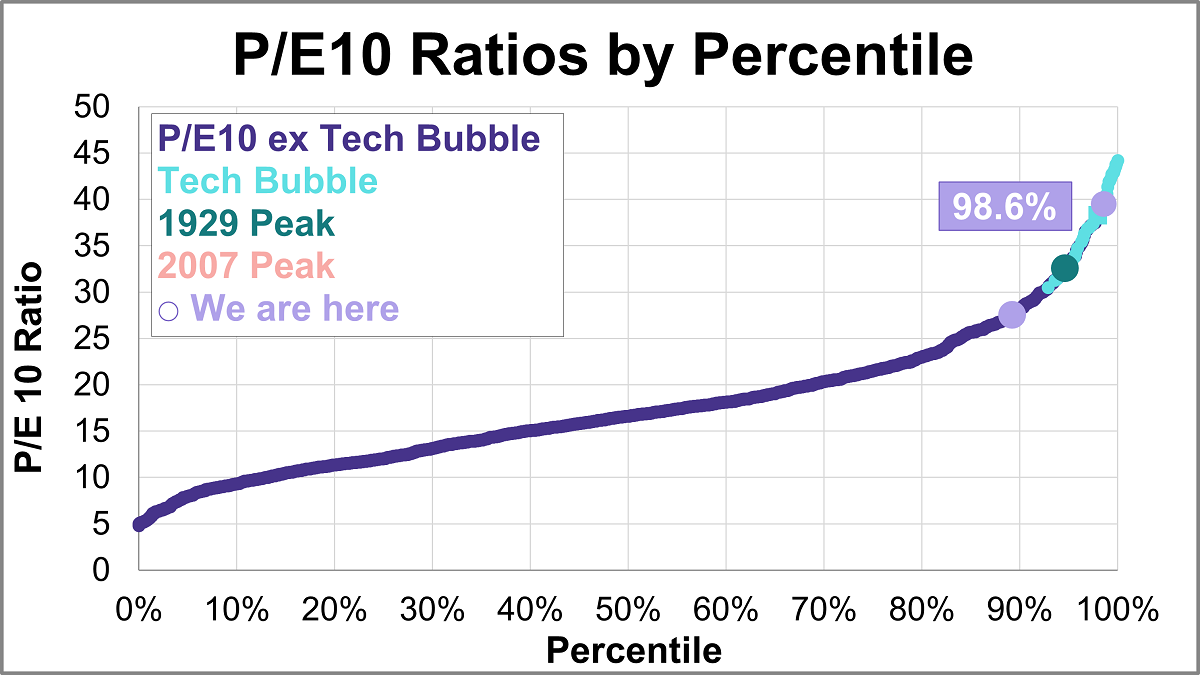
Our monthly market valuation updates have long had the same conclusion: US stock indexes are significantly overvalued, which suggests cautious expectations for investment returns. This analysis focuses on the P/E10 ratio, key indicator of market valuation, and its correlation with inflation and the 10-year Treasury yield.
Here is the latest update of a popular market valuation method, Price-to-Earnings (P/E) ratio, using the most recent Standard & Poor's "as reported" earnings and earnings estimates, and the index monthly average of daily closes for the past month. The latest trailing twelve months (TTM) P/E ratio is 25.3 and the latest P/E10 ratio is 39.5.
“Productization” has quickly become one of the most widely used terms in wealth management. It appears in strategy decks, conference discussions, and vendor messaging. Yet, despite its popularity, the concept remains poorly understood in practice.
Steven Pinker's latest book digs into why the knowledge we hold in common matters and how it helps society operate more smoothly.
The word fiduciary no longer answers the only question that matters: Whether the advice you are given is shaped by what the advisor earns from giving it. Many advisors will tell you, accurately, that they are fiduciaries, and many will say they have no conflicts without disclosing the ones they hold.
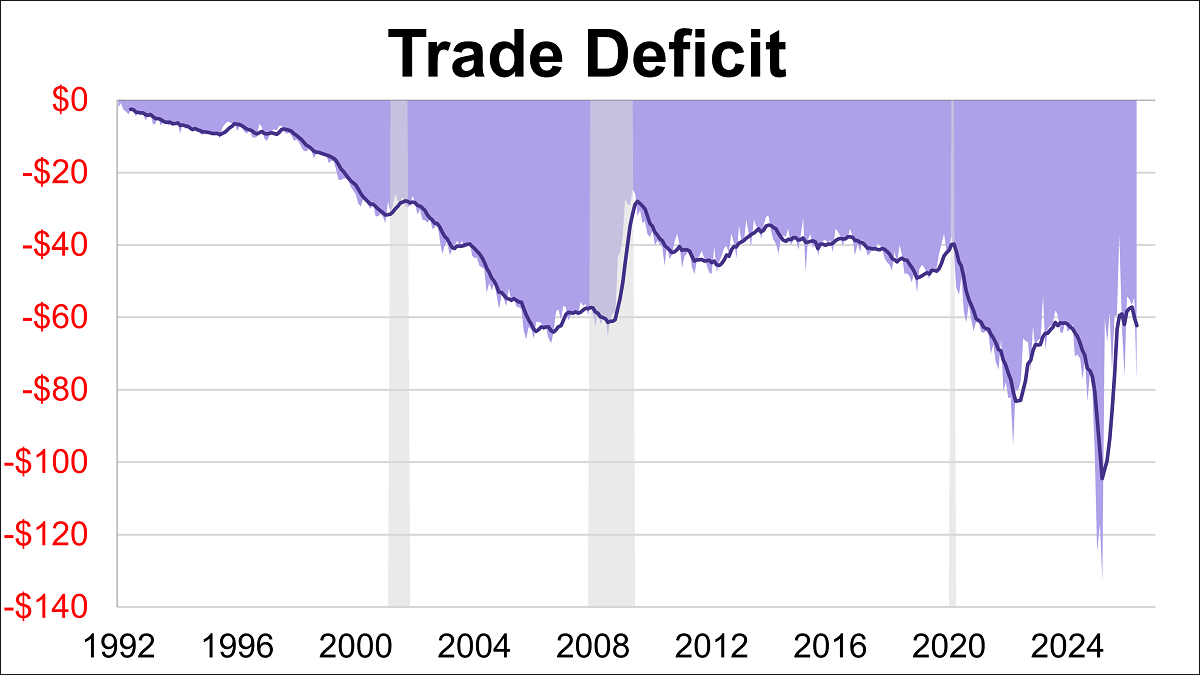
The U.S. trade deficit expanded over 40% in May to $77.59B, its widest gap since March 2025. The latest reading missed the forecast of -$78.30B.
For years, the Magnificent Seven tech giants commanded investors’ attention, dominating the S&P 500 Index and determining which way the overall stock market was headed. Those days are over.
SpaceX joins the Nasdaq 100 Index Tuesday as Wall Street brokerages launch coverage of Elon Musk’s rocket, satellite and artificial intelligence company with a clear consensus: buy the stock.
The higher the rally in technology high-flyers, the louder the anxiety around a new wave of turbulence in the group.
When Mark Zuckerberg gets a bold new business idea, he likes to throw money at it. Last summer, he dropped $14.3 billion for a 49% stake in Scale AI, allowing him to poach its wunderkind founder Alexandr Wang to lead a new project to build artificial-intelligence systems that surpass human intelligence.
Private equity may be our No. 1 economic boogeyman. It is blamed for rising real estate prices, poor medical care, and ruining many of the businesses we used to love.
ETF Database saw a massive surge in readers this past June. The most popular pieces focused on everything from breaking SpaceX IPO news to the technical mechanics behind top-performing ETFs.
Global equities rebounded in the second quarter as confidence in the AI investment cycle strengthened. As the third quarter begins, we believe markets have become priced for a smooth and profitable AI build-out, leaving little margin for error. June’s sharp sell-off in the Magnificent Seven stocks underscored how quickly sentiment can shift when crowded AI trades are priced for near-flawless execution.
Second-quarter 2026 markets were driven by the Iran conflict, which disrupted oil flows and spiked prices before easing after a partial Strait of Hormuz reopening. Focus then shifted to new Fed Chair Warsh’s reforms and SpaceX’s high-valuation IPO. The U.S. economy remains stable with moderate growth and rising inflation. Markets are up, led by AI-driven semiconductors, though risks and uncertainties persist.
Chris Galipeau discusses high-conviction insights that go beyond media headlines.
The June employment report’s headline readout was softer than expected, but the details reinforce my view that the U.S. economy remains on a stable footing. Headline payroll growth disappointed, yet the previous two months—which had surprised to the upside—were revised lower, bringing hiring back toward a pace that is far more consistent with a mature expansion.
Higher rates, weaker underwriting, and software concentration are exposing vulnerabilities in direct lending and leveraged loans, while high yield bonds appear better positioned.
Right now, advisors are facing a massive generation of clients trying to navigate retirement. That’s challenging enough, but with inflation and the cost of living rising, assuaging those clients’ concerns and delivering for them has become much trickier. Income ETFs can help meet those clients’ goals, with new, daily covered call ETFs an appealing option.
The S&P 500’s recent advance is masking a more dynamic story for US equity investors. Market winners remain confined to a tight clique of AI-related technology stocks, yet more companies are showing attractive fundamentals. For active equity investors, we believe this points to a more diversified and differentiated opportunity set ahead.
Close to 40 years ago, I moved from Canada to the U.S. after acquiring a controlling interest in U.S. Global Investors. I’ve built my entire life and career here, and in all that time, I’ve never stopped marveling at my adopted country.
Bypass the headaches of individual closed-end funds. Discover how Invesco's PCEF bundles over 100 CEFs to capture June's debt rallies.
The U.S. Treasury launched the Trump Accounts for childhood wealth building. Discover the five low-cost index ETFs anchoring the program.
Every sector chart tells you where the crowd is. Almost none tell you the thing a stock picker actually needs to know: Inside a given sector, how much room is there to beat the average name?
What is remarkable about Livermore is that his rules are still incredibly valuable. The markets he traded in no longer exist. The technology, the communication speeds, and the regulatory framework of his day are unrecognizable compared to today. But the principles and behavioral patterns he identified are as operational in 2026 as they were a hundred years ago.
Wage growth peaked four years ago. Since 1985, it has led CPI by three to seventeen months in every single cycle. The May 4.2% inflation print is the noise. Watch the wages.
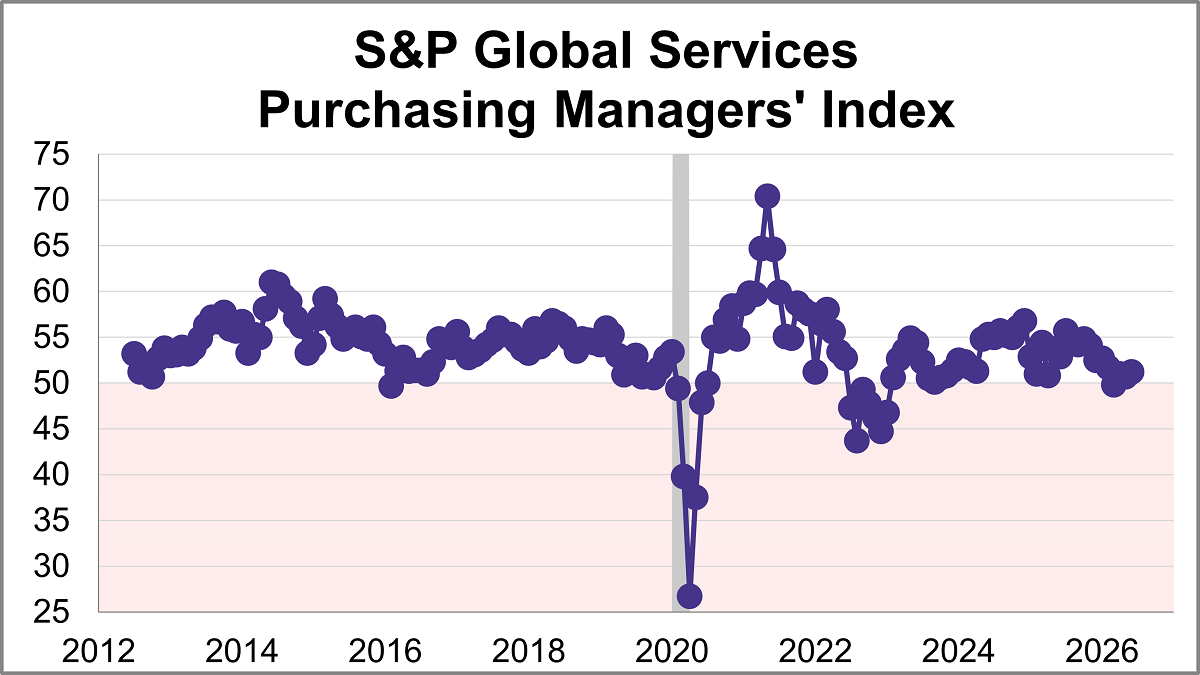
The June U.S. Services Purchasing Managers' Index (PMI) from S&P Global rose 0.5 points to 51.2, indicating a modest rise in service sector activity. The latest reading was just below the forecast of 51.3 and marked the strongest expansion in four months.
Personalization is high on the list of improvements because investing is personal. But we need to be careful in delivering personalization and to recognize the important distinctions between risk capacity (the ability to take risk) and risk tolerance (the willingness to take risks).
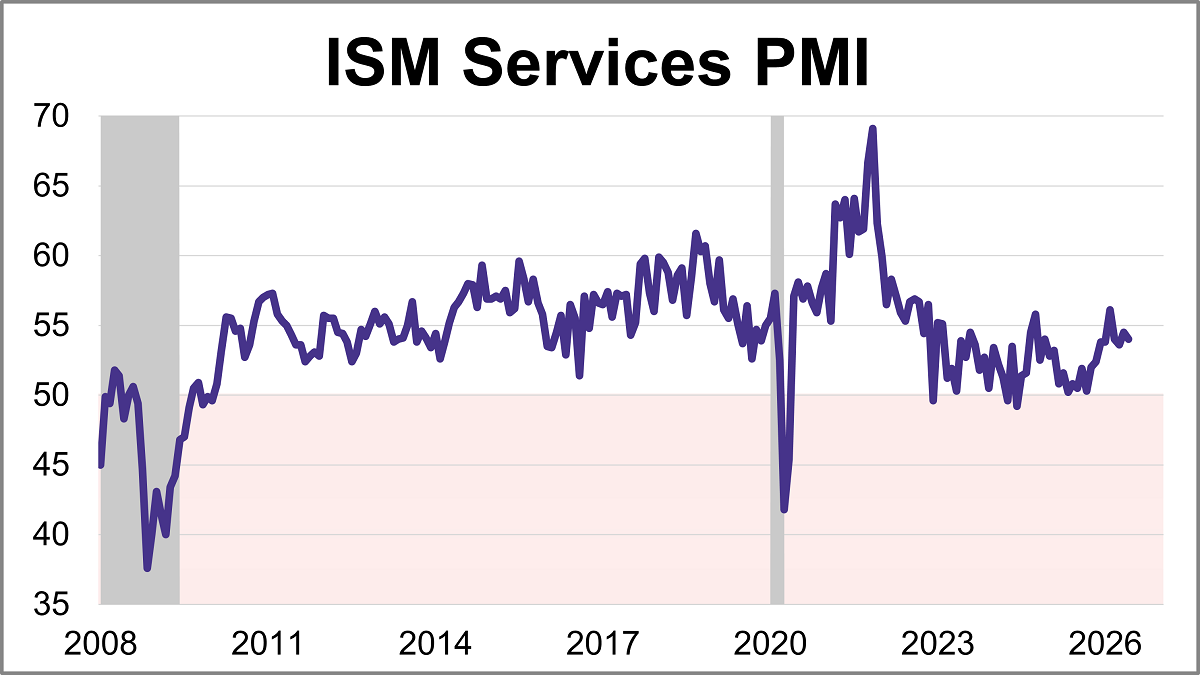
The Institute for Supply Management (ISM) released its June Services Purchasing Managers' Index (PMI), with the headline composite index at 54.0. This was slightly lower than the forecast of 54.2 but keeps the index in expansion territory for a 24th consecutive month.
While the Federal Reserve left interest rates unchanged at the latest meeting, investors increasingly speculate that rate hikes are on the table in 2026.
The US industrial robot industry is characterized by low growth and highly customized projects. Artificial intelligence holds out the hope to change that, especially when it comes to robots that can move and work safely around humans.
A violent rotation in the underbelly of a bullish stock market is extending the worst run for quantitative hedge funds since 2023.
Goldman Sachs Group Inc. sees the yen weakening to 165 per dollar in a year’s time, driven in part by Japan’s interest rate differentials with the US.
Oil held onto its recent run of losses, with traders looking for clues on flows through the Strait of Hormuz as barrels continue to return to the market after months of disruption.
US stock futures climbed early Monday as investors gauged whether the artificial-intelligence trade can regain its footing after one of its sharpest pullbacks in more than two years.
The most interesting shift in market price action in June was the strong outperformance of value stocks compared to the broad market and tech