A growing share of central bankers argue that artificial intelligence will ultimately push neutral interest rates higher. Intuitively, if AI boosts productivity and lifts long-run growth, then households have less incentive to save, pushing up the real neutral rate.
This video explains why the phrase "buy and hold" is often misunderstood and why successful long-term investing requires much more than simply buying stocks and never selling them. Chuck Carnevale, Co-founder of FAST Graphs, aka Mr. Valuation argues that buy-and-hold can be an excellent strategy, but only when investors purchase high-quality businesses at sensible valuations.
Six months is enough time for a lot to change. Your income, your expenses, your goals, and even the broader economy may look different than they did at the start of the year. And a plan that made sense in January might not fit the reality you're living in now.
Most global investors are not attuned to what can be seen on the horizon, not far from shore. After the Great Financial Crisis, Europe was slow to address the underlying capital issues. Rather than guillotining the problems, they allowed a slow bleed to take place.
America has proven that men and women not only can make their own history, but they can make it as they please, with circumstances chosen by themselves.
Midway through 2026, Franklin Templeton Institute’s Global Investment Outlook framework remains a valuable lens—but the landscape has shifted.
The U.S. nuclear sector advanced on two fronts in recent days. Advanced microreactors completed a key federal target while the existing commercial fleet signed a landmark agreement with a major retailer. These moves show momentum at both the innovation edge and the operating base.
This week, the Fourth of July, the 250th birthday of the greatest experiment in self-governance the world has ever seen, I want to do something different. I want to celebrate. And I want to use a lens I genuinely did not expect to be reaching for: the reactions of soccer fans from around the world who came to the United States for the 2026 FIFA World Cup and discovered, to their own astonishment, that they loved it.
The war in Iran has delivered an oil shock into a bond market that had not fully shaken inflation pressures. Higher energy prices have revived concerns about the path of inflation just as central banks were edging toward rate cuts, forcing a reassessment of what investors require to hold long-term bonds. That reassessment is now playing out in higher long-term yields and steeper yield curves globally.
AI-related disruption, asset valuations and borrower stress have put private credit under a microscope lately. Is this a market facing its first major test after a decade of rapid growth? If it is, we expect it to pass comfortably.
This July, the United States marks its 250th anniversary, and that has many Americans thinking about what independence really means. In many ways, genuine independence is about more than political rights. It’s financial.
The Federal Reserve left interest rates unchanged at its June 17 meeting, but investors were more focused on the future under new Fed Chair Kevin Warsh, whom Trump appointed in May.
Federal estate taxes may not affect most households, but state death taxes can still be significant. Learn key planning considerations and strategies to help preserve wealth.
The strong run by the Nasdaq-100 and the S&P 500 the last few years has loaded portfolios with heavy concentration risk. As a tiny group of mega cap tech giants shapes the market, finding meaningful diversification has become a priority for advisors. Data from last week’s VettaFi Mid-Year Market Outlook Symposium confirms that wealth managers are actively looking down the market-cap spectrum to rebalance risk.
Productivity is an essential component of economic success. It allows for growth without inflation; compensates for demographic deficits; and helps nations attract investment.
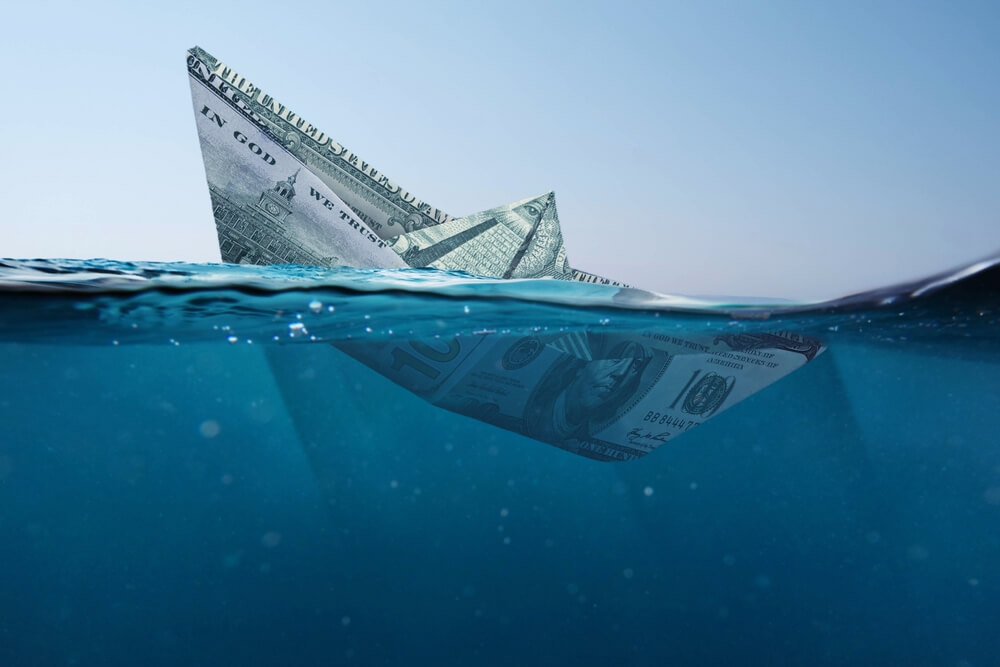
The dollar holds a central place in global markets due to its role as the world’s reserve currency. Its movements influence cross-asset correlations, shape liquidity conditions, and often offer early indications of shifts in the broader macro regime. In short, it is a critical variable that warrants close attention.
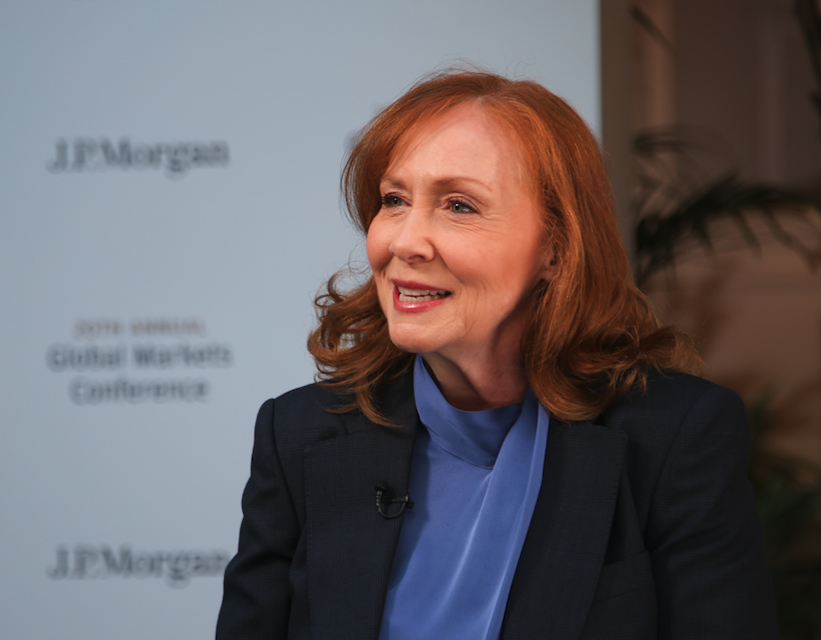
One of JPMorgan Chase & Co.’s most senior executives is leaving the bank after a four-decade career, in which she most recently led its artificial intelligence drive from a coveted spot on its top operating committee.
One should always take government data with a grain of salt. But if we aren’t going to reject it outright (if we do, we have nothing at all to go on), we should at least analyze it with a microscope. The headlines touted by your mainstream pundits almost always miss the real story.
Today’s market backdrop reflects a tension between expectations and reality. Despite higher oil prices and plenty of geopolitical noise, the US economy remains resilient and durable, supported by steady consumer spending, a labor market finding its footing, ongoing fiscal support and a surge in AI and infrastructure investment.
At VettaFi, we’ve been talking a lot about bottlenecks as a concept. Some of the brightest equity market opportunities for capital growth are tied to bottlenecks in a supply chain-context.
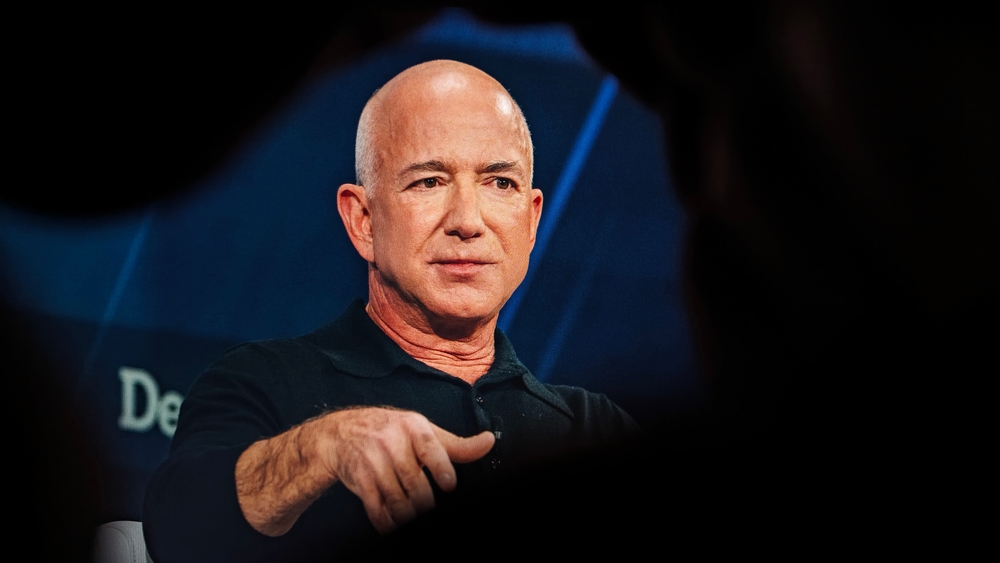
Slate Auto, the electric vehicle start-up backed by Jeff Bezos, is a grand experiment in whether austerity sells — and a warning for the US auto sector.
U.S.-listed ETFs locked in a record-breaking first half of the year. Read the analysis on active ETFs, fixed income shifts, and equity flows.
Former Fed Chair Alan Greenspan’s passing has brought a stream of retrospectives on his approaches to managing the economy. He erred on the side of parsimony, favoring short public statements. Greenspan’s vague communication style offered little clarity over the future path of interest rates.
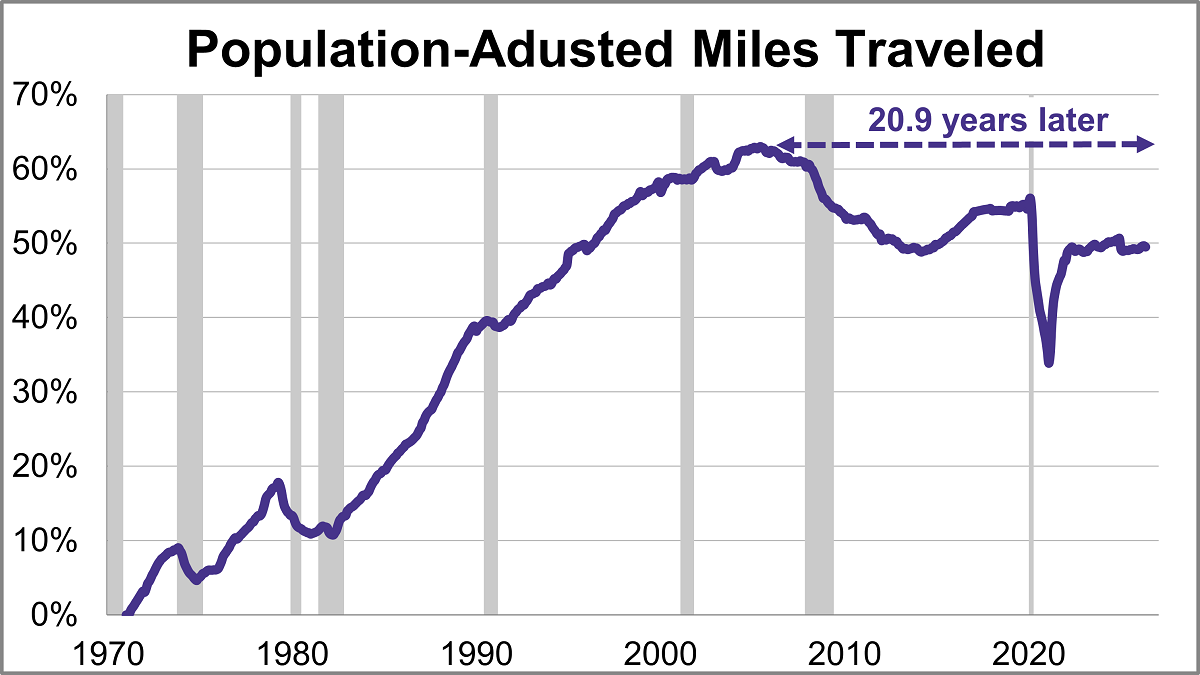
Travel on all roads and streets decreased in May. The 12-month moving average was down 0.06% month-over-month but was up 0.93% year-over-year. However, if we factor in population growth, the 12-month MA of the civilian population-adjusted data (age 16-and-over) was down 0.10% month-over-month and up 0.32% year-over-year.
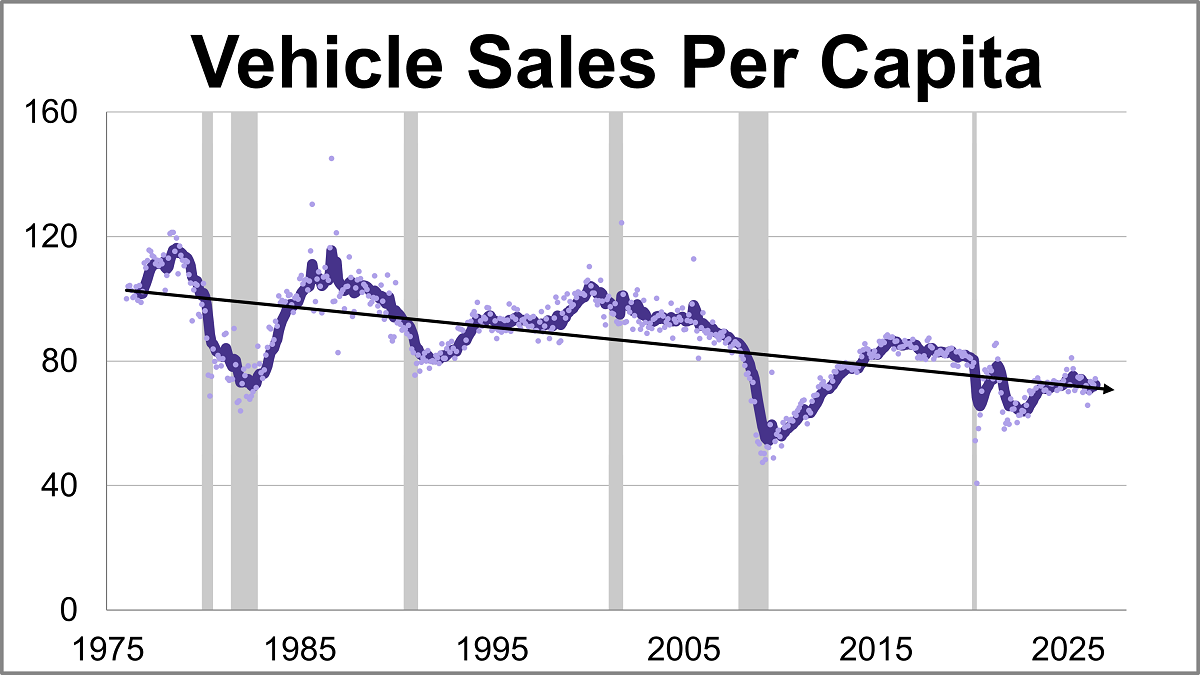
Vehicle sales rose to their highest level in nine months in June, coming in at a seasonally adjusted annual rate of 16.523 million units. This represents a 2.8% increase from the previous month and a 4.4% rise from one year ago.
The second quarter wraps up today, and it was a good one. With the S&P 500 having returned more than 14% (including dividends) with just one trading day left, it will almost certainly end up being the best quarter for the index since the second quarter of 2020. Technology was the leader despite the June weakness.
The Mag 7 has been the single largest driver of the stock market’s performance three straight years, accounting for over 20% of the S&P 500’s performance. However, there is a performance divergence happening in 2026 as the S&P 500 continues to go up, while the Mag7 go down.
The artificial intelligence boom has a power problem, and Wall Street is betting billions on companies that promise to solve it — even if some of the technology hasn’t been fully developed yet.
A look at the resilient global economy, evolving market opportunities, and key risks shaping the investment outlook.
At first glance, allocating to emerging markets appears to add diversification to a portfolio. Look more closely, and the reality is more nuanced. In the late 1990s, the MSCI EM index was dominated by materials and telecoms, driven by the growth of mobile telephony and the internet bubble.
Markets weathered turmoil in the first half, helped by solid earnings with signs of broadening beyond a few AI beneficiaries. If the war in Iran eases, oil prices could normalize, reducing inflation pressure. Still, growth, inflation and policy risks may be underestimated.
The head of BlackRock Inc.’s beleaguered private credit fund is in the process of leaving the firm, a move that follows months of losses on soured loans and revelations of a US regulatory probe into the unit’s valuation practices.
Global stocks surged during the second quarter as oversold conditions in March and de-escalation in the Middle East created ripe conditions for a rally. In the United States, the large-cap S&P 500 index climbed by 13%, while the small-cap Russell 2000 index increased by nearly 25% (yCharts).
There’s no doubt the most important aspect to the June FOMC meeting was the fact that policymakers kept the Fed funds rate unchanged and removed its prior easing bias. But, this was not just your normal, run-of-the-mill policy gathering. It was Kevin Warsh’s first meeting as Fed Chair and instead of being a ‘rubber stamp’ for rate cuts, as some market observers were opining, the new FOMC leader put his stamp on the Fed in a different way.
The business of overseeing individually tailored municipal-bond portfolios has continued to grow rapidly, turning those money managers into the biggest holders of state and local government debt, according to JPMorgan Chase & Co.
June saw strong market fundamentals once again in conflict with macroeconomic uncertainties, creating a choppy market. While a durable peace plan with Iran is seemingly underway, investors have regarded the negotiations with caution, pricing in potential setbacks.
With the artificial intelligence race moving so rapidly, even a momentary lag can be costly. Alphabet Inc.’s Google is learning this the hard way: The search giant rapidly caught up with
Federal Reserve Chairman Kevin Warsh said price risks have come down in recent weeks, while repeating his determination to bring inflation back to the US central bank’s 2% target.
Markets may have ended the first quarter with a thud, but stocks put another record run in the books to close out the first half of 2026. The U.S. ETF market had already shattered records, crossing the $15 trillion threshold and cruising past $1 trillion in net inflows right before summer officially began.
It’s been a long time coming for the asset management world, but ETF share classes are now a reality. Fidelity Investments has joined that movement, with the launch of its first ETF share classes for some of its mutual funds.
As growth stumbled, the S&P 500 Momentum Index captures a 7.5% gain in June and a 44% gain in the second quarter.
This debate also highlights a broader challenge facing markets today — balancing the desire for transparency with the need to encourage long-term thinking. Despite how often companies report results, investors will still need to discern short-term noise from long-term value.
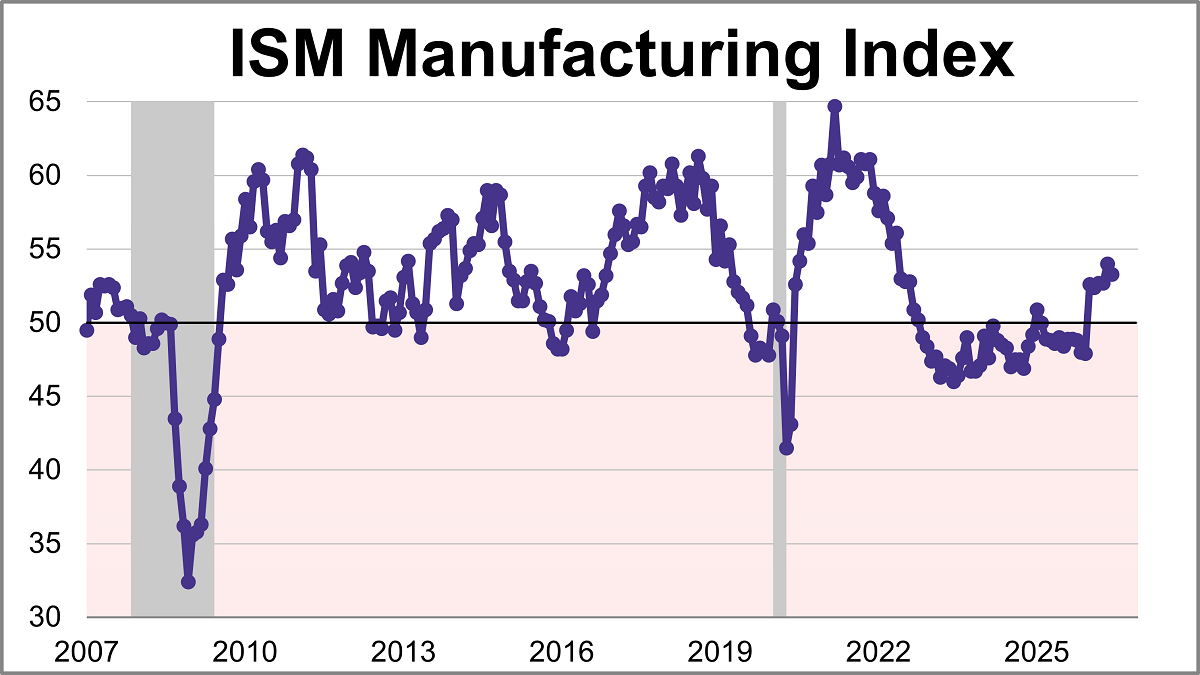
The Institute for Supply Management (ISM) manufacturing purchasing managers index (PMI) came in at 53.3 in June, down from 54.0 in May, marking slightly slower growth. The latest reading was just below the 53.8 forecast and is the index's sixth straight month in expansion territory.
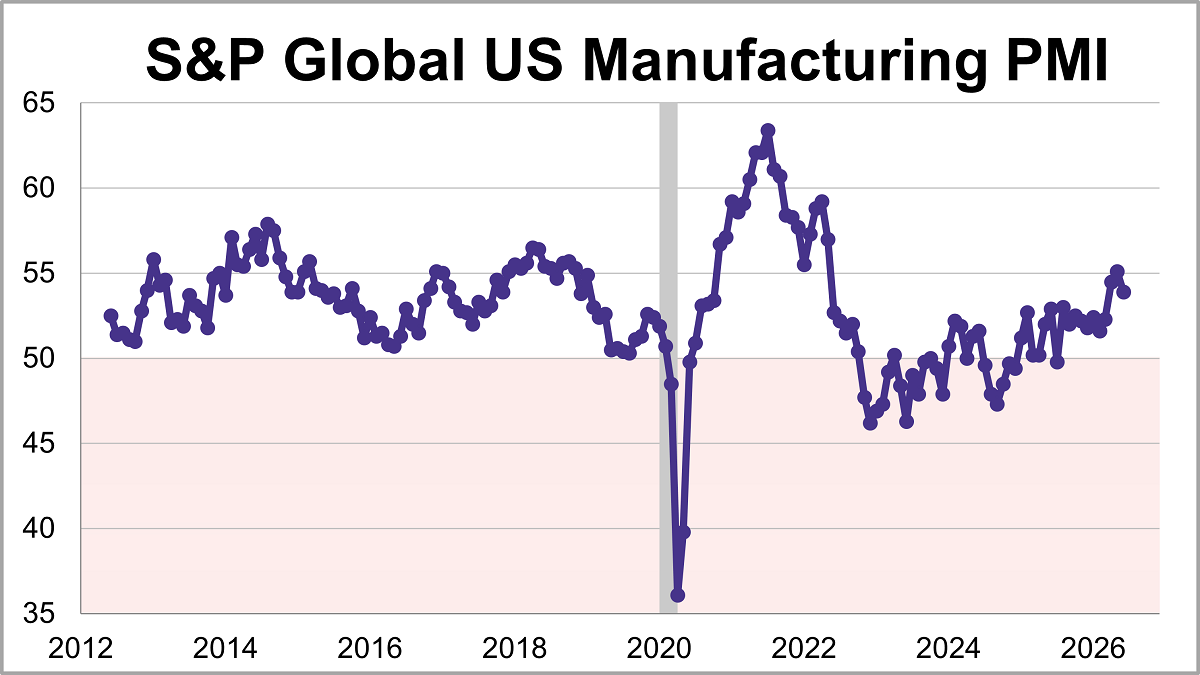
U.S. manufacturing expanded for an eleventh straight month in June but the growth eased to its lowest level in three months. The S&P Global PMI fell 1.2 points to 53.9 last month, falling short of the 55.7 forecast.
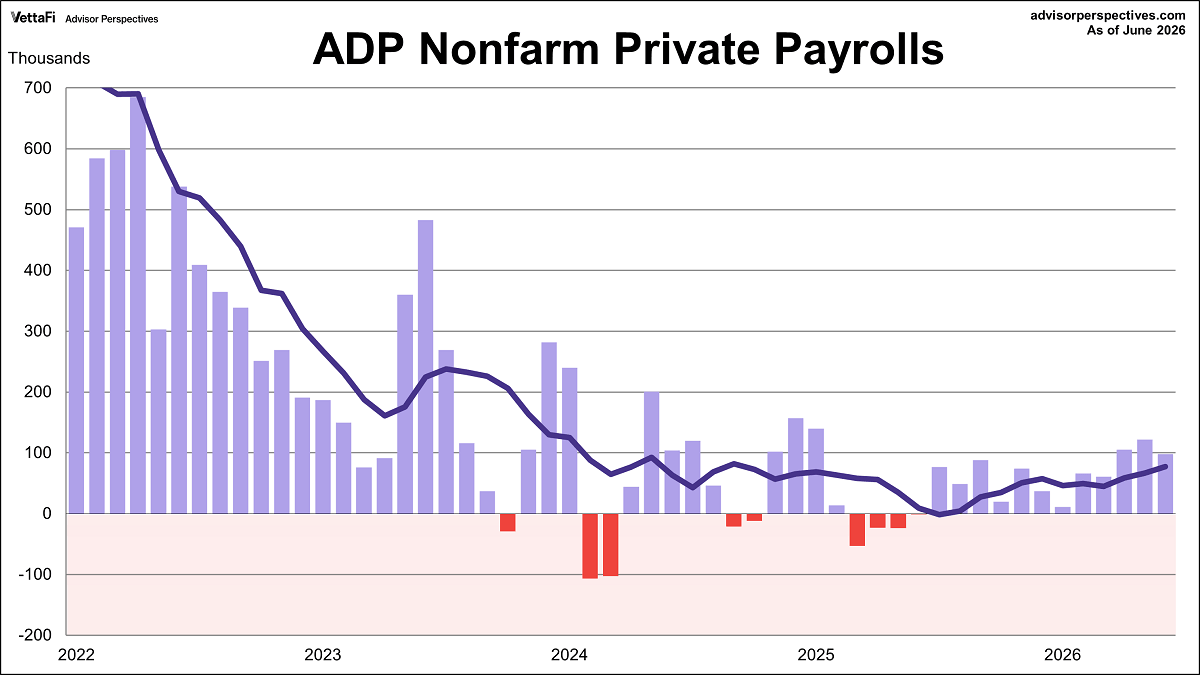
The ADP employment report revealed that 98,000 nonfarm private jobs were added in June, the twelfth straight month of growth. However, the latest figure was below the projected 118,000 addition.
The firms that operate rigorous vendor evaluation will compound two advantages simultaneously: They buy the right tools now, and their advisors trust them when the next generation of AI arrives. In a decade that will be defined by the industry's capacity to do more with fewer people, that trust is a strategic asset.
Acquiring a book of business is one of the fastest ways an independent advisor can grow AUM, expand a client base, and build long-term enterprise value. It is also one of the most financially consequential decisions you will ever make — and most advisors approach it underprepared.
A private bond market dating back more than a century is opening a new front in the trillion-dollar AI funding boom, allowing tech borrowers to sell debt directly to deep-pocketed insurance firms.
July is a great time to buy stocks. In fact, it’s been the best month for the S&P 500 Index in the past two decades. Bulls are finding comfort in that history ahead of what stands to be an eventful stretch.
At the start of the regional war in February, Wall Street banks were grappling with the prospect of a protracted slowdown in the Middle East. Three months in, many firms are rushing to add bankers after local investors largely looked past the conflict and doubled down on dealmaking.