Gold and silver rose on dip-buying, as traders monitored Middle East tensions for signs that higher energy costs could stoke inflation, putting pressure on the Federal Reserve to tighten policy.
Trading volumes on prediction markets are expected to hit $1 trillion by 2030. Overconfident traders think they are beating the crowd. Herders join it without thinking. Neither approach is likely to be a consistent winner.
VettaFi’s Midyear Market Outlook symposium Thursday saw industry leaders take on the big questions. Where is the market going? How should investors and advisors navigate uncertainty and potential volatility? Leaders from Fidelity Investments and Invesco both joined for one of the early segments, focused on innovative U.S. strategies.
GMO has posted a new 7-Year asset class forecast for 2Q 2026.
When you measure home affordability today against the metric that actually governs the check you write each month, the picture flips. By that measure, buying a home may be easier now than it was for the Boomers and Gen Xers who get blamed for everything.
As we move into the second half of 2026, U.S. large-cap stocks may be on pace to deliver their fourth straight year of double-digit gains, with the S&P 500 Index up 11.4% through July 10, 2026.
Financial markets were eventful this week, with key inflation reports, Federal Reserve (Fed) Chair Warsh’s first semiannual testimony to Congress, renewed Middle East tensions, and the start of earnings season all helping shape the narrative.
The shine has come off silver since it skyrocketed to over $100 an ounce in January. The price has dropped by over 50 percent from the record high. However, there are still reasons to be bullish on silver moving forward, including persistent supply deficits and growing industrial demand.
I really struggle to understand my utility bills. They often run to several pages, with sections describing just how difficult it is to get water from the source to your faucet, or internet service from a satellite to your home router. At the end, there is a long list of charges from a range of payors that adds up to an astronomical sum.
We’re back to reading tea leaves! Hooray! Next week the Federal Reserve will have its second meeting since Kevin Warsh officially took the helm. And, at this point, the outcome is far from certain, which is unusual given that ever since Ben Bernanke instituted “forward guidance” the market usually knew what to expect.
The second-quarter earnings season kicked off last week with a resounding statement from Wall Street, led by stellar results across the nation's six largest banking institutions.
AI is changing the investment landscape, but fundamentals still matter, and we remain focused on quality companies with growing free cash flow.
Whenever I speak at investment conferences, I like to point out that we invest in a number of publicly traded airports. I even list them: Spain’s Aena. Aeroports de Paris. Zurich Airport. Airports of Thailand. Two of the world’s largest operators, Grupo Aeroportuario del Sureste and Grupo Aeroportuario del Pacifico, trade in Mexico.
There are several market headwinds that warrant attention, as well as a tailwind that may be large enough to keep the boat moving forward. Fully understanding the headwinds and tailwinds will help you better monitor the market barometer, allowing you to assess and adjust risk levels with more awareness going forward.
In private markets, manager selection matters significantly more than asset class allocation. The spread between a top-quartile private equity fund and a bottom-quartile one can exceed 20 percentage points annually. In venture capital, the gap is even wider. This is why manager selection is crucial for advisors.
Join the experts from VettaFi for a 30-minute discussion on the broader implications of successful microreactor tests.
A holistic approach to retirement planning involves careful thinking and conversation around investment strategy, tax efficiency, income needs, and estate planning. The goal, of course, is to minimize the drag of taxation on lifetime earnings and wealth accumulation while maintaining both compliance and attention to the client’s priorities and values.
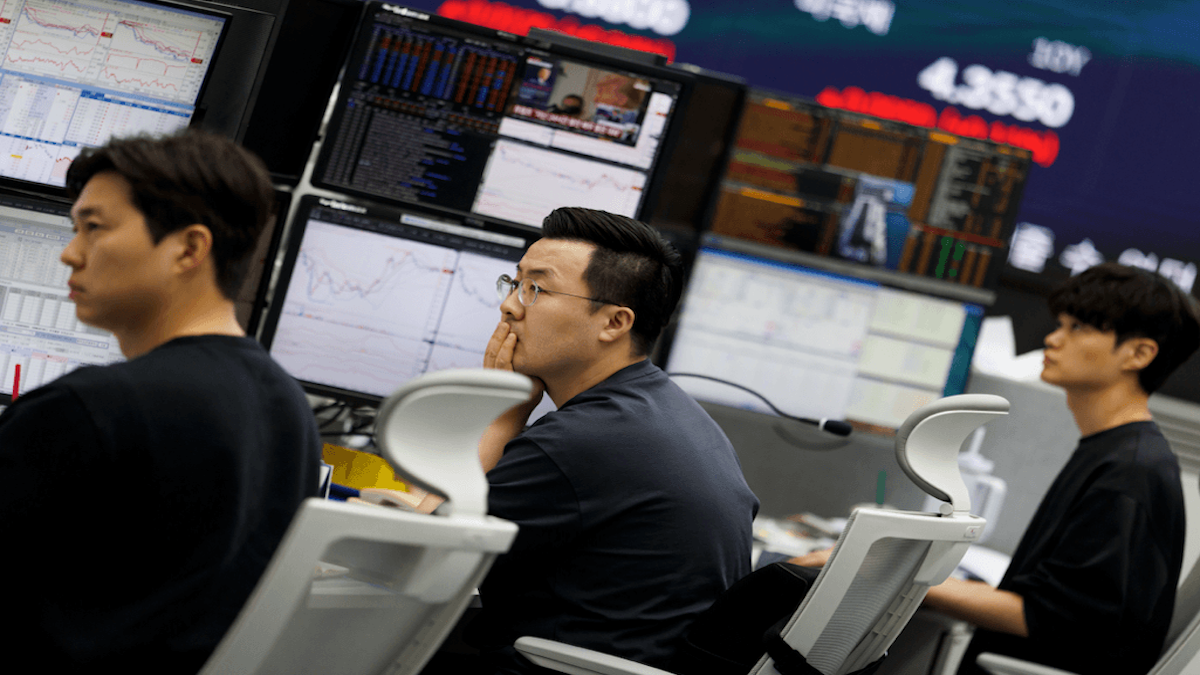
After last week’s wipeout in chips and the broader selloff in technology stocks, pressure is building for the biggest spenders on artificial intelligence to justify their expenditures to beleaguered traders with increasingly itchy fingers hovering over their sell buttons.
Andy Burnham pledged a “new economic model” for the UK as he sought to reassure Britons that his ascension as their seventh prime minister in little over a decade would bring an end to the country’s political instability.
Bond traders and Federal Reserve Chairman Kevin Warsh are in agreement on a crucial point: The central bank’s fight against inflation still seems far from over.
Whether you admire him or cringe at the mention of his name, US President Donald Trump has long had a penchant for putting his name on things. Once it was condos, steaks and Bibles.
US stocks advanced on Monday, paring last week’s slump, as chipmakers rebounded amid a deluge of earnings reports that will test whether Big Tech’s profits can match high expectations.
I’ve been writing about inflation more in recent months and quarters because inflation has become the major driver of the US macroeconomic landscape. This week, we take a deep dive into inflation and interest rates, and at the end, I talk about why I am buying gold for my grandkids.
Decades of data across global markets reach the same verdict: the more frequently retail traders trade, the worse they perform. The infrastructure has never been more inviting. The losses have never been more documented. Here are some key statistics we will dive into further.
Chairman Warsh has made clear his aim to be a strong leader, neither shackled by any attempts by his predecessor to shift policymaking power to the voting members of the FOMC nor susceptible to political pressures or past policy precedents to deter data-driven monetary policy decisions.
Today, the mission of the CFP Board of Standards, a 501(c )(6) nonprofit organization, is to credential competent and ethical financial planners, uphold CFP® certification as the recognized standard, and advance the financial planning profession. The mission is no longer to benefit the public. Selling out the public dooms financial planning as a profession. That’s horrible for the vast majority of certificants that want to be held to a higher standard.
It seems to be the end of the Great Moderation Era for the U.S. economy. The Great Moderation Era—which marked most of the two decades leading up to the COVID-19 pandemic—is drifting away into what we call the new Temperamental Era.
In this video, Chuck Carnevale, co-founder of FAST Graphs and known as "Mr. Valuation," explains why overpaying for a stock is often the greatest threat to long-term investment success. Using over 30 real-world examples, Chuck demonstrates how even outstanding companies can deliver poor returns when investors buy them at excessive valuations.
So far in 2026, we’ve seen that benchmark index returns can obscure important market dynamics. Even during a historically strong quarter, underlying dispersion created meaningful opportunities for tax-loss harvesting in custom equity portfolios.
The measurement of inflation has been getting a lot of attention lately. Some modifications are underway, with more potentially to follow.
The first half of 2026 reinforced the importance of balance, selectivity and income generation. Franklin Income Investors Chief Investment Officer Ed Perks discusses how markets have evolved, where opportunities are emerging, and why diversification remains critical heading into the second half of the year.
Investors must determine what the AI capital-spending surge means for long-term business durability.
For physicians, major financial decisions may rarely affect just one area of their financial life. The real potential risk is failing to understand how those decisions impact everything else.
I have been tracking the ETF industry for a long time. I remember when the SPDR S&P 500 ETF Trust (SPY) made history as the very first ETF to hit the $100 billion mark. Since then nearly two dozen have joined SPY.
Markets are embracing the idea that we are in an AI supercycle. Investors are betting on a multi-decade technological shift, similar to the internet, that will transform industries, computing, and infrastructure.
A handful of key economic data points dropped last week, painting a picture of an economy that is successfully downshifting from its recent inflation peaks even as consumers keep their footing.
A growing number of corporate leaders, buckling under the stress and uncertainty of the AI age, are looking for a very human solution: A chief of staff.
Something unusual is happening in the US equity market. AI infrastructure winners continue to power market gains, yet more stocks are moving against the S&P 500. That doesn’t necessarily signal widespread fundamental weakness, though it may reflect AI-driven market imbalances creating opportunity beyond today’s leaders.
A record inflow hit the largest US-listed South Korea exchange-traded fund, as investors seeking exposure to SK Hynix Inc. piled into the ETF as a proxy at a time when the chipmaker’s new American depositary receipts trade at a substantial premium to its local shares.
Halfway through the year, the U.S. equity market performance is broadening. That said, market concentration remains incredibly high, while equity and bond correlations sit in positive territory — conditions that scream a call for diversification. Investors are heeding that call, many with alternatives ETFs.
Entering Wednesday, the Russell 2000 and S&P SmallCap 600 indexes were up an average of 20.8% year-to-date, confirming small-cap stocks are back with a vengeance. Arguably overlooked in that scenario, some vibrant ETFs represent higher-quality approaches to smaller stocks.
President Xi Jinping used the rise of China’s AI models to stake his claim on shaping the technology’s global rules, even as their growing power stirs security concerns in Washington and Beijing alike.
A country drowning in energy shouldn't also feel like it's running out of electricity. In other words: before we ask whether America can make more things again, we should probably ask whether America can power the production.
On July 15, Direxion launched the Direxion Daily SK Hynix Bull 2X ETF (SKHL), seeking to replicate double the daily performance of the South Korean semiconductor manufacturers Sk Hynix (SKHY). The fund provides leveraged exposure to the world’s leading supplier of high-bandwidth memory chips. It boasts an expense ratio of 97 basis points.
At any rate, the value of the trophy reflects the value of gold. It’s almost certain that when they play the next World Cup in 2030, the trophy will be worth even more. Or I should say, the value of the dollar we price the trophy in will be less.
As the forces shaping bond markets become more local, the opportunities become more global. From energy stress to fiscal policy to advances in AI, today’s defining market forces are likely to play out differently across regions, sectors and issuers.
For many investors and families, tax planning may become a year-end exercise squeezed into November and December. But by the time the calendar turns to the fourth quarter, many of the most effective opportunities are already limited.
Tax-aware long-short strategies are no longer the exclusive domain of institutional investors. As separate account delivery has expanded access, more advisors are asking whether tax-aware long-short belongs in their clients’ portfolios. Here are five practical considerations to help you decide.
Apple Inc. is again the biggest company in the world after wresting the title from Nvidia Corp., which has held it since May 2025.
Big Pharma has a $300 billion problem, and biotech developers with promising drugs are becoming the fix. Major drugmakers are spending at a pace not seen since 2019 to replace medicines that will soon lose patent protection.