As families prepare for college move-in season, the packing list usually starts with the obvious essentials: bedding, a laptop, chargers, school supplies and plenty of snacks.
The arithmetic of doom on America’s debt and budget shortfalls has been a favorite parlor game for fiscal conservatives since 1971, when Richard Nixon removed the last constraint on federal borrowing by ending the dollar’s convertibility to gold.
Healthcare systems across the country are facing a difficult reality. Costs are rising faster than revenues, balance sheets are under pressure, the pacing of private market allocations are harder to manage, and liquidity has become an important topic for many organizations.
Once again, the Federal Open Market Committee (FOMC) decided to remain ‘on hold’, keeping the fed funds trading range at 3.50%–3.75%. Although there had been earlier conjecture in the money and bond markets the Fed may raise rates at the July gathering, that sentiment ultimately faded, and the final result was largely expected.
U.S. equities finished lower last week as investors weighed an escalating conflict with Iran against renewed concern over the scale of AI-related spending. The technology-heavy NASDAQ Composite was the worst performer, falling 2.1 per cent, while the S&P 500, an index of the largest U.S. companies, declined 0.6 per cent.
Private equity has become easier than ever for individual investors to buy. Founders, executives, physicians, and business owners now regularly see private funds offered through banks, wealth platforms, feeders, evergreen vehicles, or registered interval funds. However, just because these funds are more readily available, and at lower minimums, does not mean they should immediately be invested in.
Artificial intelligence is a transformative new technology, but we believe that it’s likely to follow a familiar pattern. From spreadsheets to the internet, innovations have historically given early adopters an edge—for a time. In our view, the ability to maintain that advantage depends much more on how effectively an asset manager integrates it throughout the organization.
South Korea and Taiwan are grabbing the majority of financial news headlines when it comes to international exposure, but a peek inside Latin America reveals potential opportunities. Brazil, in particular, could be offering investors ample value in both equities and bonds beyond those aforementioned countries already benefiting from the artificial intelligence (AI) buildout.
A continued escalation in the Middle East, where the Iranian-backed Houthis joined the conflict in an attempt to disrupt Saudi Arabian crude shipments that pass through the Red Sea via the Bab-el-Mandeb Strait, drove oil prices higher, while new tariff announcements and Alphabet's earnings release created headwinds for equities.
Kevin Warsh’s second meeting as Fed Chair saw no change in rates and minimal edits to the Fed Statement, but included a press conference giving insight into what the Fed is focused on.
Considering that the Federal Reserve has been meeting this week, it’s safe to say that inflation is likely front-and-center on the minds of many advisors and investors. After all, energy prices and supply chain constraints have kept inflationary pressures far more persistent than the Fed would like.
Join the experts at Harbor Capital and PanAgora for a product due diligence session exploring the Harbor PanAgora Dynamic Large Cap Core ETF (INFO).
Clients do not need us to predict whether the next 10% move is up or down. They need help staying invested in a way that matches their goals, their time horizon, and their actual tolerance for risk. Staying invested is easier when clients understand what each part of the portfolio is designed to do.
Investors overwhelmingly recognize the value of financial planning, but a substantial planning gap remains. The desire for guidance is there. Access remains the challenge.
The combination of succession planning — where the lead advisor wants to have a successful and well-funded retirement and the successors want to get paid for taking over — along with the riches of the market over the last few years are all adding up to significant unrest within many teams.
In the current macroeconomic landscape marked by higher-for-longer interest rates, investors looking to optimize their short-term capital allocations may want to consider collateralized loan obligations (CLOs) as a higher-yielding potential alternative to traditional cash proxies like money market funds.
At the party, hosted on a hot day last July at HPS business development head John Christmas’ New Jersey beach house, bandana-clad colleagues across his teams mingled poolside with the wind at their backs. With the addition of HPS, one of the biggest names in private credit, it seemed BlackRock was set to break through in the market in a way that had eluded the asset manager for years.
Wall Street is racing to roll out complex investment products tied to SpaceX shares that aim to shield buyers from future losses amid a sharp selloff following its market debut.
The US dollar will weaken if the Federal Reserve leaves interest rates unchanged this week, according to TD Securities.
One of this year’s hottest themes in the stock market has been the crowds of traders chasing the recipients of all the planned spending on new artificial-intelligence data centers.
Politicians all over the world are showing renewed enthusiasm for public ownership of private companies. The methods range from modest government stakes to outright nationalization, but the trend is apparent.
Leverage, ratings arbitrage, liquidity transformation, and a growing willingness to embrace complexity and illiquidity are becoming more visible across parts of the financial system.
The US economy grew 2.0% in 2025 and it looks like it is growing another 2.0% this year. Real GDP grew at a 2.1% annual rate in the first quarter and, as we set out below, it looks like it grew at a 2.0% rate in the second quarter.
The market encountered its stiffest test in months last week as rising oil prices, higher bond yields, and renewed scrutiny of AI capital spending combined to pressure many of the year’s biggest winners. Easing tensions over the weekend have buoyed stocks. If the Strait of Hormuz was opened, I believe the market would be 5% to 10% higher.
As the Q2 earnings season kicks into high gear, market sentiment around the AI trade is undergoing a critical sanity check. Alphabet’s second quarter results last week served as a barometer for how Wall Street is weighing artificial intelligence investments against current profitability.
With the US-Iran conflict nearing the five-month mark, equity markets have mostly shrugged off the latest escalation. On one hand, that’s understandable – a healthy economy and record corporate profits continue to support the market’s fundamentals. But a note of caution is warranted.
Without the support of rate cuts by the Federal Reserve, it’s been a lethargic year in terms of performance by municipal bonds and the related ETFs, but that doesn’t mean advisors and fixed income investors should ignore this bond segment.
Chris Galipeau discusses high-conviction insights that go beyond media headlines.
On a recent episode of the Money Metals Podcast, host Mike Maharrey welcomed veteran market strategist Gregory T. Weldon, publisher of the Global Macro Strategy Report, for a wide-ranging discussion on precious metals, inflation, Federal Reserve policy, artificial intelligence, and global macroeconomic trends.
For many years, globalization felt like a one-way street. Supply chains stretched effortlessly across continents. Companies built “just-in-time” systems that assumed goods, data, and capital would flow smoothly around the world. Investors could buy a global index fund and feel reasonably confident that they were capturing the benefits of ever-closer integration.
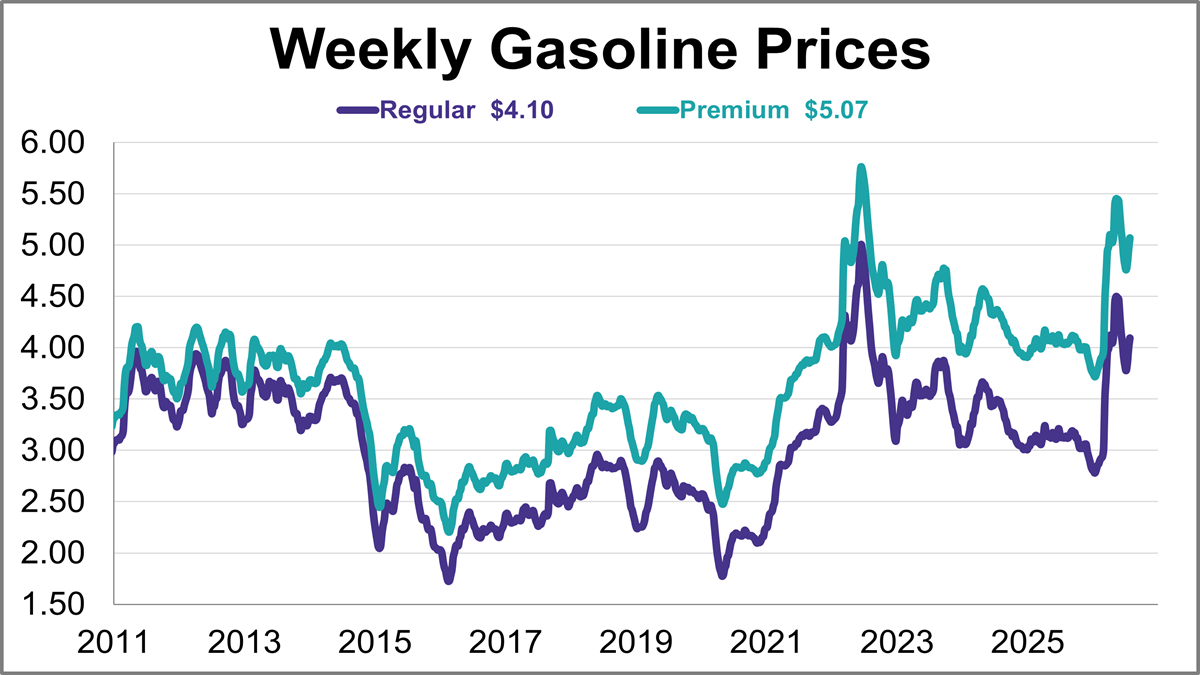
Gasoline prices jumped for a third straight week, reaching their highest level in almost two months.
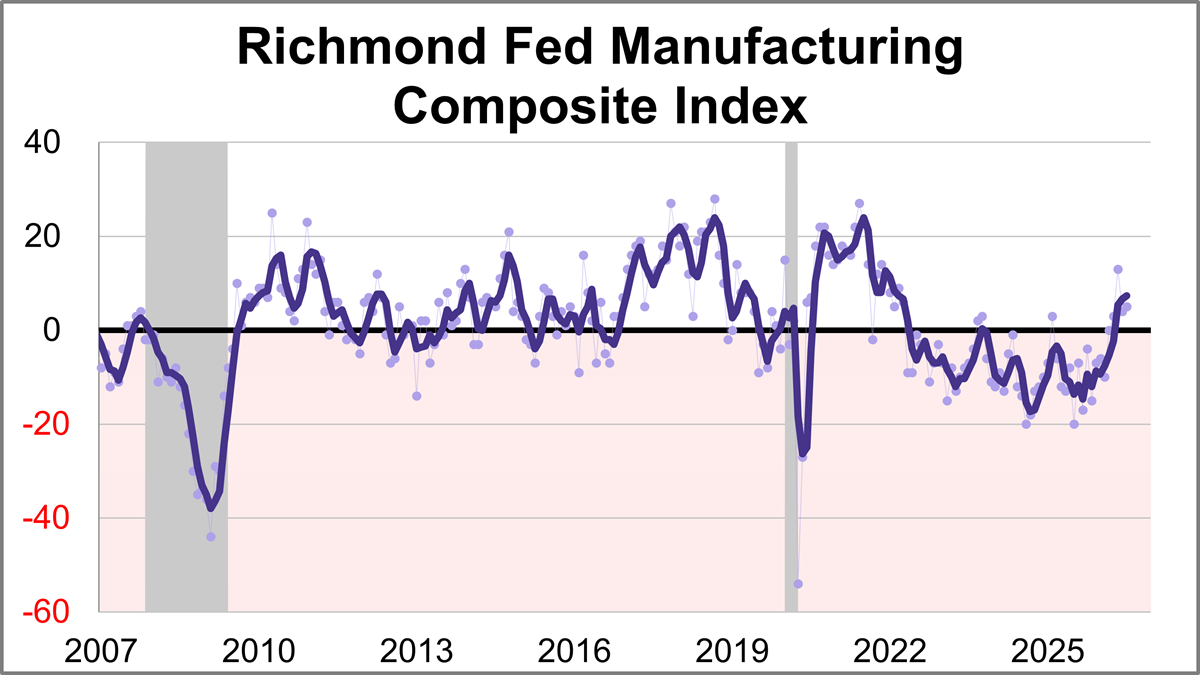
Fifth district manufacturing activity was mostly flat in July, according to the most recent survey from the Federal Reserve Bank of Richmond. The composite manufacturing index inched up one point to 5, marking the fourth consecutive positive reading.
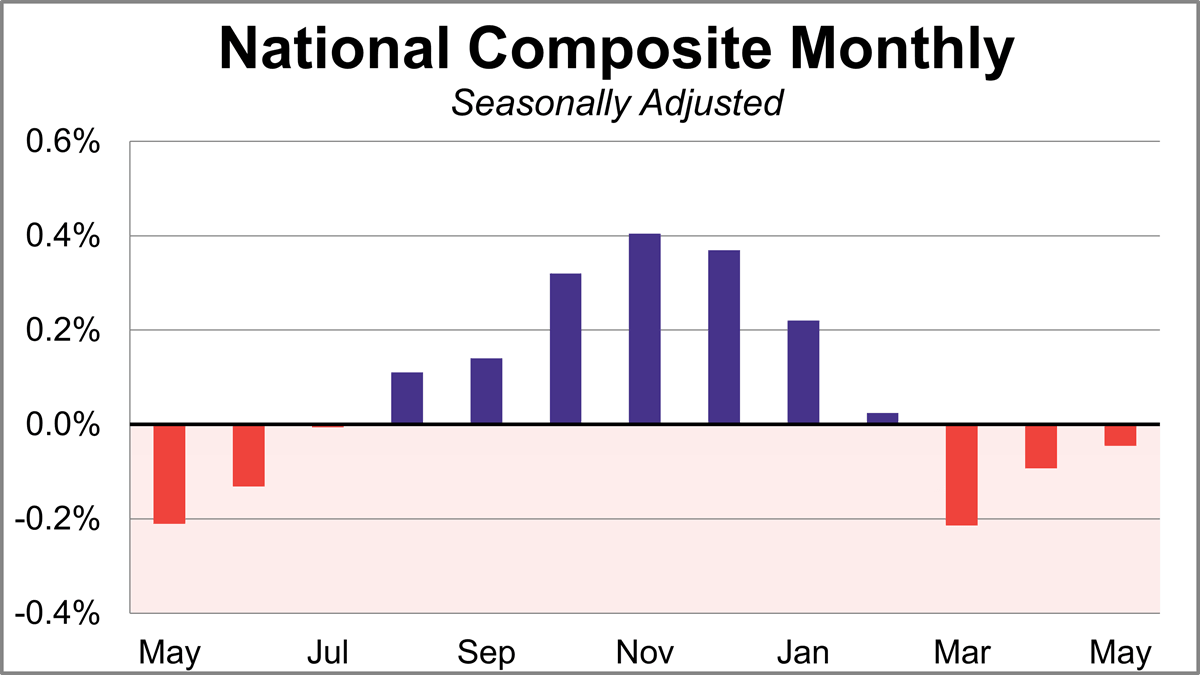
Home prices fell for a third straight month in May according to the S&P Cotality Case-Shiller index, as the housing slowdown continues. On a seasonally adjusted basis, the national index was essentially flat month-over-month and was up 1.1% year-over-year.
Discover Aberdeen’s closed-end funds (CEFs) for high yields, illiquid assets, long-term investments, and resilient income for 2026.
As equity compensation becomes a larger component of employee wealth, financial advisors are helping clients navigate the complexities of stock options, RSUs (restricted stock units), and ESPPs (employee stock purchase plans). Here, three financial advisors discuss how to balance the upside potential of equity awards with tax planning, concentration risk, diversification, and strategic exercise decisions.
In the coming years, more investors will expect financial planning to be a key part of the services they receive from advisors. To be prepared, advisors will need technology to help streamline added workflows, as well as the expertise of certified financial planners to support their clients long term.
Join Fidelity Investments as they provide their market outlook, including how investors can best seize opportunities and sidestep challenges.
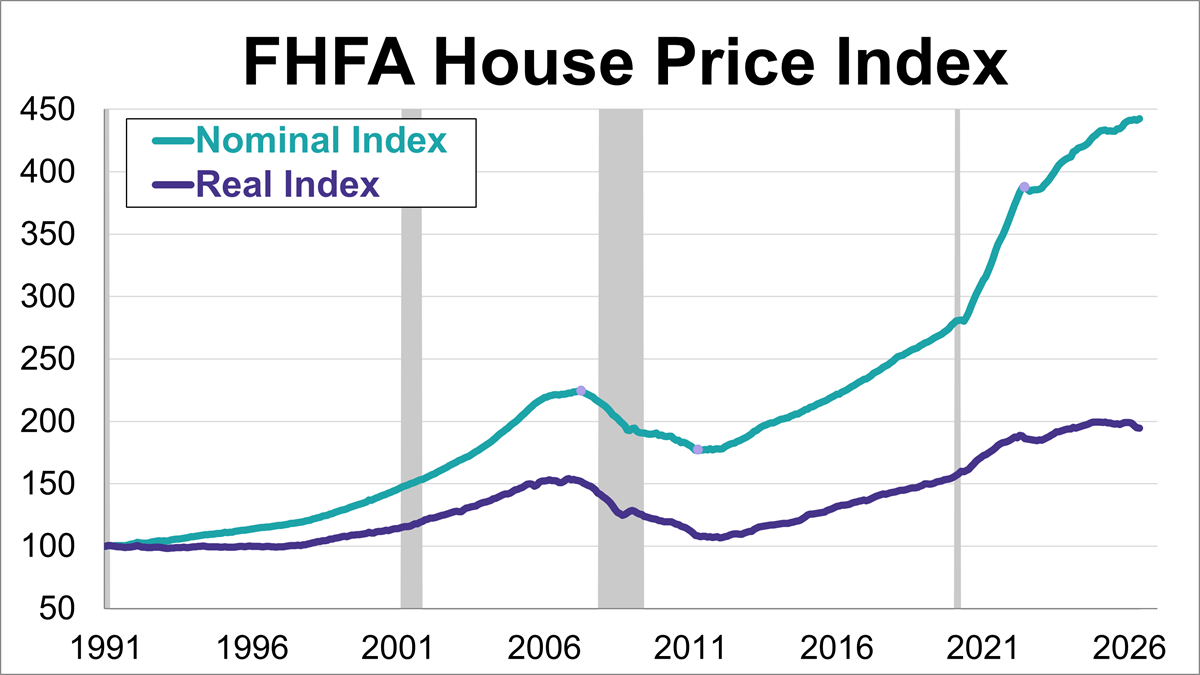
The Federal Housing Finance Agency (FHFA) House Price Index (HPI) rose more than expected in May, reaching a new record high.
BlackRock Inc.’s $12.55 billion bond sale tied to a Meta Platforms Inc. data center rallied in early trading on Monday in a sign that relatively high yields on the debt ultimately attracted investors.
CME Group Inc. said the debut weekend of 24/7 trading for its one-ounce gold futures saw stronger-than-expected demand with deep liquidity despite subdued volatility.
Registered investment advisors (RIAs) are increasingly adopting artificial intelligence (AI) tools that automatically transcribe and summarize client calls. While these technologies may offer efficiency gains, they introduce significant legal and compliance risks. This article discusses the intersection of AI transcription tools with state wiretapping laws, privacy considerations, Securities and Exchange Commission (SEC) requirements, and the evolving litigation landscape.
If you own treasuries, you need to make two separate decisions rather than one blended bet. The liquidity sleeve holds the bill exposure and does the work people mistakenly ask the long end to do. The duration sleeve stays deliberately small, sized as recession insurance rather than as a conviction call on falling inflation.
Pimco has been one of the loudest voices warning of risks in private debt markets, and Ivascyn, 56, has cautioned on the trillions of dollars pouring into the infrastructure underpinning the artificial intelligence boom.
US earnings are set to grow briskly in 2026, but much of the expected gains are being driven by expanding profit margins that may be hard to sustain. Equity investors should ask whether portfolios are exposed to businesses with durable demand and profitable reinvestment—or merely a favorable margin cycle.
The structural backdrop for U.S. inflation increasingly suggests that the long run equilibrium range is migrating from roughly 1.5–3.5% toward 3.5–4.5%, with a significant risk of episodes of inflation above 5%. An important core reason is the steady erosion of the disinflationary architecture that dominated the 1990–2020 period, even as various cyclical pressures also play a role.
The motivation for today's report comes from the growing number of articles warning about the possibility of an AI bubble. The truth is that nobody knows whether a bubble exists today in artificial intelligence or whether one may emerge in the future.
It’s becoming increasingly clear that tariff tensions between the United States and the rest of the world won’t be going away any time soon. Last Friday, the U.S. imposed a series of tariffs on 60 different trading partners, including China, Canada, and the European Union.
Earlier this week, I wrote that the gold-silver ratio has recently widened to around 70-1, a bullish signal for silver. But is this metric still relevant today?
US state and local government debt hit its cheapest level since the spring, after inflation fears caused municipal bonds to see their worst week of returns since April 2025.
On July 28, Morgan Stanley launched two new spot crypto ETFs on NYSE Arca. The Morgan Stanley Ethereum Trust (MSSE) and the Morgan Stanley Solana Trust (MSOL) provide spot price exposure to underlying ethereum (ETH) and solana (SOL), alongside additional distributions from staking yields.