While bitcoin may continue higher, proving MicroStrategy's CEO Michael Saylor a genius, investors should at least appreciate what may happen if things do not go according to plan. We now present the other side of the story.
On this episode of the “ETF of the Week” podcast, VettaFi’s Head of Research Todd Rosenbluth discussed the VictoryShares Free Cash Flow ETF (VFLO) with Chuck Jaffe of Money Life. The pair discussed several topics related to the fund to give investors a deeper understanding of the ETF overall.
Double-digit increases in rates are common. I’m definitely feeling the pain, as I suspect you are. So here are a few things I do to help my clients save some money.
This has been a year of market highs, puzzling signals, and a few head-scratching moments.
How a diversified liquidity strategy might help time-strapped corporate treasurers reduce vulnerabilities and improve adaptability in uncertain markets while maintaining access to cash.
From Wall Street funds to small-time day traders, those who dared to bet big on Elon Musk’s business empire are closing out the year with hefty payoffs, as Donald Trump’s US election win turbocharges the fortunes of the world’s richest man.
Bitcoin rose to a record high on President-elect Donald Trump’s support for digital assets and optimism about the upcoming inclusion of MicroStrategy Inc., an accumulator of the token, in a key US stock gauge.
Investors anticipating another calm year in 2025 should be on guard for more shocks like the one seen in August as uncertainty around Donald Trump’s tax and tariff policies threaten to roil markets.
Jeremy Grantham’s valuation-oriented investment firm is famous on Wall Street for trumpeting the contrarian, and decidedly bearish, views of its co-founder, seemingly every passing year.
There is widespread agreement in markets and among economists that the Federal Reserve will cut interest rates at its policy meeting on Wednesday.
While analysts are currently very optimistic about the market, the combined risk of high valuations and the need to rebalance portfolios in the short term may pose an unanticipated threat.
Energy is everything. Or, if Einstein was right, you and I are just energy in material form. Accelerate us to lightspeed squared and we might become something else.
The clouds hanging over Boeing’s operations finally appear to be clearing.
Many hot trends have been turned into equity portfolios. But fads aren’t investing themes and may be flawed as standalone investments.
The blog touches on how the "Magnificent Seven" tech giants—Apple, Amazon, Alphabet, Meta, Microsoft, Nvidia, and Tesla—achieved a remarkable 21% earnings growth in Q3 2024, propelling the S&P 500 to a 5.9% overall increase.
In his 2025 investment outlook, Portfolio Manager John Lloyd shares his views on the attractiveness of a multi-sector approach to fixed income investing.
"Trump Trade 2.0" fueled U.S. equity and digital asset rallies, while real assets faltered under a strong dollar.
Time to refresh before 2025? The 2025 global market outlook offers compelling opportunities abroad, with the active ETF TOUS a route therein.
Rice paddies that lay fallow for decades in some of Japan’s most far-flung regions are now its hottest properties.
At some, point a steepening yield curve will result, leading to yield opportunities for long-term bond exchange-traded funds.
Joel Liu, J.D. Head of Advanced Sales MassMutual Strategic Distributors, discusses the impending wealth transfer.
In the latest episode of ETF 360, Kirsten Chang was joined by Rockefeller Asset Management’s Director of Fixed Income Alex Petrone.
The transition from bank-dominated lending to a diversified financing ecosystem offers unprecedented opportunities for private credit investors.
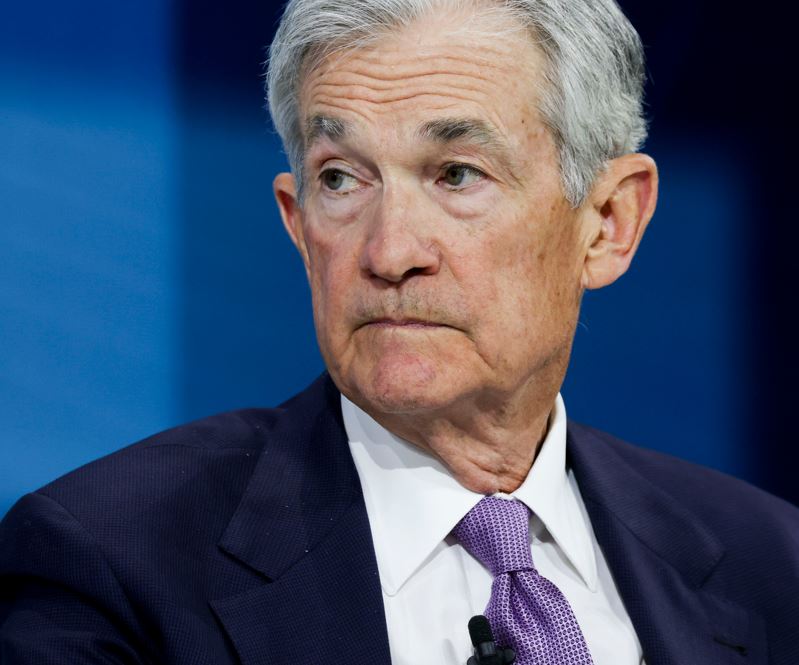
When US Federal Reserve Chair Jerome Powell faces the media after the central bank’s policy-making meeting next week, he’ll probably get a politically fraught question: How will the Fed incorporate president-elect Donald Trump’s stated plans — including tax cuts, tariffs and deportations — into its economic outlook and monetary policy?
Broadcom Inc., a chip supplier for Apple Inc. and other big tech companies, rallied in premarket trading after predicting a boom in demand for its artificial intelligence chips.
Federal Reserve officials will lower interest rates this month for a third straight time and pare back the number of rate cuts they anticipate next year, according to economists surveyed by Bloomberg News.
Emerging-market currencies in Asia and the South African rand retreated as China’s policy makers appeared to disappoint investors expecting fiscal measures to boost the economic outlook.
Corporations are currently producing the highest level of profitability, as a percentage of GDP, in history.
Collectively, we’re spending more and more on Christmas each and every year. This happens despite concerns about the economy and politics—and the fact that US credit card delinquencies continue to climb higher. So, how does this put more money in our pockets as dividend investors?
Portfolio managers and market strategists from Payden & Rygel review the opportunities and risks ahead for four bond market sectors: high yield, emerging markets, global bonds and low duration securities.
In his 2025 investment outlook, Head of U.S. Securitized Products John Kerschner shares his U.S. securitized outlook, identifying the key trends he believes will drive investment returns in the year ahead.
Fixed income markets face key questions that will shape their direction in 2025. This post explores these questions & their potential impact.
“Should I hire a financial advisor?” people often ask Jon Fee. The answer is never “No.” But sometimes the answer is “Maybe.”
Join the experts at abrdn as they discuss the nuances of municipal bond investing, how current events are shaping the opportunities for this asset class as we head into 2025, and where municipal bonds may fit within your fixed-income allocation.
oin the experts at SS&C ALPS Advisors for a product spotlight on the ALPS Intermediate Municipal Bond ETF (MNBD) and discover how its active, bottom-up approach could boost your portfolio.
China got a head start on a looming trade war with the US by showcasing a new range of tools it’s prepared to use if Donald Trump makes good on his threat to punish the world’s second-biggest economy with tariffs.
The near-$5 trillion hedge fund industry is having one of the toughest years in decades in convincing fee-conscious investors to fork out cash for new market players.
To most of us, a power plant is a source of electricity. To Exxon Mobil Corp., it’s a machine that converts natural gas into money. And this is a propitious time for doing that.
In the two years since ChatGPT burst onto the scene, artificial intelligence has come to dominate investor consciousness more than any other technological breakthrough in the past two decades.
We expect high yield bond issuers to maintain healthy balance sheets and defaults to remain low.
SpaceX and its investors have agreed to purchase as much as $1.25 billion of insider shares in a transaction valuing Elon Musk’s rocket and satellite maker at about $350 billion, according to an internal email seen by Bloomberg.
Republicans have lashed out at the Inflation Reduction Act (IRA), a landmark package of incentives for clean energy, since it was passed two years ago.
Inflation optimists were riding high at the start of 2024. Price pressures seemed to be cooling quickly, and market pricing suggested that the Federal Reserve might lower policy rates by a whopping 1.75 percentage points this year.
Our outlook on the 11 S&P 500 equity sectors.
To maximize tax benefits from year-end charitable giving, you may want to use strategies like lumping contributions, making qualified charitable distributions from IRAs, and gifting appreciated assets.
An enduring image from 2024 will be the capture of the SpaceX booster rocket by the Mechazilla robot arms on its return to Earth. This achievement served as a powerful metaphor for the year: the improbable not only became possible but redefined expectations.
To improve potential returns and mitigate risks, investors should choose from the widest range of opportunities.
Better than expected economic data in November appears to be thwarting the FOMC's efforts to engineer lower short-term interest rates.
Riverfront's stock selection team performs analysis on individual equities that provides useful insights into how we position our portfolios.