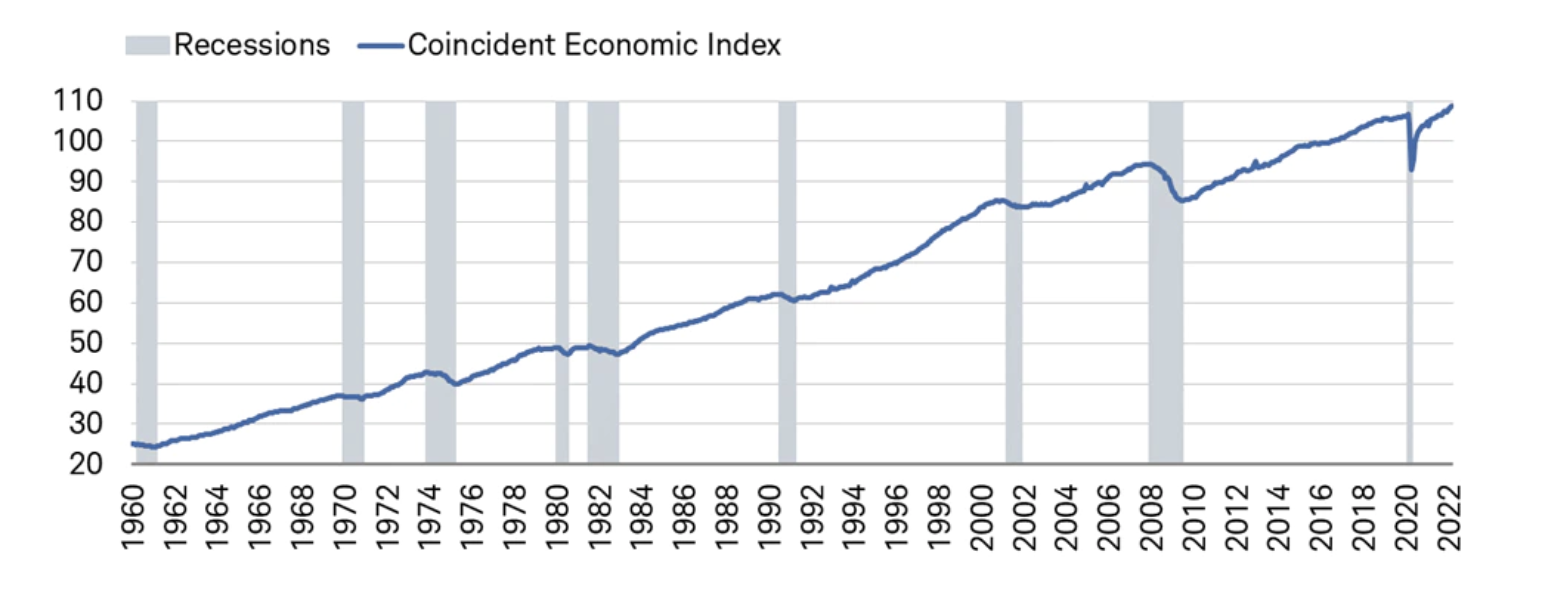
Real GDP declined at a 1.5% annual rate in the first quarter and, as of Friday, the Atlanta Fed's "GDP Now" model projects zero growth in Q2.
My CFP peers must be tired of hearing me sing the praises of living in South Dakota. But one of them recently emailed some disturbing news. A recent national survey that ranked financial literacy placed South Dakota in 49th place.
Gasoline consumption in the US probably peaked in the years before the pandemic.
Surging mortgage rates have finally cooled off the housing market. The cooldown, though, is coming unevenly, accentuating differences between the existing home market and new construction.
Options insurance. Hedging with Treasuries. Using sentiment to pick a bottom. The things that have lessened the pain of past equity selloffs are coming up short this time around.
Interest rates aren’t simply the price of borrowing money. They are also information, providing signals telling economic players what to do. Interest rates are in fact the price of time. Low interest rates don’t value time very much. Bad signals produce bad outcomes… and that’s where we are now.
Brian Smedley, Guggenheim’s Chief Economist and Head of Macroeconomic and Investment Research, discusses the impact of the Fed’s 0.75% rate hike on markets and the economy.
Let’s face it—we love exciting announcements. Why talk about the small technical improvements of a given artificial intelligence (AI) system when you can prognosticate about the coming advent of artificial general intelligence (AGI)? However, focusing too much on AGI risks missing many incremental improvements in the space along the way.
Ken Griffin just set a new standard for Wall Street firms looking to make the move south.
U.S. stocks are extending weekly gains, rebounding from yesterday afternoon's slide as the markets remain choppy amid lingering global recession concerns that have been bolstered by monetary policy tightening efforts around the globe aimed at getting high inflation under control.
In this video I cover 20 stocks requested by subscribers.
President Joe Biden and his allies in Congress are rightly concerned about surging prices.
Bonds have been whispering in the ears of stock investors all year. Now they’re starting to shout.
The war in Ukraine has widened global geopolitical fractures, and we see risks of deglobalization and more fragmented capital markets over the secular horizon.
Register today to join the Delaware Funds by Macquarie® Fixed Income team, as they discuss credit market valuations, the current market environment, their outlook for the remainder of 2022, and how to find value, specifically in high yield securities including bank loans. The discussion will include an analysis of credit fundamentals and technicals, how the US Federal Reserve is impacting credit markets, and how to look for attractive valuations.
Over the last four years, we have argued that the glamour monopoly technology companies have a low multiplier effect in the U.S. economy
While everyone’s financial journey is different, there are actionable steps advisors can take to empower their female clients’ financial futures and health.
The yield of the U.S. high yield (HY) market, currently at 8.4%, has risen by over 420 basis points since the start of the year.
Lifetime income solutions are high on the wish lists of defined contribution (DC) plan participants, with the certainty of a guaranteed lifetime income stream ranking as the top feature in our surveys over the past decade.
Because the consequences of leaving longevity unmanaged are likely to be the most devastating, advisors must act now to address it.
There is no Hall of Fame for single parents. There should be. The challenges of being a single parent are monumental.
US builders completed more apartments in large multi-unit buildings than ever before.
Given year-to-date fixed income returns, one would be forgiven if they never wanted to own the asset class again. Such a view, however, could prove costly as, for the first time in a year, areas of the market are starting to look attractive.
The Fed raised interest rates by 75 basis points in its June policy meeting, acknowledging continued upside surprises on inflation, inflation expectations and wage growth.
The yellow metal has managed to stay positive since the start of the year, skirting pressure from surging yields and a strong U.S. dollar. Meanwhile, nearly every other asset class has fallen into either correction or bear market territory.
Today we’ll look at some evidence this period could even be worse than the 1970s. Then we’ll read the mea culpa regrets of someone who had a big part in that drama.
Since the start of 2019, investors have plowed more than $300 billion into environmental, social and governance (ESG)-themed exchange traded funds.
It’s too soon to call an end to America’s worst bond-market collapse in at least half a century.
A key source of US economic growth this year -- consumer spending -- is showing signs of losing steam, even before Wednesday’s round of Federal Reserve rate hikes kick in.
While the market chatter in the run-up to Wednesday’s Federal Reserve interest rate decision has understandably focused on whether the increase will be 50 or 75 basis points, the critical issue in play is a broader one.
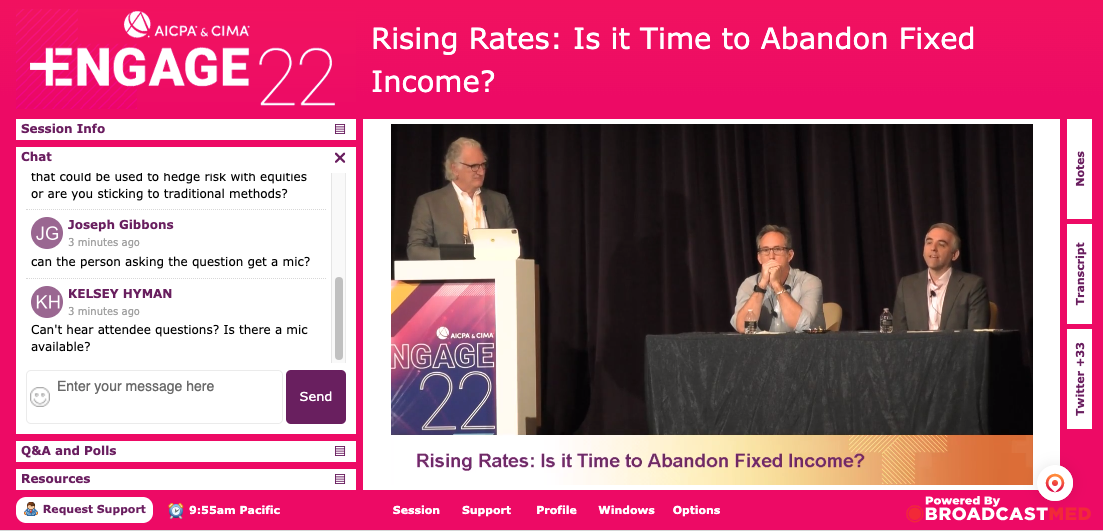
On June 7, Bob was in Las Vegas at the AICPA Engage conference, where he moderated a panel discussion.
A vague tweet by a founder of Three Arrows Capital, an influential hedge fund that has been liquidating crypto holdings as prices plummeted, is stirring fresh apprehension in an already shaken industry.
In our new piece from the Franklin Templeton Institute, we examine the challenge of feeding a growing global population in the midst of climate change, geopolitical shocks and uncertainty.
For as long as the market allows, brokers, lenders, and investors are cashing in on the real estate boom in America’s prime vacation spots.
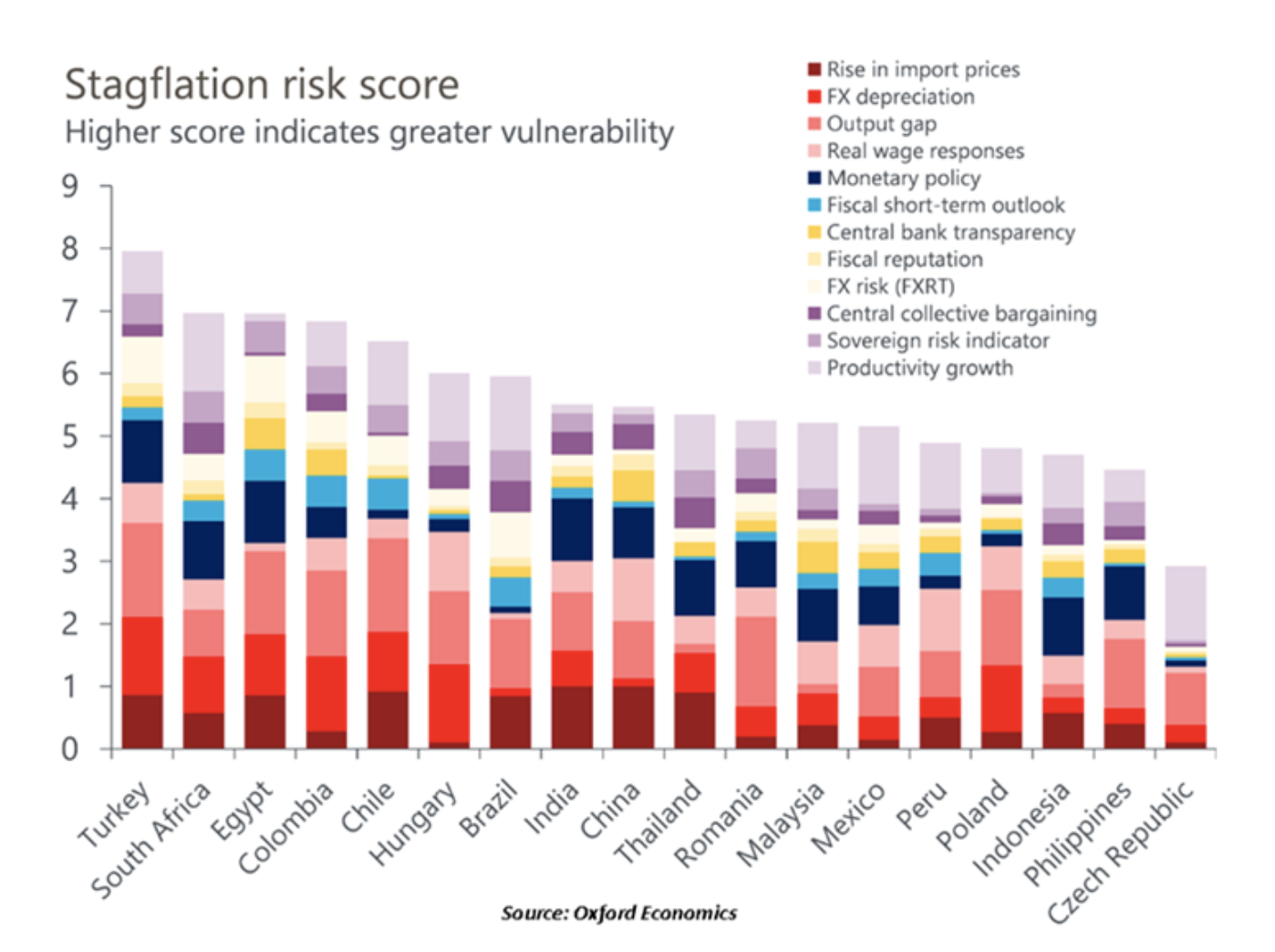
Rising inflation, rate hikes, supply-chain problems and the Russia-Ukraine war have contributed to growing recession fears.
I have identified a few opportunities within my portfolio and wealth management practice that prompt consideration for your own strategies as you plan for large estates.
Mistakes are easy to make but are easier to avoid if you know what a “bad” succession plan looks like.
Persistent … or transitory? It’s the inflation question that has been weighing on financial markets over the last year. As each economic data point trickles out, it is analyzed and re-analyzed, with that focus in mind. But it may be the wrong question to ask.
Traders unnerved by a selloff that hit stocks and bonds alike are looking for refuge, increasing the appeal of investments offering reliable returns such as shares that pay steady dividends.
As proxy season comes to a close, investors and advisors have grappled with company stewardship on a wide variety of issues. But what’s the best way to get a company to listen? Is divestment the way to go? Or must you engage with a company? And how do investors in ETFs and mutual funds make sure their voices are heard at the asset managers they invest with?
Engine No. 1 focuses on engaging with companies constructively to make sure they are taking the costs they impose on society and other stakeholders into account. It operates on the belief that climate and social concerns are economic issues and companies that fail to address them will underperform for the long term.
Social Security has a problem.
Multi-asset strategies have caught the eye of market participants seeking pre-packaged solutions to diversification. Whereas many of these strategies are becoming increasingly complex—with black-box allocation algorithms, multiple signals, and 10 or more components—the S&P Target Risk Indices offer a more transparent approach.
Read on to explore:
What will be the Fed's next steps after a rapid course correction?
It's been a tough job market for much of the past 20 years, making a grim landscape for workers and contributing to a world of haves and have-nots. Now the have-nots are finally getting their shot.
US consumer sentiment plunged in early June to the lowest on record as soaring inflation continued to batter household finances.
There’s no way of knowing for certain whether a recession is imminent, but for many Americans, it’s sure starting to feel that way. According to Google, more people in the U.S. searched for the term “recession” than at any other time in the past two years.
Complaining about federal debt is a time-honored American tradition. Remember Ross Perot and his hockey-stick charts? Then there was Harry Figgie’s 1992 best-selling book, Bankruptcy 1995. It was quite a sensation at the time.
Headline inflation in May rose 8.6% from a year ago, accelerating from April’s 8.3% growth rate.
Those who are familiar with my articles know that I see market crashes in stocks and bonds occurring in this decade, combined with serious inflation. Readers ask how I recommend protecting. This is it.
Economists like to strip food and energy out of their inflation calculations. They’re too volatile to be meaningful, they say. But for everyday Americans coping with exploding prices, those items are pretty much all they care about right now.