The higher-for-longer interest rates narrative could continue to negatively affect small-cap companies. This is because they look to stay afloat in the current macroeconomic environment.
“Restrictive for longer” is now the mantra as monetary policymakers seek to bring inflation reliably to target.
In the most recent FOMC meeting, the committee decided to refrain from raising rates again, but held open the prospect for further hikes this year.
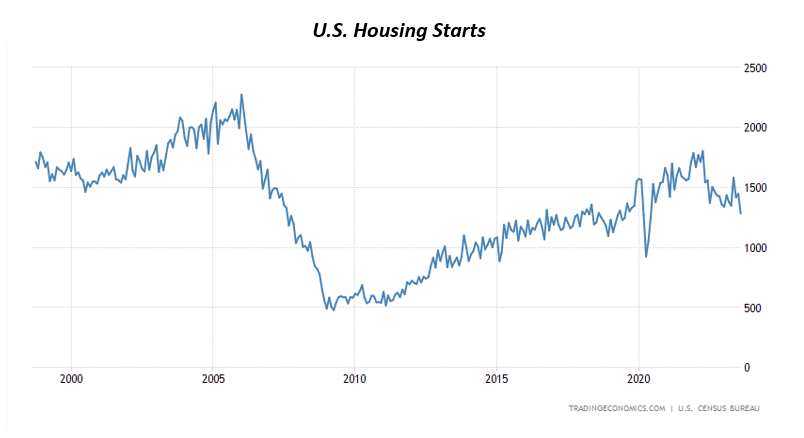
US housing affordability worsened to a fresh record low in August as Americans continue to bend under the weight of soaring mortgage rates and sticky prices.
As the second quarter came to a close, the Fed’s elusive soft landing appeared to be within reach. However, inflation resurfaced during the third quarter, substantially complicating the near-term economic outlook.
Savvy investors are aware that geopolitical tensions and uncertainty can significantly influence the financial markets.
Is now the time to add an active foreign equities allocation? Investors have likely already considered a case to diversify domestic-heavy portfolios with international equities.
Reverting to old fiscal rules will create a strong economic headwind for Europe.
The spike in bond yields presents an opportunity for fixed income investors to earn capital gains and diversify portfolios.
Amazon.com Inc. crowed over this week’s Prime Day sales, boasting that the two-day discount promotion “outpaced” last year’s event. Such a flashy description suggests the unofficial kickoff to the holiday season has set up the broader retail industry for a bright few months.
GMO has published a new 7-Year Asset Class Forecast
After three quarters of improving economic outlook amid increasing expectations for a painless decline in global inflation, markets and pundits alike have become less optimistic about a soft landing as they reacted to frustration from the Fed.
Breaking a mirror, walking under a ladder, and a black cat crossing your path have all been seen as bad omens.
US consumers’ year-ahead inflation expectations rose sharply in early October, driving a steep deterioration in Americans' views of their finances as well as sentiment.
Mortgage rates in the US rose for the fifth week in a row, topping 7.5% for the first time in more than two decades.
Slower growth and rising interest rates have tapped the brakes on private deal activity this year. But as banks continue to retreat from lending, we see plenty of opportunity for investors to pick their spots across the broad private credit universe.
Older workers can still be a source of relief for tight labor markets.
A liquidity gap is growing as banks curtail specialty lending, providing specialty finance investors opportunities for potential better risk-adjusted returns than we’ve seen since the GFC.
In this second episode, Franklin Templeton Institute’s Tony Davidow discusses opportunities in alternative credit strategies with Richard Byrne from Benefit Street Partners.
Gold has lost $170 since hitting a peak of $2,050 per ounce in early May.
Market pricing, verbal cues from Federal Reserve members and the likely evolution of the economic data over the next couple of months all point in the same direction — the central bank is likely done raising interest rates.
The latest Underlying Inflation Gauge full data set for September is 2.9%, down 0.1% from last month, while the prices-only measure is 2.2%, down 0.2% from last month. Current Headline CPI is now 3.7% and Core CPI is 4.2%.
The few remaining signs that the US economy is headed for a recession are vanishing before our eyes.
In his latest memo, Howard Marks provides a follow-up to Sea Change (December 2022). He argues that the trends highlighted in the original memo collectively represent a sweeping alteration of the investment environment that calls for significant capital reallocation.
Like a watched pot that refuses to boil, the much-anticipated recession of 2023 has yet to materialize. In our latest Strategic Income outlook, we examine the reasons and discuss what might finally cause the temperature to rise.
Yet again, the Federal Reserve’s battle to tame inflation has hit a speed bump. This week’s jobs report came in surprisingly strong, and while it may see revisions, it’s yet another point toward a lengthening rate cycle.
Making the case for municipal bonds today with Stephen Dover, Head of Franklin Templeton Institute.
The Federal Reserve (Fed) only controls one rate of interest, and it is a very short-term rate called the federal funds rate, the rate that banks charge each other for overnight, intra-bank loans.
The quarter started off strong enough in July but gave up ground in both August and September. The total return of the S&P 500 was down 3.27% for the quarter.
One and three hundred years before the enormity of the present dilemma began to dawn on the Federal Reserve, a similar moment arrived within the stone walls of the Banque Royale. You may recall the scene we visited last year.
The odds of a unicorn spraying rainbows across the sky and the government running a surplus are the same: zero percent.
Three major housing-industry lobby groups called on Federal Reserve Chair Jerome Powell to refrain from raising interest rates any further and to pledge against selling mortgage bonds unless real estate financing stabilizes.
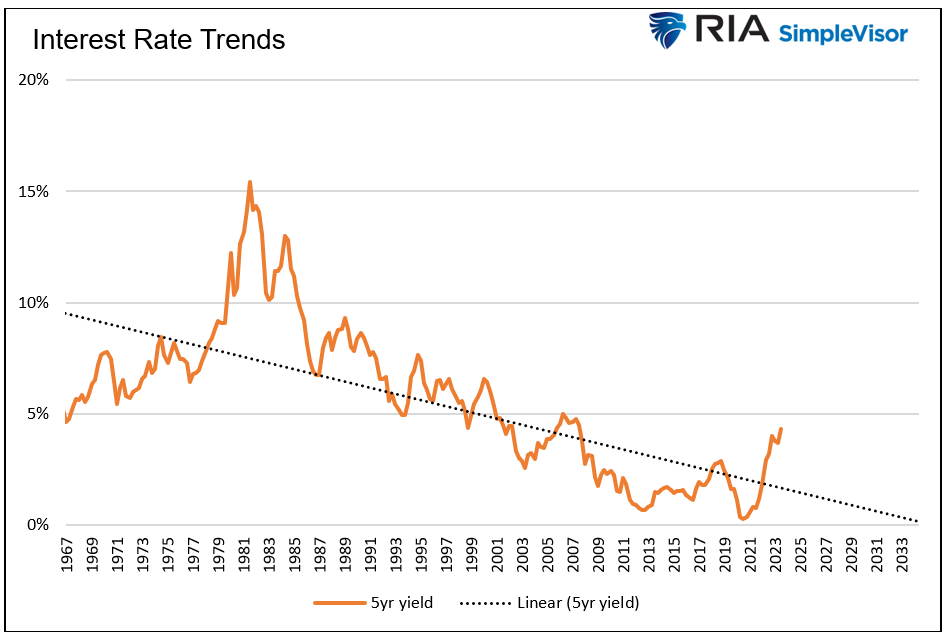
The recent repricing in longer-maturity yields has pushed the 10-year Treasury yield to levels not seen in 16 years.
While bond yields have risen sharply lately, fund flows into bonds tell two very different stories.
As the Federal Reserve signals it will keep interest rates higher for longer, the market appears to be reflecting the uncertainty about the path of policy going forward.
What everyone wants to know now is how much further the selloff will go and how long it will last. I can venture a few educated guesses based on history.
For two decades, Amy Wu Silverman has tracked fear and greed across Wall Street by keeping a close eye on the twists and turns in the Cboe Volatility Index.
Even as stocks rallied back during the monetary panic last week, big disruptions in the world of Treasuries threaten fresh pain for a host of hedging strategies on Wall Street.
Professional stock investors know little about bonds and vice versa I suppose. Yours truly has to be included in that mix but that doesn’t stop me from trying.
In a market burdened by uncertainties, a flexible approach can help equity investors strike the right balance between short-term risks and long-term opportunities.
Back in 2008, Ben Bernanke and Hank Paulson, using fear of financial collapse, convinced President Bush and Congress to 1) pass a $700 billion bailout of banks (called TARP) and 2) allow the Federal Reserve to pay banks interest on reserves at the same time the Fed moved from a scarce reserve model of monetary policy to an abundant reserve policy.
Advisor Perspectives has announced its Venerated Voices™ awards for commentaries published in Q3 2023.
It is unlikely housing prices are set to crash unless there is an unexpected shock (a “black swan” event).
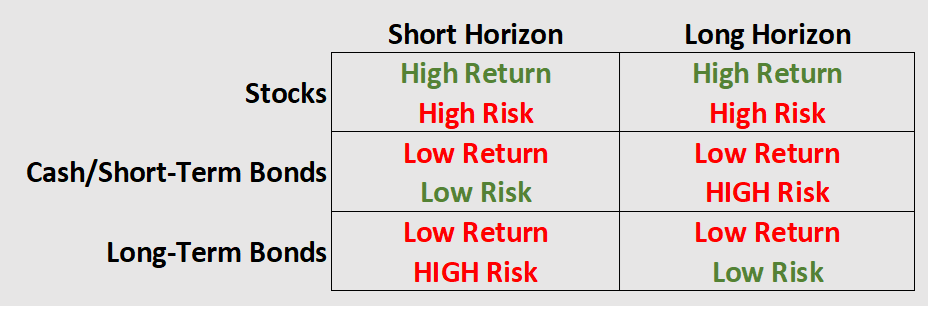
In investing, you can have a safe present or future value, but not both!
Economic indicators provide insight into the overall health and performance of an economy. They serve as essential tools for policymakers, advisors, investors, and businesses alike.
Bond investors are coalescing around a segment of the Treasuries market that offers a measure of protection from this year’s brutal rout and also positions them for the recession that some still anticipate.
There were two stories that mattered this week: interest rates and the jobs report for September. For the week as a whole, rate increases seem to have taken away from markets, as they tanked on an increase in the U.S. 10-year yield from about 4.6 percent to 4.8 percent.
Risks remain tilted to the downside. Uncertainty about the strength and speed of monetary policy transmission and the persistence of inflation are key concerns. The adverse effects of higher interest rates could prove stronger than predicted, and greater inflation persistence would require additional policy tightening that might expose financial vulnerabilities.
Bill Bengen has continued his groundbreaking research into retirement strategies. He has developed a framework for retirees to monitor and adjust withdrawals based on inflation and market performance.
Global central bank hiking cycles have dominated financial market headlines for the last 18 months, keeping many investors on the sidelines, hiding out in cash as inflation and the resulting rate hikes were serious headwinds to returns.