Goldman Sachs Asset Management launched two new ETFs Monday, expanding exposure to emerging and international equities. The ETF duo includes the Goldman Sachs Data Enhanced Emerging Markets Equity ETF (GEMQ) and the Goldman Sachs Data Enhanced International Equity ETF (GIEQ). That pair joins an ETF landscape in which those segments are seeing growing interest.
For most of this year, investors have flocked into small caps to diversify away from the concentrated AI trade. Rising interest rates are threatening to put a damper on that.
Novo Nordisk A/S is eyeing the hair-loss market as the maker of Ozempic seeks to expand its direct-to-consumer pharmaceuticals business.
Family offices now see inflation as their No. 1 worry, underscoring how rising costs of goods and services are vexing even the richest investors.
This has been an incredible year in that Wall Street has spent all of it raising its earnings estimates, and the second-quarter season only accelerated the trend. Analysts began the year expecting S&P 500 earnings to grow about 15%.
Early this week, I was in Los Angeles at the All-In Summit along with about 4,000 others, including tech investors, money managers and entrepreneurs. The ticket wasn’t cheap, but it was well worth it.
Chris Galipeau and Taylor Topousis discuss high-conviction insights that go beyond media headlines.
In August, a flurry of ETF-related deals were announced and expected to close by early 2027. Goldman Sachs is buying NEOS Investments. T. Rowe Price plans to add F/M Investments. Victory Capital is acquiring First Eagle.
A popular narrative for the rise in bond yields over the past few months is that the debt-funded AI capital expenditure cycle is crowding out the Treasury market. The crowding-out argument can appear compelling: AI companies are expected to continue to issue unprecedented amounts of debt at a time when Treasury supply remains elevated. Because both ultimately draw from the same pool of investor capital, yields must rise to clear the market.
As summer officially gives way to fall on September 22, it's not just the weather that's changing. The global monetary policy landscape is shifting as well. After spending much of the past two years focused on supporting growth, central banks have increasingly turned their attention back to inflation, especially with oil prices climbing back above $100 per barrel.
I typically avoid business books when I am on vacation. But I made an exception during our sojourn last month for Andrew Ross Sorkin’s 1929. Nearly a century after the Great Crash, that era is still being studied for lessons that might be relevant in the current day. The potential for financial instability is ever-present.
GMO has posted a new 7-Year asset class forecast for August 31, 2026.
This week's Federal Open Market Committee (FOMC) decision was largely in line with expectations. While many market participants and Federal Reserve (Fed) members anticipated another rate increase later this year, we remained in the camp that viewed the move as likely the last increase before the Fed adopted a wait-and-see approach, allowing geopolitical developments to stabilize and recent inflationary base effects related to the US-Iran war to fade.
Join the experts at Thornburg Investment Management for a product due diligence session covering the Thornburg Premium Income Builder ETF (THOR), an active ETF which combines a high-conviction global portfolio of dividend paying companies with an actively managed options overlay.
Confused by the Singularity and the impending AI apocalypse? Theoretical physicist turned science writer Adam Becker is here to help with “More Everything Forever: AI Overlords, Space Empires, and Silicon Valley’s Crusade to Control the Fate of Humanity,” a jaundiced tour d’horizon of the peculiar end-times stories that IT visionaries — particularly the richest and most powerful ones — tell themselves.
The Federal Reserve increased rates by 25 basis points this week, a remarkable turnaround with major implications for portfolios of all kinds; one underexamined impacted area may be annuities.
The combination of prior Fed inaction followed by relatively significant market tightening raises a question: If long-maturity yields were already weighing on economic activity, did the bond market already do the Fed’s job?
The K-shaped economy is real, and it is old. What changed isn’t the shape of the economy; it’s just that the media found a narrative that gets lots of clicks and views, and we let headlines do our thinking for us.
Throughout this Indexing Redefined series, we explored how traditional market-capitalization indexing ties portfolio weights directly to stock prices, creating hidden concentration risks. Furthermore, we discussed how fundamental indexing offers a disciplined alternative by weighting companies according to their real-world economic footprint. In this final installment, we address the dilemma investors face in highly concentrated equity markets.
Bitcoin surged near $85,000 to its highest since late-January, extending a sharp rebound as falling oil prices and a broader return of risk appetite helped cryptocurrencies move past setbacks on US crypto legislation and monetary policy.
Investors in the US Treasury market are shifting their focus to owning shorter-dated government bonds, a bet that the Federal Reserve will eventually emerge victorious in its fight against inflation.
Like it or not, we are all betting on AI taking over the economy. In the last 40 years, the US has become a nation of stock investors. On the whole, it has made Americans rich. Now the stock market is soaring on the hopes that AI will make everyone more productive — and if that doesn’t work out, we all may learn the definition of a bad tail risk.
US and Chinese officials offered upbeat assessments of their talks on artificial intelligence, trade and investment, signaling a mutual desire to steady ties ahead of this week’s summit between leaders Donald Trump and Xi Jinping.
Better clarity about the Federal Reserve’s resolve to fight inflation is giving investors reason to be bullish, and yet risks associated with oil prices and artificial intelligence keep them from fully committing.
Traditional performance attribution shows which active exposures added value to a portfolio and which detracted value. But for ESG mandates, it can lead to a misleading interpretation because it doesn’t explain why certain exposures exist.
This month, our experts discuss how Federal Reserve tightening has historically affected the markets; whether European stocks might be worth a second look; and the news from the most recent Federal Open Market Committee (FOMC) meeting. We provide the supporting documentation for all claims summarized below in the linked articles.
Catherine LeGraw and B.J. Brannan of GMO's Asset Allocation team discussed the role of liquid alternative strategies in today's investment landscape.
According to the latest SPIVA U.S. Scorecard report, broader isn’t always better for active managers. Following a volatile start to the year, the S&P 500 rebounded sharply in the second quarter to gain 10% through June 30 thanks to robust corporate earnings.
Silver has already demonstrated that it can make large moves in both directions, and volatility is likely to remain part of the picture. But after the recent correction, the technical setup is becoming considerably more constructive.
Pacing isn't pausing. Calls to "pace the frontier" mean slowing the release of powerful artificial intelligence (AI) models to test and control them better, not halting development or spending.
Advisors outsourcing at least 20% of assets reported saving 9.1 hours per week, or approximately 473 hours annually. WisdomTree research found 90% of investors welcomed third-party model portfolios, suggesting clients may be more comfortable with outside expertise than advisors expect.
We are never going to get rid of the FOMC for political and practical reasons. For those of us who would like to see the market set rates without an FOMC intervening, this is as good as it’s going to get.
Janus Henderson Investors today announced two senior investment appointments that will further deepen the firm’s leadership across its global equities franchise.
The Federal Reserve raised interest rates this week, in part to reset consumer expectations on inflation. Their work is likely not done, as there is a negative surprise coming for many consumers, especially in rural America. Winter is coming, and that means the return of home heating bills. Depending on how you heat your home, your bills could be much higher this winter.
Gold rallied alongside Treasuries as a slump in oil prices helped ease concerns about inflation, following the Federal Reserve’s first interest-rate hike since 2023.
The Federal Reserve (Fed) made something clear this week that markets had been reluctant to accept. Apparently, the easing cycle isn't paused, it's over for now.
Open any market commentary today and the conversation is dominated by giants. Mega-cap technology companies command outsized shares of major indexes, and the private markets tell a similar story, as we watch companies increasingly staying private well past the point where they once would have gone public.
After years of trying to convince developers and investors that it’s a viable alternative to Miami and Palm Beach, Fort Lauderdale’s pitch is starting to resonate.
Join Defiance ETFs’ Brendan Cavanaugh, CFA, and VettaFi’s Kirsten Chang as they discuss how advisors can gain exposure to companies advancing autism care.
Artificial intelligence is advancing at a stunning, and perhaps uncontrolled speed. Last week, Evan Hubinger, the Alignment Science Lead at the AI company Anthropic estimated a greater than 10% chance that AI could eliminate humanity within a decade. Jakub Pachocki, Chief Scientist at OpenAI, recently observed 'The core problem in AI research is that of alignment - getting the AI to ‘try to do the right thing’ by human standards…
A spinout from the family office for the billionaire owners of US construction giant Michels Corp. is expanding its public equities strategy with a fund focused on US infrastructure.
Berkshire Hathaway Inc. founder Warren Buffett is stepping down as the company’s chairman to be replaced by his son Howard, effectively ending roughly six decades at the helm of the conglomerate.
The Commodity Futures Trading Commission is delivering on its promise to swiftly move forward with crypto rules after a landmark digital asset bill failed to advance in the Senate this week.
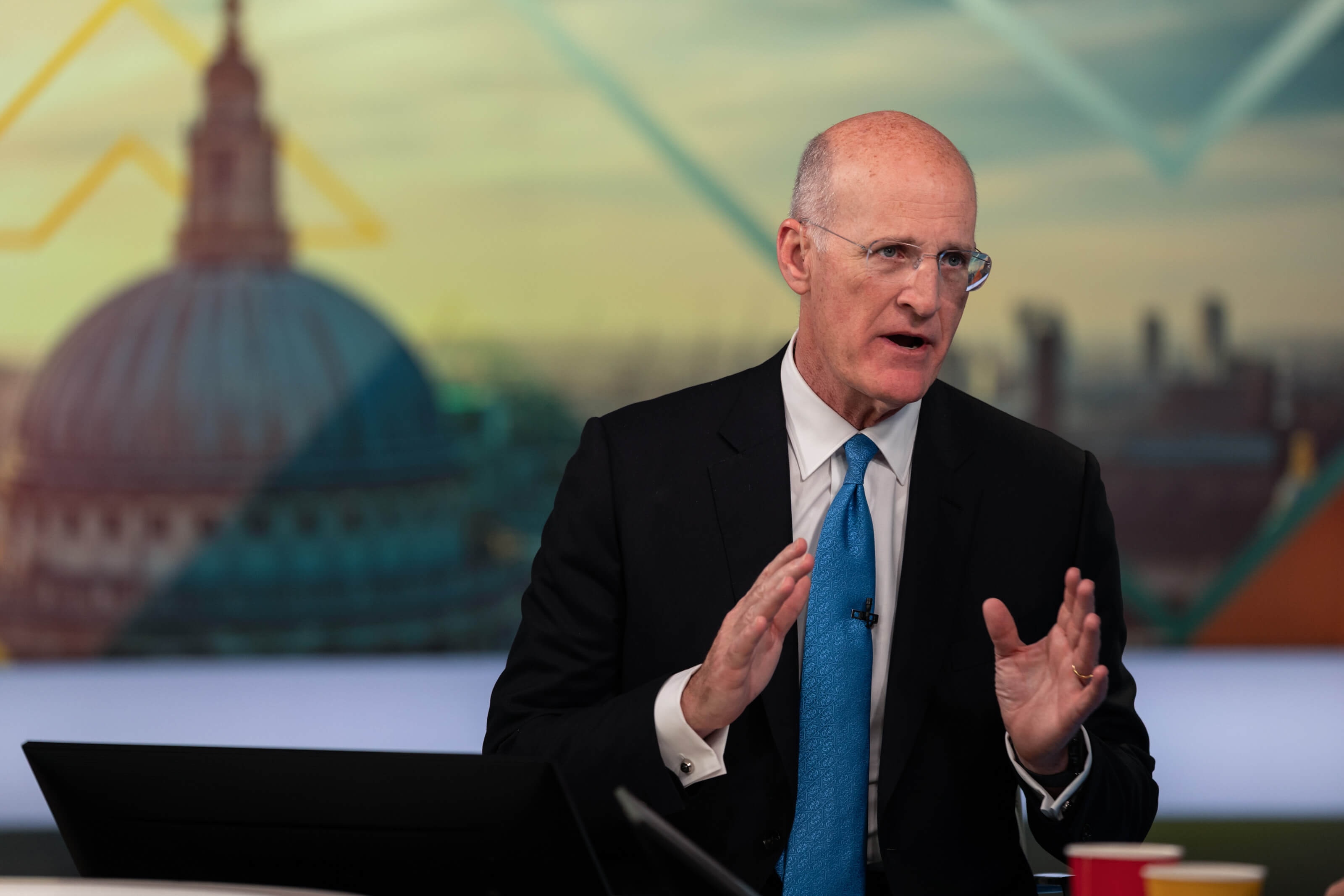
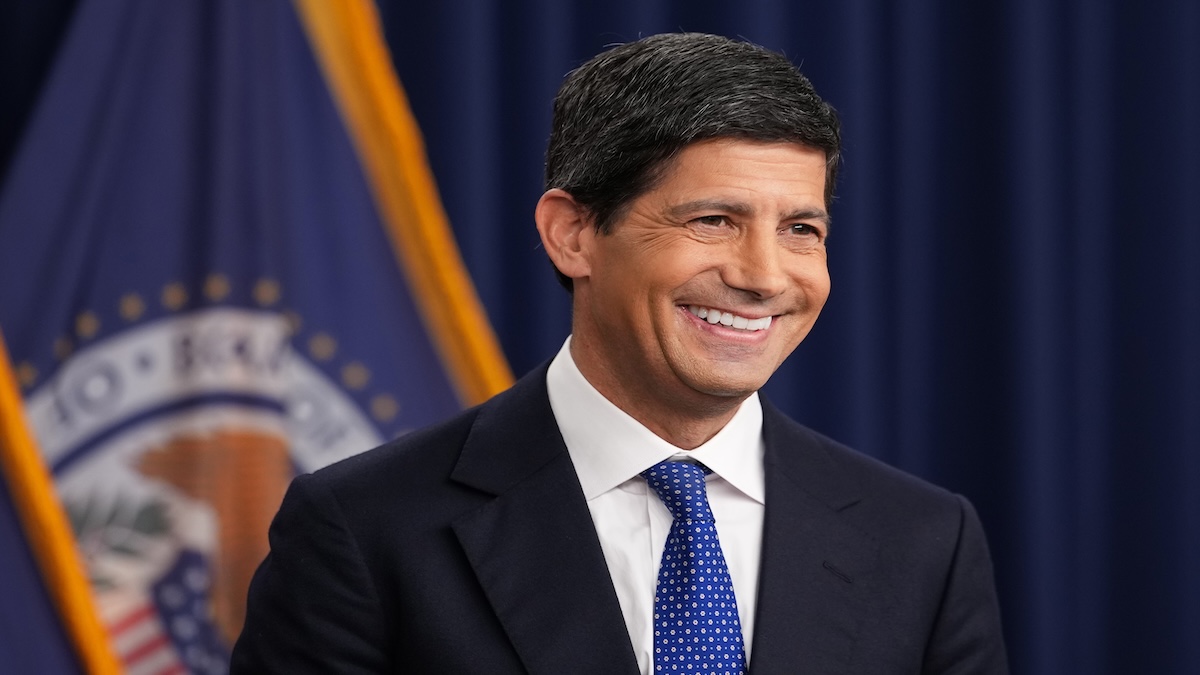
Federal Reserve Chairman Kevin Warsh had ground to make up on Wednesday — and, for the most part, did what was necessary.
Much about the global AI panic — could it really “kill us all by the end of the decade”? — is genuinely new, and thus extra-scary. Then again, the specter of human-engineered extinction is hardly novel; we have about eight decades of experience in thinking about it.
In an environment marked by the Fed’s first rate hike in three years and ongoing market uncertainty, income-focused investors face a unique dilemma. While cash alternatives offer attractive yields in the short-term horizon, they leave portfolios vulnerable to reinvestment risk should the
As ETF strategies continue to expand into new asset classes and structures, the SEC has been taking a closer look at how some of these products fit within existing regulations.
For decades, equity investors have relied on a foundational promise from Corporate America: the continuous return of surplus cash. Dividends and share repurchases represent the two primary ways by which companies deliver tangible value back to shareholders. Yet as we navigate the final stretch of the third quarter of 2026, both channels are signaling a distinct shift toward restraint.
The new investment case for global power, security and affordability. The phrase “energy transition” has served as a useful political and cultural shorthand, but it has become a misleading framework for capital allocation. Franklin Templeton Institute explodes new opportunities for investors—and where shifts in thinking may be needed.
The U.S. Federal Reserve delivered on consensus expectations by raising its policy rate by 25 basis points (bps) at its September meeting.