Portfolio Managers Jonathan Coleman and Aaron Schaechterle outline why they believe momentum in small-cap stocks relative to large caps can continue, highlighting favorable earnings growth prospects, appealing relative valuations, and other structural tailwinds.
2026 began with 10-year Treasuries right around 4%, which many viewed as a comfortable place. The comfort came from some simple math—2 plus 2 equals 4. The long-term real yield on the 10-year Treasury was around 2% and the Fed’s inflation target is 2%.
Market volatility persisted in August as investors were again forced to reassess escalating tensions and an exchange of military strikes in the Middle East, while softer labor-market data was countered by mixed inflation readings.
With so much attention focused on what the Federal Reserve (Fed) might do at its policy meeting next week, it’s a good time to look back at history to get a sense of how stocks might respond should the Fed hike rates as the market (barely) expects.
Benchmark-Free has been a flagship strategy for half of GMO's history. As we approach our 50th anniversary in 2027, Ben Inker reflects on our first 25 years of Benchmark-Free investing.
Elevated interest rates have investors scrambling for yield, and munis have been ready to answer the call with tax-exempt income.
Join the investment strategists at WisdomTree for an educational webcast that explores portfolio position going into the second half of 2026.
Federal Reserve officials have signaled they’re prepared to raise interest rates if inflation doesn’t improve soon, but they may find their main policy tool will do little to restrain some of the forces pushing up prices now.
Meta Platforms Inc. was upgraded to overweight at JPMorgan Chase & Co. on Thursday, the latest example of how sentiment toward the Facebook parent’s position with artificial intelligence has been improving.
Gold hovered near $4,400 an ounce, as traders awaited US inflation data due later this week for clues as to whether the Federal Reserve will hike interest rates this month.
The midterm election season has entered its final stretch, and Wall Street is busy drawing up game plans for a range of scenarios. Yet, in a fortuitous turn of events, the best outcome for markets is also looking like the likeliest one.
Brent oil spiked to $105 a barrel as rising tensions in the Middle East heightened concerns over global supplies.
For much of the past decade and a half, investors saw little reason to favor bonds over equities. Yields were low and returns were muted, especially in passive strategies. Equities seemed to offer a much clearer path to long-term capital appreciation. For many investors, bonds were, at best, ballast: a dull but generally stable component of a broader portfolio. Then the experience of 2022 had investors questioning even that view, as areas of high quality fixed income generated equity-like losses that eroded much of the prior decade’s real return.
As students get closer to making a final college decision, the last two years of high school are particularly important. Parents will want to review their financial strategy to meet the costs of college, including a review of current savings, financial and merit aid, scholarships and loan options.
The August employment report was much stronger than expected and reinforces my view that the U.S. economy remains remarkably resilient. Payrolls increased by 162,000, above every estimate, while revisions added another 55,000 jobs to the previous two months. The workweek increased by one-tenth of an hour, the household survey was extremely strong, and the participation rate finally moved higher.
On Friday, the August U.S. employment report surprised to the upside, with 162,000 jobs added during the month. Year to date, the labor market has shown impressive resilience, with hiring also becoming more balanced across sectors than in previous years.
Before Friday’s jobs report, it was roughly a toss-up in the financial markets whether the Fed would raise rates at the next meeting in mid-September. Now, the odds favor a rate hike and it’s not hard to see why.
When markets become volatile, many investors gravitate toward assets they perceive as “safe.” Cash, certificates of deposit (CDs), money market funds, U.S. Treasury securities, and high-quality bonds can all play an important role in a diversified portfolio. But “safe” doesn’t necessarily mean “risk-free.”
LPL Research analyzes rising U.S. debt, Treasury yields, and fiscal trends, highlighting implications for markets and investors.
Target-date funds have become a staple qualified default investment alternative (QDIA) because they help participants invest appropriately without requiring them to act. But as retirement nears, income needs become more pressing and financial situations diverge—a situation dynamic defaults seek to address.
Brent crude oil rose above $100 a barrel for the first time since July, while the U.S. benchmark West Texas Intermediate (WTI) crossed $95, with varying impacts on energy ETFs. The price surge followed escalation in the Middle East conflict, including U.S. military strikes on five Iranian oil tankers and Houthi attacks on Saudi energy facilities.
From an earnings perspective, this summer proved to be a largely fruitful one for many companies within the S&P 500.
Join the experts from Stance Capital, SS&C ALPS Advisors, and VettaFi for an educational webcast to learn all about the mechanics of Section 351 and how to determine if an investor qualifies under IRS regulations.
The alternative is to be proactive by helping a grieving client name and address the financial concerns that loss creates, without ever rushing them. Doing that well takes two things: an understanding of how grief actually unfolds and a deliberate process for the conversation itself.
As clients come to advisory shops more informed, due to the plethora of financial advice available online, firms will need to be able to “stress test the information or bias” they arrive with. A comprehensive team, with training across advisory areas, can offer clients more depth of service.
When navigating leadership decisions that leave a team feeling underappreciated, offering benefit of the doubt can reduce personal frustration and help maintain productive daily interactions.
Every year, Americans send hundreds of billions of dollars of retirement savings to life insurers in return for annuities that promise a future income. It’s an industry built on trust and prudence.
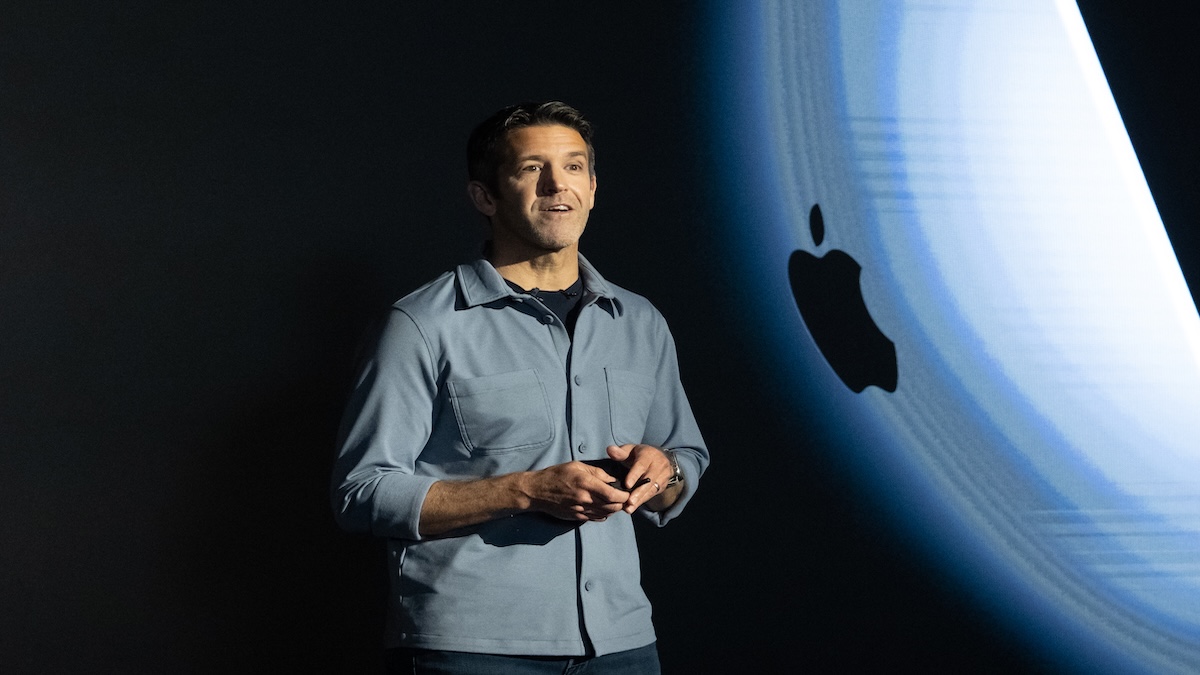
Apple Inc.’s $570 billion summer surge is saddling new Chief Executive Officer John Ternus with high expectations heading into the company’s most anticipated event in years: the unveiling of the foldable iPhone on Wednesday.
At least a third of all Federal Reserve officials have said they would consider meeting less frequently to set interest rates, giving Kevin Warsh an early opening for one of the biggest structural changes he’s proposed as the central bank’s new chairman.
Defiance ETFs has submitted paperwork to the US Securities and Exchange Commission for a series of leveraged funds that would seek to double the moves of some individual stocks — over periods measured in just hours, rather than days.
Donald Trump’s pledge to ensure that Bitcoin mining activity is centered in the US is rapidly disintegrating under the twin forces of the artificial intelligence boom and a prolonged crypto slump.
Chapter 3 of this series ended with a simple question. If the math so plainly says avoid big losses, respect valuations, and mind your timing, why does so much of the industry preach the opposite?
Equity markets can be as difficult to forecast as the weather, yet investors often assume future return patterns will predictably follow recent trends. In today’s turbulent market climate, we think fundamental research can help investors build conviction in long-term company forecasts that may be obscured by the AI-driven cloud cover.
Labor Day signals more than summer’s end. It marks a return of focus to the economic and market forces that will shape the remainder of the year. From resilient earnings and record AI spending to rising bond yields and the midterm elections, there is no shortage of forces shaping the market outlook.
If you’re planning on driving anywhere this Labor Day weekend, be prepared to pay the highest gas prices ever for this time of year. The national average hit $4.14 per gallon on Thursday, an approximately 30% increase from last year, according to AAA.
Bond markets around the world have trembled in the last week, as uncertainty continues to rise. A mix of geopolitical, trade, debt, and currency pressures have put immense pressure on yields. The Yen carry trade situation alone has soaked bond markets, but when combined with U.S. debt fears and Hormuz concerns, the picture has shifted.
To kick off our fourth season of the Alternative Allocations podcast series, I sat down with John Bowman, CEO of CAIA Association, to explore the massive changes underway across our industry. John and I discussed CAIA’s seminal paper “The World Rewired,” and the implications for private markets.
The Federal Reserve has spent the past four years trying to cool price increases through higher interest rates. The federal funds rate is still well above its pre-pandemic average, mortgage rates remain elevated, and borrowing costs for households and businesses are considerably higher than they were in the era of ultra-low interest rates.
Oil prices climbed further Tuesday, with Brent crude rising 1% to $97.95 a barrel and briefly touching $99.46, according to the Associated Press. The benchmark has climbed from around $72 over the past two months. Fighting tied to the war with Iran has clouded hopes for reopening the Strait of Hormuz to tankers.
The S&P 500 gained 2.7% in August 2026 and four indexes hit all-time highs, but only five of eleven sectors rose and the Fed’s speech at Jackson Hole put a rate hike back on the table.
Are investors overlooking a “stealth bear market” hidden beneath the strength of the broader market?
Join the experts at Cohen & Steers for an educational webcast exploring real assets and how they fit into client portfolios.
The U.S. ETF market reached $16.4 trillion in AUM in August 2026, driven by record product launches and a defensive shift to Treasuries.
The SEC wants to rescind a 15-year-old rule curbing political donations by investment advisers, aiming to ease compliance burdens for RIAs.
Direct venture investment rewards a rigorous, patient approach. The companies that generate exceptional returns tend to combine all three factors above: genuine growth momentum, clear category ownership, and strong institutional support.
The value of actively bringing the quieter partner into the conversation by turning toward them, making eye contact, and asking for their thoughts. Even if the answer is still a shrug, the question signals that their view belongs in the conversation.
Organizations are beginning to rethink how development projects are priced. One emerging approach is the use of a max-price software model. This establishes a predefined budget ceiling while allowing priorities to evolve throughout the project.
Chris Galipeau discusses high-conviction insights that go beyond media headlines.
Stock investors are caught between the pull of strong earnings and mounting macroeconomic risks, with key events carrying binary outcomes that argue for some protection.
I love ETF milestones and round numbers almost as much as I love watching football. There is something deeply satisfying about watching a fund hit a clean asset threshold. Crossing $500 million, $1 billion, or $2 billion in assets under management (AUM) is more than just a psychological victory. It signals real validation from financial advisors, provides greater liquidity, and lowers the risk of fund closure. Plus, as a fun bonus this week, our three featured funds all start with the letter B!