Lock, stock and barrel, a British phrase, originally referred to the three essential components of a firearm. Over time, it evolved into shorthand for the whole package. When tensions flare in the Middle East, the global economy often feels the consequences lock, stock and barrel.
Oil is the lock, often the first channel through which geopolitical tensions reach global markets. The stock is the network of shipping routes and supply chains that transmits the disruption. The barrel is the wider economy, which experiences higher costs, renewed inflation pressure and slower growth.
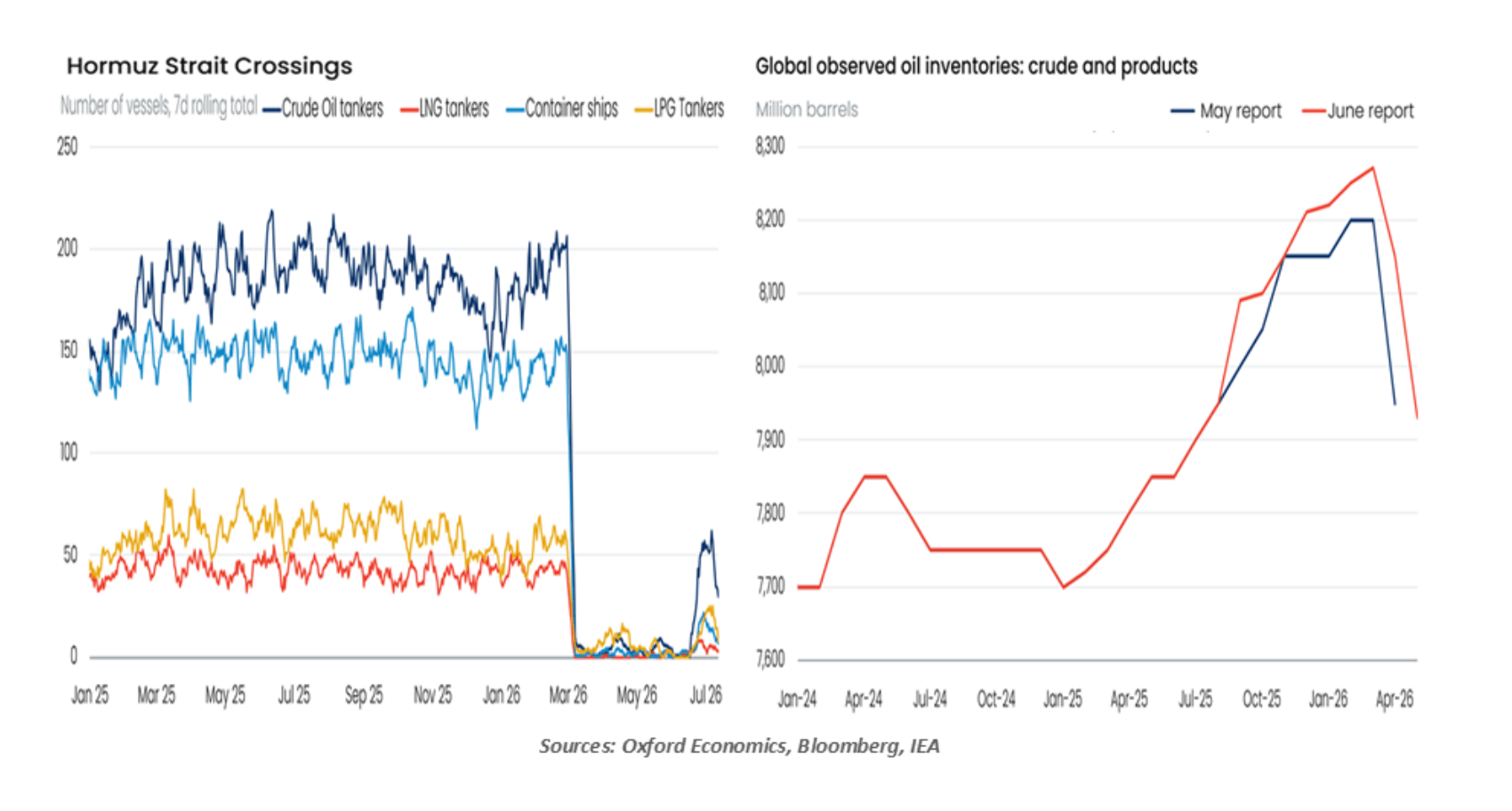
With prospects for a durable U.S.-Iran peace appearing increasingly remote, a lasting reduction in traffic through the Strait of Hormuz looks likely. The waterway carried roughly one-fifth of global petroleum shipments before the conflict. Any sustained disruption was viewed as a worst-case scenario, with severe consequences for supply chains and energy security.
Despite these risks, the oil market's response to the hostilities has been surprisingly muted. Prices eased as the conflict cooled, then fell quickly after last month's ceasefire. Even as the fighting resumed, prices have remained well below the peaks reached during the initial phase of the conflict. Several factors explain this resilience.
The conflict erupted against a backdrop of ample oil output. During the ceasefire, Gulf producers were eager to restore revenues, while growing fragmentation of OPEC has weakened the group's pricing power. Russia continues to sell crude at discounts, and Venezuela is slowly returning additional barrels to the market. U.S. production has reached record highs, and countries including South Korea and the Netherlands have also turned to U.S. exports to replace barrels they could no longer source from the Middle East.
See more: Middle East Conflict Clouds the Economic Outlook
Alternative export routes have also provided a cushion. Saudi Arabia has continued shipping oil through its East-West pipeline to the Red Sea port of Yanbu, bypassing the Strait of Hormuz. With a capacity of around seven million barrels per day and export potential of roughly five million barrels, the pipeline has operated at or near full capacity during the crisis, helping to offset some of the lost Gulf supply. The UAE’s ability to export outside the apex of the Strait may have motivated its departure from OPEC.
Weak demand from major consumers has also been a factor. Chinese crude imports fell again in June, leaving volumes roughly 40% below year-ago levels and near a decade low. Softer demand conditions in China and India have helped absorb part of the supply shock that would otherwise have translated into higher prices.
Additionally, inventories have been drawn down, keeping prices contained. Stockpiles have met their mission to cushion supply disruptions, but this is a temporary fix. Depleted reserves will take months or even years to rebuild as governments grow more reluctant to release strategic stocks. Inventory levels are already becoming uncomfortable: U.S. commercial crude stockpiles remain low by historical standards, key storage hubs are approaching operational minimums, and the Strategic Petroleum Reserve remains near multi-decade lows.
The greater vulnerability lies in fuel markets. Refining activity has weakened in several regions, tightening supplies of diesel, jet fuel and other middle distillates. Renewed disruptions to Middle Eastern refining, combined with Russia's restrictions on diesel exports, have further constrained supply. Refined fuels play a direct role in freight transportation, agriculture and industrial production, making shortages especially damaging for economic activity.
Expectations of a gradual normalization in shipping flows now appear increasingly optimistic. With the Strait of Hormuz under pressure and Houthi threats to Red Sea routes resurfacing, the resilience of the global energy system is facing a more demanding test.
The ceasefire's collapse is a reminder that geopolitical events trigger a series of aftershocks. They move through the global economy lock, stock and barrel.
Information is not intended to be and should not be construed as an offer, solicitation or recommendation with respect to any transaction and should not be treated as legal advice, investment advice or tax advice. Under no circumstances should you rely upon this information as a substitute for obtaining specific legal or tax advice from your own professional legal or tax advisors. Information is subject to change based on market or other conditions and is not intended to influence your investment decisions.
© 2026 Northern Trust Corporation. Head Office: 50 South La Salle Street, Chicago, Illinois 60603 U.S.A. Incorporated with limited liability in the U.S. Products and services provided by subsidiaries of Northern Trust Corporation may vary in different markets and are offered in accordance with local regulation. For legal and regulatory information about individual market offices, visit northerntrust.com/terms-and-conditions.
A message from Advisor Perspectives and VettaFi: Discover something new! Click here to register for our upcoming webcasts.
© Northern Trust
Read more commentaries by Northern Trust