Federal Reserve Chairman Kevin Warsh had ground to make up on Wednesday — and, for the most part, did what was necessary.
The Fed’s policymakers voted unanimously to raise the federal funds rate by a quarter point, to a range of 3.75% to 4%, and, more important, Warsh gave an intelligible explanation. The confusion caused by the new chairman’s previous statements receded. That’s progress.
Yet to say that challenges remain would be putting it mildly. The economic outlook is extremely uncertain, and monetary policy is still in flux.
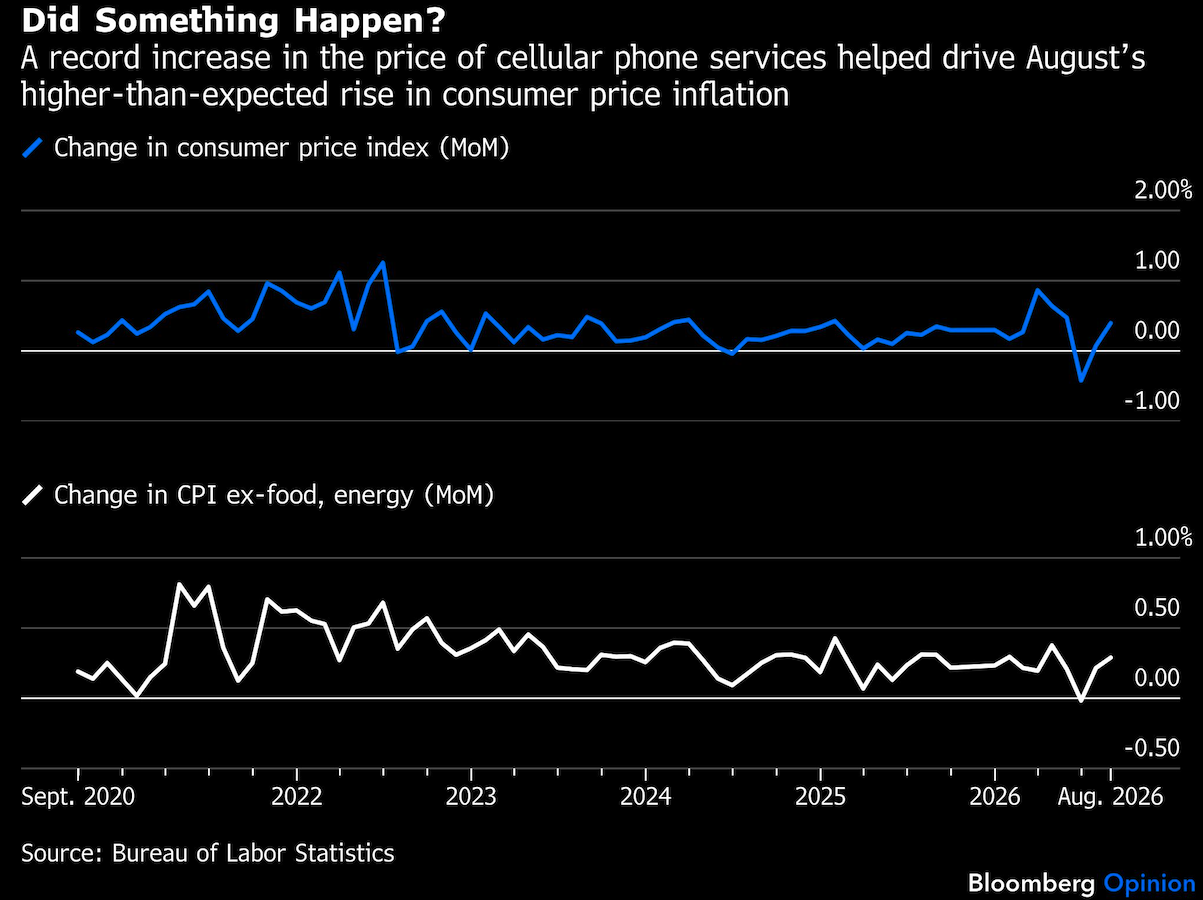
Warsh had puzzled investors by talking like an inflation hawk after his appointment in May, then voting against a higher policy rate in July. Worse, his stated reasoning was opaque. The following month, he offered a straightforwardly hawkish assessment at the Jackson Hole central bankers’ conference, which was followed in short order by an elevated inflation reading. With high confidence, investors promptly priced in a rate increase. The Fed was right not to confuse them any further with another hold.
Market expectations aside, the decision was a closer call than the committee’s unanimous vote suggests. Supply shocks continue to keep inflation high, and monetary policy is a questionable way to respond. Amid this volatility, it’s odd that August’s single month of noisy data seemed to carry such weight with the Fed’s officials, most of whom had voted to hold in July.

See more: September Fed Hike May Be More Than a Risk Management Exercise
Warsh, at least, now stands on firmer ground. He emphasized that he isn’t swayed by single data points and is focused instead on the longer-term trend in prices, which he thinks (supply shocks notwithstanding) have been too high for too long. Moreover, he said the economy is strong, at full employment and growing satisfactorily, allowing the Fed to safely prioritize price stability. Unlike in July, his analysis and his policy choices have come into alignment. And, for the moment, the Fed’s policy committee is backing him up.
Investors now want to know what happens next. Attention has shifted to the Fed’s new summary of economic projections, or dot plot — in which, as many analysts put it, policymakers have “penciled in” at least one more rate increase in the coming months. Evidently, Warsh has more work to do in this regard, since he declines to take part in the dot-plot exercise and strongly objects to “forward guidance.” In his view, presumably, nothing is penciled in.
Partly as a result, the connections between incoming data and policy choices (the Fed’s so-called reaction function) are far from resolved. If inflation is trending too high, a quarter-point hike — removing, as Warsh put it, a “dose of accommodation” — is unlikely to suffice. But how much higher, as things stand, would the rate need to be? It would help to know how Warsh and his colleagues assess the neutral rate (which neither adds to nor subtracts from aggregate demand). But Warsh puts this question in the same category as forward guidance: He thinks it’s misguided and not worth addressing.
In short, the clarity that would best serve the economy remains elusive. But let’s not be churlish. The decision to raise the policy rate, despite opposition from the White House, strengthens the Fed’s credibility when it otherwise might’ve been severely strained. And for now, Warsh is making sense.
A message from Advisor Perspectives and VettaFi: Discover something new! Click here to register for our upcoming webcasts.
Bloomberg News provided this article. For more articles like this please visit
bloomberg.com.
Read more articles by The Editors