One of the most interesting conundrums is the surging wealth gap in America. Despite two of the largest bull markets in history since 1980, most Americans struggle with making ends meet and are unprepared for retirement. Such a reality starkly differs from the belief that rising asset prices benefit the masses.
Leaders take a lot of criticism. In fact, that’s part of the job. Presidents, governors, CEOs, football coaches, other top decision makers and even your humble analyst all have to answer for what happens on their watch—even when it’s not their fault.
Gold staged a blinding comeback this week, surging to fresh all-time highs above $2,200 an ounce.
After many years of low and negative interest rates, the Bank of Japan has changed course, creating opportunities for Japanese investors and implications for global markets. Templeton Global Investments outlines the positives and the risks.
Guessing the direction of interest rates is no easier than any other tactical or market timing decision. The yield on the benchmark 10-year Treasury note is just under 3.9%. That is about 100 basis points less than it was a few months ago. Fed policy is uncertain, inflation has not been fully controlled, and fiscal deficits loom as a long-term risk for yields to go higher.
Those factors argue in favor of an allocation to floating-rate notes. My guest today will help us explore this asset class, its opportunities and its risks.
Federal Reserve Chair Jerome Powell’s increasing focus on protecting the job market is encouraging a swath of bond traders putting bets on inflation rates to remain elevated.
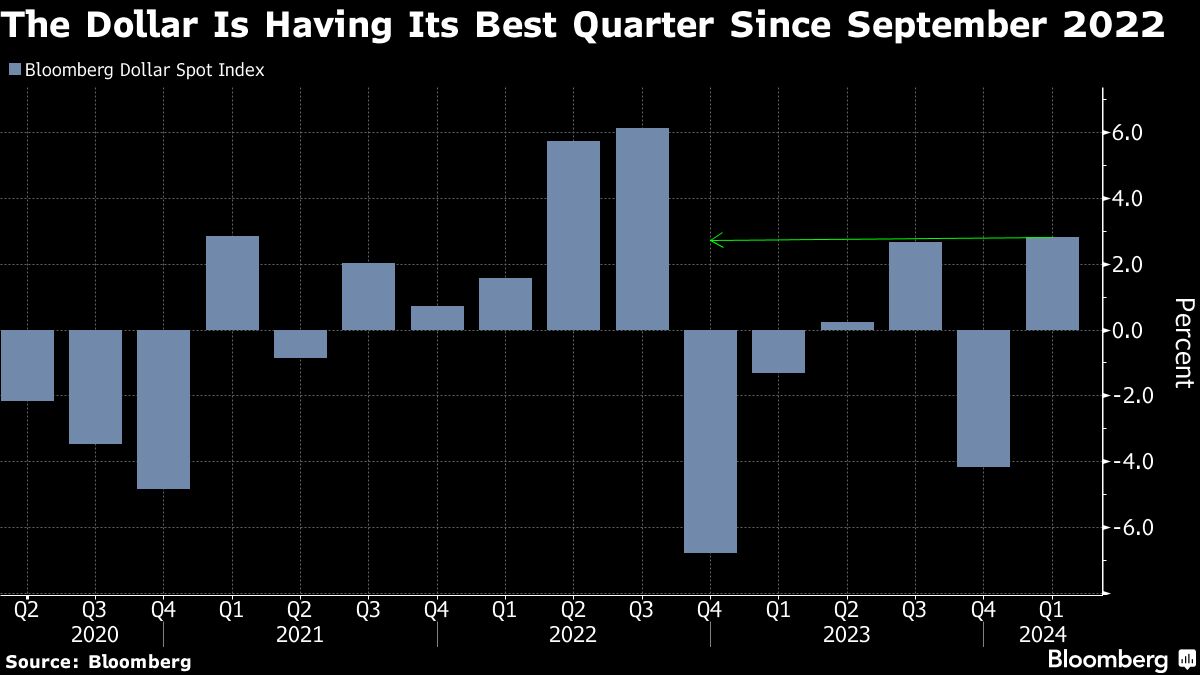
The dollar is poised for its best quarter since late 2022 as Federal Reserve officials push back against the latest bout of rate-cut wagers.
Pending sales of previously-owned homes in the US recovered last month after declining at the start of the year, adding to evidence that the housing market is gradually improving.
After two volatile years, we believe conditions are especially compelling for fixed income.
The upcoming US presidential elections transcend mere political rivalry. Stephen Dover, Head of Franklin Institute, examines the policy differences between the major parties and their potential implications on capital markets in the years to come. He also discusses whether elections and their outcomes have significantly affected equity markets or if other factors made more of an impact.
For this edition of Bull vs. Bear, Karrie Gordon and Nick Peters-Golden debate whether alts deserve portfolio allocation in 2024.
Recent signals from major central banks suggest challenges ahead with easing monetary policy amid above-target inflation.
We believe optimism over a soft-landing scenario—where economic growth slows but a recession is avoided—may deliver more near-term market gains, as inflation declines and central banks look to start easing around mid-year.
The negative rate experiment has ended. What comes next?
US financial regulators have been working on what’s optimistically known as Basel III Endgame – the long, slow effort to reform global banking rules following the crash of 2008. They’re apparently getting cold feet.
As improvements in artificial intelligence continue apace, so do questions about how AI will influence economies, asset prices and — the question of the moment — interest rates: Is AI more likely to make them go up or down?
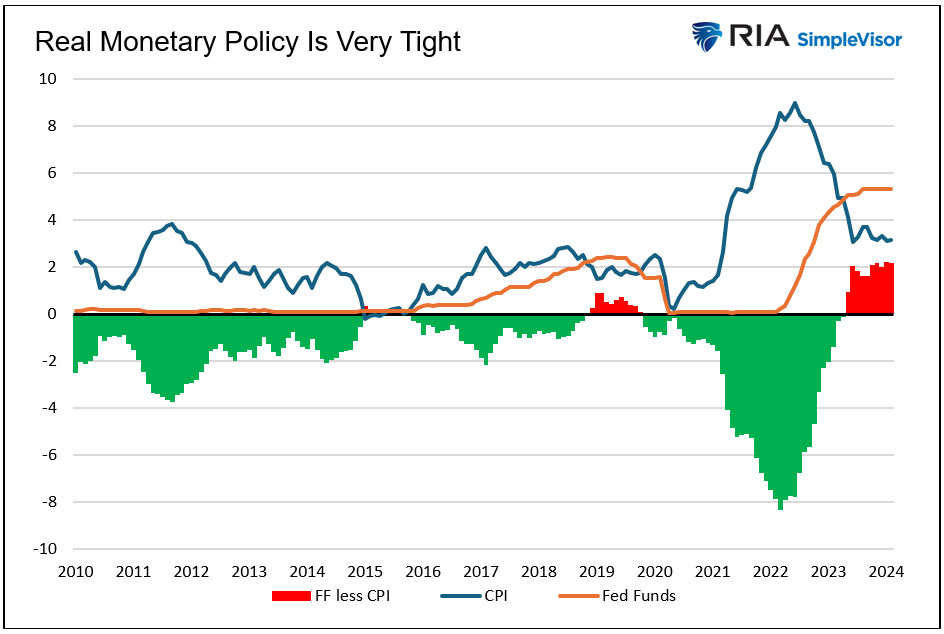
Easy financial conditions and tight borrowing conditions make monetary policy difficult for the Fed to balance.
Cautious investment is holding back the outlook for European nations.
The Federal Open Market Committee (FOMC) comprises the Federal Reserve System’s decision-makers on monetary policy in the United States. This monetary policy is designed to keep the Fed’s dual mandate of maximum employment and price stability in line with targets.
Bob Doll, CEO & CIO at Crossmark Global Investments, explains why double-digit earnings growth and multiple Fed rate cuts seem incompatible.
Global Head of Client Portfolio Management Seth Meyer discusses the hidden risks and potential strategic pitfalls of sitting in cash.
More charging stations and lower prices can break EV sales out of their slump.
Economic indicators allow policymakers, advisors, investors, and businesses to make informed decisions about financial markets.
Larry Adam takes stock of how the economy and markets have performed since the beginning of the year and take a fresh look at where we are heading as we progress through the year.
Bond traders are cautiously reloading wagers that burned them just weeks ago as the Federal Reserve and key global peers finally appear set to begin reducing interest rates as soon as June.
Franklin Templeton Fixed Income CIO Sonal Desai believes that the Fed's March policy meeting was not as dovish as some commentators and market participants have claimed, and that the Fed is still pragmatic and cautious about inflation and rate cuts.
We’ve mentioned this before, but it bears repeating. It seems that investors pay as close attention to what the government is doing, as they do to actual business news. We don’t think investors are wrong to do this, but it’s only because government has become so big.
Junk-rated US companies have seen their interest costs rise after the Federal Reserve’s rate-hike campaign, but profits haven’t kept up, putting a squeeze on finances and underscoring a key risk for investors in high-yield debt as the trend persists.
If one wants a guaranteed store of real purchasing power to pay off a future liability or to provide a multi-year income stream such as for retirement, then a ladder of TIPS provides a much stronger guarantee than other readily available assets.
At a time when financial professionals are increasingly looking for differentiated alternative investment products for diversification and return benefits, these are the three things you need to know about the growing asset class.
As the anticipation of rate cuts build, it may cause fixed income investors to fret, but an ultra-short option could help ease those worries.
Most clients have no idea what retirement failure means to them and how a given failure rate should influence their planning. We present a planning framework that improves on existing models by dynamically adjusting for market performance and longevity.
Markets have taken the Federal Reserve (Fed) decision to keep about 75 basis points (bps) cuts in its dot plot as a very positive sign that the Fed is going to actually cut 75 bps during the year and are still acting upon the news.
GMO has published a new 7-Year Asset Class Forecast.
Thoughts on the US monetary policy path ahead from Franklin Templeton Institute’s Stephen Dover and Rick Polsinello.
There have been several big changes in the municipal bond market lately. Here's what you should know.
If, like me, you’re old enough to remember the 1990s internet bubble, today’s AI excitement might be giving you flashbacks. The parallels are unmistakable.
Gold staged a blinding comeback this week, surging to fresh all-time highs above $2,200 an ounce. The rally, which has added around 10% to gold’s value since mid-February, caught many market watchers off-guard.
With three potential Fed interest rate cuts forecast for this year, gold remains an attractive equity hedge.
Seeking ETF options as rate cuts look further and further away? Consider how value investing via active ETFs could help.
The Bank of Japan (BOJ) has bid farewell to its negative interest rate policy (NIRP), yield-curve control (YCC) and quantitative and qualitative easing (QQE), marking the end of an era of extraordinary monetary easing.
Corporate defaults have been on the rise. As such, investors may want to consider investment-grade debt until credit risks subside.
Zach Pandl, the head of research at Grayscale, spoke with VettaFi about bitcoin's current runup and what lies ahead for the cryptocurrency.
Based on the valuation measures we find best-correlated with actual subsequent S&P 500 total returns across a century of market cycles, the stock market presently stands at valuation extremes matched only twice in U.S. financial history.
The Northern Trust Economics team shares its outlook for major markets, with a spotlight on China.
The central bank will look to cut interest rates three times by the end of 2024.
Federal Reserve officials appear locked in for multiple rate cuts this year, despite inflation reaccelerating – raising questions about the speed and timing of this easing cycle.
The Federal Reserve suggested that interest rates likely will move lower, but perhaps not as quickly as markets had been expecting.
In this FAST Graphs Analyze Out Loud Video, Chuck Carnevale, Co-Founder of FAST Graphs, a.k.a. Mr. Valuation will analyze Super Micro Computer (SMCI) Chuck will also cover Nvidia Corp (NVDA).
Despite strong gains in equity markets last year and year-to-date as well as indexes sitting at all-time highs, we are extremely excited about the investing landscape from an asset allocation perspective.