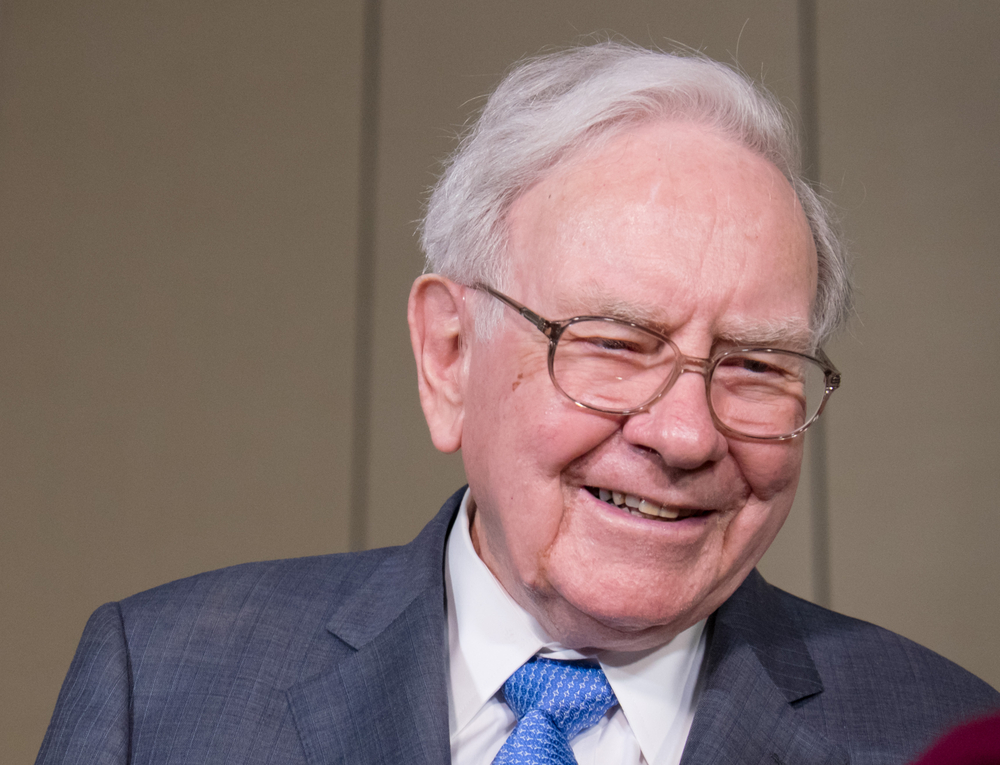
When Berkshire Hathaway Inc. devotees gather in Omaha on Saturday for its annual meeting, there will be a noticeable void on stage.
Once again, the Fed kept rates unchanged at the May FOMC meeting. As a result, the Fed Funds trading range remains in the 5.25% to 5.50% band introduced in July 2023 and still resides at a more than 20-year high-water mark.
No shortage of things to discuss after today’s Fed statement and subsequent press conference.
How and why more advisors are tapping into alternatives—Tony Davidow, Senior Alternatives Investment Strategist at Franklin Templeton Institute, shares insights from a recent gathering.
The first-quarter GDP report supports the view that the US economy has not landed. While some economists are concerned about stagflation, the real worry is that taming price pressures may require a mild downturn, given strong consumer spending and inadequately restrictive monetary policy.
Despite lingering economic fears, concerns over the timing and pace of rate cuts, sticky inflation reports, a crisis in the Middle East, and a looming close U.S. presidential election, stocks marched higher, and sentiment remained optimistic.
On the latest edition of Market Week in Review, Investment Strategist BeiChen Lin and Sophie Antal-Gilbert, Head of AIS Portfolio & Business Consulting, discussed the U.S. first-quarter gross domestic product reading. They also reviewed the latest U.S. inflation data and provided an update on U.S. first-quarter earnings season.
Attention-grabbing performances from the likes of Microsoft, Google, and Tesla swayed market sentiments back to growth.
Our top five picks for events that have the potential to be market moving.
The most interesting thing about 1968-1969 was the agreement about the stock market future between the greatest growth investor at that time, T. Rowe Price, and the greatest value investor of all time, Warren Buffett.
Investors are plowing into technology-tracking ETFs at a record clip as conviction builds that the market’s biggest stocks can thrive in almost any economic cycle.
What’s the value of a good story? $82 billion, to judge by Tesla Inc.’s 15% share price gain Monday.
Government economic intervention has persisted since the pandemic.
Stocks have been buoyant this year, but market conditions are still in flux. Looking at equity factors can help investors make informed judgments about how allocations are prepared for different scenarios.
Momentum traders are modeled to buy equities over the next week regardless of market direction, according to Goldman Sachs Group Inc.’s trading desk.
America’s experiment with quantitative easing is almost over. This week, the Federal Reserve will likely announce plans to slow the shrinkage of its balance sheet, foreboding the end of a long period in which it sought to stimulate the economy by holding large quantities of Treasury and mortgage securities.
It does you no good to meet with a prospect or client who doesn’t feel comfortable enough to be candid about what they want. Give them options, help them discover their goals, ask deeper questions and “prime the pump.”
It’s not just about the balances in the accounts; it’s about helping our clients have a healthy relationship with money.
This article takes a deep look at three important economic releases from the past week: PCE, GDP, and consumer sentiment.
The reaction from markets to the release of Q1 2024 real GDP results has given every sector of the market another chance to give their own interpretation of what is coming regarding Federal Reserve (Fed) policy, inflation, and the federal funds rate.
Until recently, any suggestion of fiscal prudence was quickly dismissed as “austerity” by economists on the left. But with higher interest rates fast becoming the new normal, the idea that any economic problem can be solved with more government borrowing has become untenable.
In September, we wrote a piece discussing some of the growing pains that have impacted clean energy in the last few years. Despite what we believe are compelling long-term growth prospects, the sector has continued to struggle over the past two quarters.
Financial stability is much improved since last year's stress.
The often-cited goal of having a $1 million retirement nest egg needs to be retired itself. Adjusted for inflation , it would take nearly $1.9 million to have the same purchasing power today as in 1999, when the oldest of millennials were just turning 18.
The article to which this “Concerned American” refers was about investing in low-cost diversified index funds and U.S. Treasury instruments, such as TIPS. It wasn’t about politics, nor was I even thinking of the election as I wrote the piece.
Is this just a correction after a strong bullish advance from November, or is the bull market ending?
Following yet another release of US macroeconomic data that lies outside the range that anyone had predicted, the only certainty is that forecasters' jobs are not getting any easier. But while the global outlook is growing murkier, it has not become inscrutable.
In case you missed it, a $5 trillion tax hike looms over American households and businesses in President Joe Biden’s latest budget proposal, which would include a 25% annual minimum tax on unrealized capital gains for individuals with incomes and assets exceeding $100 million.
Another strong quarter in markets led to another stellar performance for the Momentum and Growth factors.
The prospect of interest rate cuts may be helping to fuel gold's rally. However, it's not the only factor propelling gold to new highs.
Stubbornly high inflation and solid economic may be conspiring to force the Federal Reserve to keep interest rates higher for longer.
With inflation up, economic growth down and two-year Treasury yields testing 5%, Bill Gross sensed the music in markets was fading, and said it was time to get over the likes of the Magnificent Seven.
Friday’s data showed that the case for disinflation remains intact. Unfortunately, it may take some thick skin to remain an optimist in this environment, as the near-term data continues to complicate the situation and the market embraces a far uglier view of the future.
Change is happening all around us at an accelerating rate. To exploit that change, rather than be exploited by it, professional advisors need power and capability that is protected by true independence. My guest today is a pioneer of the business model that was created to deliver that combination, what is now called outsourced chief investment officer (OCIO). Jon Hirtle will explain why he is just as passionate about power, capability and true independence as he was when he founded an industry and a firm over 35 years ago. He has been an active investor and successful entrepreneur for 40 years and I look forward to discussing the lessons he has learned as well as the trends he finds compelling.How do good RIAs become great ones? How do $1 billion-dollar practices become $20 billion-dollar practices? Today, I talk with someone who has done both.
A changing rate narrative now leaves advisors weighing the costs and benefits of taking on additional interest rate risk.
The US economy is resilient, and it’s bad news for Joe Biden.
Markets are supposed to be forward-looking, so it’s a bit of a mystery that bonds sold off as dramatically as they did on evidence that bad first-quarter inflation was worse than previously understood.
The US economy expanded at a strong 3% last year, though growth slowed to a 1.6% annual rate in the first quarter with a drag from imports.
The Federal Reserve’s preferred gauge of underlying US inflation rose at a brisk pace in March, reinforcing concerns of persistent price pressures that are likely to delay any interest-rate cuts.
The Northern Trust Economics team shares its outlook for growth, employment, inflation and interest rates in major markets.
Discover the reasons investors diversify their portfolio with alternative investments.
Why should anyone be allocating to investment-grade corporate bonds right now?
It may seem counterintuitive to suggest that today’s high interest rates will fuel shelter inflation down the road. After all, the Federal Reserve has tightened monetary policy to stamp out price pressures in the economy.
Demand for Treasuries is holding up as the US government floods the market with more than $180 billion of new debt this week, a testament to the appeal of high yields for shorter-term notes.
We believe high-yield munis carry additional risks, but are worth consideration by investors in higher tax brackets who are comfortable taking added risks.
After a strong start to the year, equity investors are assessing whether a range of escalating risks will lead to continued volatility ahead. In this quarter’s Systematic Equity Outlook, we’ll explore macro and micro risks through a systematic lens, and how we’re positioning portfolios to harness alpha opportunities ahead.
With nearly 4.5 million Americans turning 65 in 2024, advisors are navigating four core risks that will impact their portfolios in retirement: longevity, inflation, volatility, and emotions. We will discuss new research by Dr. Wade Pfau, professor at The American College of Financial Services. He did this research on behalf of Equitable to look at how to improve the efficient frontier, enhance risk-adjusted returns and help advisors – and their clients – make the most of their assets through their retirement.The research looks at the role of a registered index linked annuity (RILA) with lifetime income for a portion of a portfolio and the resulting impact on meeting lifetime spending goals, preserving assets and managing volatility as part of an overall retirement plan.
Demand for copper is on the rise. Can its supply keep pace?
The market has been highly tuned to news from the Fed or developments in artificial intelligence technology to set expectations.
Don’t believe the economic consensus, according to David Rosenberg. A recession is much more likely than a soft landing, and investors should allocate to 10-year Treasury bonds instead of stocks.