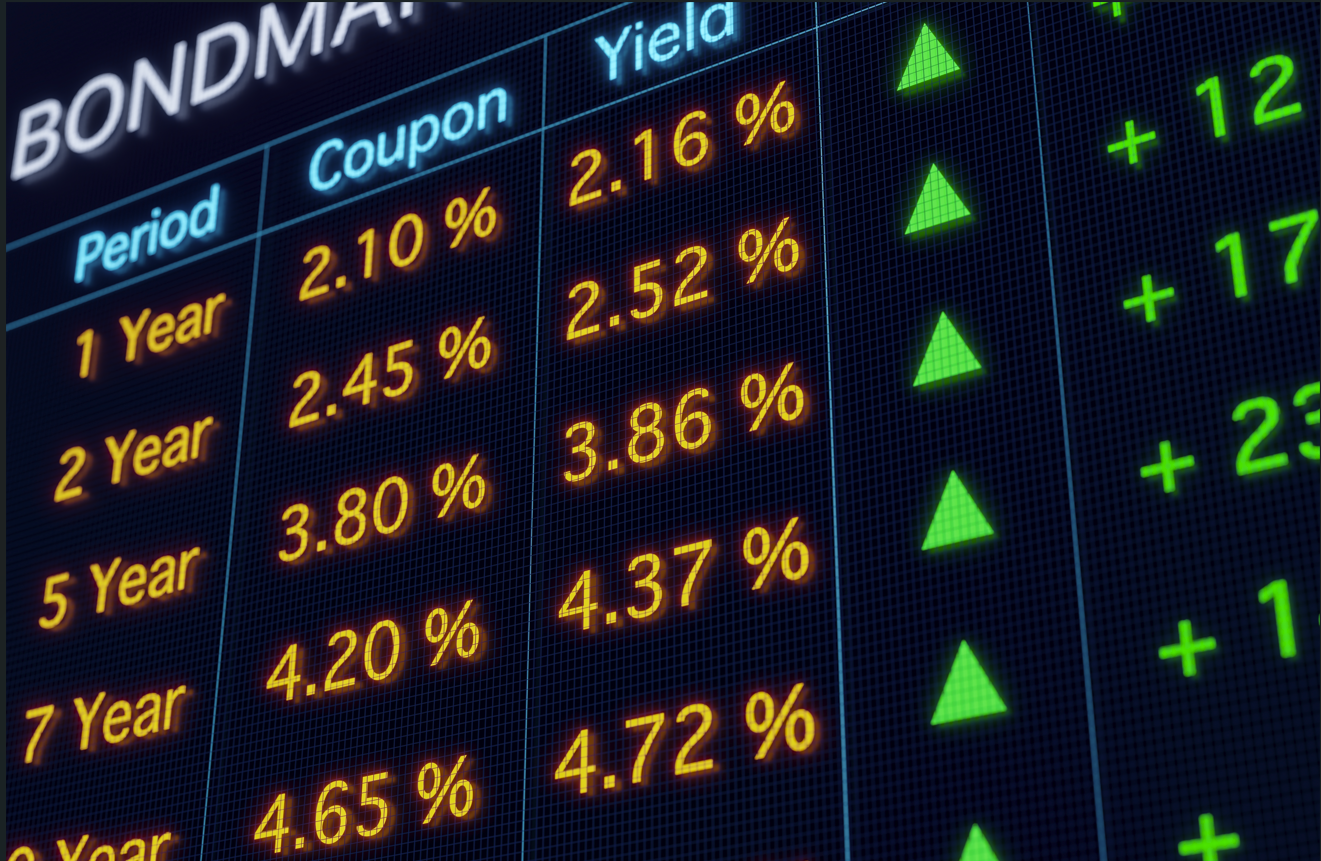
Higher yields on cash have allowed some de-risking.
Changes in sentiment may drive the performance of the Eurozone equity markets, even with disappointing economic data.
Growth stocks are getting the better of their value rivals this year. Still, that doesn’t mean exchange traded funds dedicated to value stocks are delivering losses. Rather, the opposite is true. It’s just that growth stocks are delivered better returns though the first eight months of the year.
We expect yields to fall later this year and into 2024 as inflation continues to cool.
In September, where volatility can strike at any time, investors will want the safety cushion of bonds for their portfolio. At the same time, short duration continues to be the default play as the U.S. Federal Reserve still attempts to cool down inflation further.
The U.S. dollar has dropped to its lowest level against other currencies in 15 months. In this environment, a wide range of assets stand to profit, not least of which is the AI-infused U.S. technology sector. However, no space stands more ready to benefit from this environment than emerging markets..
Today's economic conditions are attractive for BDCs (business development companies), and some benefit from businesses seeking alternative financing sources.
In the final part of our series on global supply chains, portfolio managers Inbok Song and Sherwood Zhang look at the companies that are reconfiguring their networks and portfolio manager Vivek Tanneeru gives his assessment on the investment opportunities.
A hard landing in China would rattle Asian economies.
Oil has entered a new uptrend after finally breaking out from nearly a year-long bottom formation. Support from OPEC+, notably Saudi Arabia’s one million barrel per day production cut for the remainder of the year, has been a major driver of the rally.
Mega-cap stocks continue to dominate the market in 2023. The question is, why? After all, many other great companies have arguably much better valuations and fundamentals.
Innovative provider of custom indexes becomes a key part of a growing suite of VettaFi index solutions, which now power nearly $19 billion in ETFs and other vehicles.
Even though past performance doesn’t guarantee future results, investors should prepare for continued market volatility this month.
Greetings from Europe. I promised to write a letter describing my personal investment portfolio. I still plan to, but it won’t be this week.
High-yield bonds, often referred to as “junk” or “speculative grade,” are corporate bonds that command a higher interest rate than other bonds. This higher yield is essentially compensation for the increased risk of default that investors assume when purchasing these securities.
Resilient consumer spending has been a pillar of the US economy. While activity may soften, we think the consumer will help the coming slowdown stay mild.
An efficient avenue for asset managers and fund issuers to avoid regulatory scrutiny of products with the environmental, social, and governance (ESG) label is to ensure that those funds live up their ESG ETF billing. That can be accomplished with data-intensive approaches.
With government stimulus over, accumulated savings starting to become depleted, rents soaring, and student loans about to switch back on, it appears a credit cycle has begun where borrowers struggle to fulfill their financial commitments.
On the interest rate front, the Federal funds rate is now close to systematic benchmarks that have historically been consistent with prevailing core inflation, nominal GDP growth, and unemployment.
Vanguard has forecasted that inflation will remain sticky, so the U.S. central bank will continue raising rates. But the investment giant also estimates that a recession still won’t hit the U.S. this year.
Tony Davidow, Senior Alternatives Investment Strategist, at Franklin Templeton Institute, shares some takeaways from a panel discussion on the topic.
For some organizations, a partial outsourcing of their investment program is preferable to total outsourcing. Despite this, some OCIO providers will still try very hard to sell companies on a full OCIO solution.
When you step back and think about it, it is hard to believe that this hugely important retirement benefit has only been around for just over 40 years.
I am traveling for business this week, but I’ll return with a fresh interview for Global Macro Update next Friday. For those of you who missed my interview with Louis Gave last week, read on… There’s a reason this was one of our most-watched Global Macro Update interviews of the year.
Conference season has come for Financial Services. Future Proof is coming up and Exchange is right around the corner. Many advisors have complex, busy schedules.
Dina Ting, Franklin Templeton ETFs’ Head of Global Index Portfolio Management, explores the positive trends that are making a case for holding UK equities.
Many investors are starting to look for ways to diversify their portfolios and protect their wealth. One way investors have done so in the past is through investing in gold.
Equity investors should look beyond the hype for companies with clear strategies to profitably monetize the benefits of generative AI.
The August jobs report confirms the labor market's continued slowdown, which is for now consistent with the Fed's soft-landing desires—but not without warning signs.
In this video, Chuck Carnevale, co-founder of FAST Graphs, a.k.a. Mr. Valuation, will guide you through the analysis of consumer staple stocks.
Most portfolios live or die based on their equity allocations. VettaFi is thrilled to announce that they will be hosting an Equity Symposium on September 21st.
August saw modest market pullbacks across the board, as investors were nervous about risk.
Factory order numbers had previously been a source of positivity for the U.S. economy. The tough turn for the economy should remind investors of active ETFs’ ability to respond to a market downturn.
Back in the 1980s, President Reagan took enormous political heat (Sam Donaldson comes to mind) for being fiscally irresponsible. His offense? Presiding over a budget deficit that peaked at 5.9% of GDP in Fiscal Year 1983.
I write a few newsletters, and I frequently get feedback from my subscribers. Sometimes, they’re just saying hello, and sometimes, they’re ripping on me, but sometimes, they’re telling me about things they see in the economy that are of interest.
Powell’s recent Jackson Hole Summit speech was mainly as expected. Well, except for the part where Powell obfuscated the truth behind the surge in inflation.
Diversifying a portfolio means spreading the investments across a variety of asset classes, industries and geographies.
When money becomes less valuable and costs rise, the money you have saved affords you exponentially less. In the short term, you may not notice the difference.
After a slow start to asset gathering, U.S.-listed equity ETFs were in vogue during the summer. At the end of August, the asset category had $165 billion of net inflows, more than $125 billion for fixed income.
In the second part of our series on global supply chains, portfolio managers Inbok Song and Peeyush Mittal examine the regions and countries that may benefit from industries and companies shifting operations.
Seven mega-cap US-based companies – Apple, Microsoft, Amazon, Google, Nvidia, Tesla, and Meta (Facebook) – have stayed top of mind for many investors this year.
Last week, the VettaFi AI Symposium was one of the more popular places to be in the days before Labor Day.
Restricting the money supply will help contain inflation.
This week was packed with several key economic releases that helped provide insight into the overall state of the U.S. economy. Policymakers and advisors closely monitor economic indicators to understand recession risk and the direction of interest rates because the data can ultimately impact business decisions and financial markets.
In general, portfolios can be split into growth assets and principal protecting assets. Growth assets tend to have greater risk coupled with greater income/reward.
Bond investors have been looking for an approach that delivers attractive, repeatable, uncorrelated active returns. Is their wait over?
Last week we changed our economic forecast because the economy has remained stronger than we expected. We delayed the start of the recession to the first quarter of 2024 rather than the last quarter of 2023.
The BRICS’ invitation to six more nations to join their group is an important initiative promoting greater global influence for major EM countries.
As multi-asset income investors, we seek to help a wide range of clients meet their income needs. The benefits of an income-centric approach are especially relevant for investors as they enter retirement – and that’s especially true today. We bring that to life with two case studies.
There are differing opinions all around, but some reputable sources like Goldman Sachs are saying it’s increasingly unlikely. Yet the Fed is going to be raising rates further, from what it looks like because inflation is higher than they want.