Jeff and Ron Muhlenkamp discuss economic data and its influence on the federal funds target range. They also talk about the policy choices of the presidential candidates and the affect they may have on the economy and our investors’ wealth.
Markets changed character to broad-based optimism relating to the economy. The economic picture began to come into focus with inflation continuing to moderate as the economy maintains steady growth and employment. The result was a stark turnaround for economically integrated or interest rate sensitive assets, which resulted in a great quarter for diversified multi-asset portfolios. New Frontier sets a major milestone in Q4, marking 20 years of investing at the end of October.
If UK Chancellor of the Exchequer Rachel Reeves tried to meet all the political demands that have been placed on her, her budget would likely result in disappointing growth and financial instability. Instead, the new government's first budget should be judged according to four longer-term criteria.
Economic data releases have surprised to the upside in recent weeks, but inflation does not remain a threat right now.
The Nasdaq-100 Index (NDX), which is half composed of tech stocks, including a slew of AI names, is usually more volatile in October.
Asia-Pacific economies will benefit from soft landings and easier monetary conditions.
Municipal bonds bucked the seasonal trend and posted strong performance in September.
The markets saw a fifth straight week of gains last week. The S&P 500 closed above 5,800 for the first time, the Dow hit a new record high, and the Nasdaq came within 2% of its all-time high.
Just 5% of board directors are under the age of 50. But research indicates that more age-diverse boards may possess unique business advantages.
While tariffs have been utilized heavily in the past, both their usage and rates have fallen considerably over the past half century as countries have engaged in different stages of trade negotiations.
The Northern Trust Economics team shares its outlook for U.S. growth, employment, inflation and interest rates.
Fed easing cycles and lowered target interest rates impact various economic sectors, such as mortgages, consumer credit and cash investments.
Markets broadened as anticipated. After the strong rally, our investment models advise a reduction in risk-appetite.
One of most dangerous habits of a speculative crowd is the tendency to use unconditional averages and unconditional probabilities regardless of how extreme market conditions have become. This is like stepping into a house with two rooms, one with the temperature at 0 degrees and one at 140 degrees, and expecting a temperature of 70 either way.
We are excited to release our October 2024 Chart Pack, our visual quarterly designed to walk investors through what’s happening in markets.
The bar is raised for Q3. With a handful of earnings reports delivered from major banks, companies from other sectors begin now to report results to the street.
My father is 86 and the topic of financial markets and his investment accounts invariably comes up at every family gathering. Mainly, he talks about how my mother and he have lived from their retirement accounts since they both retired more than 25 years ago.
A tariff is a tax assessed on imports. Historically, tariffs have been enacted to generate tax revenue or to protect domestic producers from competition in the form of cheaper foreign goods. In essence, tariffs artificially make domestically produced goods more competitive in the local market by making imports more expensive.
In this article, Russ Koesterich discusses gold may continue to serve as a store of value in the current environment.
Turbulent market conditions can make anyone nervous. Here's what investors should know about dealing with them.
New business formations have held up, but closures are also rising.
Investor Insights explores current investor sentiment, comments on market participation, and shows the current ranking of market sectors.
This unique bull market is still young relative to history and, for now, supported by relatively healthy breadth and broadening participation.
This past week saw a notable surge in the stock market, pushing it to all-time highs, despite mixed economic data. Inflation figures, jobless claims, and sentiment reports have been uneven, but markets remain resilient, with the VIX hovering around 20—a sign that fear persists among investors.
Since hitting the October 12, 2022, low, the S&P 500 has climbed 65.9%! By historical standards, there is still plenty of room for the current bull market to run
As the Fed begins cutting rates, October’s surprisingly strong US employment report only adds to the data pointing to a soft landing, despite lingering concerns of a downturn. We expect the economic expansion to continue, which has important implications for multi-asset strategies.
When we look at the Q3 earnings season, the Magnificent Seven have been driving much of the S&P 500’s growth since 2022. As these companies get larger and more mature, maintaining huge growth rates will become more difficult, especially considering the valuations they’re trading at.
On the latest edition of Market Week in Review, Investment Strategist BeiChen Lin assessed what the latest U.S. economic data suggests about the health of the nation’s economy. He also discussed the pullback in Chinese equities and the rise in volatility expectations for the U.S. stock market.
The Bureau of Economic Analysis (BEA) recently released its second-quarter GDP report for 2024, showcasing a 2.96% growth rate. This number has sparked discussions among investors and analysts, particularly those predicting an imminent recession.
The election could alter the thriving relations between the U.S. and Europe.
VettaFi discusses oil’s recent price moves and energy stocks as a geopolitical hedge.
Cash strategies may seem safe, but inflation can bite into returns. Instead, investors can try to outperform inflation with equities.
The $20 billion club is a group of pension plans near $20 billion and more in global pension liability. We have been reporting on this group since 2011.
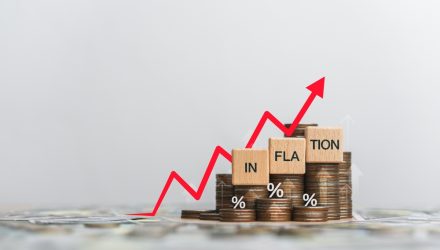
When inflation begins to upend financial markets, as it has over the past few years, it represents a tremendous disruption.
Has the Federal Reserve achieved an economic "soft landing"? A resilient U.S. economy suggests it may have.
The disruptive effects of the pandemic are still reverberating across the economy and giving incorrect signs, in this case, of the U.S. labor market.
Global equity markets continued to rally throughout the third quarter, with strong positive stock performance from the U.S., international developed, and emerging markets. The two biggest narratives that have unfolded recently center on the U.S. and China.
The stock and bond markets were not spooked in September. The S&P 500 had its best September in the last 11 years with a +2% performance.
Exchange-traded funds (ETFs) have grown in popularity as one of the most flexible and accessible investment vehicles available today. Offering a blend of stock-like liquidity and mutual fund-like diversification, ETFs can serve as a core component in the portfolios of both novice and experienced investors
Interest rates are falling but growth is holding up. Still, we see ways to proactively shore up private allocations.
There are two types of economists in the world…demand-siders and supply-siders. Without digging too deeply, one huge difference shows up in government policy.
The need for old age support is on the rise, as is its cost.
When most people hear the word “risk,” they think about wild market swings, scary headlines, and losing money overnight, but Howard Marks, Co-Chairman and Co-Founder of Oaktree Capital Management, takes a different approach. In his new video series How to Think About Risk, Marks digs deep into what risk is and how investors should handle it. Spoiler alert: It’s not just about volatility.
Everything I’ve learned and experienced in 50+ years of watching the economy tells me not to expect a soft landing. But maybe that’s because I’ve never actually seen one.
With over 36,000 metric tons in reserves—about one-fifth of all the gold ever mined—central banks know something we should too: Gold is the ultimate safety net.
The latest Employment Situation Report released on October 4, 2024, showed nonfarm payrolls increasing by 254,000 in September, with the unemployment rate holding steady at 4.1%.
As the Fed shifts its stance, investors must now weigh the broader economic implications.
For decades, a key component of many investors’ portfolios was a fixed income ladder. It was intended to provide ballast to the more volatile equity allocation and help reduce interest-rate risk.
Commodity returns are hard to predict, yet all commodities have something in common—prices that tend to return to their long-run average, a characteristic described as mean reversion. For investors, this behavior could offer an exciting opportunity to improve long-term performance potential.
China’s leaders appear to be back on a pragmatic macro policy path, but more course corrections will be required to change the direction of the world’s second-largest economy. Beijing must continue to be less stubborn, and we will need to be patient.