Dan Suzuki analyzes current and historical trends in investors' stock, bond, and cash holdings to assess whether this "cash on the sidelines" narrative could be a valid catalyst for pushing the stock market to new highs.
Assets in money market funds reached an all-time high of $7 trillion this past month. Now that rates are moving lower, money market yields may not be as attractive to many investors and assets may gradually leave money funds.
A couple of weeks ago, we wrote about how the deficit had come back into focus for the U.S. financial markets.
At the 2018 Berkshire Annual Meeting, Buffett noted that “multiple times in my life, people have felt the country was more divided than ever.
We launched QuantStreet a little over three years ago, and our first accounts went live as of December 2021.
The S&P 500 earnings growth rate will likely come in just below the 6% mark for the third quarter.
In their 2025 outlook, Head of Americas Equities Marc Pinto and Head of EMEA and Asia Pacific Equities Lucas Klein say a changing macroeconomic backdrop could create new pockets of leadership in global equity markets.
Our research suggests that healthcare firms with sound pay practices may yield healthier returns.
We compare investor risk-taking behaviors at the start of the bull market with those nearly 16 years later. We also analyze key market areas that can offer essential diversification to help manage overall portfolio risk.
While politics garner headlines, fundamentals drive the market over the long term.
The Fed could be ‘slower to lower,' while the Trend continues to rise, with an overly optimistic Crowd due to seasonality and post-election trends.
The WisdomTree BioRevolution Fund (WDNA) is showing signs of recovery, reflecting renewed investor confidence in biotechnology innovation.
The 2024 wild ride has proven to be a continuation of last year’s.
International markets are expected to clear the hurdles of uncertain trade policy, tighter fiscal policy and slower than average economic growth to support solid overall returns.
With human rights regulations expanding, investors need a broader approach to assessing risk and opportunity.
When it comes to personalized investment strategies, multiple perspectives come into play: the client, the provider and the advisor.
It’s hard to keep track of all the theories about inflation. Remember policymakers and analysts blaming the surge in inflation in 2021-22 on supply-chain disruptions, too much government spending, and Putin invading Ukraine? Now some are saying that tariffs and deportations are going to cause a second surge in inflation.
Astoria rounds up its 10 ETFs for 2025, providing unique thought leadership and actionable investment ideas.
As a result of the election and rate cuts, the stock market indices surged to new highs in anticipation of lower taxes & looser regulations.
Expectations for solid corporate earnings drove our U.S. and Japanese equity overweights this year. They have delivered, showing that fundamentals are key. Earnings strength could matter more to equity investors in 2025 over valuations.
Today’s video is another in the continuing series of videos where we are looking for value in each of the 10 major sectors as reported by Standard & Poor’s.
Credit spreads are critical to understanding market sentiment and predicting potential stock market downturns.
The question on “everyone’s” mind, whether the back or the front, is where will the stock market be in two, three, six years?
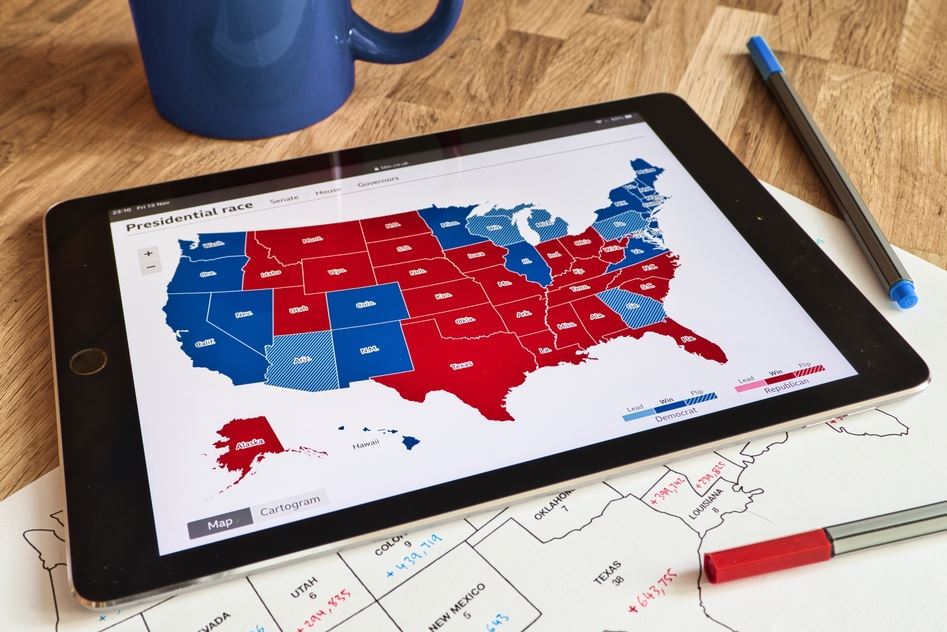
Trump's election win spurred market optimism, driving rallies in equities, crypto, and cyclical sector.
As Germany and France head into another year of near-zero growth, it is clear that Keynesian stimulus alone cannot pull them out of their current malaise. To regain the dynamism and flexibility needed to weather US President-elect Donald Trump’s tariffs, Europe’s largest economies must pursue far-reaching structural reforms.
Let’s take a look at five of VettaFi's articles that significantly resonated with the community in 2024.
Policy changes could reshape return potential for companies across the US market. Here’s how investors can start thinking about the challenges ahead.
It’s been nearly two years since generative artificial intelligence (AI) took the world by storm, with the release of large language models like ChatGPT, Copilot, and Gemini dazzling humankind with their ability to interpret human requests and respond with the desired output.
You're interested in investing in municipal bonds, but which type—general obligation or revenue—is best for you? We break it down.
Wholesale elimination of tax exemption isn’t likely, but certain types of muni bonds could be targets.
Another election season has come to an end. While there are opposing feelings about the outcome of the election, I think everyone agrees that they are happy it is over.
The U.S. economy faces growing risks, from a surging Federal deficit to geopolitical uncertainty. Investors must assess how these factors could ignite market instability and take proactive steps to safeguard their portfolios.
As students across the country start to prepare for year-end exams, there are valuable lessons we can take from the classroom.
AI can be a powerful tool, but one that demands thoughtful, measured implementation. Taking thoughtful steps now to integrate and innovate with AI will keep you competitive. Turn your back on it and you’re probably not in business in the long run.
We are prone to animal analogies when describing disorderly situations: like herding cats, like a barrel full of monkeys, like a dog’s breakfast.
Some post-election stock market excitement has receded, but the story of strong breadth—which predated the election—has not changed and continues to support the market for now.
Not everyone is ready to give thanks for moderating food prices.
Going into Thanksgiving week, we are reassured of two things we already knew about artificial intelligence, but that could play a role in portfolio allocation decisions for the new year.
On whole, EM growth has been resilient, while inflation has fallen closer to normal levels.
Following President Trump’s re-election, the S&P 500 has seen an impressive surge, climbing past 6,000 and sparking significant optimism in the financial markets. Unsurprisingly, the rush by perma-bulls to make long-term predictions is remarkable.
In the weeks surrounding the US election, US bond yields climbed sharply, reflecting speculation that President-elect Trump’s policies could lead to higher inflation and a widening federal deficit.
For most of the last fifty years, fixed income investing has been characterized by owning some combination of Municipals, Corporates, Treasuries and Agency Mortgage-Backed Securities.
he Tax Cut and Jobs Act (TCJA) was passed in 2017, otherwise known as the Trump Tax Cuts.
As we look through our financial lens and reflect upon everything that has transpired in 2024, we have compiled a list of the top ten economic and market-oriented things that we are most grateful for this year.
This week’s data and market momentum solidified the case for a resilient U.S. economy, defying concerns of an imminent slowdown. Initial jobless claims dropped to a five-month low, reinforcing the strength of the labor market, while GDP growth projections hover around an impressive 2.5%.
You won’t catch a fish unless your line is in the water, and you won’t benefit from the market’s potential move higher unless you are invested.
There has been a lot of talk about (in)efficiencies in government spending, both before and since the election. Much of the conversation has been driven by Elon Musk, who will co-head the Department of Government Efficiency (DOGE, not an actual government agency). Musk has boasted he could find $2 trillion to cut from the federal budget.
New ideas are never as easy as they sound in campaigns.
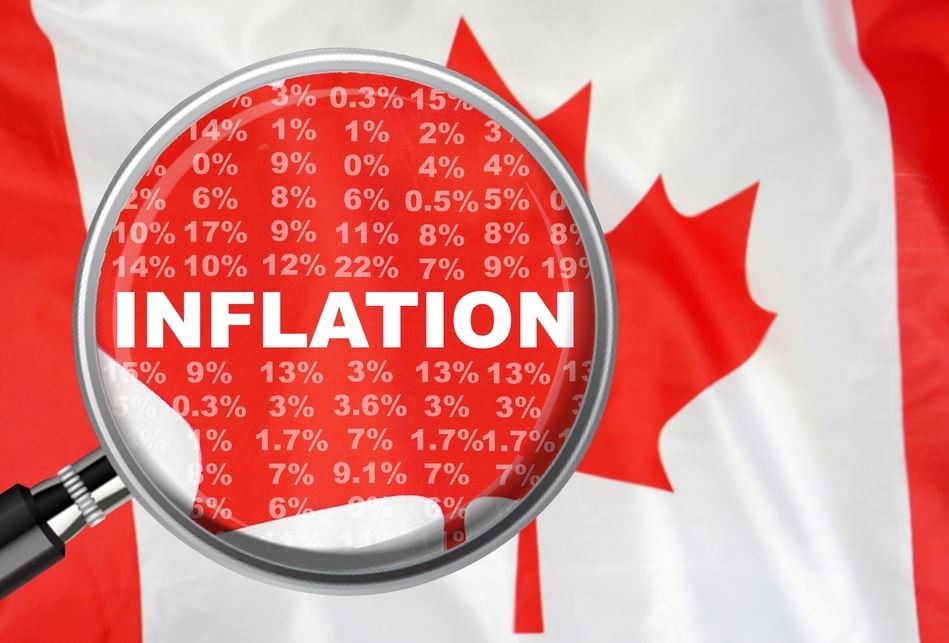
On the latest edition of Market Week in Review, Investment Strategist BeiChen Lin reviewed the latest inflation numbers from Canada.
Some retirees say they could have planned better for lifetime income—helpful insight for current participants.