How can you help a family foundation plan for rapid growth in a way that is consistent with their wealth management objectives?
Are proposed fiscal policies and student debt forgiveness too much of a good thing?
Emerging-market investors seem to have a lot going for them right now -- and the renewed weakness in the U.S. dollar is adding to the bullish mood.
If, however, the pandemic continues into summer, it will mean the Gripping Hand is still squeezing us. Employment won’t recover and more small businesses will fail. This relief package, as large as it is, may prove necessary and maybe even too small.
Happy Year of the Ox! Today China and a number of other Asian countries celebrate the Lunar New Year, also known as the Spring Festival.
Rob Arnott: “There hasn’t been a better time to be a value investor at any other time in my career. I look back at the tech bubble and I never thought I would see valuations stretched the way they were then. We're back to that, and then some." We invite you to revisit “Reports of Value’s Death Have Been Greatly Exaggerated” now published in the Financial Analysts Journal.
Following the rioting at the Capitol building on January 6, Twitter permanently deleted President Trump’s Twitter account. Twitter accused Trump of repeated and severe violations of its Civic Integrity policy. While applauded by many, that move was controversial on the basis that it inhibited free speech. My guest today, Barry Ritholtz, defended Twitter’s action on the basis that Twitter is analogous to the host of a dinner party, and as the host it can throw out guests it does not like. Barry and I had an email exchange about that analogy, and we agreed to continue our discussion in this podcast.
I don’t say this often, but Fed Chairman Jerome Powell is wrong. Regular readers of our investor letters and other publications will recall that we regularly cite Chairman Powell as doing the best he can with the levers he has while arguing correctly for others to do their part.
Maybe you’ve heard: The pandemic is killing cities, fueling a rush to spacious houses in the suburbs. But beyond pricey New York and San Francisco, real estate demand is booming in downtowns across America.
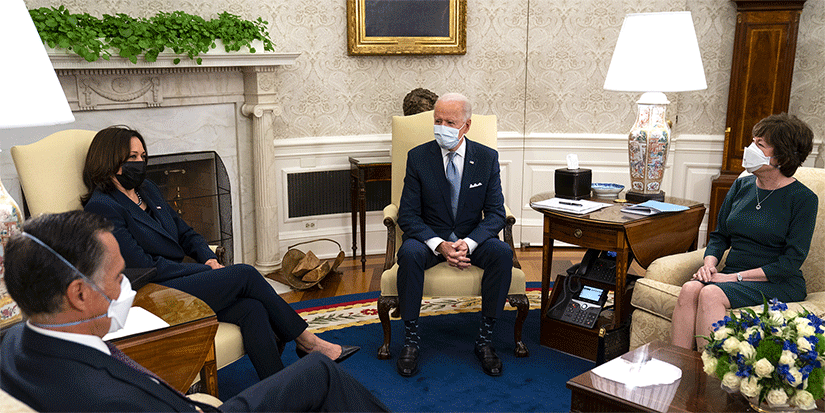
Joe Biden’s administration has dedicated its first few weeks in office to spending more money on pandemic relief -- and shrugged off warnings that the economy may overheat as a result.
Rick Rieder and team think that today’s potent policy cocktail holds important implications for the path of economic growth, markets and the value of a dollar.
It goes without saying that COVID-19 and the pandemic has been and is a terrible thing. People have gotten terribly sick and many have even succumbed to this horrible virus. Clearly, there is nothing good or positive that can be said about this scourge from a purely human or humanity perspective.
Fortunately, human behavior has a history of repeating itself at extremes. The worst buying decisions are made at the top. Just like bonds, the convexity is true when yields rise going forward. It’s a slippery slope and could be vexing.
I have had it with people putting their cute kids to their laps on Zoom and introducing their dogs and cats on camera so we can all ooh and aah about them.
Any surge in inflation will likely not last for long, but Italy's economic troubles and the shift in rental markets may endure.
It’s hoped that an extra $1,400 in the pockets of everyday Americans may help support lagging U.S. consumption. We believe the stimulus, along with improved vaccine roll out, may also help support commercial air travel.
Effective vaccines, historic fiscal stimulus, Democratic Party control of the legislature, even more stimulus, reopening economies, 6% U.S. real GDP (gross domestic product) growth, 25% U.S. EPS (earnings per share) growth, and maybe even an infrastructure plan sprinkled on top.
The 4th quarter of 2020 began with tremendous anxiety and divisiveness around the Presidential election. Investment markets reflected that anxiety.
Despite a pandemic, tariffs and superpower political tensions, the resilience of the Chinese economy was clear in 2020. In this issue of Sinology, we highlight five macro trends from 2020 that investors should watch this year.
Let’s look at the correlation between size of independent advisory firms and the average wealth of the clients they serve.
When investors talk about “the stock market” they are most often referring to an index that tracks stocks only in their home country. This “home bias” is evident when it comes to the make-up of investors’ stock portfolios. Investors around the world tend to hold mostly domestic stocks.
Nobody loves oil companies. Tesla Inc., the emblem of an emissions-free future, is worth more today than the top five Western supermajors combined.
Advisor Perspectives, the most-read eNewsletter for financial advisors as ranked by the Erdos & Morgan “FAMOUS” Study in 2019 and 2020, has announced its Venerated Voices™ awards for commentaries published in 2020.
Emerging markets seek a sustainable solution to debts, and the Fed takes a step toward sustainability.
Nothing so animates a speculative herd as a parabolic price advance in an asset detached from any standard of value. I am convinced that future generations will use the present moment to define the concept of a reckless speculative extreme, in the same way our generation uses “1929” and “2000.”
Those of you with kids and grandkids may at some point have stepped inside a GameStop. If so, you might be familiar with the video game retailer’s tagline: “Power to the players.”
I’m often asked if I foresee inflation or deflation. Both are possible in their own ways, and frankly I feel a little funny telling people I think we will see both. I would just like to have a growing economy and dependable money that holds its value.
Although many companies in consumer-oriented industries continue to struggle, others have benefitted from society’s need to socially distance. Discussed here are five stocks that have successfully accelerated digital adoption through the pandemic along with three in hard-hit categories poised to thrive once coronavirus inoculations become widespread.
I have a problem with both growth and value demagogues.
AT&T reported earnings today and although they beat expectations, the stock is trading down over 2% so far. The company was light on revenues compared to 2019 but did report free cash flow for the year of $27.5 billion, slightly below the $29 billion reported in 2019.
The future of financial advice is evolving. The real value of an advisor not only requires the ability to build a plan and portfolio, but to guide clients through the process, unearth their values and emotions, and change their behavior for the better. A realm of the relationship is called the human side of money. Here today to talk about that human side and how advisors can leverage the science of behavioral finance is Brendan Frazier.
Here’s how to avoid being misunderstood by a prospect or client.
It has been my tradition to informally rate the investment-related books I read in the past year. I have also included some novels and books of general interest. Here is my list of winners and losers.
Read our year-ahead report to learn how this shift could lead to investment opportunities in 2021 and to understand RBA's positioning.
There are two incorrect assumptions in most stock return forecasts.
By the end of the first decade of the 19th century, everyone in the U.S. was accepting denominations printed on paper by banks as payments in dollars. Americans had invented retail credit banking and discovered how much they liked it.
As expected, the new administration has hit the ground running. In his first two days in office, President Biden issued executive orders which rescinded a number of previous directives or were aimed at ending the pandemic and easing the pandemic’s economic impact.
In the years since the end of the gold standard, there’s been a significant lack of discipline in government spending. Today, the federal debt is closing in on an astronomical $28 trillion, which is more than 130% of the size of the U.S. economy.
For European banks’ stockholders, 2020 was a year to forget. But bank bondholders enjoyed positive returns and may overcome COVID-19 challenges again in 2021, backed by solid balance sheets and supportive regulatory conditions.
Despite some news reports that suggest the green ambitions of the US Democratic Party could spell doom and gloom for traditional oil and gas companies.
Joe Biden takes the Presidential oath of office this week in the U.S., marking the end of a long U.S. political contest; a year of political challenges is just getting started overseas.
Janet Yellen invoked an enduring era of low interest rates in delivering the Biden administration’s opening argument to lawmakers for its $1.9 trillion Covid-19 relief proposal.
Technology stocks including ACI Worldwide Inc. appear to be the most likely takeover candidates in 2021 as the outlook for merger and acquisition activity brightens with companies seeking growth opportunities.
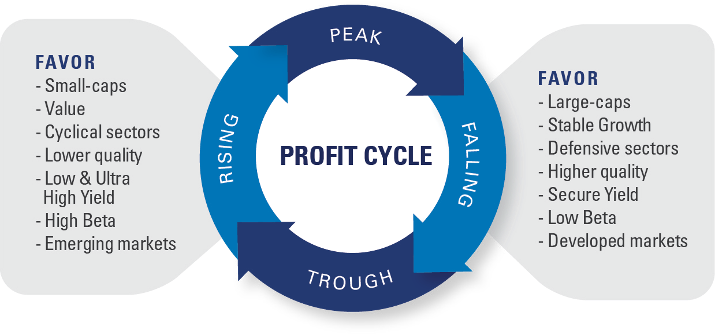
Too often analysts report characteristics of the ‘market’ without calling attention to the limited scope of the analysis or the breadth and depth of additional options available to investors within the same asset class. When markets are in a bubble, they tend to have been driven by Growth stocks, not Value, meaning that a market in a bubble might be a strong indicator of an opportune time to shift into Value.
The double-dip recession so many feared didn't arrive in the fourth quarter of 2020, and it certainly doesn't look like it will happen in early 2021, either.
The speculative “V” is one of the most interesting and challenging features of the market cycle. For passive investors, it can be a period of exhilaration followed by panic.
Emerging-market stocks rebounded in 2020 even as the COVID-19 pandemic spread globally. As vaccines and other favorable conditions unfold, investors have good reasons to consider EM equities in 2021 while strategically considering their potential risks.
In September 2019, I wrote “NFIB Survey Trips Economic Alarms,” Of course, it was just a few short months later the U.S. economy fell into the deepest recession since the “Great Depression.” The latest NFIB survey is sending a strong warning to investors piling into small-cap stocks.
Today we’ll begin by looking at new virus developments, some of which are good, some very good, and some frightening. We (the entire world) are in a very tight race with dire consequences if we lose.
Founding Father Benjamin Franklin said it best: “They who can give up essential liberty to obtain a little temporary safety deserve neither liberty nor safety.” In this light, what are we to make of Trump’s social media suspension?