The GDP report for the first quarter of the year showed a very engaged business sector as it rushed to try to minimize, as much as possible, the future impact of higher tariffs.
April was a volatile and policy-sensitive month in the markets. Every week, my colleagues and I were joined by Professor Jeremy Siegel to discuss how macroeconomic data, Federal Reserve policy and the variety of tariff proposals from President Trump shaped sentiment and the investment landscape.
Economic data can be soft or hard. “Soft” data reflects attitudes, expectations, opinions, and feelings. It’s a step removed from the “hard” data reflecting actual events. Soft data is still valuable because future expectations shape the hard data that follows.
At the end of April, U.S.-listed ETFs gathered approximately $360 billion of new money.
Amazon.com Inc. said it’s bracing for a tougher business climate in the coming months, echoing concerns from a range of companies that tariffs and related economic turmoil could crimp consumer spending.
University of Michigan Consumer Sentiment is a so-called "soft" report, not reflecting "hard" data like GDP or CPI. It moved markets recently, so how much attention should investors pay?
Uncertainty reigned through April and likely will continue to do so, at least in the near term. Markets have reacted, both negatively and positively, to every headline coming out of Washington.
Businesses may face challenges but there are also a number of tax-smart strategies that can help mitigate tax liability and enhance efficiency. Our Bill Cass discusses several tax-smart strategies to consider.
Like sailors lured by the Sirens' song, today’s investors risk being captivated by seductive narratives in the market. While diversification remains a time-tested strategy for building wealth, we examine the risks and returns investors are embracing today.
In the early years of the artificial intelligence (AI) race, performance benchmarks told a clear story: a handful of frontier models, developed by a few dominant labs, consistently outperformed the rest. In 2024, that changed.
Vanguard is well-known for making investing more accessible, affordable, and efficient for investors over the past 50 years.
The US Federal Reserve is undertaking a major rethink of how it manages the world’s largest economy.
Famous gold skeptic Warren Buffett is right about the dangers of inflation when it comes to non-producing assets, but he’s never been a fan of gold. Monetary Metals has transformed gold into a productive asset by generating a yield on gold, paid in gold, proving Buffett wrong about gold and giving investors new ways to own this timeless asset.
SEI® (NASDAQ:SEIC) today announced that Summit Wealth Group, a fast-growing enterprise advisor practice, has selected SEI to support the firm’s vision and evolution for strategic growth.
The Covid-19 pandemic brought some big shifts in the US labor market. The biggest was the departure of millions of older workers, ending a decades-long rise in employment and labor-force participation rates for those 65 and older.
Even in normal times, managing an investment program is a challenging job. But when you add on tariffs and trade wars, it's bound to lead to some sleepless nights. Learn how an OCIO firm can provide relief.
Stable value funds can offer capital preservation and stable returns. Our Mike Dullaghan explains the key role of stable value in long-term retirement savings.
A massive budget bill of tax and spending cuts, as well as a debt ceiling debate loom as Congress returns from its Easter recess.
Doug Drabik discusses fixed income market conditions and offers insight for bond investors.
First, let’s check the market action. Fortunately for stocks, the public has come around to a thesis that the sky is not falling, though there are a ton of market viewers who remain decidedly skeptical that the worst is behind us.
The real estate industry is at the forefront of a lobbying blitz to sway Congress to preserve the carried interest tax break that President Donald Trump wants to abolish in a giant tax bill pending in Congress.
Sharp losses in investment grade (IG) corporate bonds this month have reminded us of the potential advantages of rules-based fixed income ladders.
Recession risk remains elevated, likely only receding with a fuller "pivot" in tariff-related uncertainty. While every recession is unique, history can provide a guide.
Think of the drafting process like investing—scouts meticulously rank players based on their strength, speed, flexibility, and mental acuity, much like we analyze the economy and financial markets to shape our outlook. The true value of these players might take years to unfold...
Barry Ritholtz, Chairman and Chief Investment Officer of Ritholtz Wealth Management, breaks down the current market environment and discusses key ideas from his latest book, How Not to Invest. VettaFi’s Todd Rosenbluth offers highlights from the 2025 etf.com Awards.
US stocks traded steady on Tuesday as traders digested a slew of corporate earnings results and parsed comments from the White House about trade negotiations.
Social Security does face challenges. The trust fund reserves, built up during years when payroll taxes exceeded payouts, are projected to run dry around 2033. If Congress does nothing, benefits will need to be cut by about 20%. That’s serious, but it’s a solvency issue, not a scam.
The sole pursuit of shareholder value — i.e. of maximizing stock price — leads not to a focus on creating the greatest possible value for the firm’s customers, but to a focus on financial metrics and financial engineering.
American leaders are now engaged in an effort to reverse the loss of manufacturing. The hope is to restore a path to prosperity for struggling regions and their residents. Tariffs are being employed liberally as a means to this end.
Peak earnings season kicks off this week, with 7,600 companies, or 70% of our equity universe expected to report over the next three weeks.
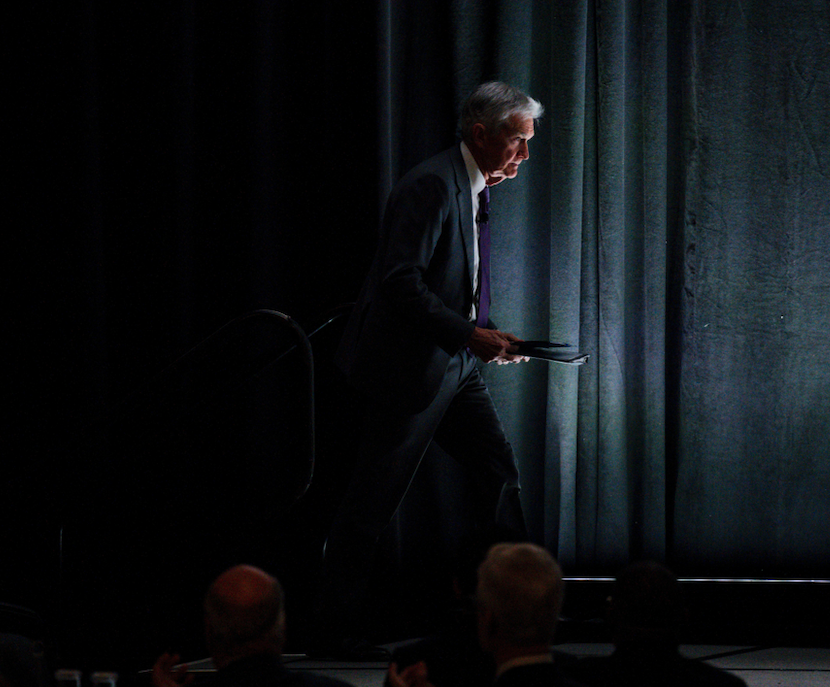
Although President Trump has said he has no intention of firing Fed Chair Powell, the Trump administration may be testing the laws underpinning Fed independence.
The Fed’s in a bind. Policy uncertainty is high. And tariffs are likely to hit the U.S. economy with a “stagflation-lite” impulse in coming quarters—weaker growth and higher prices.
Local currency rates and FX screen very attractive, while hard currency credit is neutral+.
With uncertainty rising and credit markets flashing early warning signs, RBA explains why now might be the time to sidestep risk—and where investors can still find attractive, high-quality returns in fixed income.
High-yield bonds may be an attractive choice for investors looking to rebalance portfolios.
Unexpected wider and larger-scope tariff announcements have sent tremors through bond and equity markets, resulting in a brisk sell-off that signals investors’ caution.
On this episode of the “ETF of the Week” podcast, VettaFi’s Head of Research Todd Rosenbluth talked about the the WisdomTree Floating Rate Treasury Fund (USFR) with Money Life host Chuck Jaffe. The pair covered a range of topics related to the fund, providing investors with a deeper understanding of the ETF.
In this article, I will discuss another advantage of using the actuarial approach for retirement planning — helping your clients determine when they can afford to make big-ticket item purchases.
Emerging-market stocks rose for a second day, with the benchmark gauge heading for a three-week high amid optimism over corporate earnings.
The “Sell America” trade that gripped markets this month has left a potentially lasting dent in investors’ willingness to hold the US government’s longest-maturity debt, a mainstay of its deficit-financing toolkit.
The last time Big Tech delivered earnings, Donald Trump had just started his second term, stocks were soaring on expectations of a pro-growth agenda and investors’ main worry was how long it would take companies to convert their artificial intelligence spending into profits.
It’s harder to make it as a professional stock picker than it used to be, which is saying a lot because it was never easy.
Chief Economist Eugenio J. Alemán discusses current economic conditions.
Historically the United States dollar strengthens when U.S. Treasury yields rise. But the reverse happened in April after the White House announced widespread tariffs.
I don’t believe the current level of tariffs will be maintained. I think most of them will be walked back, and the country will adapt to, say, a 10% tariff here and there. The Chinese (and a few other countries) tariffs are different in that they will have a more significant impact.
Five pivotal U.S. economic considerations, including tariffs, monetary policy, fiscal policy, debt overhang, and demographics, are aligning to depress economic growth for the balance of this year and into 2026.
U.S. policy uncertainty and the ebbs and flows of AI advancement are likely to stoke continued volatility in the world’s stock markets.
In the Middle Ages, a common form of punishment was some form of mutilation, which included cutting off the nose of a prisoner or purposefully marring one’s own appearance before the arrival of conquering armies
There's a tectonic shift unfolding in global finance—subtle in appearance, but profound in implication. The traditional signposts of market anxiety—stocks, bonds, even crypto—are being bypassed in favor of something far older: gold.
Investors are currently using leveraged ETFs to embrace market volatility, particularly in disruptive technology.