Market leadership is shifting and the once-dominant Magnificent 7 may no longer be so magnificent. Our latest report reveals why broader opportunities are emerging across sectors and regions, with quality, value, and growth converging in unexpected places.
The economic narrative took a decisive turn last week. A stunning collapse in the trade deficit suggests we could be looking at near 4% GDP growth in the second quarter—a massive upward revision from the consensus of 2%.
The “sell and stay” approach in wealth management mergers and acquisitions (M&A) is a transformative trend reshaping how advisors approach their succession planning and business transitions.
Treasuries have been the default go-to safe haven bonds during times of heavy market volatility. But with Moody’s recent downgrade, an opportunity for mortgage-backed securities (MBS) exists.
Mortgage rates last week climbed to their highest levels since the beginning of the year on elevated economic risks. With markets still hopeful of at least one interest rate cut in the second half, the real estate sector stands poised to bounce back in a lower rate environment.
On this week’s episode of ETF Prime, VettaFi’s Head of Research Todd Rosenbluth discusses the rise of active ETFs and anticipated ETF share class structure. Later, Fidelity’s Eric Granat and Christine Thorpe spotlight the Fidelity Hedged Equity ETF (FHEQ) and the Fidelity Total Bond ETF (FBND).
Nvidia Corp. shares have staged a $1 trillion rebound in two months — and investors are betting the rally has further to go as fears about the chipmaker give way to optimism.
One thing just about everyone will tell you about divorce is that it’s expensive. There are several reasons for that, chiefly the lack of education and awareness and the habitual use of lawyers rather than mediators.
Signs are emerging that the Trump administration may be less willing to give up control of mortgage giants Fannie Mae and Freddie Mac than investors have bargained for, as policymakers scrounge for ways to close US budget gaps.
Our role isn’t just to manage assets; it’s to help clients stay grounded. We remind clients that investing is a long-term journey, and short-term volatility doesn’t have to knock them off course.
Here are three universal, time-tested principles, that will protect you from“over-delivering” with information and value, and ultimately missing out on the opportunity to add a new, paying client.
As investors grapple with nagging macro uncertainty, market volatility’s likely to continue. But we also see reasons for optimism — and new opportunities.
Treasury floating rate notes and ETFs like the WisdomTree Floating Rate Treasury Fund (USFR) are often seen as beneficial tools to fixed income investors when yields on U.S. government debt are rising.
Conventional wisdom was that the tariffs imposed by the Trump Administration would cause higher inflation and slower growth – stagflation as far as the eye could see. But this past week brought economic news that defied this prediction.
This past week, news flow around policy came in hot and heavy, with President Trump’s ‘Big, Beautiful’ tax cut bill passing the House of Representatives, and Trump threatening 50% tariffs on the European Union (EU).
Amid a fair amount of market tumult, we wrote two months ago that the best course of action was to stay invested in roughly the same portfolios that we’ve had throughout, and let the market stabilize.
Most clients are relatively conservative when it comes to determining how much they can afford to spend in retirement. All things being equal, clients would generally rather die with too much money than too little.
This article presents a different perspective on the question of why bond yields are rising. I focus on the difference between narratives and fundamentals.
Last week's economic data presented a mixed but generally more positive outlook. Inflation continued its downward trend in April.
Similar to the equity market’s response to the recently announced tariffs, the bond market responded with a widening of credit spreads. These spreads represent the difference in yield between a U.S. Treasury bond and other bonds of the same maturity but different credit quality.
As discussions about reshoring continue to dominate economic policy debates, VettaFi hosted a timely webcast with Dr. Daniela Rus, director of MIT’s Computer Science and AI Lab (CSAIL).
For anyone on Wall Street still clinging to a time-honored macro-investing playbook, Trump 2.0 has been a source of endless punishment.
Wall Street banks are reinforcing their calls that the dollar will weaken further, hit by interest-rate cuts, slowing economic growth and President Donald Trump’s trade and tax policies.
The House passed a comprehensive tax bill to avoid an expiration of the 2017 Tax Cuts and Jobs Act (TCJA) at the end of the year.
Chief Economist Eugenio J. Alemán discusses current economic conditions.
Assessment and selection of covered call funds is based on criteria like total return, distribution rate (sometimes referred to as yield), and fees.
With current home sales at historical lows and mortgage rates hovering between 6% and 7%, homeowners who are locked into previously secured low-interest mortgages remain hesitant to sell. In fact, existing home sales have reached depressed levels unseen in three to four decades.
Corporate credit spreads, whether investment grade or high yield, can often hint at hiccups in the stock market and the economy. But they tend to keep a low profile.
Every year, a large number of ETFs launch in December, aiming to get the benefit of a fresh calendar year of performance.
From equities to fixed income to options-based ETFs, we look at the areas of the market finding the most traction in 2025.
Many investors have underweighted high yield bond ETF strategies in recent years, satisfied with the opportunities found in other segments of the fixed income market.
There could be a silver lining in the volatile clouds hovering above the bond markets. Investors may want to give municipal bonds a closer look given their sound fundamentals.
Remember last July and August when the yen carry trade blew up? At the time, the central bank surprised the market by signaling a faster pace of rate hikes than expected. Investors sold foreign currency, bought back yen and sent markets into a tailspin.
The "One Big Beautiful Bill" tax-and-spending plan was passed by the House of Representatives and now moves on to the Senate. Here's what's in it.
Two of Wall Street’s top investment banks cautioned that the impact of a court ruling striking down many of President Donald Trump’s tariff measures may prove limited, given that the administration has other avenues to impose import duties.
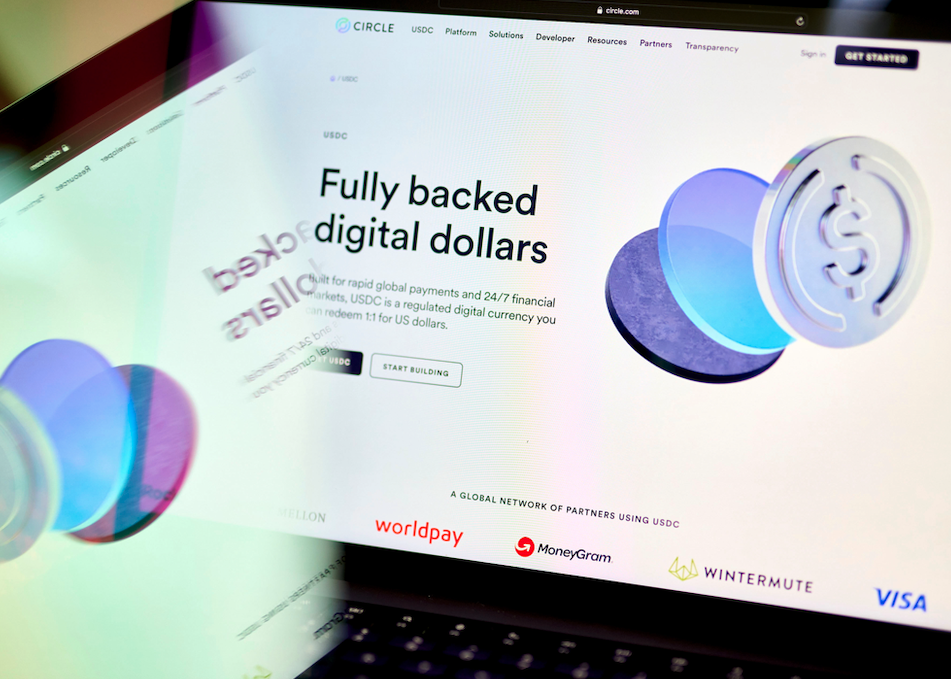
A dollar is a dollar, whether spat out by an ATM or digitally issued on the blockchain. That’s the promise of Circle Internet Group Inc., one of the biggest issuers of stablecoins designed to emulate fiat money like the greenback or the euro, primarily for the purpose of cryptocurrency trading.
There is still a wide divergence between hard and soft data, and a recovery in the latter is likely to be weak absent a meaningful reduction in policy uncertainty.
Markets have recovered from their post-Liberation Day sell-off. Investors are feeling better about the outlook. But there are still clouds on the horizon.
529 plans do not earn interest like a traditional savings account. However, they offer strong growth potential through a range of investment options.
Some of the most useful financial advice has a homespun tone, like to make hay while the sun is shining or save up for a rainy day. I recently encountered another helpful idea in that vein: Think of your house like a family member who is always sick.
I worked with a large mutual fund company years ago to develop a program on succession planning for advisors. I’ll share insights and considerations if you are thinking about making a transition, or are working with an advisor who is doing so.
In this article, I focus on five essential age-based milestones and life events that collectively present more than 40 million advice opportunities, enabling financial advisors to showcase their care and expertise beyond traditional investment strategies.
Nvidia Corp. faces the final test of an earnings season-driven rally that has sent its shares up more than 40% from an April low.
Residential mortgage-backed securities, or MBS, are a big part of the securitized investment market. Here's what to know about MBS investing.
Actively managed ETFs pulled in approximately 40% of the industry flows through the first four months of 2025. These ETFs tap into professional expertise, which has been helpful in the volatile market environment. The latest model allocation changes made by BlackRock’s team will help more ETF-minded advisors have greater access to active strategies.
While official estimates remain fluid and subject to change, our preliminary analysis at the time of this writing suggests that the House Reconciliation Proposal could significantly increase the national debt over the next decade.
Over many years of educating investors about direct indexing, we have noticed a common misunderstanding—conflating the economic value of harvested losses with the investment return on the performance statement.
SS&C ALPS Advisors’ Paul Baiocchi dives into key ETF trends, from active and alternatively-weighted strategies to international and thematic ETFs. VettaFi’s Cinthia Murphy goes inside the world of S&P 500 ETFs, exploring several unique angles to the industry’s flagship products.
VettaFi’s Head of Research Todd Rosenbluth discussed the abrdn Bloomberg All Commodity Strategy K-1 Free ETF (BCI) on this week’s “ETF of the Week” podcast with Chuck Jaffe of “Money Life.”
Many buffer ETF providers advertise these products as substitutes for bank products such as CDs. However, for residents of high-tax states, T-bills are more attractive than CDs, so for us that’s the more relevant comparison.