Uncertainty is the watchword for the global economy. Dramatic policy shifts—tariffs in particular—by the Trump administration 2.0 have so far surprised financial markets and softened consumer sentiment. But we see a global economy well positioned to absorb potential shocks in the months ahead.
Compensation dynamics are commanding investor attention once more. For the first time in decades, Japan's pay increases—finalized at +5.46% in this year's shunto negotiations—have notably exceeded compensation growth rates in the United States.
Turbulence is expected to continue until markets gain more clarity.
The first quarter of 2025 took investors on a rollercoaster, driven by on-again, off-again tariff policy announcements.
An early-term recession, though difficult, can create strategic opportunities to push a bold and transformative agenda forward.
In recent weeks, market volatility has surged, driven by uncertainty surrounding the growth picture and Washington's economic policy
2025 has been marked by U.S. tariff news, geopolitical tensions and market volatility. Recent comments by Treasury Secretary Scott Bessent and President Donald Trump seem to confirm that the “Trump put” of his first presidential term is no longer in place.
Since mid-January, a new political regime in Washington has shaken the geopolitical landscape and global markets. In this volatile environment, bonds have performed well, resuming their traditional role as ballast against falling stock prices and attracting strong demand from investors.
Investors often debate the merits of value versus growth investing, but when it comes to developed international equities, the conversation isn't static; it moves in cycles.
The last time the dollar needed policy intervention was in 1985. The dollar was ascendant, and that put American exports at a disadvantage.
The world has entered a period of geopolitical uncertainty, with the U.S. now at the center of the storm.
US stocks flipped between small gains and losses following the opening bell on Tuesday after closing out their worst quarter in nearly three years, as traders await President Donald Trump’s next tariff deadline on Wednesday.
Amid a market correction and heightened policy, inflation and growth concerns, valuations are back in the spotlight.
Following the latest Federal Reserve meeting, there was a massive surge in media headlines stating “stagflation.” The media’s stagflation panic is unsurprising as it elicits memories of the late 1970s during the Arab oil embargo.
We call upon an expert for the latest on foreign exchange markets.
During the ten years prior to COVID, PCE inflation, the Fed’s preferred measure, averaged about 1.5% per year. Jerome Powell said it was too low and he wanted inflation to “average” 2% over time.
Markets sold off sharply Friday and in the early Monday hours, and I do not believe inflation data was the culprit.
Economic activity hit a soft patch in the first quarter—whether it was fueled by the big pullback in confidence or one-off factors such as cold weather, a harsh flu season and an acceleration of imports ahead of pre- announced tariffs, our economist expects the slowdown will prove short-lived.
Dr. David Kelly, chief global market strategist, J.P. Morgan Asset Management, provided insight on current opportunities at Exchange.
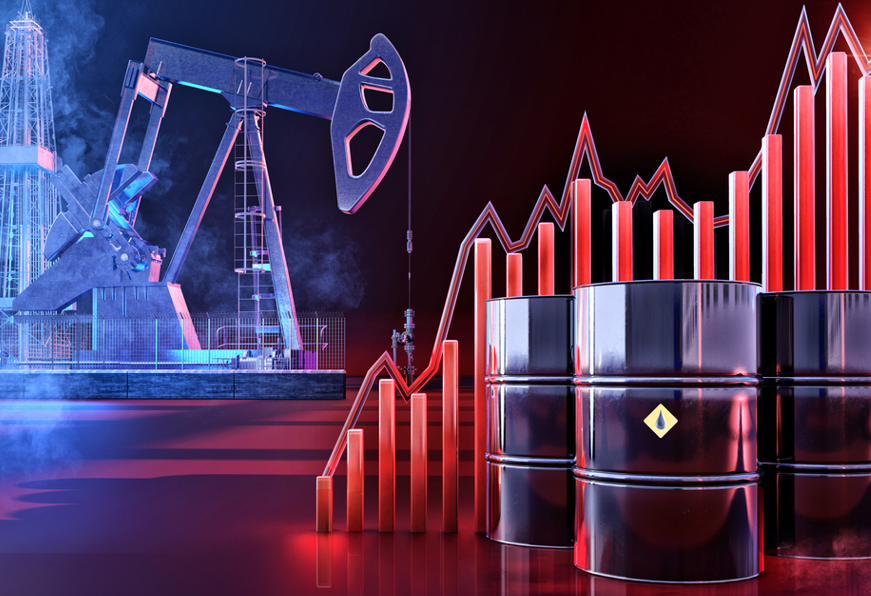
The energy sector has pulled off a rare feat: It’s the only industry group in the S&P 500 Index to rise in the month of March.
Last week's economic reports painted a stark picture of rising inflationary pressures and plummeting consumer confidence.
The US stock market is about to conclude its worst quarter compared to the rest of the world since the 1980s.
Today I’ll try to cut through some of this fog and look at why the US has a trade deficit. As you’ll see, it is a built-in, necessary feature of our money. Plus, it is time to start watching for a recession. Let’s jump in.
We were in the camp that the new administration was using the threat of tariffs as an instrument to negotiate deals with other countries, especially with our largest trading partners, Canada and Mexico.
The substantial shift in U.S. trade policy will put a significant dent in growth in major markets.
Uncertainty dominates the day, with market volatility sparking investor questions not seen in years. With this in mind, we’ve put together a concise cheat sheet covering key topics on everyone’s radar.
Longtime Investor Alert readers have often seen me say that government policy is a precursor to change. What this means is that, when policymakers act—whether through subsidies, sanctions, tariffs or regulations—markets can sometimes respond swiftly and dramatically. We’re seeing that play out right now in real time, especially in the copper market.
Long-maturity Treasury yields reached the highest levels in a month Thursday as investors demand compensation for the risk that tariffs will spur US inflation.
US President Donald Trump’s focus on “reciprocal tariffs,” rather than balanced trade, does not suggest that his administration intends to use tariffs strategically to cut the country’s chronic trade deficit. But Democrats must stop dismissing outright a policy tool that they themselves embraced under Biden.
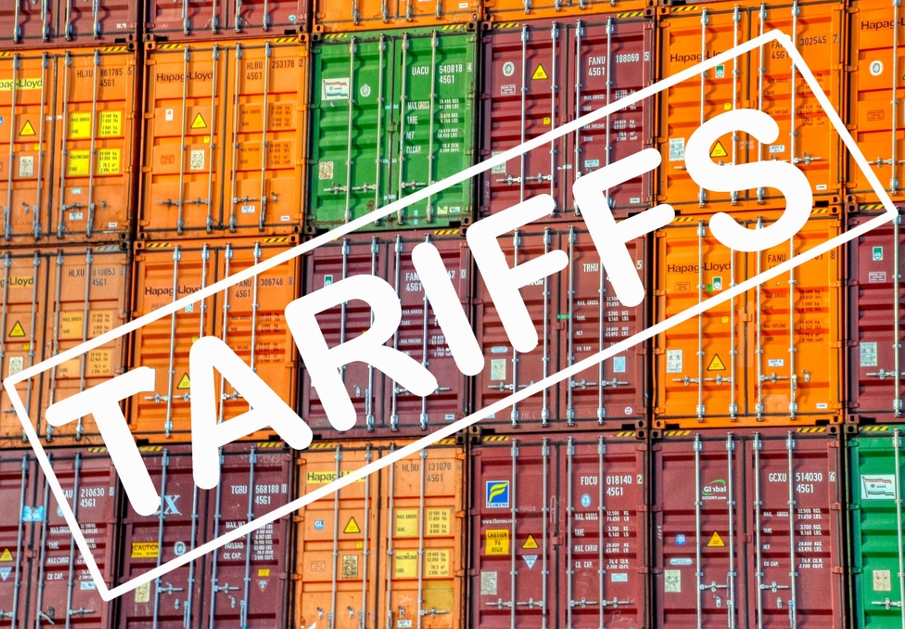
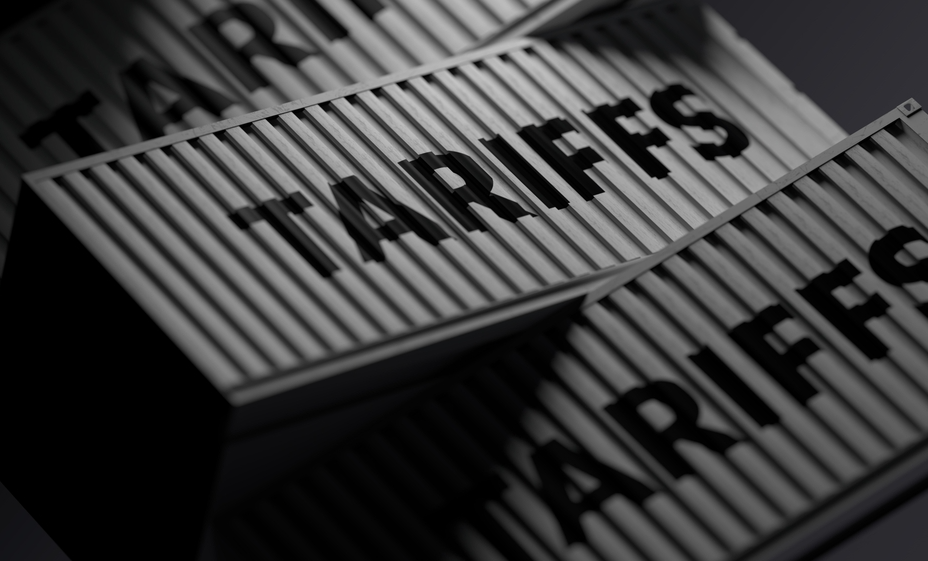
We’ve written quite a bit on tariffs already this year, and appropriately so. Developments on this front have been significant and are of global consequence.
As the first quarter comes to a close, there is one word that has become the new go-to term to describe the investment backdrop: uncertainty.
Portfolio Managers John Kerschner, Nick Childs, and Jessica Shill discuss the AAA CLO ETF landscape and highlight the most important considerations for investors.
When you grow up with a father who worked in the brokerage business, you hear a lot of stories.
Since May 2020, inflation (CPI) has gone from a low of 0.1% to a high of 9.1% and back to 2.8%. It is no wonder why any investor might at least pause in this period of uncertainty.
The global economy is undergoing an unprecedented wave of industrial and infrastructure expansion, driving relentless demand for commodities across energy, metals and agriculture.
Over the last couple of weeks, the market sell-off eclipsed 10% on an intraday basis, sending investor sentiment plummeting to levels usually seen during more significant declines and previous bear markets.
Changing market narratives in the third quarter led to ongoing market volatility.
Inflation uncertainty makes it tricky to foresee the Fed's next moves. In moments like these, it may be time to turn to active fixed income.
The Chicago Fed's National Activity Index is a monthly indicator designed to gauge overall economic activity and related inflationary pressure. It is a composite of 85 monthly indicators across four broad categories. The CFNAI is a forward-looking indicator that suggests how the economy will likely look in the near term and has been called one of the "most important and overlooked economic numbers". The index is constructed so a zero value for the index indicates that the national economy is expanding at its historical trend (average) rate of growth. Negative values indicate below-average growth, and positive values indicate above-average growth.
Margin debt is the amount of money an investor borrows from their broker via a margin account. Trading with a margin debt can magnify gains because an investor can benefit from the upside of any stock without having to invest 100%, resulting in greater profit. On the flip side, trading with margin debt can also exacerbate losses because if a stock's value were to depreciate, the investor may face a margin call and would need to come up with additional cash to reach the minimum requirement.
Fort Knox, home to much of the nation’s gold reserves, doesn’t get many visitors. That may soon change: President Donald Trump and his sidekick, Elon Musk, claim there’s a chance someone has stolen the shiny stuff. They want to visit and see it with their own eyes.
In 2024, the S&P 500 delivered a total return of 25%, while gold finished the year up 27%. This marks the first time in recent financial history in which gold and stocks achieved gains exceeding 25% within the same calendar year.
This week, and according to many, Federal Reserve (Fed) officials jumped onto the uncertainty bandwagon, along with consumers and businesses, waiting for more policy clarity from the Trump administration.
Last week, I had the pleasure of presenting at a Commonwealth conference. I love spending time and sharing ideas with our advisors. They are the best in the business.
As policy uncertainty grows, we consider how tariffs and other government actions might impact inflation, interest rates, and market sentiment.
The stock market sell-off appears to be signaling a recession. However, we believe the bond market disagrees.
The US economy looks set to disappoint this quarter. A number of economists have lowered their forecast for growth in real gross domestic product due to a widening trade deficit and sluggish consumer spending. An uncertain trade war and tepid labor demand have also clouded the outlook for the rest of 2025. Conflating the two would be a mistake, though.
Recently I have realized that cryptocurrency might be something even bigger and stranger than currency. It is not just digital money; it’s a bet on the huge global demand for financial autonomy.
First, the market is rallying on news that the targeted tariffs that Trump is planning to introduce on April 2 may be more limited than initially feared. Let’s hope that is the case.
Happy National Countdown Day! Yes, you read that right—today is a day to celebrate the excitement and sometimes anxious anticipation that comes with planning for an upcoming event.